



We may receive a commission on purchases made from links.
Most films treat the idea of the “director” with a dignified sense of reverence, especially since the end of the studio system. Where the producer’s role was once seen as paramount in getting a film made and even in achieving a certain artistic vision, a film’s achievements are now often attributed to the isolated decisions of the all-important director.
While we’ve talked plenty about the medium’s great moviemakers — indeed, we already have a list of the 25 best directors of all time — it seemed appropriate to carve out space for the history’s great directing partnerships. Though plenty of movies have two directors, the sustained union of two filmmakers over many years and/or films is rarer, and it warrants a closer look at the best of those recurring or long-lasting alliances. While the idea of the director usually implies one voice making the final decisions for the myriad creative components of a finished film, these directing duos prove that continuing that sense of collaboration into the chief position on a film set can bear rewarding fruit.
Here are the best directing duos of all time, ranked.
10. Jean-Pierre Jeunet and Marc Caro
Jean-Pierre Jeunet and Marc Caro spent years honing their singular aesthetic in short films before making their feature debut with “Delicatessen,” a pitch-black comedy set in a post-apocalyptic apartment building where a butcher-landlord keeps his tenants fed by turning unsuspecting newcomers into meat. Jeunet and Caro’s penchant for grotesque faces and sickly yellow lighting helped make the film a sensation, earning it four César Awards, including Best First Film and Best Original or Adapted Screenplay.
“The City of Lost Children” saw them double down on their peculiar sensibility: a fable set in a decaying port city, where a prematurely aging scientist steals children’s dreams and a gentle circus strongman, played by Ron Perlman, searches for his kidnapped little brother. Its macabre, nightmarish storybook whimsy remains one of the most singular visions in French cinema — an underseen, visually stunning masterpiece.
Then the partnership abruptly ended. Jeunet was tapped to direct “Alien Resurrection”, and his subsequent films, most famously the candy-colored “Amélie,” have generally been warmer and more polished. Meanwhile, Caro’s lone solo feature, the sci-fi film “Dante 01,” never found the same audience. It makes for a fascinating what-if, as nobody has quite matched the blend of cruelty and tenderness the two cooked up together, and it’s hard not to suspect that the grime and the heart needed each other.
9. John Musker and Ron Clements
John Musker and Ron Clements met at Disney while working on “The Fox and the Hound,” and they went on to become one of the studio’s most dependable directing teams during its biggest creative revival. They made their feature-directing debut alongside Burny Mattinson and David Michener on 1986’s “The Great Mouse Detective,” a Sherlock Holmes riff about a sleuthing rodent, before Clements pitched an adaptation of Hans Christian Andersen’s “The Little Mermaid.” Working with songwriters Howard Ashman and Alan Menken, they delivered a film that won Oscars for its score and for “Under the Sea” and helped kick off the Disney Renaissance.
“Aladdin” followed in 1992. The now-iconic musical was the highest-grossing film of its year and the highest-grossing animated film to that point, earning two more Oscars for Menken’s score and “A Whole New World.” The duo kept working through shifting tastes, with “Hercules” in 1997 and the sci-fi swashbuckler “Treasure Planet” in 2002, which flopped but has since found its defenders. They returned to hand-drawn animation with “The Princess and the Frog” in 2009, then made their first fully computer-animated feature with “Moana,” which earned an Oscar nomination for Best Animated Feature. It also spawned a widely criticized, remarkably premature live-action remake — part of a trend the pair described as “bemusing.”
The pair has since retired, closing out a partnership that lasted more than three decades. Their films were defined by the fundamentals of Disney magic: musical numbers that developed the plot and emotions, and humor that never smothered the pathos underneath. Few directors have made so many movies that feel so effortlessly designed for all audiences.
8. Joe and Anthony Russo
Before they set box-office records, Joe and Anthony Russo were comedy filmmakers from Cleveland. After their micro-budget debut, “Pieces”, Steven Soderbergh and George Clooney produced their second feature, “Welcome to Collinwood.” The brothers broke through on television, winning an Emmy for directing the pilot of “Arrested Development,” then directing the pilot of “Community” and many beloved episodes after it.
That sitcom background is key to the work that followed in the Marvel Cinematic Universe, where their instincts for staging a dozen characters trading blows and punchlines helped define the quippy, ensemble-driven sensibility of their “Avengers” movies. However, that style has become a grievance among certain viewers who wish the films could escape their unrelenting sense of brand management. The brothers have cited François Truffaut and the French New Wave as major influences, but their biggest films operate within decidedly conventional blockbuster boundaries. Still, there’s no denying the level of control needed to orchestrate some of the biggest hits of the 2010s.
Their post-Marvel streaming films, including “Cherry,” “The Gray Man,” and “The Electric State,” have been considerably less successful creatively. But through their company AGBO, they also produced the far more inventive “Everything Everywhere All at Once.” With “Avengers: Doomsday” scheduled for December 2026, the brothers are once again tasked with herding Hollywood’s biggest cast into something halfway coherent — a feat they’ve proven capable of, against all odds.
7. Justin Benson and Aaron Moorhead
Justin Benson and Aaron Moorhead work on the principle that a tiny budget and a big idea can take you a long way. They broke out with “Resolution,” which premiered at Tribeca in 2012, a lo-fi two-hander about a man who holes up in a remote cabin with his drug-addicted friend while something strange lurks beyond the walls. “Spring” followed in 2014, a Lovecraftian romance set on the Italian coast that fuses monster spectacle with the heart of a character drama. Benson typically writes and Moorhead handles cinematography, but the two co-direct and often appear on screen.
That approach led to “The Endless,” in which they play brothers returning to the cult they escaped. The film explicitly connects to “Resolution”, establishing a shared cosmic-horror mythology. “Synchronic,” their 2019 time-bending drug thriller with Anthony Mackie and Jamie Dornan, contains looser connections to that world, while the pandemic-era “Something in the Dirt” finds them starring as neighbors chasing a supernatural mystery.
Marvel took notice. They directed episodes of “Moon Knight” and much of the second season of “Loki,” then helped rework the first season of “Daredevil: Born Again” before returning for its second. You could have worse pairs acting as custodians for one of the entertainment industry’s biggest brands. Even if their Marvel work lacks the more personal flourishes of their smaller projects, you can still feel their indie-horror sensibility breaking through.
6. Daniel Kwan and Daniel Scheinert
Daniel Kwan and Daniel Scheinert met at Emerson College and built their reputation on music videos, most famously DJ Snake and Lil Jon’s “Turn Down for What”, before making their feature debut with “Swiss Army Man,” an emotionally vulnerable absurdist comedy about Paul Dano befriending a flatulent corpse played by Daniel Radcliffe. The movie’s surprisingly tender treatment of shame, loneliness, and the weird stuff that makes us human earned the duo the U.S. Dramatic Directing Award at Sundance in 2016.
That set the stage for their true breakout: “Everything Everywhere All at Once” cranked their style to maximalist levels in one of the decade’s most unexpected hits. Michelle Yeoh’s exhausted laundromat owner is dragged across the multiverse in a hyper-stylized, daffy yet sincere family drama about an immigrant mother and her daughter facing the potential end of the world. It was A24’s highest-grossing release at the time — the studio’s first film to reach $100 million worldwide — and won seven of its 11 Oscar nominations, including Best Picture, Best Director, and Best Original Screenplay, plus acting wins for Yeoh, Ke Huy Quan, and Jamie Lee Curtis.
That made the Daniels only the third directing pair to win Best Director, after Robert Wise & Jerome Robbins and Joel & Ethan Coen. Though prone to hyperactivity, few other filmmakers could make a hot-dog-fingers gag and a mother-daughter reconciliation feel like parts of the same carefully calculated thematic throughline. Here’s hoping their next film, with Matt Damon attached, sustains that momentum.
5. Phil Lord and Christopher Miller
Phil Lord and Christopher Miller have built a career on finding inventiveness in projects that might have become franchise mediocrity under other filmmakers. The Dartmouth classmates started in television, co-creating the short-lived MTV cult satire “Clone High,” before making their feature debut with “Cloudy with a Chance of Meatballs,” a frantic, silly adaptation of a children’s picture book filled with surprisingly clever gags and character detail.
The duo kept pace: “21 Jump Street,” a seemingly ill-conceived reboot of a 1980s TV drama as a buddy-cop farce, became one of the 2010s’ most successful and acclaimed comedies. “The LEGO Movie,” seemingly a feature-length branding exercise, became an inventive parable about creativity and conformity, launching a franchise of other LEGO films while transforming a bad premise into a cinematic miracle.
Their commitment to a distinct filmmaking voice also caused friction within the franchise machine, leading to their firing from “Solo: A Star Wars Story” late in production, though they went on to find other successes. As producers of “Spider-Man: Into the Spider-Verse,” they helped push the possibilities of mainstream animation forward. They also drew on their “Star Wars” experience in making 2026’s “Project Hail Mary,” a funny, meticulously crafted, heart-on-its-sleeve adaptation of Andy Weir’s novel that has grossed roughly $685 million worldwide. The pair’s irreverence remains central to their success: tongue-in-cheek self-awareness and a genuine love of subverting expectations have helped them turn unlikely premises into crowd-pleasers.
4. Lana and Lilly Wachowski
Lana and Lilly Wachowski came out of Chicago as comic-book obsessives, finding work as screenwriters before announcing themselves as directors with “Bound,” a lean, sultry neo-noir starring Jennifer Tilly and Gina Gershon that showed off their formal command on a small budget. Then came “The Matrix,” the iconic 1999 sci-fi smash that fused Hong Kong martial arts, anime, and heady cyberpunk philosophy into a defining text of 2000s action cinema. Its “bullet time” effects were imitated endlessly; it broke box-office records, and cinema was never quite the same.
But what really sets the sisters apart is how stubbornly they kept betting big. “Speed Racer” may have flopped on release, but it has since gained recognition as a forward-thinking work of art. Similarly, “Cloud Atlas” and “Sense8,” their Netflix series about psychically linked strangers, have attracted devoted defenders of the Wachowskis’ uncompromising vision. Even “Jupiter Ascending” has its champions. Their work has also invited a deeper reading of “The Matrix” as a trans allegory, something Lilly has discussed directly.
The sisters have pursued separate projects in recent years. Lana directed 2021’s caustically self-referential “The Matrix Resurrections” on her own, while Lilly has been developing “The Hunted,” a mid-sized thriller with an all-transgender cast. Even while working apart, both continue to follow the amplified, philosophical sensibilities that made their collaborations so distinctive.
3. Josh and Benny Safdie
Widely known as engineers of feature-length anxiety attacks, Josh and Benny Safdie were among the most exciting filmmakers working in New York before their broader breakthrough. They first drew attention with “Daddy Longlegs,” a scrappy, semi-autobiographical portrait of a chaotic father that played Cannes’ Directors’ Fortnight in 2009. Then came “Heaven Knows What,” a bruising drama about people struggling with heroin addiction, starring Arielle Holmes and drawn from her own experiences and writings. Their method of handheld close-ups, overlapping dialogue, and nonprofessionals cast alongside movie stars came together in “Good Time,” in which Robert Pattinson plays a small-time crook losing control of one long night.
The apex was “Uncut Gems,” in which Adam Sandler gave a career-defining performance as a gambling-addicted Diamond District jeweler hurtling through two hours of escalating bad decisions — a stress-riddled, darkly funny drama of street-level chaos and apprehension.
The brothers have since pursued separate directing careers, and differences in their sensibilities emerged in their solo work. Benny’s “The Smashing Machine,” with Dwayne Johnson as MMA fighter Mark Kerr, struggled commercially but revealed a quieter, more observant side of his filmmaking. Josh’s “Marty Supreme,” with Timothée Chalamet as a force of chaos, continued the streak of relentless havoc. Both films still carry the fingerprints of what the two built together: textured environments, tightly observed characters, and an acute sense of the worlds they inhabit. But the partnership that produced “Uncut Gems” remains one of the most electrifying of its era.
2. Michael Powell and Emeric Pressburger
Few partnerships have been as productive or as generous to film history as Michael Powell and Emeric Pressburger. Although Powell generally handled on-set direction and Pressburger originated many of their stories, they famously shared writing, producing, and directing credit during their peak years as the Archers. Powell, an Englishman who learned his craft on British quota quickies, and Pressburger, a Hungarian screenwriter who fled Nazi Germany, first teamed up in 1939. Pressburger later won an Oscar for the original story of 1941’s “49th Parallel,” and in the early 1940s they formed their production company, the Archers, whose films opened with an arrow striking a target.
That led to one of the great runs in British cinema: the wartime satire “The Life and Death of Colonel Blimp,” the pastoral “A Canterbury Tale,” the romance “I Know Where I’m Going!,” and “A Matter of Life and Death,” a fantasy about a pilot who cheats death. “Black Narcissus” won Oscars for Jack Cardiff’s cinematography and Alfred Junge’s art direction, while “The Red Shoes” remains an utterly dazzling film about artistic obsession, with its nearly 17-minute ballet sequence nestled inside a classical yet fantastical melodrama.
Their main partnership ended after 1957’s “Ill Met by Moonlight,” though they collaborated again on smaller projects, including “They’re a Weird Mob” and “The Boy Who Turned Yellow.” Powell’s solo thriller “Peeping Tom” was so reviled by British critics that it badly damaged his career, though it has since been rediscovered as a masterpiece, thanks in no small part to Martin Scorsese.
1. Joel and Ethan Coen
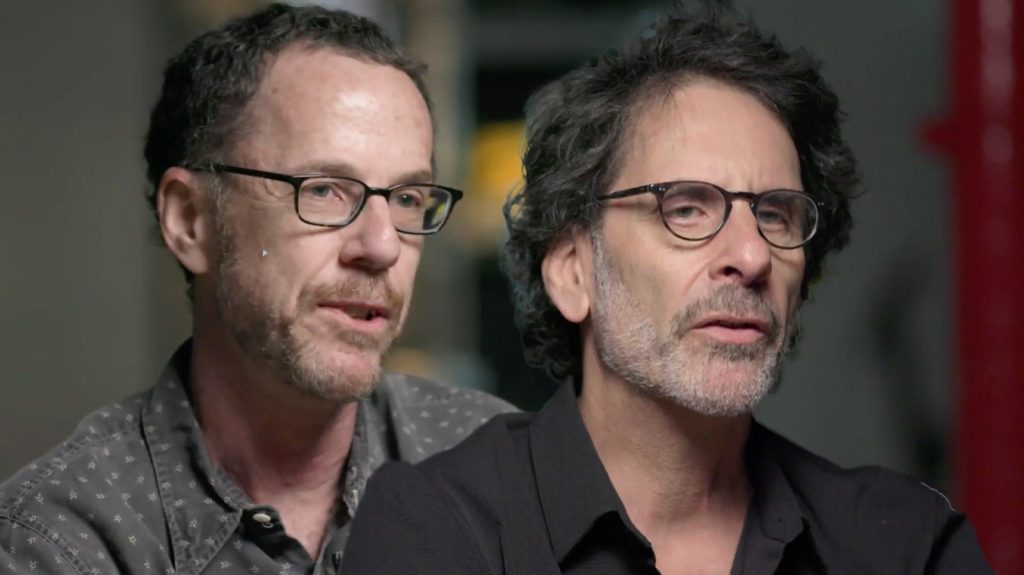
Joel and Ethan Coen have long worked like one filmmaker with two heads, though Directors Guild rules obscured that for two decades by crediting Joel as director and Ethan as producer. The two also shared editing duties under the pseudonym Roderick Jaynes, a nonexistent editor who nonetheless earned Oscar nominations for “Fargo” and “No Country for Old Men.” They finally received joint directing credit with 2004’s “The Ladykillers.” By then, the work had long spoken for itself: “Blood Simple” and “Raising Arizona” announced a pair of formalists with a wicked sense of humor, and “Barton Fink” swept Cannes in 1991.
Working frequently with cinematographer Roger Deakins, they moved between screwball comedy (“Raising Arizona,” “Burn After Reading”), gangster pictures (“Miller’s Crossing”), and Westerns (“True Grit”) with unmatched formal and tonal precision. Few filmmakers could make movies as equally iconic as “The Big Lebowski” and “No Country for Old Men,” works at opposite ends of the tonal spectrum that still feel unmistakably of a piece with the brothers’ sardonic, philosophical sensibility.
After 2018’s “The Ballad of Buster Scruggs,” the brothers pursued solo directing projects, with Joel making “The Tragedy of Macbeth” and Ethan making “Drive-Away Dolls” and “Honey Don’t!” But in October 2026, while receiving the Lumière Prize in Lyon, they said they planned to direct another film together. Joel’s upcoming “Jack of Spades,” which Ethan co-wrote and Netflix plans to release theatrically in fall 2027, is still a solo directing project, but their reunion comments suggest another collaboration may be ahead. Hopefully they’ll add another movie to a remarkable joint filmography, which we’ve ranked in full.