


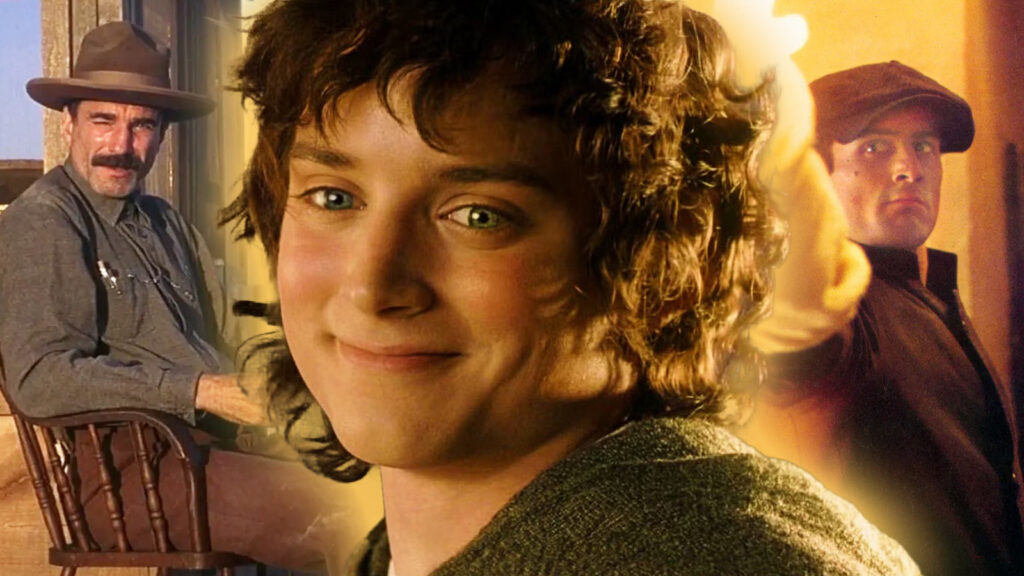

With the Academy Awards on the horizon, Letterboxd seems like the place to be. The site might be known for its users’ controversial takes and pithy reviews (some of which are featured below), but it’s also a virtual theater lobby for some of the most passionate and engaged movie fans online. So we took a look at how nearly a century of Oscars nominees fared in such an environment.
To have been considered for this list, a film must have been nominated for the Academy Award for Best Picture. This does mean that some well-reviewed films that have placed near the top of the site’s Top 500 rankings do not qualify for inclusion. That said, the film does not need to have won the award to be included.
What makes this list particularly fascinating to us is seeing which films remain celebrated and culturally relevant among the world’s most avid cinephiles. Just outside the top 10, you’ll find an intriguing mix of features without apparent genre bias: the airtight thriller “Whiplash,” the fantasy franchise sequel “The Lord of the Rings: The Two Towers,” the Golden Age noir “Sunset Boulevard,” the seminal romantic comedy “The Apartment,” and the haunting war epic “Apocalypse Now.” This trend carries over into the main list below, revealing that moviegoing appetites seem as large and diverse as they’ve ever been.
Here are the best movies nominated for Best Picture at the Oscars, according to Letterboxd.
10. It’s a Wonderful Life
“nobody likes getting the most out of a vowel quite like james stewart”
– Karsten (★★★★1/2)
Logs: 1.1 million | Likes: 401,000 | Letterboxd Ranking: No. 39
Despite having a reputation among casual moviegoers as a respected, feel-good museum piece to ritualistically admire at some point during the holiday season (like many Christmas-set dramas from the black-and-white era of filmmaking), Frank Capra’s “It’s a Wonderful Life” is seemingly resonating with Letterboxd users all year round. The 1946 film stars James Stewart as George Bailey, a downtrodden and self-sacrificing banker who nearly leaps to his death from a bridge on Christmas Eve. He is prevented from doing so by an angel named Clarence (Henry Travers), who intervenes and reveals to him an alternate reality robbed of his presence. The film’s ending is so cathartic and life-affirming that the FBI investigated it for disseminating communist messaging. Seriously, we’re not joking.
At the 19th Academy Awards in 1947, “It’s a Wonderful Life” was nominated for five Oscars, including Best Picture, Best Director, and Best Actor (James Stewart). It lost all five to William Wyler’s post-war veteran drama “The Best Years of Our Lives,” which currently has an average Letterboxd rating of 4.2 out of 5 stars and sits at No. 231 on the platform’s Top 500 list. “It’s a Wonderful Life” did take home one of the Academy’s Technical Achievement Awards for its pioneering development of realistic fake snow, another legitimately life-saving feat (accomplished by special effects artist Russell Shearman), given that studios previously showered sets with asbestos.
9. Goodfellas
“idk man there were some pretty bad fellas in this one”
– oleff (★★★★1/2)
Logs: 2.8 million | Likes: 1.1 million | Letterboxd Ranking: No. 30
Remembered as part of one of the most shocking upsets in Oscars history, no amount of gold (or lack thereof) can determine the greatness “Goodfellas.” Inspired by the true story of mobster-turned-informant Henry Hill, Martin Scorsese’s 1990 ensemble gangster drama is an epic in every sense of the word, charting Hill’s (Ray Liotta) seduction into and subsequent self-destruction within the world of organized crime. The film also stars Robert De Niro as Hill’s mentor, Jimmy Conway, Joe Pesci as his peer Tommy DeVito, and future “Sopranos” actor Lorraine Bracco as his wife Karen (Michael Imperioli also has a small role as “Spider,” a low-level soldier coldly gunned down by DeVito).
At the 63rd Academy Awards in 1991, “Goodfellas” was nominated for six Oscars, including Best Picture, Best Director, Best Supporting Actor (Joe Pesci), and Best Supporting Actress (Lorraine Bracco). The first two awards were lost to Kevin Costner and his Western “epic” “Dances with Wolves” (3.9, unranked), while Bracco lost the Supporting Actress race to Whoopi Goldberg for “Ghost.”
The only winner of the night from “Goodfellas” was Pesci, who beat out other powerful mobster performances from Al Pacino (“Dick Tracy”) and Andy Garcia (“The Godfather Part III”). The actor memorably delivered one of the shortest acceptance speeches in Oscars history. As for Scorsese, he left empty-handed, and he remained so for over a decade afterward. Despite being the second-most-nominated director in Academy history behind William Wyler — not to mention maintaining a legendary status in the filmmaking community — Scorsese has only ever won one Oscar: Best Director for 2007’s “The Departed” (4.3, No. 120).
8. There Will Be Blood
“cancelling plans is ok. adopting your dead co-worker’s baby to look like a family man so your oil business is successful is ok. buying out an entire town to drill for their oil is ok…”
– siobhan (★★★★★)
Logs: 1.6 million | Likes: 623,000 | Letterboxd Ranking: No. 29
Where many cinephiles decry the 1991 Academy Awards for letting “Goodfellas” get away from them, the 2008 ceremony was widely remembered as a night when any picture could’ve been the Best Picture. But even among a field of competitors that included “Juno,” “Atonement,” and “Michael Clayton,” “There Will Be Blood” sprang up from the ground as a richly rewarding front-runner for many. Paul Thomas Anderson’s capitalist cautionary tale stars Daniel Day-Lewis as an oil prospector with an unquenchable thirst for wealth.
At the 80th Academy Awards in 2008, “There Will Be Blood” was nominated for eight Oscars, tying with the Coen Brothers’ neo-western crime thriller “No Country for Old Men” (4.3, No. 146) for most nominations. The latter film ultimately beat “There Will Be Blood” in the races for Best Picture, Best Director, and Best Adapted Screenplay. Daniel Day-Lewis, however, took home his second Best Actor award after 1989’s “My Left Foot.” Cinematographer Robert Elswit won “Blood” its only other award that evening, and was the only member of the film’s team to directly beat out “No Country” — no small feat, considering the latter film was shot by the legendary Roger Deakins.
As of writing, Anderson has yet to win a single Oscar — though this is almost certain to change in the near future, with his Oscar-nominated “One Battle After Another” expected to dominate the 98th Academy Awards later this year. It currently holds a 4.2 rating and is ranked No. 367 on Letterboxd.
7. The Godfather
“haha they made that scene from zootopia into a movie”
– Hannah
Logs: 3.6 million | Likes: 1.4 million | Letterboxd Ranking: No. 15
Hailed as the greatest American film of all time by frequently Oscar-nominated filmmaker Steven Spielberg, “The Godfather” is a timeless masterpiece that had to overcome the odds just to exist. Francis Ford Coppola grants Shakespearean grandeur to this mafia tragedy, anchored by career-best performances from Marlon Brando and a young Al Pacino.
At the 45th Academy Awards in 1973, “The Godfather” tied with Bob Fosse’s World War II musical drama “Cabaret” (4.2, No. 396) for most nominations, with each film receiving 10 nods from the Academy. The film would have led with 11, had composer Nino Rota not had his nomination for Best Score revoked after it was discovered that he had effectively plagiarized himself from an earlier film. Nevertheless, Rota’s iconic score kicked off an industry trend that has transcended several decades of moviemaking.
The success of “The Godfather” at the Oscars was undeterred by this negligible scandal, though it was perhaps overshadowed by one that took place at the actual ceremony. Marlon Brando was technically awarded the honor of Best Actor (his second win after 1954’s “On the Waterfront”), but the actor infamously refused to accept it or attend the ceremony in protest of the industry’s treatment of Indigenous peoples. Activist Sacheen Littlefeather took the stage in his place, facing a shockingly hostile crowd of Hollywood elites.
The evening was most successful for Coppola, who took home Best Picture and shared Best Adapted Screenplay with “Godfather” author Mario Puzo (though Fosse won the race for Best Director). His feelings are nonetheless complicated in hindsight, however, as he feels the film’s success ruined his subsequent career.
6. Parasite
“Another Bong hit.”
– Matt Singer
Logs: 6.6 million | Likes: 3.5 million | Letterboxd Ranking: No. 14
Considered by many to be the greatest film of the 21st century, Bong Joon-ho’s “Parasite” made history when it broke into the Oscars race in 2020. The class tragicomedy explores the physical and psychological prison of poverty by making the viewer party to the brilliant but desperate schemes of the destitute Kim family, as they attempt to better their lives by deceitfully infiltrating those of the obliviously affluent Parks.
At the 92nd Academy Awards in 2020, “Parasite” was nominated for six Oscars after a significant degree of (frustratingly unnecessary) controversy. Amidst ongoing discourse surrounding the racist bias toward domestic films and white actors and filmmakers overall (which was further stoked by the Academy giving “Green Book” — 3.8, unranked — Best Picture in 2019), some people bafflingly felt the need to debate whether or not “Parasite” deserved to be nominated for Best Picture as opposed to Best International Feature Film.
Fortunately, the Academy not only nominated “Parasite” for both awards, but they gave it the Oscars at the end of the evening. Beating the likes of “The Irishman,” “Little Women,” and “Once Upon a Time in Hollywood” in the former category, it also became the first foreign-language film to take home the award. Bong also won Best Director (over Martin Scorsese and Quentin Tarantino) and Best Original Screenplay, making his feature the most awarded film of the night.
5. Schindler’s List
“if you have any information regarding the whereabouts of ralph fiennes’ missing oscar please contact me”
– cinéfila… (★★★★)
Logs: 2.1 million | Likes: 661,000 | Letterboxd Ranking: No. 12
Steven Spielberg might be the most successfully versatile filmmaker in the history of cinema. By the time he made the historical drama “Schindler’s List” in the 1990s, he had already earned Oscar nominations for “Close Encounters of the Third Kind,” “Raiders of the Lost Ark,” “E.T. the Extra-Terrestrial,” and “The Color Purple.” This film — which he considered, with some anxiety, as his first conscious attempt to make a serious, adult film – exposed audiences to the horrors of the Holocaust without sacrificing beauty, complexity, and hope. Liam Neeson stars as the titular historical hero, who begins his story as a cynical Nazi-affiliated industrialist.
“Schindler’s List” dominated the 66th Academy Awards in 1994, leading the ceremony in both nominations and wins. Of the 12 nominations it received, the film won seven, including Best Original Score for John Williams, Best Adapted Screenplay for Steven Zallian, Best Director for Spielberg, and Best Picture. Indeed, though both Liam Neeson and Ralph Fiennes received nods from the Academy (for Best Actor and Best Supporting Actor, respectively), neither took home awards. (Those honors ultimately went to Tom Hanks for “Philadelphia” and Tommy Lee Jones for “The Fugitive,” respectively.)
Spielberg has been nominated for Oscars in six different decades, and earned his second Best Director award in 1999 for “Saving Private Ryan” (4.3, No. 221). He is the third-most-nominated director in Academy history behind Martin Scorsese. Spielberg is quietly in the running for an Oscar in 2026 as a producer of Best Picture nominee “Hamnet” (4.2, No. 323).
4. The Lord of the Rings: Return of the King
“ok but the real reason frodo f***s off to valinor is because sam married rosie instead of him and that’s the tea”
– eely (★★★★1/2)
Logs: 3.4 million | Likes: 1.2 million | Letterboxd Ranking: No. 11
Few blockbuster genre films ever make it past the special effects category at the Oscars. None but “Return of the King” have accomplished what it did in 2004.
The culmination of Peter Jackson’s era-defining “Lord of the Rings” trilogy provides a finale to J.R.R. Tolkien’s peerless fantasy saga that cannot be rivaled. From the climactic Battle of Pelennor Fields to the destruction of the One Ring in the fiery mouth of Mordor, the 2003 film is a fantasy spectacle packed with breathless action and hard-won emotional payoffs.
No other film on this list — and, by some standards, no other film in Academy history — has performed as well at the Oscars as “Return of the King.” The film entered the 76th Academy Awards with a leading 11 nominations and left having won every single one, earning it a place alongside “Ben Hur” (4.1, unranked) and “Titanic” (3.8, unranked) as the most Oscar-winning movies of all time. Though they both received more nominations, “Return of the King” remains the sole claimant to the largest perfect sweep in Academy history. Among the film’s haul were Best Director, Best Visual Effects, Best Score, Best Adapted Screenplay, and Best Picture.
3. The Shawshank Redemption
“he became a morgan free man”
– adambolt (★★★★1/2)
Logs: 3.7 million | Likes: 1.5 million | Letterboxd Ranking: No. 8
Though it’s now considered one of the most beloved films ever made, “The Shawshank Redemption” wasn’t all that successful when it was first released. Sure, critics praised Frank Darabont’s 1994 adaptation of Stephen King’s prison drama, but the lukewarm interest from general audiences was made apparent by “The Shawshank Redemption” earning disappointing box office receipts.
At the 67th Academy Awards in 1995, “The Shawshank Redemption” was nominated for seven Oscars. It ultimately walked away with no wins. In the races for Best Picture, Best Adapted Screenplay, and Best Actor (Morgan Freeman), “Shawshank” was outpaced by Tom Hanks and “Forrest Gump” (4.2, No. 399). And yet, aside from maybe “Forrest Gump,” “The Shawshank Redemption” arguably now enjoys a more timeless, enduring reputation among audiences than any other film nominated that year.
Darabont was curiously not nominated for Best Director. Even so, King has maintained that “The Shawshank Redemption” is one of his two favorite adaptations of his books. (It’s actually something the author has given a significant amount of thought to.) King later entrusted Darabont with adapting “The Green Mile” (4.3, No. 185) and “The Mist” (3.4, unranked), before the latter went on to develop the massively popular and yet enduring “Walking Dead” franchise for AMC.
2. The Godfather Part II
“the transition between idealism to capitalism, between loyalty to family and loyalty to business. the most tragic film of a generation.”
– Logan Kenny (★★★★★)
Logs: 1.9 million | Likes: 710,000 | Letterboxd Ranking: No. 7
From “The Bells of St. Mary’s” in 1945 to “Dune: Part Two” in 2024, the Academy has only nominated 10 sequel films for Best Picture. The first film to win was, fittingly, one that arguably remains the greatest sequel of all time: “The Godfather Part II.” While continuing the epic of Al Pacino’s Michael Corleone, the film casts back to the early days of Vito Corleone, now played by Robert De Niro.
At the 47th Academy Awards in 1975, “The Godfather Part II” was nominated for 11 Oscars, tied for the most nominations with Roman Polanski’s equally influential paranoid conspiracy thriller “Chinatown” (4.3, No. 160). Once again, Coppola took home Best Picture and Best Adapted Screenplay (with Mario Puzo), and he even managed to take home Best Director this time too. Nino Rota received some overdue flowers as well, sharing the Best Original Score award with Coppola’s father, Carmine Coppola.
The acting categories were a bit more contentious for the film. Talia Shire was nominated in the Best Supporting Actress category for playing Vito’s daughter Connie Corleone, but she ultimately lost to Old Hollywood legend Ingrid Bergman for “Murder on the Orient Express.” Al Pacino was similarly unlucky in the Best Actor category, losing to Art Carney for “Harry and Tonto.” Meanwhile, in the race for Best Supporting Actor, “The Godfather Part II” instigated a three-way contest between Robert De Niro, Lee Strasberg, and Michael V. Gazzo. De Niro won in the end, earning his first of two statues (the second was a Best Actor Oscar for starring in Martin Scorsese’s “Raging Bull”).
1. 12 Angry Men
“That was the best 1.5 hours of middle aged white dudes yelling at each other that I’ve ever seen.”
– Lia Allison (★★★★★)
Logs: 1.9 million | Likes: 781,000 | Letterboxd Ranking: No. 3
While superhero fatigue and studio consolidation might seem to herald the cultural decay of film as an art form rather than product, we can take some heart that, as of 2026, one of the best-reviewed films on the world’s premier movie discourse website is a 90-minute, stageplay-like drama that restrains itself to a single room for most of its runtime. Clearly, an appetite still exists for serious, daring films like “12 Angry Men.”
Released in 1957 and directed by five-time Academy Award nominee Sidney Lumet (“Dog Day Afternoon,” “Network,” “The Verdict”), “12 Angry Men” remains one of the most influential and celebrated courtroom dramas ever made. The ensemble (anchored by Henry Fonda, the father of Jane Fonda and future star of “Once Upon a Time in the West”) portrays a New York jury deliberating over the dubious guilt of a boy accused of murdering his own father. Its presentation of prejudice in conflict with true justice was decades ahead of its time.
At the 30th Academy Awards in 1958, “12 Angry Men” had just three nominations — Best Picture, Best Director, and Best Adapted Screenplay (for original playwright Reginald Rose). It lost all three to David Lean’s World War II epic “The Bridge on the River Kwai” (4.2, No. 232). As stated above, “12 Angry Men” boasts the Letterboxd-specific honor of being No. 3 in the site’s Top 500 rankings. It ranks just above other 4.6-star films “Seven Samurai” (No. 5) and “Come and See” (No. 4), and just below “The Human Condition III: A Soldier’s Prayer” (4.6, No. 2) and “Hara Kiri” (4.7, No. 1).