


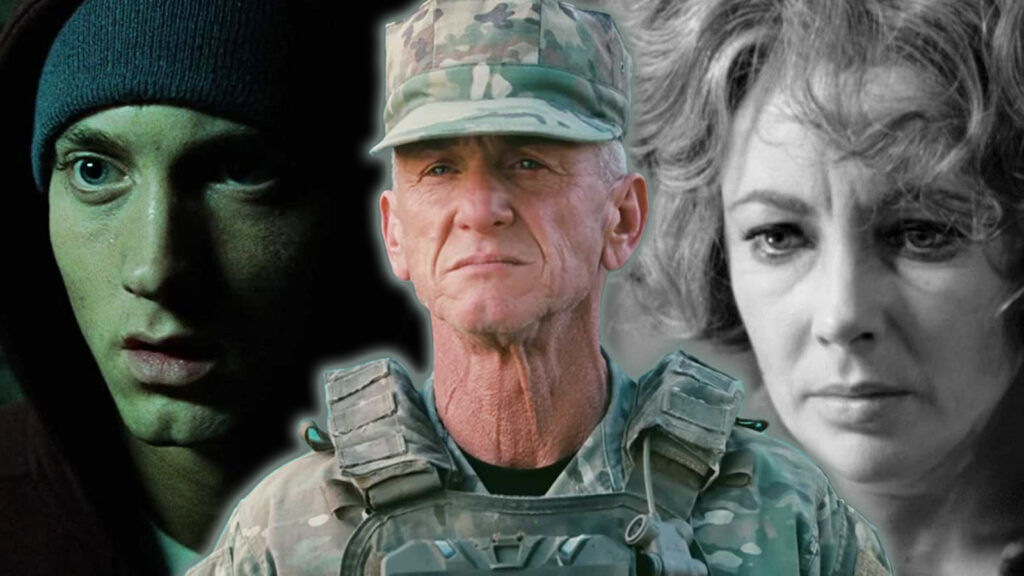

Winning an Oscar shouldn’t be seen as the be-all end-all of success in the entertainment industry. There have certainly been plenty of films and actors who failed to be recognized for their achievements over the years, and there are plenty of wins we look back on and think, “How did THAT movie win?’ Still, who doesn’t love being handed a trophy and attending a lavish party?
The answer is actually quite a few Hollywood A-listers. A number of big names failed to attend the ceremony where they won their Academy Award, but it’s fascinating to see how much the explanations differ. Some had scheduling conflicts, while others recovered from injuries. Others wanted to make political statements, and some, well, simply didn’t feel like showing up.
To be honest, it’s the ultimate power move. Giving a speech that lasts a couple minutes isn’t going to define someone’s legacy. What society remembers are the movies and performances that helped shape our lives and culture at large. These 10 Hollywood stars who didn’t show up to accept their Oscars may be remembered more for that than most of the winners’ speeches anyway.
Alice Brady
The early days of the Academy Awards were kind of like the Wild West. The Academy of Motion Pictures Arts and Sciences was still figuring out how this whole thing worked, and there are some fascinating details concerning the first-ever Oscars, like how there were technically two Best Picture winners. The Academy learned one important lesson in 1938 when an absent winner resulted in a notorious theft.
Alice Brady won Best Supporting Actress that year for her role as Molly O’Leary in “In Old Chicago.” It’s a disaster musical film, which is a niche subgenre Hollywood desperately needs to bring back, offering an amusing account of how the Great Chicago Fire of 1871 broke out. Brady may have taken home the award, which at the time was a plaque instead of the statue we all know today, but she wasn’t in attendance. She had broken her ankle while filming “Good Bye to Broadway,” so a man went up on stage to accept the plaque on her behalf. The problem with this is that no one had any idea who this guy was, and Brady’s Oscar remains missing to this day.
It’s hard to imagine something like this happening today, but this was only the 10th ceremony, so there were probably still a lot of kinks to work out, like making sure someone walking away with an Oscar should rightfully have it. To this day, no one knows where Brady’s Oscar went. Sadly, she passed away a couple of years later in 1939, never having actually gotten her award.
Elizabeth Taylor
When it comes to absolute screen legends, they don’t get much more iconic than Elizabeth Taylor. She was a tour de force in the industry and is rightfully recognized as one of the greatest actresses of all time. She was recognized multiple times by the Academy, including being nominated for Best Actress a total of five times and winning twice. Her first win came during the 1961 ceremony for “Butterfield 8,” a movie Taylor personally despised due to its portrayal of a more promiscuous woman, going so far as to refer to it (via The Hollywood Reporter) as a “piece of s***.”
“Who’s Afraid of Virginia Woolf?” is regarded far more highly in the zeitgeist, and Taylor would win her second Oscar here. Of course, Taylor would skip the event this time around. It might seem odd, as “Virginia Woolf” is often seen as a highlight of Taylor’s career, and at the time, it was practically a certainty she would go home with a trophy that night. The reason Taylor bailed was due to Richard Burton’s (her husband at the time) ill will toward the awards.
The two starred together in “Virginia Woolf,” and Burton was nominated for Best Actor, making it his fifth nomination. He figured he would lose again, which he did to Paul Scofield for “A Man for All Seasons,” and he refused to attend out of protest. Taylor stayed with him in Paris, so Anne Bancroft accepted the Oscar on her behalf. It was the last time Taylor was ever up for a competitive Oscar, but she’d later receive the Jean Hersholt Humanitarian Award for her commitment toward helping those with AIDS. Burton would be nominated twice more at the Oscars but never win.
George C. Scott
When an actor doesn’t show up to the Academy Awards, it can take some audiences by surprise. But that shouldn’t have been the case for George C. Scott, who wasn’t shy about letting his feelings surrounding the ceremony known.
He was nominated for Best Supporting Actor for both “Anatomy of a Murder” and “The Hustler.” When it came to the latter, Scott didn’t even want the nomination, as he didn’t like the idea of turning the art form of acting into a competition. At one point, he referred to the Oscars as a “two-hour meat parade” (via The Los Angeles Times). He didn’t win for either of those parts, but there was no denying the magnetism of his performance in the titular role in “Patton.” It’s one of the all-time great World War II movies that earned a perfect score from critic Roger Ebert, and even though Scott made his intentions loud and clear, it didn’t stop the Academy from making him the winner.
“Patton” producer Frank McCarthy accepted the award on his behalf. Scott would be nominated one more time for “The Hospital,” but a similar stunt wouldn’t play out that time, seeing as he didn’t win.
Marlon Brando
George C. Scott wanted nothing to do with the Academy Awards. In a similar vein, Marlon Brando didn’t want to show up when he won for his role of Vito Corleone in “The Godfather, but he took the opportunity to send a message.
Arguably, the most infamous example of a celebrity refusing an Oscar is when Brando sent Sacheen Littlefeather to the award ceremony to accept the Oscar on his behalf. Rather than thank the Academy, Littlefeather discussed the poor treatment of indigenous people within the entertainment industry and the United States at large. People booed during her speech, and according to Littlefeather, John Wayne tried to physically assault her and had to be restrained to avoid doing so.
In 2022, the Academy finally gave Littlefeather a long overdue apology for how she was treated, nearly 50 years since the incident in 1973. Littlefeather passed away a couple of months later. But Brando’s win and Littlefeather’s speech remain important touchstones in the history of the Academy Awards and serve as a reminder that there are far more important things out there than silly trophies.
Katharine Hepburn
Katharine Hepburn is the second most-nominated actor in Oscar history with 12 nominations (only falling behind Meryl Streep’s astounding 17 noms). She won four of those prizes, including a win in 1969 for her role in “The Lion in Winter,” where she tied for the prize with Barbra Streisand in “Funny Girl,” making it one of the few times in Oscar history where a tie occurred. However, Hepburn never actually went to an awards ceremony to pick up any of these trophies.
The reason comes down to Hepburn believing that awards for acting were unnecessary. She was once quoted as saying, “As for me, prizes are nothing. My prize is my work” (via The Hollywood Reporter).
In addition to the aforementioned “The Lion in Winter,” Hepburn also won the top prize for her work in “Morning Glory,” which was the first time she had ever been nominated for an Academy Award. She also won for “Guess Who’s Coming to Dinner” and “On Golden Pond.” There are 48 years between her first and last Oscar, and many would say that having a career that iconic is far more valuable than any piece of metal.
Paul Newman
Paul Newman is another one of those actors one would assume has a lot more Oscars than he actually does. He was nominated for Best Actor six times (and even had a seventh nomination as the producer and director for “Rachel, Rachel”). However, he never won any of those, though he received an honorary award in 1986, which may have indicated to Newman that the Academy was basically apologizing for years of fake-outs.
But that honorary award may have come too soon, as Newman still had plenty of great performances in him, including his portrayal of Fast Eddie in “The Color of Money.” Once again, he was nominated for Best Actor at the 1987 ceremony, but he didn’t even bother to show up.
Despite winning that year, Newman was over the whole thing at that point, saying in a statement, “It’s like chasing a beautiful woman for 80 years. Finally, she relents and you say, ‘I’m terribly sorry. I’m tired'” (via The Los Angeles Times). Newman would receive the Jean Hersholt Humanitarian Award and get nominated twice more (for “Nobody’s Fool” and “Road to Perdition”), but it’s a good reminder to the Academy that it’s probably for the best to celebrate actors when they still care about such trophies and baubles.
Michael Caine
Michael Caine is a highly respected actor, and he finally won an Oscar in 1987 for “Hannah and Her Sisters” after he was previously nominated three times. But he couldn’t accept the award in person, as he had scheduling conflicts. Given the reasons for why some other Hollywood stars didn’t show up to accept their Oscars, it’s a fairly innocuous explanation … until you realize the scheduling conflict in question was so that he could film “Jaws: The Revenge.”
Yes, Caine went from playing an emotionally complex man infatuated with one of his wife’s sisters in “Hannah and Her Sisters” to a guy named “Hoagie” in the fourth “Jaws” movie. Such is the nature of Hollywood where you never know where work is going to come from next. Caine is one of many actors who have publicly trashed their own movies. To be fair, Caine has claimed he’s never seen it, but he doesn’t regret his decision as he relayed in one famous anecdote: “I haven’t seen it, but I’ve seen the house it bought my mother, and it’s marvelous.” An Oscar and a new house? Maybe Caine was onto something.
Caine would win another Oscar, this time for Best Supporting Actor for “The Cider House Rules” in 2000, but this is often considered a case of an actor undeservedly winning an Academy Award. It’s a particular bummer seeing as he won it out over Tom Cruise for “Magnolia” and Michael Clarke Duncan for “The Green Mile,” which were probably more deserving that year.
Eminem
Eminem effectively played himself in “8 Mile,” only his name there is B-Rabbit. We get a taste of what his life may have looked like pre-fame, as he’s an up-and-coming rapper trying to balance a burgeoning music career with trying to raise a daughter. But easily, the longest-lasting impact the film has had is giving the world one of the best songs out of Eminem’s entire discography: “Lose Yourself.”
In 2003, the likelihood of a rap song winning for Best Original Song at the Oscars probably felt like a long shot, which is exactly why Eminem didn’t show up. He’d later say he was sleeping at the time, because he figured he had no chance, but he made history that night as the first hip-hop song to ever take home the big prize. This paved the way for more eclectic songs to take home that particular trophy, like “It’s Hard Out Here for a Pimp” from “Hustle & Flow” and even “Golden” from “KPop Demon Hunters” winning as the first K-pop song.
Going into the ceremony, it probably felt like some of the other songs, including “I Move On” from Best Picture winner Chicago, felt like more likely to appease the Academy. But sometimes, Oscar voters aren’t as stuffy as they might seem.
Anthony Hopkins
The 2021 Oscar ceremony is definitely an odd duck. The world was still gripped by the COVID-19 pandemic, so the ceremony was held at a smaller venue (Union Station in Los Angeles). People could more easily abide by social distancing guidelines, but the atmosphere certainly felt off. That may have also been due to the fact that the ceremony switched up the awards order. Normally, Best Picture understandably goes last, but this time, they had Best Actor as the finale.
The reasoning for this seems to be that one of the nominees was the late, great Chadwick Boseman, who was posthumously nominated for “Ma Rainey’s Black Bottom.” It would make sense to hold that award for the evening’s end and have a giant celebration for a spectacular career cut too short. Instead, the result was one of the most awkward moments in Oscars’ history. The award instead went to Anthony Hopkins for “The Father,” and he wasn’t even present at the ceremony to accept it.
The final award of the night had no rousing speech because Hopkins, who was 83 years old at the time, didn’t want to risk catching COVID by flying to Los Angeles from his home in Wales. The award ceremony also had a strict “No Zoom” policy, so people had to give their acceptance speeches in person or at a remote hub. Hopkins didn’t do either, so the ceremony went out with a whimper. Hopkins did give an acceptance speech after the fact, in which he paid tribute to Boseman.
Sean Penn
Normally, when it comes to Hollywood award season, actors heavily campaign for themselves. They do interviews and show up to events to stay in the public consciousness and convince Academy voters they did, in fact, have the best performance of the year. And then there’s Sean Penn, who won the Oscar for Best Supporting Actor for “One Battle After Another,” but he wasn’t there to accept.
The reason why Penn wasn’t at the 2026 Oscars is reportedly due to him being in Europe at the time and planning on visiting Ukraine. Before the Academy Awards, Penn also won in the same category at the BAFTAs and The Actor Awards.
To be fair, this isn’t his first rodeo, and he joins an exclusive club of performers who have won three Oscars, a distinction he shares with the likes of Meryl Streep and Daniel Day-Lewis. But Penn has made a habit out of not appearing at the Oscars. Despite being nominated in 1996, 2000, and 2002, he didn’t attend those ceremonies. However, he was present when winning Best Actor for “Mystic River” in 2004 and “Milk” in 2009.
The most disappointing part of Penn playing hooky this time is, prior to the ceremony, Kieran Culkin talked about how much he was looking forward to giving the next Best Supporting Actor winner the trophy. When the time came and Penn wasn’t there, Culkin stated, “Sean Penn couldn’t be here this evening, or didn’t want to, so I’ll be accepting the award on his behalf.”