
We may receive a commission on purchases made from links.
Despite Hollywood having a reputation for being one of the most risk-averse industries in the world, that hasn’t stopped film studios from getting themselves into trouble fairly often. In fairness, the real outrage inspired by such works of fiction is regularly and unexpectedly sparked by innocuous aspects of a given work. In most cases, those fans affected would be best and bluntly advised to “touch grass.”
Below, however, are some of the most infamous films released since the dawn of the new millennium, with controversies so explosive they threatened to consume the film in a blaze of articles and angry tweets. It’s a wonder most of these movies were even seen (or even made) in the first place. In some cases, we feel we’d all probably be better off if their firestorms caused them to flame out.
These are the most controversial movies of the 21st century (so far).
12. Star Wars: The Last Jedi
After the spectacular yet narratively safe rehash that was “Star Wars: The Force Awakens,” the next installment in the then-promising Disney sequel trilogy needed to be more than good — it needed to be a turning point for the franchise overall that justified its resurrection beyond the obvious financial incentive. Rian Johnson seemingly understood that better than anyone when he set out to make “Star Wars: The Last Jedi.” But not even he could imagine the lasting, irreversible impact that film would have on the “Star Wars” franchise, brand, and community.
Johnson’s film took the story and the audience as seriously as they’ve ever been taken. Amidst an absurd, positive critical reevaluation of the prequel trilogy as profound works of sci-fi political commentary and the warm reception received by the gritty, thematically-heavy “Clone Wars” series, the “Breaking Bad” director delivered a story that challenged fans in the same way. In doing so, he poetically separated the fanbase (and, seemingly, higher-ups within the “Star Wars” creative team) into those who wanted the series to grow into something greater and those who wanted it to continue preserving and embellishing what they remembered about the original trilogy.
The ensuing conflict was public, toxic, and messy. “The Last Jedi” was a before and after moment for “Star Wars,” where the franchise was now trapped in an identity crisis it had been unwittingly hurtling toward since the reboot. Releasing the painfully self-conscious “Rise of Skywalker” two years later certainly didn’t help matters. In the aftermath of the film’s reception and Disney/Lucasfilm’s panicked reaction to it, the “Star Wars” franchise exited cinemas just five years after it returned, quietly begging for goodwill through uneven content on Disney+.
11. Blonde
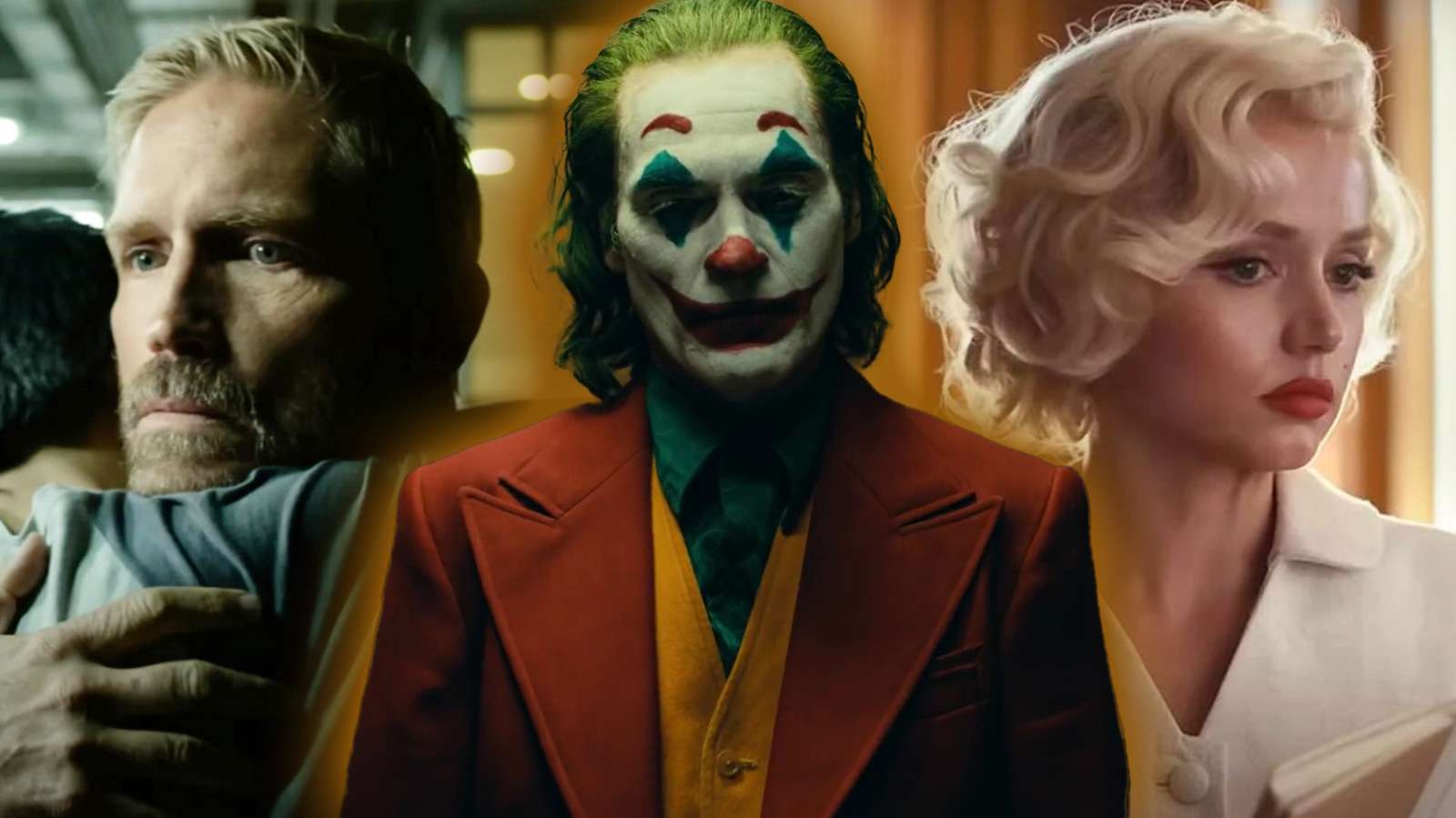
When “Blonde” premiered at the 2022 Venice Film Festival, we had plenty of praise for Ana de Armas’ performance as Marilyn Monroe. Overall, the movie was not just an obvious mess but an unanticipated cultural lightning rod about to strike Netflix accounts across the globe.
Andrew Dominik’s film is, admittedly, filled with truly wild directorial choices. The most incendiary among them by far was Dominik’s decision to dramatize the actor’s psychological struggle with pregnancy and motherhood by having Monroe talk to a fetus growing inside of her. The fetus, a comically globulous CGI thing, pointedly asks Monroe if she’s going to choose to have another abortion. Monroe responds by anxiously reassuring the fetus, verbally, that this time is going to be different.
Putting aside the anti-abortion undertones and the anti-scientific personification of a fetus, the scene encapsulates the entire critical conversation surrounding “Blonde.” Monroe is often depicted in this way — a perpetual child with a shaky grip on reality, whose fragile mental and emotional state was inflicted on her and is further mangled by every person she meets on her road to fame. Some would argue that this choice shamefully robs Monroe of agency as a human being – others would argue that lack of agency is the very experience “Blonde” is attempting to render.
10. The Hunt
You had to try really hard to get upset over the first trailer for “The Hunt.” That didn’t stop the movie from becoming the center of a political uproar.
When Universal Pictures offered the initial teaser back in 2019, it was hard to even tell what the movie was about, beyond that it was a people-hunting horror thriller. Eventually, someone found and spread a plot synopsis that revealed it followed a group of kidnapped conservatives being hunted by rich liberals. Despite the first trailer looking, frankly, unimpressive and unexciting, pearls were being clutched on both sides of the political aisle, though prominent Republicans were overrepresented among the outraged.
A willful misreading of obvious satire allowed them to posit it as propaganda endorsing the murder of conservatives. Even though the liberals are, y’know, obviously the bad guys. Director Craig Zobel was completely blindsided by the backlash, especially when Donald Trump himself whined about the movie on his Twitter (which, ironically, would be suspended two years later after he led a crowd of violent supporters in an attempt to hang his own conservative Vice President Mike Pence).
As far as political satires and thrillers go, “The Hunt” is both better and safer than its first trailer implies. Its release was delayed multiple times in the wake of mass shootings, likely in an effort to avoid both causing genuine harm and exacerbating the controversy by releasing it at a time when Trump and Republican lawmakers would be looking to focus on fictional violence rather than the real violence happening inside schools across America. The marketing team shrewdly embraced the manufactured outrage to sell seeing the film as an act of defiance. Unfortunately, imminent Covid lockdowns made the film both relevant and unwatchable for a time, leading to a dismal $12 million box office haul.
9. Joker
At the risk of mixing superhero metaphors, the whole experience of the 2019 “Joker” movie was a bit of a Rorschach test for comic book movie fans. From its announcement to its release and the subsequent, collective critical head-scratching reaction it received, every aspect of its rollout felt like it had been designed to reveal the most embarrassing things about the people attempting to project meaning onto the film. Ultimately, the movie was more interested in homage than messaging. The anticipation it would incite real violence, however, was something no one expected.
The easiest entry point to the controversy is through a U.S. Army memo disseminated in September 2019 that aimed to warn service members about a “disturbing and very specific chatter in the dark web” who was apparently going to perpetrate an act of violence at a movie theater in Texas. Despite neither the FBI nor the Department of Homeland Security confirming this tip, the narrative quickly and ridiculously exploded. The conversation soon became about whether or not a movie about a comic book villain was going to start a violent uprising in cinemas across America. Theaters in New York were flooded with undercover cops. Joaquin Phoenix – who would go on to win an Oscar for his performance in the film — walked out of an interview after he was bafflingly asked if “Joker” could inspire a mass shooting.
That line of thinking comes from the misconception that the shooter who attacked a premiere of “The Dark Knight Rises” in Aurora, Colorado in 2012 was motivated by the comic book character. Amidst hysteria about imagined violence, the families of the Aurora victims used the conversation to ask Warner Bros. to lobby for gun reform and cease donations to NRA-backed candidates. Despite the controversy — or maybe even because of it — “Joker” grossed over $1 billion worldwide.
8. The Interview
The geopolitical controversy spawned by “The Interview” is one of, if not the most infamous incidents that occurred in Hollywood in the 2010s. It was also quietly one of the most consequential and damaging, especially for the film’s distributor, Sony Pictures.
The story is best remembered as that time Seth Rogen almost started a war with North Korea. Indeed, his buddy action comedy about two American entertainment personalities attempting to assassinate Kim Jong Un (Randall Park) sparked outrage within the DPRK government, clearly articulated by a U.N. ambassador from the country who described it as an “act of war” and an example of state-sanctioned “terrorism” (per The Guardian). Then-President Barack Obama was sympathetic — or at the very least annoyed — and expressed as much to Sony personally. After all, if another country produced a $40 million blockbuster about assassinating him and distributed it internationally, he’d probably have a few things to say.
However, the real damage was ultimately not done by words or weaponry but by a hack into Sony’s computer network. Thousands of company emails leaked that, admittedly, provided a fascinating look at how the company was being run during one of its most difficult eras. It also revealed embarrassing internal communications (including one racially-charged exchange between producers Amy Pascal and Scott Rudin, in which they joked about whether Obama liked “12 Years a Slave,” “Django,” or “Think Like a Man” more) and compromising details about films that subsequently had to be shelved. As for Rogen, he was mostly devastated by the film’s poor reviews.
7. Fahrenheit 9/11
Love him or hate him, Michael Moore courted controversy with more enthusiasm than most documentary filmmakers in the 1990s and 2000s. Whether or not that was a benefit to his work or his message is up for debate. At least in the case of “Fahrenheit 9/11,” that attitude is being used with admirable intent.
In “Fahrenheit 9/11,” Moore argues — with clear, admitted bias and stated intent to convince rather than merely educate — that mainstream media played an active role in manufacturing popular consent for America’s illegal invasion of Iraq. This was a controversial opinion at the time that is more or less understood to be true now, and there were even contemporary reports about the White House’s manipulation of the New York Times. The ongoing debate is not whether the manipulation happened but who in the journalistic chain of command was an active participant and who was merely a pawn.
Moore’s film received widespread backlash from Conservative intellectuals, think tanks, and groups who argued its criticism of the Iraq invasion and its lead-up was anti-American propaganda. “Serious” film critics questioned the ethics of, essentially, making a documentary without the patina of non-biased journalism. Between 100,000 and 400,000 Iraqis were killed as a result of the invasion. That fact should serve as an answer to both critiques.
6. Zero Dark Thirty
In filmmaking circles, “Zero Dark Thirty” has a rather respected reputation. It received widespread critical acclaim when it was released in 2013, and it ultimately went on to compete for Best Picture at the 85th Academy Awards. It lost to Ben Affleck’s “Argo,” a film mired in its own controversy surrounding its borderline propagandistic historical inaccuracies. In some ways, it pales in comparison to the harmful narrative that was identified within “Zero Dark Thirty.”
The central controversy of Kathryn Bigelow’s film revolves around her depiction of torture. In chronicling the military operation to assassinate Osama bin Laden, she packages torture as a dark necessity for intelligence work rather than a shameful, recent chapter in our country’s history (that was effective at eliciting dubious intel at best).
In a 2013 op-ed published on /Film, commentator David Chen noted that “Zero Dark Thirty” could be criticized for implying torture is effective (it isn’t), but he argued it’s ultimately a story about the moral cost of such tactics that righteously questions their use on such grounds, regardless of efficacy. Given the contemporary popularity of the torture-friendly FOX series “24,” however, it’s hard to imagine that argument penetrating the accepted CIA narrative of stoic, moral martyrdom in the service of national security.
5. The Da Vinci Code
Aside from the “Toy Story” films, “The Da Vinci Code” remains the highest-grossing film of Tom Hanks’ prolific career — though you won’t hear him bragging about that. The actor doesn’t have very many nice things to say about the film or its sequels, beyond the fact that they were financially successful not to mention that while filming on his birthday, he got to eat birthday cake in the Louvre.
Hanks’ main complaint with the series is the lack of intellectual integrity and historical accuracy, and the latter of the two sins actually got the movie banned in multiple countries. Dan Brown’s megahit novel (upon which the film is based) plays fast and loose with religious tradition, most damningly claiming that Jesus himself had a child with Mary Magdalene. This plot point sparked outrage among religious groups around the globe, with international protests denouncing the film spreading internationally in the lead up to its release. Even the Vatican got involved.
For their part, the cast and crew of the film dismissed the outrage, with Hanks laughing off the idea that a movie so goofy could impeach his own faith. His co-star Ian McKellen was equally direct when asked if the film should carry a disclaimer that it’s a work of fiction. He replied that the Bible ought to carry the same disclaimer.
4. The Passion of the Christ
Arguably the most divisive, yet simultaneously most popular and critically acclaimed faith-based movie of all time, “The Passion of the Christ” has always been defined by controversy. The 2004 film, directed by Mel Gibson and starring Jim Caviezel as Jesus himself, was released prior to the director’s many public controversies. Even so, his involvement was controversial in and of itself, as Gibson’s father was an outspoken traditionalist Catholic and Holocaust denier. The worst fears of Jewish critics were confirmed when the film was released with obvious antisemitic imagery and overtones, painting Jewish people as the villains of the Christian story.
The legacy of “The Passion of the Christ” is mixed. Neither Gibson nor Caviezel have maintained reputations that make their work worth championing, and the antisemitism throughout remains indefensible despite its status as a cultural touchstone. The graphic violence also continues to polarize viewers – though it has performed quite well on streaming services. Let’s not forget that “The Passion of the Christ” was also a contemporary box office hit, and it was the highest-grossing R-rated movie of all time until “Deadpool and Wolverine” beat its record in 2024.
3. The Sound of Freedom
Speaking of Jim Caviezel’s questionable reputation, the actor has the dishonor of championing two morally questionable films on this list. The second is “Sound of Freedom,” a faith-based film disguised as an action thriller that became a box office smash through some questionable methods. Distributor Angel Studios marketed the film with a pay-it-forward campaign that effectively encouraged patrons to buy large blocks of tickets for Church groups.
More than the financials, however, the film was criticized for its QAnon-cozy depiction of child trafficking, sensationalizing the dubious methods of the group Operation Underground Railroad (their greatest hits as a non-governmental anti-sex-trafficking org include trying to turn vigilante raids into a reality show where child victims are caught on camera while being rescued). Caviezel portrays real OUR founder Tim Ballard, who was fired from the organization in the same year “Sound of Freedom” was released, due to allegations of sexual misconduct. Around the same time, one of the film’s investors was charged with felony child kidnapping, though the charges were ultimately dropped.
“Sound of Freedom” tried to market with a facade of apolitical moral clarity and inevitably wound up courting the same kind of conspiracy theorist responsible for making it. In the process, they created the most politically combative film of the 2020s so far.
2. Cuties
Despite being one of the most controversial movies of the century so far, the actual controversy surrounding “Cuties” is relatively simple and arguably overblown. Originally titled “Mignonnes,” this 2020 French film was made by director Maïmouna Doucouré as a reflection on her own childhood, as well as a critique of the culture of hypersexualization of young girls. It’s a difficult subject to broach, certainly, but critics actually felt Doucouré did a fine job avoiding the line between dramatization and exploitation. “Cuties” itself was, by all accounts, a challenging but worthwhile work.
The majority of people who took offense to “Cuties” did so not based on its story or content (within the context of the work) but with the bewilderingly obtuse marketing from Netflix, which essentially tried to package the film as a provocative, salacious drama. The discrepancy between the domestic marketing approach and the U.S. one is apparent in the posts alone: French posters showcase the young cast innocently laughing in the street, an image of tragic irony that reflects the mood of the film, while U.S. posters that Netflix had to apologize for were close-up images of the girls posed in revealing dancewear.
Republican political figures, including the son of President Donald Trump, pushed for legal action against Netflix over the film and tried to frame it as an example of “the left” defending child abuse. The hypocrisy reads as particularly brazen amidst the growing evidence of Trump’s own alleged ties to Jeffrey Epstein.
1. A Serbian Film
“A Serbian Film” is by far the most infamous movie on this list. It’s also, in many ways, the least interesting, especially as time goes on. It wants to be shocking — and It is shocking. Whether or not that shock is meaningful is barely worth debating, given that its content has alienated most potential viewers from engaging with its message. Director Srdjan Spasojevic set out to make a film simulating the degradation of Serbian authoritarianism and made a horror movie so grotesque that not even diehard fans of the genre could finish it.
“A Serbian Film” is one of the most censored movies in the history of cinema. It was banned in several countries and struggled to meet the criteria to earn even an NC-17 rating in the states. Since its release in 2010, its transgressive story has divided cinephiles. Some feel it’s a misunderstood masterpiece that uses shocking violence, abuse, and sexual content as a means of vividly rendering an experience genuinely alien to those with such emotional distance from it. Others struggle to justify either Spasojevic’s political argument or the film’s lasting impact beyond its base shock value. But there’s no denying the controversy that stirred around it.




Leave a Reply