


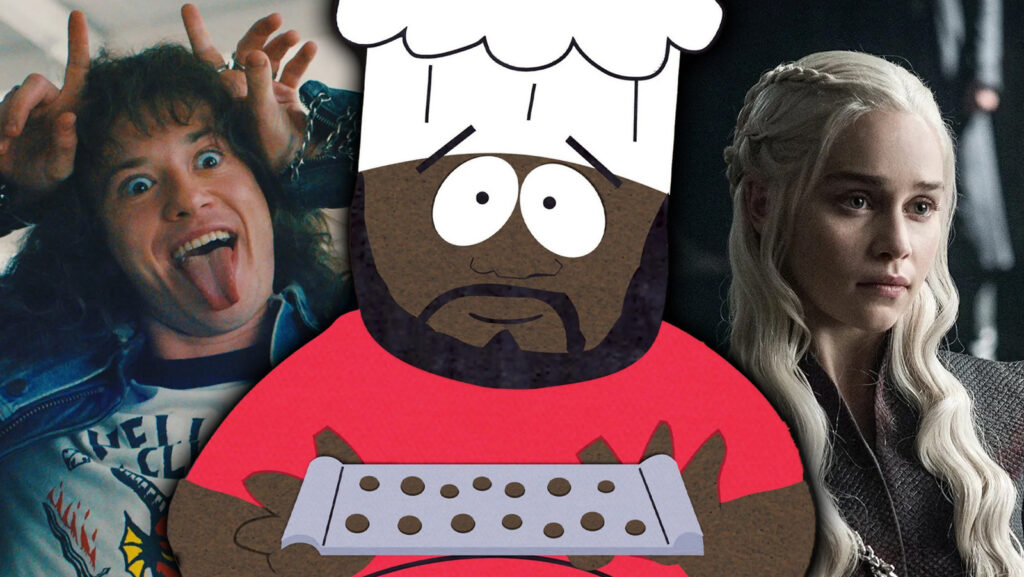

Everybody has at least one TV show where the characters on it feel more like family than … well, their families. Whether it’s a long-running comfort sitcom, or the latest drama everyone’s talking about, television is designed to string audiences along. It does this with storytelling, compelling characters, and most of all, never knowing what twists are in store from episode to episode.
But like any television show, nothing lasts forever. It’s rare actors will agree to play a character until they’re dead, especially the worst main characters in popular sitcoms. Actors want to move on to other projects, or the shows themselves simply must end with not a whimper but a bang that leaves viewers remembering these characters’ fates for the rest of their lives. Sometimes, a show nails it, but other times, it does not.
These 12 beloved characters from television history may have drawn in audiences, but when they were taken away, it alienated fans of the respective series rather than make them appreciate a character’s completed arc. Ultimately, playing the viewer’s emotions is a pretty cheap and unearned way to tell a story, so it’s no surprise these television character deaths upset more than they satisfied. Then again, for certain TV writers, upsetting fans is something of a priority.
Logan Echolls (Veronica Mars)
Fans of “Veronica Mars” have been through a lot. The UPN/CW series aired for three seasons between 2004-2007 and starred Kristen Bell as the show’s namesake, who becomes a high schooler-by-day, detective-by-night, following the death of her best friend, Lilly (Amanda Seyfried). However, the relationship that fans really latched onto was Veronica’s will-they-won’t-they romance with Logan Echolls (Jason Dohring), a wealthy classmate of Veronica and Lilly’s ex-boyfriend, whom she reluctantly begins seeing during her investigation into Lilly’s death.
After its cancellation, fans were worried they’d never get to see Veronica and Logan become endgame, at least until Hulu gave us another season of “Veronica Mars” set 12 years after the events of season 3. Veronica and Logan’s rocky relationship remains a major part of the series to the very end, when they finally get married … only for Logan to be killed by a surprise car bomb moments later.
Unsurprisingly, fans were heartbroken that a character like Logan could be killed off in such a sudden, cruel manner. It’s especially egregious knowing that there were no plans to continue “Veronica Mars” beyond its fourth season, despite Bell herself defending Logan’s death as the right thing for Veronica instead of her getting married. Either way, it would’ve been nice for Veronica to have some agency in that decision and not have her new husband ripped from her so bluntly.
Lexa (The 100)
Sci-fi shows are known for having diehard fanbases, and “The 100” is no exception. The CW series follows a colony of survivors of a nuclear disaster on Earth returning to the planet after a century, only to discover the post-apocalyptic struggle between the remaining clans and barbaric tribes. Despite having a large ensemble, fans really connected with Lexa, a Grounder commander with a recurring role in the second and third seasons of the show, as played by Alycia Debnam-Carey.
Lexa particularly endeared herself to viewers when she began a relationship with the series’ protagonist, Clarke (Eliza Taylor), only for this same-sex couple to receive backlash from other characters. Titus, Lexa’s spiritual advisor, particularly disapproved of the relationship and tried to kill Clarke, only to accidentally shoot and kill Lexa instead.
This episode of “The 100” garnered quite a lot of controversy, given that it resorts to the tired, problematic trope of queer characters being killed off immediately following their “coming out.” As if that wasn’t bad enough, fans were taunted when Debnam-Carey returned as Lexa, but only because her consciousness remained alive via an artificial intelligence hologram.
Carl Grimes (The Walking Dead)
By the time Carl Grimes met his fate on “The Walking Dead,” the show had already drove away most of its core fanbase. Many fans felt that “The Walking Dead” should have ended with season 5, back when it was at the height of its popularity and still prominently featured the likes of Andrew Lincoln’s Rick Grimes and Danai Gurira’s Michonne. And yet, the death of characters like Steven Yeun’s Glenn was a turning point in which audiences started tapering off.
For the most part, “The Walking Dead” did have a graphic novel to adapt, but after a while, as it began straying from its source material, decisions like killing Rick’s son Carl (Chandler Riggs) seemed to be made purely for shock value. Riggs had essentially grown up in front of audiences’ eyes since “The Walking Dead” season 1, so it was all the more frustrating when he died of a Walker bite in the season 8 mid-season premiere, as opposed to becoming the strong leader he is in the comics.
Though character deaths in “The Walking Dead” had resulted in backlash prior to Carl, this was a new low for the series and kickstarted a petition to have Scott Gimple, the showrunner at the time, fired for abandoning the character’s more interesting comic book arc.
Ruth (Ozark)
“Ozark” made a household name out of Julia Garner, who began the Netflix series as a mostly unknown recurring TV actor. Her role as Ruth over four seasons of “Ozark” won her three Emmys for Outstanding Supporting Actress in a Drama Series, and they were much deserved. Ruth was easily the most fascinating character in the show. The reluctant business partner of Jason Bateman’s Marty Byrde, she goes from petty criminal to becoming a key figure in the criminal underworld.
As one of the best “Ozark” characters, Ruth was, for many fans, the most sympathetic figure in the series. She’s incredibly intelligent, has a rebellious streak, and possesses quite the foul mouth, which easily endeared her to fans compared to its more introverted lead. However, the series’ final episode saw Ruth’s story end far more anti-climactically than she deserved.
After carrying out a vengeance-fueled hit on Javi (Alfonso Herrera), the hotheaded Mexican cartel prince, Ruth is unceremoniously killed in her own home by Javi’s mother Camila (Verónica Falcón) in the final moments of the “Ozark” season 4 finale. The show’s creatives felt that Ruth’s death was a more fitting fate than if she had gotten away with everything, but fans weren’t so keen on how it all played out.
Eddie Munson (Stranger Things)
Eddie Munson (Joseph Quinn) may’ve had a tough go of it in “Stranger Things” season 4, but at least his absence from the series afterwards gave Quinn time to star in blockbusters like “A Quiet Place: Day One” and “The Fantastic Four: First Steps.” A new addition in “Stranger Things” season 4, Eddie is a misfit D&D player and mentor figure to Dustin (Gaten Matarazzo) who’s framed for the murder of Chrissy (Grace Van Dien), a cheerleader killed by the malevolent Vecna (Jamie Campbell Bower).
At a certain point, it becomes kind of obvious that the only fate left for Eddie is death. Save for Dustin and his friends, everyone else believes he’s a Satanic worshipper and murderer, forcing him into hiding. Not only that, but by this point, “Stranger Things” had developed a habit of introducing fun new characters each season only to quickly kill them off. (See also: Sean Astin’s lovable Bob Newby and Shannon Purser’s Barb.)
Sure enough, Eddie ends up sacrificing himself to some Demo-bats in order to get them off the tail of the show’s plot-armored characters at the end of season 4. As “Stranger Things” proved over and over, beloved supporting characters like Eddie never stood a chance when no one else on the series could die.
Tracy McConnell (How I Met Your Mother)
Having already aired for eight seasons, it seemed like it was going to be impossible for “How I Met Your Mother” to satisfy fans by finally introducing the titular character, aka the unnamed mother of Ted Mosby’s (Josh Radnor) future kids. Against all odds, the series pulled off the magic trick with the casting of Cristin Milioti, whose personification of Tracy McConnell and love story with the long-romantically-suffering Ted could make any audience member believe in soulmates.
Nevertheless, many fans consider season 9’s series finale to be the worst episode of “How I Met Your Mother,” given the twist ending that, in the future where Ted is telling his kids this story, Tracy has died of an unknown illness. In all fairness, this twist had been set up as far back as season 8 and was once again foreshadowed during Ted and Tracy’s heartbreaking dinner scene a few episodes prior to the finale.
However, Tracy dying isn’t exactly what upset fans, all things considered. After all, it gave some proper context as to why Ted would be telling his children how he met their mother. Rather, audiences were mostly upset because it was clearly just a cheap way for the show’s writers to force Ted back together with Robin (Cobie Smulders) in the series finale after Robin spent the entire ninth season preparing to marry Barney (Neil Patrick Harris), a marriage that, anti-climactically, didn’t last.
Chef (South Park)
Most of the time, deaths on “South Park” don’t really matter, as evidenced by the 100+ times that Kenny has been killed in various episodes of the adult animated series over the years. However, one death was not only permanent, it was also caused by behind-the-scenes drama related to one of the most controversial “South Park” episodes of all time: season 9’s “Trapped in the Closet,” which infamously lampooned the Church of Scientology.
Though Chef (Isaac Hayes) was an integral character in the early seasons of “South Park,” the character was killed off in the season 10 premiere, “The Return of Chef,” when Hayes retired from the series, supposedly in protest of its treatment of the church (of which he was a member). Unused clips of Hayes’ voice were pieced together for the episode, which parodied Hayes’ involvement in Scientology by having Chef be brainwashed by a cult of pedophilic explorers.
While this act of defiance is par for the course with “South Park,” the manner in which Chef died in the episode was particularly cruel, especially for a character who was beloved by fans. Torn between returning to South Park or the Super Adventure Club, Chef is struck by lightning on a rope bridge, causing him to fall to his death and defecate in his pants. Since then, it’s come to light that Hayes may’ve not made the decision to retire himself, seeing as he was recovering from a stroke at the time — a revelation that makes Chef’s death all the more upsetting.
Natalie (Yellowjackets)
“Yellowjackets” is an interesting show to dissect in terms of who does and doesn’t die. The Showtime drama takes place in two timelines: One is set in 1996, where a high school girls soccer team gets stranded in the Canadian wilderness after a plane crash, and the other is set 25 years later, as those who survived continue to deal with the aftermath of this traumatic event. As a result, several characters die brutal deaths, including Ella Purnell’s star player Jackie, who freezes to death in the ’90s timeline at the end of the first season.
However, season 2 also featured another major character death — namely, that of adult Natalie, as played by Juliette Lewis. Her younger self, played by Sophie Thatcher, proves to be more logical than her peers when it comes to surviving in the ’90s timeline. Nevertheless, adult Natalie dies at the end of season 2 when, in a bizarre twist, she’s accidentally injected with fentanyl.
While many felt “Yellowjackets” season 2 was angrier, more twisted, and as good as season 1, adult Natalie’s death still came as a shock. Ultimately, it may have been the result of behind-the-scenes drama involving Lewis’ creative differences with the show’s writers regarding Natalie’s storyline. At the very least, fans can take comfort in knowing Thatcher’s Natalie will remain part of “Yellowjackets” to the very end.
Talos (Secret Invasion)
Superhero projects are often criticized for their inability to kill off integral characters … which is not to say fans like it when they do, either. Such was the case with “Secret Invasion,” the underwhelming Disney+ series that followed Samuel L. Jackson’s Nick Fury as he investigated a covert invasion by the shape-shifting Skrulls. By the end of the first episode, the show has already killed off Cobie Smulders’ Maria Hill, an already under-utilized Marvel Cinematic Universe character whose death was as unceremonious as it gets.
The wild part? Hill’s death wasn’t even the most frustrating one on “Secret Invasion.” That honor went to Ben Mendelsohn’s Talos, a Skrull leader and ally to Fury who was introduced in 2019’s “Captain Marvel.” Despite being the only significant Skrull character prior to “Secret Invasion,” Talos died at the hands of Kingsley Ben-Adir’s Gravik, a Skrull rebel who eventually became the villainous Super-Skrull.
Not only was Talos’ death a waste of a good character (and a great actor in Mendelsohn), but it also barely even served a purpose in the show. Indeed, Talos died sacrificing himself to protect Dermot Mulroney’s President Ritson, who went on to declare war against the Skrulls anyway, making his sacrifice all for nothing.
Villanelle (Killing Eve)
In the pantheon of great shows with terrible endings, “Killing Eve” is up there. The BBC series drew in an audience with its fascinating character study of Eve (Sandra Oh), a workaholic MI6 agent who becomes obsessed with catching the twisted-albeit-charismatic assassin Villanelle (Jodie Comer) — whose own obsession with Eve turns their cat-and-mouse game into a romantically-charged drama. Obviously, a character as horrible as Villanelle couldn’t have a happy ending, but the way the show’s writers did her dirty betrayed everything fans loved about the series.
The series finale, “Hello, Losers,” sees Eve and Villanelle not only finally get together as a couple but work together to take down the Twelve, a secret society who had initially hired Villanelle to do their killings. Just as the two are about to get away, Villanelle is disappointingly killed by a sniper, falling into the River Thames where Eve dives in after her, mourning her. Following this moment, the series ends, full stop, no epilogue.
It’s hard to believe that “Killing Eve” almost had a darker ending, but that might have been better than the anti-climactic (albeit, totally deserved) justice served to Villanelle. Yes, she’s horrible, but fans loved her character so much and wanted to see her change for the better, if that was at all possible. Seeing her die in a very unremarkable way right after consummating her slow-burn romance with Eve was not the right call.
The Fifteenth Doctor (Doctor Who)
Yes, we know, the Doctor doesn’t ever technically “die,” he only regenerates into a new form. But, given how “Doctor Who” has treated these regenerations in the past, they’re very much proper endings for specific Doctors’ character arcs. That being said, the Doctor’s regenerations used to feel like a much bigger deal than they do now, as evidenced by the responses to David Tennant and Matt Smith ending their runs as the 10th and 11th Doctors, respectively.
More recently, Ncuti Gatwa played the Fifteenth Doctor for two seasons before the character abruptly regenerated once more. Compared to Tennant, who played the Doctor for five years over nearly 47 episodes (not including his later guest-starring roles), Gatwa’s time as the Doctor lasted only 16 episodes total. The time-traveler then regenerated into a new form played by Billie Piper, who previously portrayed the Doctor’s companion Rose Tyler.
Now that “Doctor Who” and Disney’s partnership is over, and the future of the series seems a bit up in the air, the fact that Gatwa got shortchanged seems rather unfortunate. It’s all the more frustrating when you remember that he’s also the first Black actor AND openly-queer actor to play the Doctor.
Daenerys Targaryen (Game of Thrones)
Most of the deaths on “Game of Thrones” feel unfair, random, and downright cruel, but none garnered as much discourse and hate from fans as the death of Daenerys Targaryen in the series finale. It’s no secret at this point that “Game of Thrones,” particularly after the show’s writers blew past George R. R. Martin’s source material, suffered a severe drop in quality in its later seasons. By the time season 8 was airing, that drop was very palpable, as Emilia Clarke’s Daenerys, once a beacon of liberation and empowerment, went full “Mad Queen” and committed genocide against King’s Landing.
After Dany basically destroys the city, the show draws unsubtle comparisons between her and real world fascist leaders by having Dany announce her rule over a snowy, bleak Westeros. However, she doesn’t reign for long, as she’s almost immediately assassinated by Jon Snow (Kit Harington), and her body is taken away by her remaining dragon, Drogon, who flies off to who knows where.
As far as main character endings in “Game of Thrones” go, Daenerys’ is completely disrespectful to her journey across the rest of the series. She began the story as an enslaved young woman, only to steadily rise up and become one of the most integral power players in the War for the Iron Throne through her own strength. To throw all of that away in the span of a few episodes, only to have her be murdered by her new paramour before she even gets to sit on the throne? What a waste.