


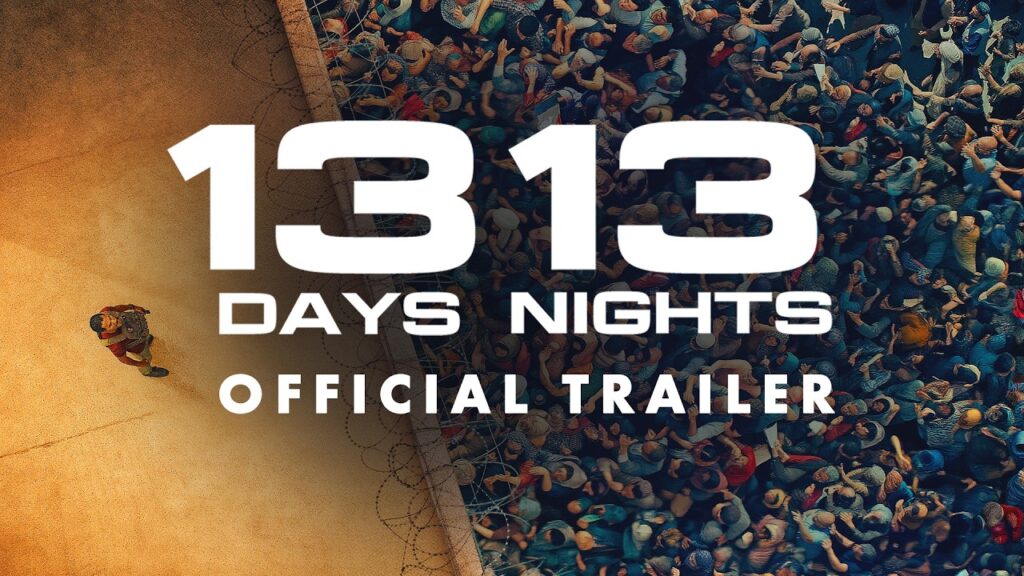
500 lives, one commander, 13 days to get them out alive
August 15, 2021. U.S. troops withdraw. The Taliban seize Kabul. Commander Mohamed Bida and a skeleton security team are left holding the last open Western mission in the city — and 500 people who need to reach the airport before everything collapses.
Why It Is Trending: The Kabul Evacuation Finally Gets Its French Thriller
The chaotic Western withdrawal from Afghanistan is one of the defining geopolitical failures of the 2020s — and 13 Days, 13 Nights arrives as the most ambitious cinematic account of its human cost. The film premiered out of competition at Cannes 2025, just days after the six-part miniseries Kabul — telling the same story from an Afghan woman’s perspective — finished airing on France 2, signalling a cultural moment of collective reckoning with August 2021. Its US release in March 2026 via Samuel Goldwyn Films extends the conversation into new markets. Bourboulon discovered Bida’s memoir while editing The Three Musketeers: Milady — and his shift from 17th-century costume drama to contemporary crisis thriller gives the film added industry significance.
Elements Driving the Trend: Bourboulon excels in controlling pace — playing with the pedals of suspense and plot twists with undeniable efficacy, finding new shooting angles to tell a story where characters are endlessly forced to adapt in a world without reference points. The film transitions from siege drama to road movie as the convoy fights toward the airport — a structural shift that sustains momentum across its nearly two-hour runtime. It successfully recreates real-life events in a very credible way, transforming into a highly effective American-style action film while providing Roschdy Zem with an exceptional role. A €30 million budget gives it the visual scale to match its subject.
Virality: The Cannes premiere generated immediate international coverage, with Roschdy Zem’s performance cited across outlets as the film’s standout asset. Audiences processing the political legacy of the Afghanistan withdrawal found the ground-level perspective uniquely compelling.
Critics Reception: Cineuropa called it an enthralling and hard-hitting thriller inspired by real events, remixed in an American style. Screen Daily acknowledged the grit and documentary truth behind the nationalistic framing, calling it an old-fashioned Franco-Hollywood production that works when you stop interrogating its clichés.
Awards and Recognitions: 1 nomination total. World premiere out of competition, Cannes Film Festival 2025. US distribution acquired by Samuel Goldwyn Films, theatrical and streaming release March 27, 2026.
13 Days, 13 Nights lands at a moment when the geopolitical consequences of the Afghanistan withdrawal — for NATO credibility, refugee policy, and Western self-image — remain live and unresolved. The film gives a mainstream audience a human entry point into a political catastrophe that official accounts have largely avoided. Its €30 million budget generated $3.9 million worldwide — a box office disappointment that reflects the difficulty of selling recent political trauma as popular entertainment, not a failure of the film’s execution. The US release gives it a second chance at the audience it was always built for.
What Movie Trend Is Followed: Recent History Docudrama Goes Action-Thriller
A growing wave of films is transforming recent geopolitical events — within years, not decades — into genre cinema, collapsing the gap between journalism, memoir, and mainstream entertainment. 13 Days, 13 Nights follows the template of Argo, Zero Dark Thirty, and Dunkirk: real events, real stakes, genre mechanics deployed in service of historical record. The script finesses the real events to emphasise heroism and procedural drama — a choice that generates both the film’s commercial appeal and its critical tension. The evacuation thriller format — countdown, impossible logistics, human cost at every decision point — is one of genre cinema’s most reliable engines.
Trend Drivers: Contemporary Crisis as Blockbuster Subject The success of recent history thrillers — from Operation Finale to The Mauritanian — has proven that recent political events can sustain mainstream genre treatment without the distance of historical perspective. Bourboulon applies the meticulous production standards of his period films — Eiffel, The Three Musketeers — to a 2021 crisis, bringing costume-drama craft to contemporary chaos. The memoir as source material — Bida’s firsthand account — gives the film an insider authority that invented thrillers cannot claim. Pathé’s backing and Cannes placement position it as prestige popular cinema rather than exploitation.
What Is Influencing Trend: The Afghanistan withdrawal remains a politically charged wound across NATO countries — France, the UK, the US — generating an audience that wants narrative accountability the news cycle never provided. Streaming platforms are aggressively acquiring recent-history thrillers that feel urgent rather than archival. The formula of the “unsung hero” extracted from recent geopolitical failure is proving commercially reliable across national cinemas.
Macro Trends Influencing: The global appetite for true-story crisis drama has accelerated since the pandemic — audiences gravitate toward non-fiction-rooted genre content that processes collective trauma through individual survival. European prestige cinema is increasingly adopting American blockbuster grammar while retaining national specificity. The Cannes out-of-competition slot is becoming a strategic launch platform for commercially ambitious French films seeking international distribution.
Consumer Trends Influencing: Audiences aged 30–55 are the strongest demographic for recent-history docudrama — informed enough to know the events, engaged enough to want the human story behind them. The casting of Roschdy Zem — one of France’s most respected leading men — signals a film built for adult mainstream audiences rather than genre specialists. True-story credentials function as a marketing asset that bypasses traditional genre resistance.
Audience Analysis: Crisis Drama Fans, Afghanistan-Aware Viewers, and the French Mainstream The core audience is 30–60 — adults who followed the August 2021 news cycle and want the ground-level account official narratives omitted. User reviews consistently praise its ability to make audiences feel the dust, the heat, and the fear of those final days — an immersive quality that separates it from more detached political drama. The multilingual cast — French, Dari, English — reflects the film’s commitment to representing the actual complexity of the operation. International audiences drawn by the Afghanistan story will find the French perspective both specific and broadly accessible.
The film works because the story is true and the stakes were real — and no amount of cinematic cliché can entirely undo that. The trend it represents is accelerating: as recent geopolitical crises accumulate faster than cultural institutions can process them, genre cinema is filling the gap. 13 Days, 13 Nights is an imperfect but serious entry in that expanding category.
Final Verdict: 13 Days, 13 Nights Is a Gripping, Flawed, and Necessary Thriller
Martin Bourboulon delivers a film that is consistently entertaining and intermittently powerful — tightly paced, technically accomplished, and anchored by one of Roschdy Zem’s finest performances. Its clichés are real and its nationalistic blind spots are legitimate criticisms. The best approach is to know as little as possible about the story going in, accept the formula, and let the vein of documentary truth that pulses beneath carry you through. What the film lacks in political nuance it compensates for in human urgency — and that urgency, rooted in a real mission that saved 2,630 lives, is ultimately impossible to dismiss.
Audience Relevance: For Anyone Who Watched Kabul Fall and Needed to Understand What Happened on the Ground The August 2021 withdrawal generated images that no one who watched could forget — crowds at airport gates, people falling from planes, a city collapsing in real time. This film fills in what the cameras missed: the decisions made inside the embassy, the negotiations at Taliban checkpoints, the arithmetic of who gets on the bus.
That ground-level specificity is the film’s most valuable quality — and no political critique of its framing can take it away.
What Is the Message: Ordinary People Make Extraordinary Decisions When There Is No Other Choice Commander Bida did not choose to be the last French officer standing in Kabul — he was simply the one who was there when the city fell. The film’s argument is that heroism in crisis is less about character than circumstance.
The moral complexity of who gets saved — and who doesn’t — is the film’s most honest and least resolved dimension.
Relevance to Audience: A Siege Film That Becomes a Road Movie That Becomes a Reckoning Smoothly transitioning from siege to road movie as the convoy heads toward the airport, the film sustains momentum through structural variety — each phase presents new obstacles, new negotiations, new human costs. The 112-minute runtime never feels padded.
For viewers unfamiliar with the specific details of the French evacuation, the procedural information is delivered efficiently without drowning the emotion.
Social Relevance: The Afghanistan Withdrawal’s Human Cost, Finally on Screen The political debate around the withdrawal has been conducted almost entirely at the level of strategy and blame. 13 Days, 13 Nights insists on the human scale — 500 people waiting in an embassy courtyard, not knowing if they will make it to the airport before the Taliban shut the road.
That shift of perspective — from geopolitical to personal — is the film’s most important social contribution, regardless of its cinematic imperfections.
Performance: Zem Carries the Film With Controlled Authority Roschdy Zem delivers a performance of exceptional physical and emotional precision — calm under impossible pressure, human in moments of doubt, never resorting to genre heroics. Lyna Khoudri brings sharp intelligence to Eva, and Sidse Babett Knudsen provides moral clarity as the journalist who refuses to leave anyone behind.
The three-lead structure distributes the film’s emotional weight effectively, preventing the story from collapsing into a single-hero narrative.
Legacy: The French Blockbuster That Told the Kabul Story First 13 Days, 13 Nights will be remembered as the first major cinematic account of the Western withdrawal from Afghanistan — and specifically of the French role within it. Its Cannes premiere cemented its cultural standing; its US release extends its historical relevance.
The film’s legacy will grow as the political consequences of 2021 continue to unfold. It documents a moment that history has not finished judging.
Success: Cannes Premiere, Box Office Shortfall, US Second Wind World premiere out of competition at Cannes 2025. French theatrical release June 27, 2025 via Pathé — 468,533 admissions, $3.9 million worldwide against a €30 million budget. US theatrical and streaming release March 27, 2026 via Samuel Goldwyn Films. IMDb user rating of 6.7 from 2,000 users. 12 critic reviews with generally positive consensus.
The French box office underperformance reflects the commercial difficulty of recent political trauma as mainstream entertainment. The US release is the film’s real market test.
Insights 13 Days, 13 Nights is the film that gave the Kabul evacuation a human face — and no amount of political criticism of its framing changes the fact that it was the first to try. Industry: The recent-history thriller is one of French cinema’s most commercially viable export formats — and 13 Days, 13 Nights, despite its box office shortfall, demonstrates the template: Cannes placement, Pathé backing, international cast, and US distribution acquisition. Bourboulon’s pivot from period epic to contemporary crisis drama signals a director expanding his range in a commercially intelligent direction. The Samuel Goldwyn acquisition gives the film a second commercial life in the market that matters most. Audience: The Afghanistan withdrawal audience is large, globally distributed, and hungry for narrative accountability that the news cycle never provided. 13 Days, 13 Nights offers that in genre form — imperfect, biased toward French heroism, but grounded in a real mission that saved real lives. That truth is the film’s most powerful marketing asset and its most durable audience hook. Social: The Kabul evacuation raised questions about Western responsibility, refugee obligation, and the ethics of withdrawal that remain unresolved. Cinema is processing what politics refuses to — and 13 Days, 13 Nights, alongside the France 2 miniseries and the Canal+ documentary, represents a collective French cultural reckoning with a moment the country did not fully understand in real time. That reckoning will continue, and this film will be part of it. Cultural: French popular cinema is increasingly adopting American genre grammar — the procedural thriller, the action set piece, the countdown structure — while retaining national subject matter and star systems. Bourboulon is the clearest example of this tendency, and 13 Days, 13 Nights is his most politically serious attempt to make it work. The film’s critical tension — between genre satisfaction and political honesty — is itself a cultural statement about what French mainstream cinema is willing and unwilling to say.
13 Days, 13 Nights is not the definitive film about Kabul’s fall — but it is an urgent, gripping, and humanly necessary first attempt. For the 2,630 people who made it to the airport, it is the closest thing to a record that popular cinema has yet produced.
Summary of 13 Days, 13 Nights: One Mission, 500 Lives, No Margin for Error
-
Movie themes: Crisis leadership, moral obligation, refugee survival, and the human cost of geopolitical failure. A procedural thriller about the arithmetic of who gets saved when there is not enough room for everyone.
-
Movie director: Genre craftsman meets contemporary urgency. Martin Bourboulon — fresh from The Three Musketeers diptych — brings period-film production discipline to a 2021 crisis, delivering tight pacing, strong ensemble direction, and an American-style thriller rooted in French political reality.
-
Top casting: Zem defines the film. Roschdy Zem is exceptional as Commander Bida — restrained, authoritative, and deeply human. Lyna Khoudri and Sidse Babett Knudsen provide sharp support across the film’s emotional and moral spectrum.
-
Awards and recognition: 1 nomination total. World premiere out of competition, Cannes Film Festival 2025. US release March 27, 2026 via Samuel Goldwyn Films.
-
Why to watch: The ground-level account of the Kabul evacuation that news footage couldn’t provide — gripping, emotionally honest, and anchored by one of Roschdy Zem’s finest performances.
-
Key success factors: True-story authority plus genre craft plus a lead performance of exceptional precision — 13 Days, 13 Nights earns its tension because the events it depicts actually happened and the stakes were real.
-
Where to watch: Theatrical and streaming release March 27, 2026 (United States) via Samuel Goldwyn Films. Previously released in France June 27, 2025 via Pathé.