


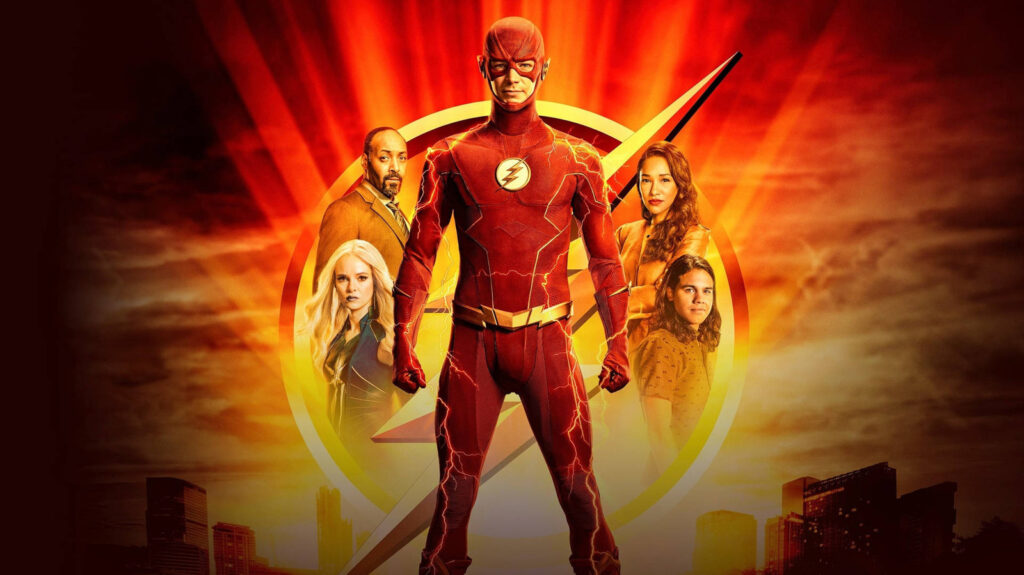

It’s genuinely tragic how fast “The Flash” went from the best superhero show on TV to a total disaster. By the time it ran the Arrowverse into the ground with a stumbling series finale full of unsatisfying conclusions to a variety of storylines (punctuated by a final showdown that sees the series’ beloved rogues gallery go out like a bunch of punks), former fans had already begun processing its legacy as a once-great show that had slowed to a crawl long ago.
It’s easy to forget that throughout the entire series (though especially in its earlier seasons) “The Flash” spent most of its run telling some of the best small-screen superhero stories of the 2010s. If you need an excuse to rewatch it on streaming, we’ve taken a sprint down memory lane to bring our favorite moments from the series’ past back to the future.
From climactic showdowns and terrifying villain introductions to crossovers and musical numbers, these are our 15 favorite episodes of “The Flash.”
Armageddon — Part 4 (Season 8, Episode 4)
For all the faults of the later seasons of “The Flash,” the series could still be pretty fun when it embraced its innate pulpy sci-fi energy. “Armageddon — Part 4” is a prime example of this.
Dipping back into the old “Elseworld” well to great effect, it sees Barry emerge in a future where Eobard Thawne (Tom Cavanagh) had manipulated the timeline to effectively steal Barry’s life. While he’s the hero of Central City, celebrated by Team Flash and preparing to marry Iris West (Candice Patton), Barry discovers that he is now the reviled Reverse Flash. With no friends left to turn to and only a handful of hours before Thawne’s master plan erases him from history, Barry is forced to team up with bygone Arrowverse foe Damien Darhk (Neal McDonough).
Even retreading a few emotional beats here and there, “Armageddon — Part 4” is thrilling enough to be worthy of a spot on this list. Tom Cavanagh and guest star Neal McDonough deserve the bulk of the praise, proving that the Arrowverse would be nothing without its most cherished villains.
Elseworlds (Season 5, Episode 9)
Though not as flashy (no pun intended) as other Arrowverse crossovers in terms of narrative scope or cast size, “Elseworlds” arguably benefits from the focus. It kicks off with the eponymous season 5 episode of “The Flash,” which itself begins with a proper introduction to the Monitor Mar Novu (LaMonica Garrett). After he gifts the Book of Destiny to an unstable psychiatrist (Jeremy Davies’ John Deegan), Oliver Queen (Stephen Amell) and Barry Allen wake up living each others’ lives.
The episode gets a lot of mileage out of the two heroes having to teach the other how to use their new powers. While Oliver struggles to get the hang of the Flash’s super speed and Barry learns the full extent of what the Arrow learned on Lian Yu, they retreat to “Supergirl’s” Earth-38. Then-newcomer Tyler Hoechlin nearly steals the show by bringing the Man of Steel into the fold, but a new spin on the reliable, unbeatable dynamic between Oliver and Barry elevates the entire episode.
Invasion! (Season 3, Episode 8)
While the Arrowverse had already produced two crossover events by the 3rd season of “The Flash,” “Invasion!” was the first to showcase the potential of this expansive shared universe. It begins in earnest in “The Flash” season 3, episode 8, with an alien spaceship belonging to the Dominators landing in Central City. Though Lyla Michaels (Audrey Marie Anderson) and A.R.G.U.S. order them to stand down, Barry and Team Flash take it upon themselves to assemble their super friends.
The episode is full of great character moments, but what earns it a place on this list is the surprising amount of space afforded to the aftermath of the Flashpoint. After Professor Stein (Victor Garber) presents Barry and Oliver Queen (Stephen Amell) with a recording revealing Barry’s time-traveling transgression, the Scarlet Speedster is finally forced to come clean to the entire Arrowverse. It’s a narrative anchor that makes “Invasion!” a great standalone episode as well as a solid crossover piece, ending perfectly with a climactic battle between Ollie, Barry, and the rest of the ensemble.
The Speed of Thought (Season 7, Episode 2)
“The Speed of Thought” is a deceptively dark episode, exploring what Barry would be like if he were robbed of his humanity. The artificial speed force has granted him the novel gift of “speed thinking,” allowing him to use, refine, and expand his already impressive intellect at a pace that essentially amounts to precognition. The cost, however, is that Barry spends the episode thinking faster than his emotions, leading him to put his loved ones in jeopardy if it serves his cold tactical calculus.
“The Speed of Thought” also works well as an exploration of grief. Barry’s embrace of this optimized, emotionless state in the aftermath of the death of one of his closest friends mirrors how some people shut down emotionally to avoid processing a painful loss. His speed thinking is a subtle allegory for coping mechanisms that appear beneficial at first but are ultimately destructive.
Enter Zoom (Season 2, Episode 6)
Heading back to the golden era of “The Flash,” our next entry is “Enter Zoom” — or, “In Which Hunter Zolomon Beats the Brakes Off of Barry Allen.”
Whether or not the writers were conscious of how close the Zoom storyline was to the Reverse Flash storyline from season 1, they clearly understood that they’d have to go to great lengths to make him a convincingly superior threat to Eobard Thawne. Much of this tense, tightly written episode revolves around Team Flash trying to draw Zoom (Teddy Sears) to their Earth so that they can drain his speed. They ultimately settle on using Linda Park — a doppelganger for Zoom’s henchman Doctor Light (Malese Jow) — as bait.
Of course, Zoom ultimately sees through their ruse and turns Linda into bait of his own. When Barry arrives to save her, he’s defeated so decisively, so savagely, that the rest of Team Flash can’t help but question if Zoom is even human. Yes, he’s still just another speedster with a foot inside S.T.A.R. Labs, but “Enter Zoom” does a valiant job building him up as a threat more terrifying than anything fans have seen by that point in the series.
Crisis on Infinite Earths (Season 6, Episode 9)
Unlike the other crossover episodes included on this list, “The Flash’s” installment of “Crisis on Infinite Earths” is a bit hard to process on its own. The episode picks up and interweaves several plot threads, including a few from previous episodes — it would feel convoluted if each of them weren’t so momentous.
To unite the Paragons of the Multiverse, Ralph Dibney (Hartley Sawyer), Iris, and Ray Palmer (Brandon Routh) must recruit the scientist Ryan Choi (Osric Chau); Supergirl (Melissa Benoist) and Batwoman (Ruby Rose) do some classic World’s Finest bickering over how to handle the captive Lex Luthor (Jon Cryer). Plus, Diggle (David Ramsey) and Mia Queen (Katherine McNamara) team up with John Constantine (Matt Ryan) and the devil himself (“Lucifer” star Tom Ellis) to rescue Oliver from purgatory — only for Oliver to choose to become the Spectre instead.
If all that isn’t enough excitement for one hour of television, “The Flash” spends the majority of the episode focusing on Barry finally coming face-to-face with the fate that has chased him since the 1st season. With the “Crisis” fully underway, he knows the Flash will have to sacrifice himself to save the universe, but the prophetic news clipping never specified which Flash (enter Flash-90, played by John Wesley Shipp). The episode is one breathtakingly high-stakes sequence after another, each plotline carrying massive ramifications for the Arrowverse while setting up the final episodes of the “Crisis” event. It’s pure blockbuster TV spectacle in the best possible way.
Duet (Season 3, Episode 17)
Presumably, the writing process for “Duet” started with someone taking a glance at the Arrowverse roster and realizing they had far too many Broadway legends on the payroll to deprive fans of a musical episode. But “Duet” isn’t exceptional simply for its vocal performances.
Musical episodes are a beloved and acceptably schlocky television trope that normally use the gimmick in an attempt to distract the audience from the fact that the show probably ran out of steam a season or two ago. Here, however, “The Flash” actually uses this bizarre trial (orchestrated by a perfectly-cast Darren Criss as the Music Meister) as a pivotal note in Barry and Iris’ development as a couple. In a season that is otherwise a fairly depressing meditation on fear, guilt, and loss, “Duet” is refreshingly hopeful and wholesome.
The Last Temptation of Barry Allen (Season 6, Episode 7)
Leading up to the “Crisis on Infinite Earths” crossover event, “The Flash” paired its titular character with a big-bad that forced him to confront his will to live. Ramsey Rosso (aka Bloodwork, played by Sendhil Ramamurthy) isn’t a fan favorite by any means — in order to prevent his death from a rare disease, Ramsey had embraced a grotesque power that allowed him to prolong his life by terrorizing people. The connection between him and Barry isn’t obvious at first, but it comes into focus for “The Last Temptation of Barry Allen.”
The episode takes place largely in a dream state, where Barry is able to commune with the Speed Force (manifested in the form of his late mother) and Ramsey. The latter offers him the chance to survive his “Crisis” fate at the cost of his soul. This moral dilemma interrogates the core of Barry’s character and gives Grant Gustin a chance to showcase the sort of acting he does best. It’s hard to imagine a better way for “The Flash” to prepare its title character for a moment the entire series had been leading to.
The Man in the Yellow Suit (Season 1, Episode 9)
As great as “Enter Zoom” might be, it is still yet another example of season 2 being a slightly weaker redux of season 1. Its counterpart in the show’s first outing is “The Man in the Yellow Suit,” a midseason finale in which, you guessed it, “Eobard Thawne Beats the Brakes Off of Barry Allen.”
After a witness to a laboratory robbery gives the Central City Police Department a description that matches the inexplicable phenomenon that Barry saw the night his mother was murdered, he becomes convinced that the killer has finally resurfaced. His worst fears are confirmed in an initial confrontation that plays out like a violent, one-sided taunting rather than a real fight. Barry is thereafter sidelined by Harrison and Joe, who team up with the police to capture this mysterious speedster while Barry is forced to reconcile with his feelings for Iris.
“The Man in the Yellow Suit” does everything a midseason finale should. It raises the stakes in several key subplots (including Caitlin’s search for her presumed-to-be-dead fiancee), brings our hero to his most vulnerable state yet, and introduces the seasonal big-bad in memorable fashion. To cap it all off, it delivers the mindbending — yet not total — reveal of the Reverse Flash’s true identity, leaving audiences to wonder over the holidays about how Harrison Wells could possibly be the Man in the Yellow Suit.
Reunions (Season 9, Episode 10)
Season 9 of “The Flash” was a low point for the series, which is especially disappointing since this is how this decade-long journey chose to collapse at the finish line. But there were certainly flashes of brilliance along the way, including the exceptional “Reunions.”
The first installment of the ultimate “A New World” story arc, “Reunions” brings Barry Allen back to the day his mother (Michelle Harrison) was murdered one last time. While he initially embarks on the usual, expected journey of finding allies in the past to return to his present, he is unexpectedly forced to stay in place due to a chance encounter with his parents. He is unable to tell them who he is, but the catharsis of seeing them together one last time is powerful.
So powerful, in fact, that Barry returns to the scene of the crime not to save himself or his family but to save Eobard Thawne (Matt Letscher) from himself. When Thawne goes through with his plan, stranding himself in the past and initiating the events of the series proper, Barry expresses profound gratitude to Thawne for unwittingly helping him find peace from this core trauma. If you remove the Cobalt Blue subplot, “Reunions” has the bones of a far better series finale for “The Flash.” At present, it’s a largely definitive chapter in Barry’s story that also serves as a fitting send-off for Nora and Henry Allen, as well as Letscher’s version of Thawne.
Out of Time (Season 1, Episode 15)
If there is an episode of “The Flash” that we most wish we could go back and experience for the first time, it’s “Out of Time.” It starts normally enough: an awkward double date with Barry, Iris, and their respective partners, as well as the reemergence of a vengeful Mark Mardon / Weather Wizard. But as the episode continues, it rapidly becomes the most consequential installment of the series so far.
While Barry and Iris are finally forced to confront their feelings for one another, Cisco (Carlos Valdes) is murdered by Harrison Wells after discovering proof that he is, in fact, the Reverse Flash. Just as the series’ status quo seems irreparably altered, it brilliantly introduces one of its final core narrative tools: time travel. Twisty, suspenseful, and game-changing even despite the rewind, “Out of Time” was the episode that proved “The Flash” had the potential to be the best CW superhero series yet.
Infantino Street (Season 3, Episode 22)
With just under a day left before the prophesied death of Iris West, Team Flash gets some much-needed good news. By spying on their old friend Lyla Michaels, Cisco discovers that A.R.G.U.S. has harvested a piece of Dominator tech capable of stopping Savitar before he can cement the paradox of his existence. But when Lyla refuses to lend a hand (still bent out of shape from “Invasion!”), Barry teams up with none other than Leonard Snart to steal Iris’ only hope at survival.
“Infantino Street” is a pressure cooker of an episode. The audience at this point was fairly comfortable in the knowledge that Barry would find some way to save Iris, making the episode’s twist ending all the more jaw-dropping. And while the ultimate sacrifice isn’t what it appears, this story remains a vital component of season 3’s ambitious redemption arc for Barry.
Enter Flashtime (Season 4, Episode 15)
By season 4, “The Flash” began showing signs of exhaustion. The introduction of Clifford DeVoe (Neil Sandilands) as the series’ first non-speedster seasonal villain was a positive indicator, but the spark of the first three seasons felt like it was fading. For a moment, however, “Enter Flashtime” gave us hope.
The bulk of the episode takes place in the titular temporal state, in which time moves so slowly that only Barry and his speedster companions are able to maneuver freely. It’s an ingenious and inventive subversion of the show’s formula that allows Barry’s powers to be explored at their most extreme (which the series almost never did). More than that, “Enter Flashtime” is the kind of story that only “The Flash” could tell.
Flash Back (Season 2, Episode 17)
It’s safe to say that, as happy as fans were to see Tom Cavanagh return for season 2 as Harrison Wells, they sorely missed his portrayal of Eobard Thawne. It’s the main reason “Flash Back” is so satisfying.
Light on speedster friends and desperate to outpace Hunter Zolomon, Barry realizes he needs to reunite with Thawne in the past to gain the answer to an equation that will help him run faster. This race to the past leads to similarly entertaining “Groundhog Day” story beats as the sequel to “Out of Time,” but it has the added thrill of Barry being in control of the story. His confrontation with Wells / Thawne shows how much he’s grown as a character since the 1st season, confident enough to bluff his way into a partnership with his worst enemy.
Fast Enough (Season 1, Episode 23)
Swapping a CGI beatdown for a psychological showdown might not be the most natural way for “The Flash” to end its 1st season, but it is surprisingly compelling television. The climax of the previous episode saw Barry team up with the Green Arrow and Firestorm (Stephen Amell) to take down Eobard Thawne, smartly preserving the mystique of his speed force dominance while moving him into a vulnerable position for this tense finale.
Now imprisoned, Thawne lays his cards on the table: He needs Barry to run fast enough to open a temporal portal to his own time. If he does so, Barry will also have unlocked the ability to travel back in time and save his mother. The moral dilemma of letting Thawne go to resolve the pain that has driven the series thus far gives “The Flash” the opportunity to define what kind of hero Barry Allen is going to be now that he’s on his own.
Thus, his victory is not outrunning Thawne, but rejecting his enemy’s view that life is to be bent to the will of the powerful instead of embraced in its imperfections by even the most average of people — like, for example, Eddie Thawne, whose disappointingly unextraordinary life (in Eobard’s view) ends up being the one thing that can stop the Reverse Flash. It’s a smart, insightful wrap-up to the series’ best season by far and an example of why “The Flash” once carried the hope of the entire Arrowverse with its gold-clad boots.