
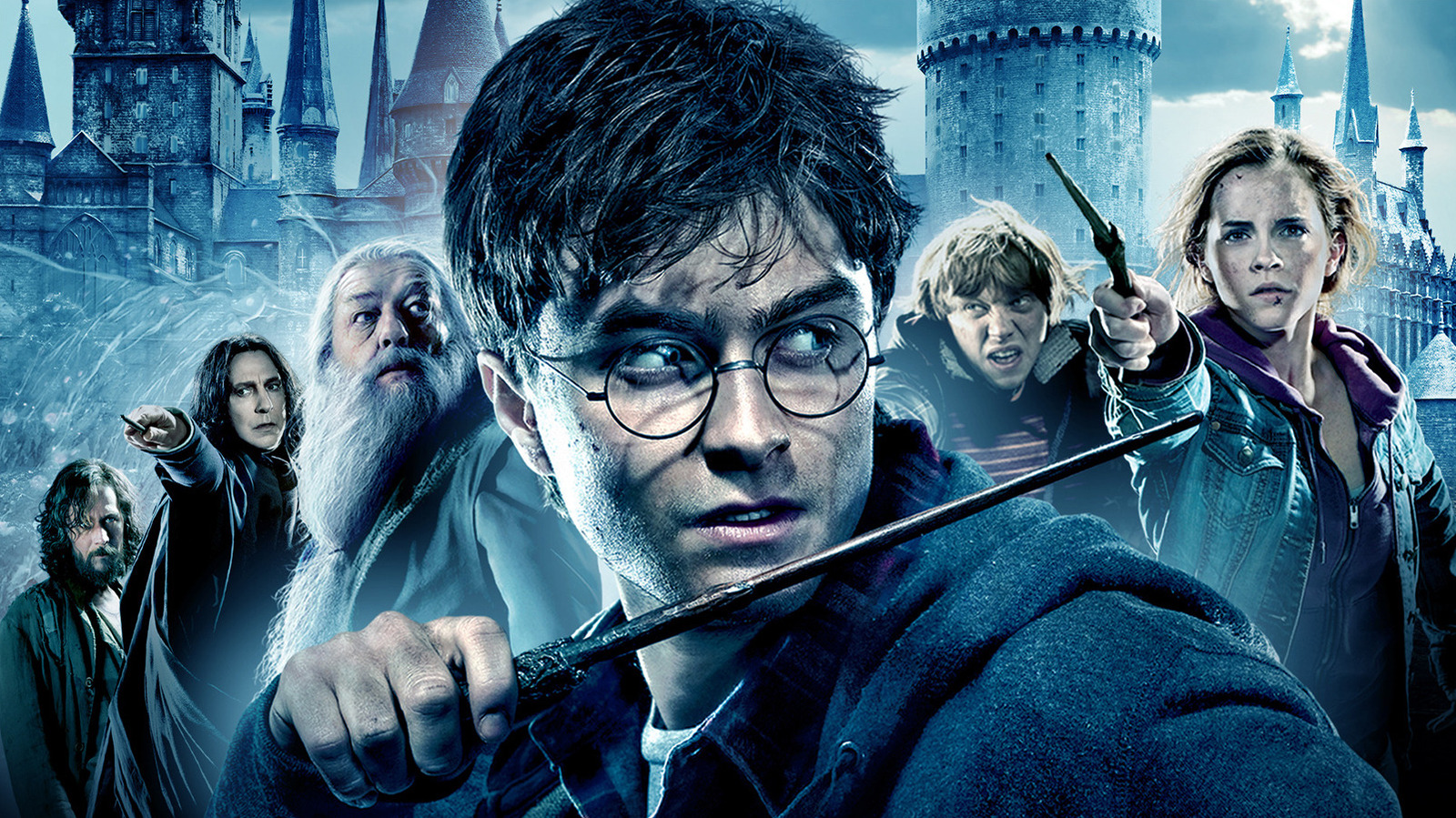
The “Harry Potter” books, which range in quality from decent to amazing, encouraged a generation of children to start reading. The movies were a global phenomenon that brought this magical world to life. But then, those kids that grew up on “Harry Potter” became adults with critical thinking skills and quickly realized how much of this magic doesn’t make a lick of sense.
It’s somewhat inevitable with any story surrounding magic. If magic exists, one would assume any problem could be easily handled with the wave of a wand. But half-baked explanations for why certain items can’t be used in a given scenario is only part of the problem.
“Harry Potter” also has some massive world-building issues. It’s honestly impressive that the wizarding world hadn’t collapsed on itself long before Lord Voldemort (Ralph Fiennes) showed up. Drawing from both the books and movies, these are the biggest “Harry Potter” plot holes that’ll make you wonder if this story was even good in the first place.
Everything about the wizarding economy
When you ride the Escape From Gringotts rollercoaster at Universal Studios Florida, you may come to the realization that money works pretty poorly in the wizarding world. For starters, Gringotts itself is the only bank, which makes depositing checks a burden. Actually, scratch that, there aren’t any checks; just physical money. The conversion rates are a nightmare too, with 29 knuts to a sickle and 17 sickles to a galleon.
Then there’s the matter of what galleons are made of — pure gold. Now, it’s generally perceived that a single galleon is worth the equivalent of £5 (which is about $6.63 USD). However, if you were to melt a galleon, it would be worth its weight in gold, making it far more valuable. There’s probably some enchantment to prevent poorer wizards, like the Weasleys, from melting galleons and taking advantage of this oversight, but it makes no economic sense to spend more money making galleons than they’re ultimately worth.
Why doesn’t Hogwarts just teach math?
Young wizards learn all about potions, defense against the dark arts, and divination, yet there’s no time for basic algebra. There are no quote-unquote “normal” classes at Hogwarts, which means these wizards are completely useless when it comes to any advanced math or English/literature.
Studies at Hogwarts don’t begin until a child is 11 years old, so one can assume they learn all the basics at muggle school before going to Hogwarts. But are wizard racists like the Malfoys (which comprise some important “Harry Potter” villains) really sending Draco (Tom Felton) to learn from muggles? Homeschooling’s an option, but if kids like Draco are taught by their parents, they’re still likely only learning about matters related to wizarding.
Even in the wizarding world, math is necessary. They take potions, so surely, they still have to perform the basics of addition, subtraction, and division. But how are wizards expected to know how to do their taxes? Maybe there’s a spell for that: H&R Blockicus.
The polyjuice potion sometimes changes your voice and sometimes not
The inconsistent powers of the polyjuice potion are a matter of the movies making things more confusing than they need to be. We first see the polyjuice potion in “Harry Potter and the Chamber of Secrets,” which allows the user to look like someone else. However, we see Harry (Daniel Radcliffe) and Ron (Rupert Grint) turn into Goyle (Josh Herdman) and Crabbe (Jamie Waylett), but they keep their same voices.
However, in “Harry Potter and the Goblet of Fire,” Barty Crouch Jr. (David Tennant) use a polyjuice potion to look like Mad Eye Moody (Brendan Gleeson), one of the strongest “Harry Potter” characters, all year. And he sounds just like him. In the books, this isn’t an issue because the polyjuice potion changes a person’s vocal cords, too. The movies likely altered this for the sake of comedy and allowing the audience to know which Goyle and Crabbe were fake.
But “Goblet of Fire” throws a wrench into the whole thing. Maybe Barty Crouch Jr. is really good at impressions, and it just never comes up.
Why did no one notice Peter Pettigrew on the Marauder’s Map earlier?
The Marauders’ storyline is one “Harry Potter” subplot we wish was fleshed out more in the films. If nothing else, it might explain why Fred (James Phelps) and George Weasley (Oliver Phelps) never realized a guy named Peter Pettigrew (Timothy Spall) was always hanging around their brother.
In “Harry Potter and the Prisoner of Azkaban,” the twins gift Harry the Marauder’s Map, which allows him to locate secret passageways around Hogwarts and keep tabs on certain individuals. Harry first learns Peter Pettigrew may not actually be dead when he sees him skulking about in the castle. We learn the map didn’t make a mistake when it’s revealed that Peter’s alive and had transfigured himself as Scabbers the rat for years.
Granted, there are hundreds of people at Hogwarts, so the map would probably fill up quickly telling you about every single one. But it stands to reason that Fred and George would keep tabs on their brother every now and then, and we’re expected to believe Peter’s name never came up once?
Harry’s parents could’ve been their own secret keepers
Speaking of Peter Pettigrew, we learn how Harry’s parents made him their secret keeper. In the wizarding world, this is someone entrusted with a hidden location protected via the Fidelius Charm, making it inaccessible to anyone lacking the password. Pettigrew betrayed the couple to Voldemort, who wanted to kill the two along with their baby due to a prophecy stating that Harry would one day defeat him.
Let’s set aside that the Potters could’ve chosen literally anyone more trustworthy, even Dumbledore (Michael Gambon). In “Harry Potter and the Deathly Hallows,” we discover that Bill Weasley (Domhnall Gleeson) is his own secret keeper for protecting the location of Shell Cottage. That means the Potters didn’t need to choose anyone, and they could’ve been each other’s secret keeper to avoid Voldemort entirely.
The reason for this plot hole is probably that J.K. Rowling didn’t think of it when writing “Prisoner of Azkaban.” But it makes the Potters pretty foolish in hindsight.
Expelliarmus is an unwieldy spell
Expelliarmus is the disarming spell. You use it on an opponent, and it knocks their wand out of their hand. Pretty simple, right?
However, it also occasionally just knocks an opponent out, as seen in “Prisoner of Azkaban” when Harry uses it on Severus Snape (Alan Rickman) at the Shrieking Shack. In the book, Harry, Ron, and Hermione (Emma Watson) use Expelliarmus at the same time, so one could reason that the combined force of three spells was enough to knock Snape out.
However, the movie only has Harry use the spell, and it knocks Snape back like he just got plowed by a semi-truck. There’s probably some explanation that if the person using Expelliarmus has a lot of hatred in their heart or force in casting it that the spell is more powerful. I suppose knocking Snape back a solid 10 feet did technically remove the wand from his hand, so the spell did what it was supposed to do.
Everything about time turners
Time travel and plot holes go together like J.K. Rowling and vehement transphobia. But in the case of “Harry Potter,” it can’t be overstated how much time turners break every semblance of logic.
They’re introduced in “Prisoner of Azkaban” for Hermione to take more classes and eventually for she and Harry to save Buckbeak the hippogriff and Sirius Black by redoing past events. One could argue this variation of time travel follows closed-loop logic where Harry was always meant to go back in time to do those things. It would explain why he can’t go back in time to save his parents or smash baby Voldemort against a brick wall to stop all of this from happening. But maybe one can only use time turners to travel back a few hours. All this confusion is likely why Rowling destroyed all the time turners in “Harry Potter and the Order of the Phoenix,” stopping any further questions about using them all the time.
But then the “Harry Potter and the Cursed Child” stage play comes along and raises even more questions. Delphi uses one to travel back decades, which completely undoes the idea that it only works for short spans. “The Cursed Child” isn’t that great anyway, so maybe it’s best just to ignore it for all things.
How did Azkaban prisoners get their wands back?
Seeing as Azkaban is wizard prison, it makes sense to confiscate their wands. But throughout the series, various wizards like Sirius Black and Bellatrix Lestrange (Helena Bonham Carter) wind up getting out of Azkaban and have their old wands back in no time.
While it’s never explained, one possible explanation is that the wands are returned to the wizards’ families. Therefore, they could’ve gotten them back easily. If the wands are held at the Ministry of Magic, then Bellatrix could’ve gotten hers back when the Death Eaters infiltrated the Ministry and held all the cards.
But with all this in mind, why doesn’t the Ministry simply destroy the wands, especially for those in prison with life sentences? Hagrid (Robbie Coltrane) had his wand destroyed after getting expelled from Hogwarts, and he wasn’t even sent to Azkaban as a child. Hagrid is ultimately proven innocent in “Harry Potter and the Chamber of Secrets,” and he doesn’t even get a new wand, so the justice system is incredibly unfair.
The rules around portkeys change
Portkeys are introduced in the beginning of “Harry Potter and the Goblet of Fire.” Harry, Hermione, and the Weasley family use an old boot that’s been enchanted with magic to function as a portkey to take them to the Quidditch World Cup. It’s here we learn the rules of portkeys: It’s an inanimate object bewitched to travel to a certain location at a given time. You must be touching it in order to transport along with it.
However, at the end of “Goblet of Fire,” Harry and Cedric (Robert Pattinson) both touch the Triwizard Cup, which transports both of them to the graveyard where Voldemort is waiting. Despite previously transporting at a specific time, this one operates via touch. To make things even more confusing, Harry then uses the same object to travel back to Hogwarts despite portkeys being one-and-done devices.
It’s possible Voldemort or Barty Crouch Jr. used dark magic to fiddle with the logistics of how portkeys normally operate. But then why enchant a portkey to work for a round-trip when Voldemort could’ve killed Harry right then and there in the graveyard?
The Trace is a poor security measure
The Trace is formally explained in “Harry Potter and the Deathly Hallows” as a magical watch on all underage wizards, so if any magic is performed in their vicinity, the Ministry is alerted. Harry almost gets expelled from Hogwarts for this in “Harry Potter and the Order of the Phoenix,” when he used a Patronus Charm around muggles. He’s eventually reinstated, but it’s clear the Ministry doesn’t want young wizards fiddling around with magic they can’t comprehend.
“Prisoner of Azkaban” shows Harry practicing the spell Lumos Maxima in his bedroom, which should’ve notified the Ministry. Perhaps they don’t care about minor spells for practice. Throughout the books and films, a ton of spells are used around Harry when he’s not at Hogwarts, but the Ministry only intervenes that one time.
This brings up a notable problem with the Trace in general. It can’t identify who used the magic, just if it happened to occur around a teenager. This is a problem when considering that Voldemort, when he was still Tom Riddle, used Avada Kedavra on his parents when he was 16, but his uncle took the blame because the Ministry couldn’t pin it on him.
Voldemort should’ve made all his Death Eaters take the unbreakable vow
The Unbreakable Vow gets introduced in “Harry Potter and the Half-Blood Prince,” when Narcissa Malfoy (Helen McCrory) makes Snape enter into the magical contract to protect her son, Draco. Daniel Radcliffe hates watching “Half-Blood Prince” because he doesn’t like his performance, but you should hate it because it raises a baffling plot hole.
Since the Unbreakable Vow exists, why doesn’t Voldemort use it to ensure the loyalty of all his followers. It could be a rite of passage for all Death Eaters to ensure none of them betray him. It would be particularly useful for a guy like Snape, who was actively working as a double agent the entire time.
This could be taken as a sign of Voldemort’s hubris. He believed he could ensure his followers’ loyalty through fear alone. Still, from a purely practical perspective, what harm could be done by having an extra security measure in place?
Veritaserum should be used in every trial
A staple of spy cinema, truth serum also comes into play in the “Harry Potter” universe with Veritaserum. It’s a truth potion that gets the user to spill whatever secrets they have, and Snape gives Barty Crouch Jr. some at the end of “Goblet of Fire” to reveal his master plan.
It calls into question why the Ministry of Magic doesn’t use it for every trial, particularly when Death Eaters were being charged with their crimes for helping Lord Voldemort the first time he tried to ascend to power. It could be used for any trial, like Harry proving beyond a shadow of a doubt he used a Patronus Charm at the beginning of Order of the Phoenix to protect Dudley (Harry Melling).
On the other hand, there are ways to counteract Veritaserum. At one point, it’s mentioned that there is an antidote, and one can use Occlumency to avoid telling the truth. But if there are workarounds, then Veritaserum can never be trusted because how could you know someone hasn’t developed a way to avoid telling the truth? Either it should always be used or never, but there can’t be an in-between with something as powerful as this.
Harry should’ve turned into a random person in Deathly Hallows
“Harry Potter and the Deathly Hallows” begins with extracting Harry out of Privet Drive. His friends show up and take polyjuice potion to look like Harry, so they can all make a grand escape to avoid the Death Eaters capturing the Boy Who Lived.
While Harry makes it out all right, the plan results in the deaths of Hedwig and Mad Eye Moody. One can’t help but wonder if a better plan would’ve involved Harry taking some polyjuice in order to look like … literally any muggle. His cohorts could’ve taken polyjuice to look like regular people, too, so that they don’t draw suspicion from the Death Eaters. Then they could’ve taken a less conspicuous mode of transportation rather than broomsticks to get to The Burrow.
Harry still has the Trace on him at this point, so polyjuice potion was probably a good plan, since it technically wouldn’t be considered “casting a spell.” But this feels like unnecessarily drawing attention to the fact that one of these Harrys is the Harry the Death Eaters are looking for.
The Felix Felicis potion should be readily accessible at all times
A major source of plot holes in the “Harry Potter” universe is some magical item being used once to move a specific plot along only to never come up again. Case in point: the Felix Felicis potion, otherwise known as Liquid Luck. It gives the drinker a brief period where they’re lucky in all of their endeavors despite some giddiness as a side effect.
It’s a complicated potion to make, but Professor Slughorn (Jim Broadbent) in “Half-Blood Prince” clearly knows how to make some, as he gifts a batch to Harry. However, he’s still around during the Battle of Hogwarts in “Deathly Hallows,” so why not have plenty in stock to give to all of the people fighting Voldemort’s army?
Before the big battle in the film, Slughorn is seen drinking something that could very well be this Liquid Luck. But even if he was lucky, why not spread it around? If nothing else, surely Harry could’ve benefitted from some extra luck during the most important moment of his life.
The Elder Wand rules make no sense
The Elder Wand is the most powerful wand in the “Harry Potter” universe. It’s so powerful that the rules surrounding its ownership change based on whatever’s most convenient for the plot. The general rule is that the Elder Wand obeys its master until they’re defeated in battle.
In the mainline series, Dumbledore possesses the Elder Wand. However, Voldemort believes ownership has transferred to Snape, since he killed Dumbledore in “Half-Blood Prince.” In reality, ownership moved to Draco Malfoy, because he disarmed Dumbledore initially, which was enough for the Elder Wand to technically obey him. But then it moved over to Harry, because Harry disarmed Draco in “Deathly Hallows” even though Draco didn’t even have the Elder Wand on his person at that time.
It’s a very loose definition of “defeat,” but “Fantastic Beasts and Where To Find Them” throws all that out of the window. Grindelwald (Johnny Depp) possesses the Elder Wand, but he’s then restrained by Newt Scamander (Eddie Redmayne) and has his wand taken by Tina Goldstein (Katherine Waterston) at the end of the film. But in “Fantastic Beasts: The Crimes of Grindelwald,” the Elder Wand still obeys his orders. Based on the logic we know thus far, the wand should follow Newt and/or Tina. But when it comes to logic in the wizarding world, it’s probably best not to think about it too hard.


Leave a Reply