



We may receive a commission on purchases made from links.
What defines a rewatchable film? Is it non-stop pacing that makes it easy to get hooked on again? A layered story with twists and turns that are satisfying to work out even further on a second viewing? A comedy with memorable punchlines and star performances that stay in your head?
The answer is all of the above and more. The essence of a rewatchable film depends on personal preference — sometimes it’s the comfort of a longtime favorite that feels like a safe haven — but it’s also an almost indescribable mix of elements that come together perfectly, in whatever genre context that may be, to keep you coming back. Usually, though, it’s the crowd-pleasers — movies crafted to immerse you in that special sense of movie magic. They make you want to return, because they offer something crucial and unique to cinema as a medium. Sometimes there’s nothing better than coming back to a movie that just does it right.
Here are the 15 most rewatchable movies of all time.
Back to the Future
Co-screenwriter Bob Gale might believe that “Back to the Future” couldn’t exist today, but that hasn’t prevented it from retaining its status as a timeless Hollywood classic that fans have been enjoying for decades. Some may argue that this applies to the entire trilogy, but let’s be honest, it’s the first film that always feels especially rewarding to rewatch, thanks to its lovable characters, fast-paced screenplay, and iconic blockbuster moments. It’s a masterful example of including broad appeal in popcorn filmmaking, especially across different generations: “Back to the Future” calls out to both kids and adults alike.
Director Robert Zemeckis’s 1985 sci-fi coming-of-age action-comedy endures as one of the most praised screenplays ever written. It’s so efficient yet emotionally rich in telling the story of slacker teen Marty McFly (Michael J. Fox) and his quirky old inventor friend Doctor Emmett Brown (Christopher Lloyd), who invents a DeLorean-powered time machine that sends them into the past. As they work to ensure that Marty’s own birth isn’t erased by their interference, every line is purposeful, and no character is merely a plot device. Watching “Back to the Future” repeatedly reveals the brilliance and creativity behind Zemeckis’s and Gale’s writing, which has yet to find its equal.
Goodfellas
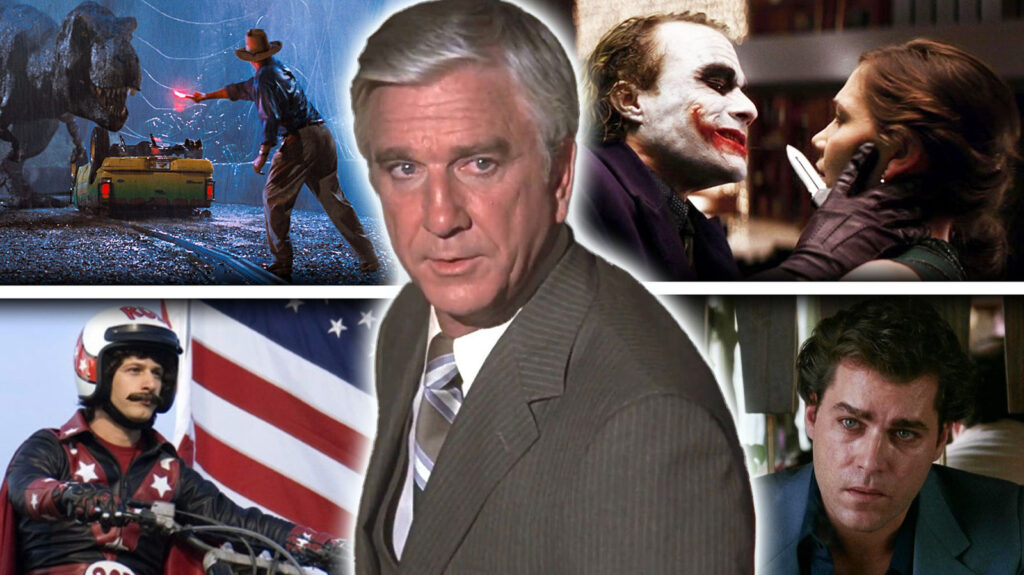
Among all the movies Martin Scorsese has made about the mob, “Goodfellas” is arguably the most compulsively watchable. That’s built into the very essence of the film: Scorsese pulls you into the glamour and excess of life in the criminal underworld, indulging in the opulence and luxuries that come with a life of crime. Of course, that’s turned on its head by the end, revealing the unavoidable crash of reality that follows a life of breaking bad.
“Goodfellas” isn’t just one of the most entertaining mob movies ever made; it also crystallizes many of Scorsese’s expert filmmaking techniques — maybe it’s no surprise that director Steven Spielberg considers “Goodfellas” essential viewing for any filmmaker. “Goodfellas” is a masterwork of energetic direction, which is why it’s so easy to revisit. With masterful control over tone and iconic performances from an excellent cast — including Robert De Niro, Ray Liotta, and Joe Pesci — Scorsese guides you through the ecstatic highs and brutal lows of mob life, making for a dichotomy that’s a pleasure to watch again and again.
Pulp Fiction
Talk about a movie that was definitely made with rewatchability in mind. Quentin Tarantino’s ’90s cult hit “Pulp Fiction,” now a staple for film fans, has a few fresh elements that make it worth revisiting. First are the characters, crafted in Tarantino’s unique voice, marked by sharp humor and a love of pop culture. The second is the story structure, with Tarantino breaking the mold for anthology films by weaving together interrelated plots featuring different characters, each caught up in their own piece of, well, pulp fiction.
Honestly, there wasn’t much quite like it when it first came out in 1994. Even today, you’d be hard-pressed to find a film that executes its ambitious goals as successfully, despite the many imitations that popped up in the late ’90s. With a script that often seems to flow from one iconic line to the next, and an all-star cast designed to outshine the most star-studded blockbusters, it’s easy to revisit and enjoy the iconoclastic pleasures of “Pulp Fiction.”
Airplane!
It’s clear that the filmmaking team of David Zucker, Jim Abrahams, and Jerry Zucker (also known as ZAZ) created their disaster spoof movie, “Airplane!,” with a specific goal in mind: to pack in as many jokes as possible. In that regard, “Airplane!” is an unmitigated success, and it’s why it’s such an easy comedy to return to again and again. Even if you think you’ve seen every joke in the film has to offer, there’s bound to be some stray line or sight gag that has been waiting in the wings for you to notice it and bust a gut all over again.
What’s even more impressive is that “Airplane!” remains genuinely hilarious over 40 years later. Comedy tends to age the worst of any genre, because it’s so closely tied to current events, trends, and sensibilities. Though “Airplane!” has a few outdated jokes, the relentless barrage of silly gags and punchlines means that any dull moments are overshadowed by undeniable hits. ZAZ perfected the spoof movie here, and most other attempts in the genre have repeatedly trie d— and failed — to match the brilliant stupidity achieved in this film.
Boogie Nights
Writer and director Paul Thomas Anderson showed off his preternatural ability to make a movie with “Boogie Nights,” his second feature film, which he made at just 26 years old. Honestly, it feels like a superhuman achievement to accomplish, as this two-and-a-half-hour journey into the rise and fall of the American adult film industry in the late ’70s and early ’80s seems like the culmination of a director with years of work behind them. Instead, it’s the first masterpiece in a career full of them.
That’s just the magic of “Boogie Nights,” a film that keeps on getting better with age. Anderson’s skillful understanding of characters, pacing, and tone makes it a movie that reveals new layers each time you watch, staying engaging as it shifts from its hedonistic partying beginnings to the darker tragedies that dominate the latter half. The expansive, skillfully crafted mix of found family drama, industry satire, and anxious fatalism is a marvel, inviting viewers to return again and again after the credits roll.
The Dark Knight
“The Dark Knight” was an event movie of the highest caliber upon its release. In the sequel to his first entry in the franchise, “Batman Begins,” Christopher Nolan reshaped the story and tone of the crime-fighting billionaire Bruce Wayne into a gritty, realistic, dark crime drama set on the streets of Gotham, resembling more a Michael Mann film than traditional comic-book blockbusters. It dominated the box office and transformed superhero cinema.
And yet, “The Dark Knight” is still somehow better than you remember. That’s because of Nolan’s mastery over his reimagined hero, but it’s also because of the element of the film that grew larger than life: Heath Ledger as The Joker. Ledger’s performance is manic and sadistic, presenting a frantic, crazed villain rarely seen with such intensity in our biggest studio hits. Much of the appeal of returning to “The Dark Knight” lies in revisiting the unrestrained madness Ledger brought, which feels even more powerful given it was released after the actor’s untimely passing. He helped make “The Dark Knight” what it is: monumental, uncompromising, and haunting.
Star Wars Episode IV: A New Hope
Believe it or not, people find the original “Star Wars” trilogy rewatchable! The original “Star Wars” can also represent “The Empire Strikes Back” and “The Return of the Jedi,” as most fans are happy to revisit the entire trilogy. Even George Lucas clearly couldn’t stop rewatching these movies, always noticing things he wanted to fix — why else would he have made all those changes with the “Star Wars” Special Editions?
Among the three original films, there’s something special about returning to the one that would later be dubbed “A New Hope.” It launched a franchise that perhaps shouldn’t have existed, as Lucas drew direct inspiration from his favorite movie serials from the ’30s and ’40s, like “Flash Gordon” and “Buck Rogers,” to craft his space opera. It’s easy to forget today, but on top of the scrappy production that prevailed over severe budget constraints and doubts from the studio, “Star Wars” was a movie out of its time when it hit theaters in 1977, which makes it all the more impressive that it has become the enduring cultural giant we know today.
The Big Lebowski
The fact that you can probably hear several iconic line-readings running through your head just by looking at the name of this movie should say enough. “The Big Lebowski” may have been a box office bomb when it was released, but it is now a bona fide cult classic that fans know rewards repeat viewings. It’s the Coen Brothers at the extreme polar ends of many of their tonal variations: funny, dark, farcical, and somewhat inscrutable.
That last point, in particular, is by design: “The Big Lebowski” is largely inspired by the 1946 film noir “The Big Sleep,” famous for its labyrinthine plot and enigmatic mystery. The Coens take this idea and apply it to one of cult cinema’s most iconic reluctant protagonists, The Dude (Jeff Bridges), a slacker-turned-diffident private eye who makes the mystery’s impenetrability even more complex, as most of the time, he couldn’t care less about actually solving it. It’s a brilliant concept for a subversive take on neo-noir, stamping the Coens’ signature wit and craftsmanship on a classic genre to make it something fresh and original, which feels particularly rewarding to revisit and discover that it still works just as well as ever.
The Godfather
People sometimes treat “The Godfather” as “homework” cinema — a movie you feel obliged to watch to prove your film fandom. This attitude not only dismisses the pure joy of immersing yourself in the slow, violent rhythm of Francis Ford Coppola’s filmmaking but also overlooks that “The Godfather” was a massive box office hit at the time, likely laying the foundation for the modern blockbuster. Its widespread popularity is still evident, and revisiting “The Godfather” uncovers countless new details and layers, leaving you amazed at how a film could feel so perfectly structured and spiritually resonant.
Simply put, there’s nothing quite like allowing yourself to indulge in the expansive three-hour epic of mob melodrama and tragedy that “The Godfather” offers (except maybe watching the equally great “The Godfather Part II”). Filled with striking imagery and featuring one of the greatest ensembles ever assembled — including Marlon Brando, Al Pacino, James Caan, Robert Duvall, Diane Keaton, Talia Shire, and many more — “The Godfather” plays like a perfect symphony, making it one of the ultimate American sagas.
Die Hard
“Die Hard” is so iconic that people use its name to describe concepts in other movies. “Under Siege” is “Die Hard” on a ship, “Speed” is “Die Hard” on a bus, “Air Force One” is “Die Hard” on a plane. It’s the simplicity and widespread familiarity of its premise, and how effectively it conveys it, that make director John McTiernan’s action classic such a rewatchable milestone in action filmmaking. It launched Bruce Willis’s career and remains a touchstone of the genre.
You can still see echoes of “Die Hard” in many modern action films, and numerous filmmakers have spoken openly about its direct influence on their work. Its tight script and claustrophobic setting are heightened by elegant direction, the compelling performance of John McClane (Willis), and one of the greatest villain portrayals ever by Alan Rickman as Hans Gruber. Its brilliance lies in how these elements elevate what feels like a boilerplate premise of a cop stopping a group of terrorists into something that, to this day, feels singular and impossible to replicate.
Hot Rod
Instead of just watching the “Cool Beans” scene on a loop over and over again, maybe it’s time to throw on the entirety of this cult classic lampoon from comedy trio The Lonely Island. “Hot Rod” is a flood of infectious silliness and absurdity, following the absurd ambitions of the clumsy, amateur neighborhood stuntman Rod Kimble (Andy Samberg) as he prepares for his biggest stunt yet: jumping a moped over a line of 15 school buses. Doing this to raise money for a heart transplant for his stern stepfather (Ian McShane), just so he can beat him in a fight and earn his respect, is just the kind of extra nonsense you can expect from this creative team.
“Hot Rod” may be a mile-a-minute joke machine of a movie, but it also embodies a gritty spirit from The Lonely Island’s early days when they were still building on their success from “Saturday Night Live.” It also has a real “Jackass” kind of danger, with the crew choosing not to use dummies or heavy visual effects. You have to respect the commitment to a movie about Andy Samberg raising money to fight his sick stepdad.
Pirates of the Caribbean: The Curse of the Black Pearl
If you’re a true fan of the “Pirates of the Caribbean” movies, you can spiritually count this as an entry for the rest of the franchise (or at least the Gore Verbinski-helmed trilogy that you keep rewatching while trying to forget the movies that came after). But “Curse of the Black Pearl” is the one with the real magic, endlessly entertaining in a grand, swashbuckling Hollywood blockbuster style. We don’t see movies at this scale or level of craftsmanship very often anymore.
“The Curse of the Black Pearl” is Disney’s most successful effort to turn one of their theme park attractions into a film. You see, we used to hire talented professionals for our branding exercises and franchise ventures, and so despite its scoff-worthy origins, talented writers, production designers, visual effects artists, and actors approached the project with genuine enthusiasm, and the results show. “The Curse of the Black Pearl” remains one of our most captivating Hollywood fantasies.
Jurassic Park
You could probably fit 80% of Steven Spielberg’s filmography into this category, and it would still be valid, making this a very personal choice. “Jurassic Park” continues to inspire the same awe and wonder as it did when it was first released in 1993. Every time you watch it again, you’re still captivated by its deliberate pacing, its blend of groundbreaking practical and digital VFX, and its sharp commentary on humanity’s illusions of grandeur.
Even today, as “Jurassic Park” sequels keep coming out, it’s hilariously obvious that the original “Jurassic Park” remains the best of the series. The script by David Koepp and Michael Crichton, author of the source novel, strikes a perfect balance between spectacle and intelligence, never sacrificing the audience’s understanding or the integrity of the story for mere blockbuster excitement. The two elements complement each other, and the pulpy thrill of reanimated dinosaurs wreaking havoc in an amusement park is delivered with a thoughtful and intelligent spirit by a masterful director. Watching “Jurassic Park” again is a reminder of what a truly perfect movie looks like.
Superbad
No other Apatow-era studio comedy quite matches the smoothness of “Superbad.” This R-rated comedy breakout shook up the box office in 2007 and transformed the landscape of theatrical comedy, with audiences responding to its crude, raunchy, yet authentic, lived-in, and naturalistic humor. It remains one of the funniest and surprisingly touching comedies of the century so far.
It was especially likely to resonate if you were on that fragile edge of adulthood at the end of high school. But the coarse coming-of-age story of co-dependent best friends Seth (Jonah Hill) and Evan (Michael Cera) has a broadly stirring appeal. Written by Seth Rogen and Evan Goldberg, based on their own teenage experiences (the characters are even named after them!), the film adds a relatable, everyday realism to the misadventures the two friends face as they try to get alcohol for a big party and get laid. You might never have had a night of chaos with juvenile cops like Fogell (Christopher Mintz-Plasse), but you’ve probably experienced the bittersweet realization that you and your friends have to move on after high school, and that’s what “Superbad” captures so well.
The Lord of the Rings: The Fellowship of the Ring
Peter Jackson’s expansive, lush adaptations of J.R.R. Tolkien’s iconic high fantasy novels are the ultimate movies to revisit repeatedly. They invite you to get lost in the detailed, enchanting portrayals of Middle-earth; in the deep relationships between characters; in the broad scope of world-building. “The Lord of the Rings” movies focus on so many characters at once that you can shift your emotional attention to a different part of the story each time, creating a new experience.
But ultimately, the most rewatchable of these films is “The Fellowship of the Ring.” Not only is “Fellowship” the best adaptation of the original books, but it also stands strong on its own as a complete movie. Compared to the inevitable transitional-feeling middle chapter, “The Two Towers,” and the imposing, formidable final hours of “The Return of the King,” Jackson’s introduction to the world and characters in “Fellowship” has a unique, magical quality that isn’t as prominent in the other entries, making it the easiest to dive into again and be instantly swept up. No matter what, when it comes to revisiting the most iconic realization of Middle-earth ever put on screen, “The Lord of the Rings” is there to invite you right back into its world every single time.