


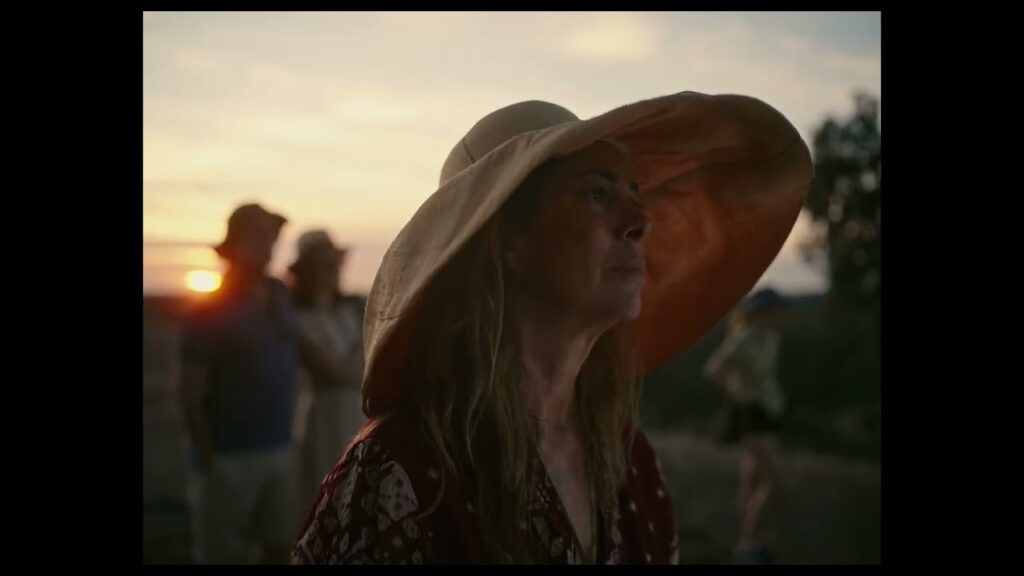
A slow-burning rural drama about family uncertainty, environmental collapse, and emotional survival
Paradise slowly disappears under heat and fire.
18 Holes to Paradise follows three women living on a rural farm during a devastating summer as their family prepares to sell the land that defines their future. As wildfires spread across the region, escape becomes impossible, forcing the family to confront emotional tension, economic uncertainty, and the fear of losing both home and identity. The isolated setting transforms the farm into a space of emotional confinement where unresolved anxieties rise to the surface. Rather than focusing on external spectacle, the film explores emotional fragility through atmosphere, silence, and interpersonal tension. The approaching fire becomes both a literal and symbolic force representing collapse, transition, and uncertainty. Ultimately, the film presents environmental crisis as deeply connected to memory, family legacy, and emotional survival.➡️ Implication: Contemporary rural dramas increasingly use environmental instability as a metaphor for emotional and social uncertainty.
Why It Is Trending: Rising interest in environmentally driven slow-burn dramas about uncertainty and survival
Audiences are increasingly drawn to intimate dramas shaped by climate anxiety and emotional realism.
The film reflects growing global concerns around environmental instability, land ownership, and rural displacement. Its slow-burn structure and emotionally restrained storytelling align with current arthouse cinema trends favoring atmosphere over spectacle. Stories centered on isolation and uncertainty also resonate strongly in contemporary prestige filmmaking. The rural Portuguese setting gives the film cultural specificity while maintaining universal emotional themes about survival and change. Festival nominations have further increased visibility within international cinema circles. The combination of family drama and environmental tension creates timely relevance.➡️ Implication: Climate anxiety and emotional realism are becoming central themes in modern international dramas.
Elements Driving the Trend: Atmospheric storytelling blending environmental tension with emotional collapse
The film builds tension through silence, heat, and emotional uncertainty rather than dramatic action.
The wildfire threat creates constant psychological pressure across the narrative. The isolated farm setting amplifies emotional confinement and interpersonal conflict. Themes of inheritance, displacement, and family responsibility shape the emotional core of the story. Minimalist pacing and restrained dialogue create a reflective atmosphere. The 4:3 aspect ratio further reinforces intimacy and emotional restriction. These elements combine to create a slow but emotionally immersive experience.➡️ Implication: Atmosphere-driven storytelling continues shaping contemporary prestige dramas.
Virality of Movie (Social Media Coverage): Festival-driven visibility supported by arthouse and environmental cinema discussions
The film’s visibility comes primarily from festival coverage and cinephile discussion.
Online conversations focus on the film’s visual atmosphere, environmental themes, and emotionally restrained storytelling style. Critics and festival audiences have highlighted its portrayal of isolation and uncertainty during ecological crisis. Discussions also center on the symbolic use of wildfire as both physical and emotional threat. Its arthouse positioning attracts audiences interested in slow cinema and international drama. While not mainstream viral content, the film continues gaining niche prestige attention.➡️ Implication: Festival-driven dramas increasingly build visibility through thematic discussion rather than mainstream marketing.
Critics Reception: Positive early reception for its atmosphere and emotional restraint
The film currently holds a strong 7.5 IMDb audience rating from early viewers.
Critics have praised the movie’s visual composition, environmental tension, and emotionally restrained performances. Reviews frequently highlight the film’s ability to create dread and uncertainty through atmosphere rather than dramatic escalation. The slow pacing has been interpreted positively by arthouse audiences seeking reflective storytelling. Some reviewers describe the film as emotionally distant, while others appreciate its minimalist realism. Overall, reception positions the movie within prestige international festival cinema.➡️ Implication: Slow-burn dramas continue attracting audiences interested in emotionally reflective and atmospheric storytelling.
Awards and Recognitions: Strong festival positioning within international arthouse cinema
18 Holes to Paradise has already received multiple international festival nominations.
The film earned Best Picture nomination recognition within the Ibero-America Competition at the Guadalajara International Film Festival. It also received Best Film nominations at the Mar del Plata International Film Festival and the Tallinn Black Nights Film Festival. These nominations strengthen the film’s prestige positioning within global arthouse cinema. The festival attention also highlights growing international interest in environmentally themed rural dramas. The movie continues building credibility through festival exposure and critical discussion.➡️ Implication: International festivals continue elevating emotionally restrained environmental dramas within prestige cinema.
Director and Cast: João Nuno Pinto delivers a restrained rural drama supported by emotionally grounded performances
Directed by João Nuno Pinto and written by Fernanda Polacow, the film focuses on emotional tension through minimalist storytelling.
Beatriz Batarda leads the ensemble with a restrained performance shaped by emotional fatigue and uncertainty. Supporting performances from Rita Cabaço and Margarida Marinho reinforce the film’s atmosphere of quiet instability. João Nuno Pinto’s direction prioritizes mood, silence, and environmental pressure over dramatic spectacle. The visual style emphasizes confinement, dryness, and emotional isolation. Together, the cast and direction create a deeply immersive rural drama.➡️ Implication: Emotionally restrained performances and minimalist direction continue defining modern festival cinema.
Conclusion: A haunting environmental family drama about uncertainty, memory, and survival
18 Holes to Paradise transforms environmental crisis into an emotionally intimate story about family instability and fear of change. Its slow-burning atmosphere and minimalist storytelling create a reflective experience centered on uncertainty and emotional survival. The film reflects broader global anxieties surrounding climate, displacement, and disappearing rural identity. João Nuno Pinto uses silence, confinement, and landscape to build emotional tension rather than spectacle. The result is a visually restrained but psychologically immersive drama. Ultimately, the film presents environmental collapse not just as disaster, but as a deeply personal emotional reckoning.➡️ Implication: Environmentally driven prestige dramas will continue shaping the future of international arthouse cinema.
What Movie Trend Is Followed: Environmentally driven rural dramas blending emotional realism with climate anxiety
18 Holes to Paradise follows the growing trend of slow-burn dramas that use environmental crisis to explore emotional instability, displacement, and family tension.
Rather than treating climate disaster as spectacle, the film focuses on how ecological uncertainty quietly reshapes relationships and identity. The wildfire becomes both a literal threat and a symbol of emotional collapse and transition. Similar contemporary arthouse films increasingly combine rural settings, minimalist storytelling, and psychological realism to create emotionally immersive experiences. The isolated farm environment also reflects broader anxieties surrounding land, inheritance, and survival. This creates a layered narrative where environmental tension and emotional vulnerability become inseparable.➡️ Implication: Contemporary prestige dramas increasingly use environmental crisis as a framework for emotionally intimate storytelling.
Trend Drivers: Growing audience interest in climate anxiety and emotionally reflective cinema
Audiences increasingly connect with stories shaped by uncertainty, isolation, and environmental fear.
Climate-related themes feel globally relevant and emotionally immediate. Slow-burn storytelling also appeals to viewers seeking reflective cinematic experiences rather than spectacle-heavy narratives. Rural settings create emotional intimacy and tension. Themes of displacement and family instability strengthen audience connection. These elements continue driving prestige environmental dramas.➡️ Implication: Climate anxiety is becoming a major emotional driver in modern international cinema.
What Is Influencing Trend: Rise of minimalist and atmosphere-driven arthouse filmmaking
Filmmakers increasingly favor restrained storytelling focused on mood and emotional realism.
Silence, visual composition, and environmental atmosphere now play larger roles than traditional plot escalation. Rural isolation creates psychological tension without relying on action-driven conflict. Minimalist pacing allows emotional uncertainty to gradually build across the narrative. This approach aligns strongly with contemporary festival cinema trends. It creates more immersive and reflective viewing experiences.➡️ Implication: Atmosphere-driven filmmaking continues reshaping prestige international drama.
Macro Trends Influencing: Expansion of globally focused climate and rural identity narratives
International cinema increasingly explores environmental instability through personal and regional stories.
Themes of disappearing rural identity, land insecurity, and ecological pressure are becoming more visible across global arthouse cinema. Audiences are also showing stronger interest in culturally specific stories connected to universal fears about climate and survival. Slow cinema aesthetics continue gaining acceptance within prestige festivals. These trends support emotionally restrained environmental storytelling. They also strengthen the visibility of regional filmmaking internationally.➡️ Implication: Global audiences increasingly value climate-centered stories grounded in local emotional realities.
Consumer Trends Influencing: Preference for emotionally immersive and slow-burn storytelling
Many audiences increasingly prefer reflective and psychologically layered cinematic experiences.
Slow pacing allows viewers to engage more deeply with atmosphere and emotional tension. Environmental storytelling also feels more relatable when connected to family dynamics and personal survival. Arthouse audiences especially value realism, silence, and emotional subtlety. Visual mood and psychological immersion now influence viewing preferences more strongly. This creates stronger long-term discussion around prestige dramas.➡️ Implication: Emotionally immersive slow cinema continues attracting prestige and festival audiences.
Audience Analysis: Arthouse audiences drawn to climate-driven emotional dramas
The film mainly appeals to viewers aged 25–55 interested in international cinema, slow-burn dramas, and socially reflective storytelling.
These audiences value atmosphere, emotional realism, and visually restrained filmmaking. They are also drawn to themes of climate anxiety, displacement, and family uncertainty. Festival audiences and cinephile communities strongly engage with minimalist storytelling and environmental symbolism. Viewers interested in European arthouse cinema form a key audience segment. This creates a niche but culturally engaged audience base.➡️ Implication: Prestige audiences increasingly support emotionally reflective climate-centered dramas.
Conclusion: A cinematic movement where environmental crisis becomes emotional and psychological storytelling
The trend reflected in 18 Holes to Paradise shows how climate-related cinema is becoming more intimate and emotionally grounded. These stories focus less on disaster spectacle and more on emotional survival, uncertainty, and social transition. Rural settings remain powerful because they visually reinforce isolation and vulnerability. The rise of environmentally reflective arthouse dramas also mirrors broader global anxieties surrounding instability and displacement. These films resonate because they connect ecological collapse with deeply personal human experiences. Ultimately, the trend represents a growing shift toward climate storytelling rooted in emotion, atmosphere, and psychological realism.➡️ Implication: Environmentally driven emotional dramas will continue influencing the future of international prestige cinema.
Final Verdict: A restrained environmental drama exploring uncertainty, isolation, and emotional collapse
18 Holes to Paradise presents climate anxiety through intimate family tension rather than large-scale disaster spectacle. The film stands out for its emotionally restrained storytelling and slow-building atmosphere shaped by heat, silence, and uncertainty. From an industry perspective, it reflects the continued rise of environmentally driven arthouse dramas centered on psychological realism and rural identity. The wildfire operates as both a physical danger and a metaphor for emotional instability and transition. João Nuno Pinto’s minimalist direction allows the landscape and atmosphere to carry much of the emotional weight. Ultimately, the film transforms environmental crisis into a deeply personal story about fear, survival, and the uncertainty of change.➡️ Implication: Prestige cinema increasingly uses environmental tension to explore emotional and psychological vulnerability.
Audience Relevance: Appeals to viewers seeking emotionally immersive slow-burn dramas
The film connects strongly with audiences interested in reflective and atmosphere-driven storytelling.
Its rural setting and environmental themes create emotional immediacy and tension. Viewers drawn to minimalist cinema and psychological realism will especially connect with its pacing and mood. Themes of uncertainty, displacement, and family instability feel universally relatable. The emotional restraint strengthens the film’s immersive quality. This creates a reflective viewing experience rather than a spectacle-driven one.➡️ Implication: Slow-burn emotional storytelling continues attracting prestige-drama audiences.
What Is the Message of Movie: Environmental uncertainty exposes emotional fragility and fear of change
The film explores how external crisis intensifies unresolved emotional tension within families.
The approaching wildfire forces the characters to confront insecurity, instability, and the possibility of losing identity tied to land and memory. The story suggests that emotional collapse often develops quietly under pressure rather than through dramatic confrontation. Rural isolation further amplifies fear, uncertainty, and emotional distance between characters. At its core, the narrative becomes a reflection on survival during personal and environmental transition. It frames change as both inevitable and emotionally destabilizing.➡️ Implication: Environmental storytelling increasingly serves as a metaphor for emotional and psychological transformation.
Relevance to Audience: Reflects modern anxieties surrounding instability, displacement, and uncertainty
The film resonates because its themes extend beyond environmental crisis itself.
Feelings of insecurity, emotional fatigue, and fear of losing stability remain universally recognizable. Climate anxiety also feels increasingly relevant within contemporary global culture. The isolated rural setting strengthens the emotional realism of uncertainty and confinement. These themes create emotional accessibility despite the film’s minimalist style. This broadens the movie’s cultural relevance beyond traditional arthouse audiences.➡️ Implication: Emotionally grounded climate narratives increasingly connect with modern audience anxieties.
Social Relevance: A subtle reflection on environmental instability and disappearing rural identity
The film quietly examines how environmental pressure reshapes both emotional life and community identity.
The potential loss of land reflects larger fears surrounding displacement and economic uncertainty. Rural environments are portrayed not simply as locations, but as emotional and generational anchors. The wildfire symbolizes both ecological instability and social fragility. Rather than offering overt political messaging, the story focuses on emotional consequences. This creates a more nuanced and human exploration of climate-related fear.➡️ Implication: Socially reflective climate dramas increasingly favor emotional realism over direct activism.
Performance: Emotionally restrained performances strengthen the film’s atmosphere of uncertainty
The film currently holds a strong 7.5 IMDb audience rating from early viewers.
Beatriz Batarda anchors the film with a restrained performance shaped by emotional exhaustion and quiet fear. Supporting performances from Rita Cabaço and Margarida Marinho reinforce the atmosphere of emotional instability and confinement. The acting avoids melodrama and instead relies on silence, expression, and psychological tension. This understated approach strengthens the immersive quality of the narrative. The performances remain central to the film’s emotional impact.➡️ Implication: Minimalist performances continue defining emotionally immersive arthouse cinema.
Legacy: Part of the growing wave of environmentally reflective international cinema
The film contributes to the expanding movement of climate-centered prestige dramas focused on emotional realism.
Its blend of environmental anxiety, rural identity, and psychological tension aligns with broader arthouse cinema trends. The movie also strengthens the visibility of Portuguese and Southern European storytelling within global festivals. Its emotionally restrained style gives it lasting relevance within slow cinema discussions. Over time, it may gain recognition as part of the evolving wave of environmentally reflective international filmmaking. The film reinforces the role of climate themes within prestige cinema.➡️ Implication: Climate-focused arthouse dramas will continue shaping the future of international festival storytelling.
Success: Defined by festival credibility and thematic relevance rather than mainstream scale
The film’s success comes primarily through critical positioning and international festival visibility.
Its nominations at major international festivals have strengthened its arthouse prestige profile. Audience engagement is driven more by atmosphere, emotional realism, and thematic depth than commercial spectacle. The movie appeals strongly to cinephile and festival audiences interested in slow-burn environmental storytelling. Its cultural relevance surrounding climate anxiety also supports ongoing critical discussion. The film succeeds by creating emotional reflection rather than mass-market entertainment.➡️ Implication: Prestige environmental dramas increasingly define success through critical and cultural resonance rather than commercial performance.
Insights: Environmental collapse becomes a deeply personal story about emotional instability, fear, and survival.Industry Insight: The film reflects the rise of climate-centered arthouse dramas driven by atmosphere and psychological realism.Audience Insight: Viewers increasingly connect with slow-burn narratives exploring emotional vulnerability and uncertainty.Social Insight: The story highlights how environmental instability reshapes identity, security, and emotional wellbeing.Cultural Insight: Rural climate dramas are becoming an important part of contemporary international prestige cinema.
Conclusion: A haunting rural drama that transforms climate anxiety into emotional and psychological storytelling
18 Holes to Paradise succeeds because it approaches environmental crisis through emotional realism and atmospheric restraint rather than spectacle. Its isolated rural setting creates a powerful sense of uncertainty, vulnerability, and emotional confinement. João Nuno Pinto’s direction prioritizes silence, mood, and psychological tension, allowing the emotional weight to emerge gradually. The film also reflects growing global interest in climate-centered stories grounded in personal and social experience. Its minimalist storytelling creates a deeply reflective cinematic experience shaped by fear, instability, and change. Ultimately, the film becomes a quiet but powerful meditation on survival during emotional and environmental collapse.➡️ Implication: Emotionally immersive climate dramas will continue influencing the evolution of prestige international cinema.
Summary of the Movie: A slow-burning environmental family drama about isolation, uncertainty, and survival
• Movie themes: Climate anxiety, family instability, rural isolation, emotional survival, and displacement — the film explores how environmental crisis reshapes identity and emotional security.➡️ Implication: Environmentally driven themes are becoming increasingly central in prestige drama storytelling.
• Movie director: João Nuno Pinto delivers a restrained and atmosphere-driven drama focused on silence, tension, and emotional realism.➡️ Implication: Minimalist direction strengthens emotionally immersive arthouse cinema.
• Top casting: Beatriz Batarda leads alongside Rita Cabaço and Margarida Marinho.➡️ Implication: Emotionally restrained performances enhance psychological realism and audience immersion.
• Awards and recognition: Nominated for Best Picture and Best Film at the Guadalajara International Film Festival, Mar del Plata International Film Festival, and Tallinn Black Nights Film Festival.➡️ Implication: Festival recognition continues elevating environmentally reflective international dramas.
• Why to watch movie: A compelling choice for viewers interested in slow-burn arthouse cinema exploring climate anxiety and emotional tension.➡️ Implication: Atmosphere-driven storytelling continues attracting prestige-drama audiences.
• Key success factors: Environmental symbolism, minimalist storytelling, rural atmosphere, and emotionally grounded performances.➡️ Implication: Psychological realism and atmosphere increasingly define prestige festival cinema.
• Where to watch: Released April 16, 2026 in Italy with international festival circulation and regional distribution rollout.➡️ Implication: Festival exposure remains essential for global visibility of arthouse dramas.
Conclusion: A restrained and emotionally immersive drama about environmental collapse and human uncertainty
18 Holes to Paradise transforms climate anxiety into an intimate emotional experience centered on fear, instability, and survival. Its slow-burning atmosphere and minimalist storytelling create a reflective portrait of family tension during environmental crisis. The film stands out through its emotional restraint, visual intimacy, and psychological realism rather than dramatic spectacle. João Nuno Pinto uses landscape, silence, and isolation to build emotional pressure throughout the narrative. The story resonates because it connects ecological instability with deeply personal fears about identity, memory, and belonging. Ultimately, the film becomes a haunting reflection on emotional survival during environmental and social collapse.➡️ Implication: Emotionally grounded environmental dramas will continue shaping the future of international prestige cinema.