


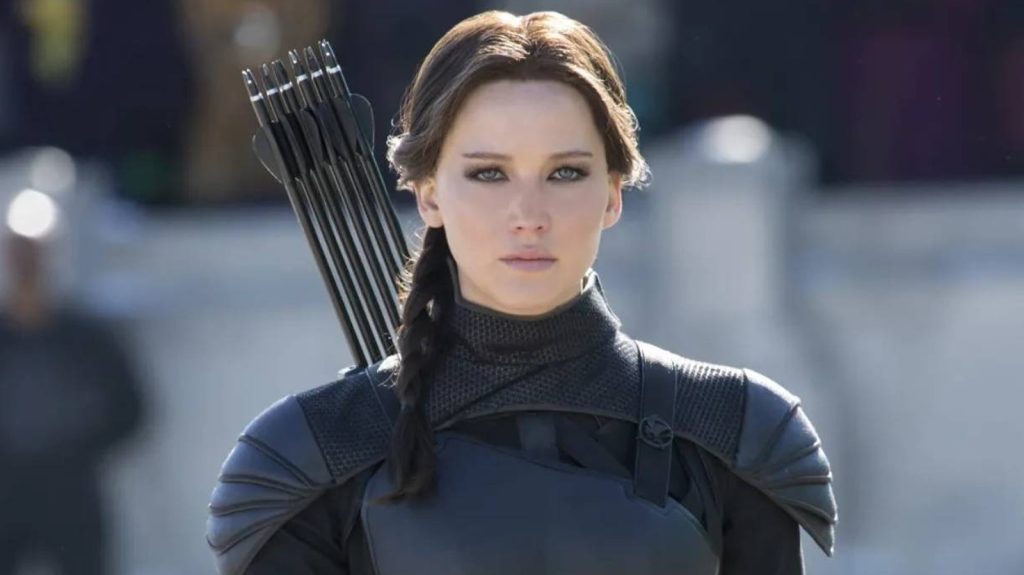

Unless you’ve been living under a rock for multiple decades, you’ve probably heard of “The Hunger Games.” Written by Suzanne Collins, this hybrid of “Battle Royale” and reality television hit shelves in 2008 and introduced readers around the world to Katniss Everdeen, a young woman trying to support her family with illegal game hunting in the deeply impoverished District 12 of a reformed North America known as Panem. When Katniss’ beloved younger sister Primrose is chosen, or “reaped,” via a random lottery to participate in the annual Games (where two “tributes” from all 12 districts are forced to compete to the death on live television until one victor emerges), Katniss volunteers as tribute, and her time as a Hunger Games participant begins.
“The Hunger Games” kicked off the property of the same name and was followed by sequels “Catching Fire” and “Mockingjay,” released in 2009 and 2010. Naturally, a “Hunger Games” film franchise followed in 2012 and spawned four blockbusters. (“Mockingjay” got split into two parts, something that director Francis Lawrence regrets.) Then, in 2020, Collins released her first literary “Hunger Games” prequel, “The Ballad of Songbirds and Snakes” — which centers on the origin story of future Panem president Coriolanus Snow — and five years later, we got “Sunrise on the Reaping,” which explains precisely how Katniss’ eventual friend and mentor (and her fellow District 12 victor) Haymitch Abernathy won his Games.
If you’ve already read all of the “Hunger Games” books and seen all the movies (including the pretty great movie version of “Sunrise on the Reaping,” which is now out in theaters), what should you check out next? From dystopian classics to other YA favorites, we’ve got some ideas.
Chain-Gang All-Stars
A lot of dystopian novels are referred to as “speculative fiction,” which means that the scenario laid out by the author could conceivably happen in real life … so, let’s hope that Nana Kwame Adjei-Brenyah’s novel “Chain-Gang All-Stars” doesn’t come to pass. Released in 2023, this novel imagines a world where the incarceration system in the United States is, somehow, even worse than it is in our reality — in that prisoners are allowed to enroll in a program called CAPE, which stands for “Criminal Action Penal Entertainment.” Not only are the inmates in CAPE constantly monitored (with their every move broadcast to hungry audiences), they’re also sent across the country to constantly participate in gladiator matches against each other that are, you guessed it, televised as well. The book’s title comes from the reimagined version of a traditional “chain gang,” where the prisoner-gladiators are called “Links” and given two options to leave: either they’re High Freed, meaning released, or Low Freed, meaning killed.
Throughout “Chain-Gang All-Stars,” we follow the Angola-Hammond Chain in the system and, more specifically, Hamara “Hurricane Staxxx” Stacker and Loretta “Blood Mama” Thurwar, the two female fighters in a secret relationship who open the book. As we move through the unsettling world Adjei-Brenyah concocted in “Chain-Gang All Stars,” we follow a wide variety of prisoners participating in this gut-wrenching game … and it’s sort of impossible to not think of the “Hunger Games” franchise as you read it, albeit in a good way. After you wrap up all five “Hunger Games” books, check out “Chain-Gang All-Stars.” (Nina Starner)
Dungeon Crawler Carl
When it comes to seeing people die horrible deaths in death games televised for the entertainment of an oppressive ruling class, no book does it on a larger scale than Matt Dinniman’s “Dungeon Crawler Carl.” The book takes place after Earth has been taken over by an alien corporation that seeks to mine the planet for resources. Those who aren’t killed during the initial invasion are then forced to compete in an intergalactic reality show program, an RPG-like “dungeon crawl” where they have to navigate various levels of a labyrinthian dungeon, each filled with increasingly dangerous monsters and scenarios.
What makes “Dungeon Crawler Carl” unique is how it blends together ridiculous video game and tabletop RPG logic with an unhealthy dose of pop culture references, the humor of a Douglas Adams book, and the brutality and social commentary about unchecked capitalism and authoritarianism of “The Hunger Games.” Indeed, reading Dinniman’s book and its follow-ups is like playing a fun RPG session, in that it’s chaotic, messy, hilarious, and weird, all while packing a serious emotional punch full of heartbreak and cruel twists and turns. But rather than reveling in their misery, Dinniman’s characters rage against the corporate machine in an effort to break it. What you end up with is a story about the necessity of resistance and the importance of community, both of which are themes that will resonate with “Hunger Games” fans. And did I mention it features an endlessly quotable talking cat? (Rafael Motamayor)
The Handmaid’s Tale
I don’t think it’s possible to have a conversation about young adult dystopian books and films like the “Hunger Games” stories without discussing “The Handmaid’s Tale.” Margaret Atwood’s landmark 1980 book set a standard for dystopian narratives rivaled only by George Orwell’s “1984,” but Atwood’s specificity is what makes her imagined world so terrifying — in that “The Handmaid’s Tale” takes place in a world where a religious totalitarian regime oppresses women and queer people. Offred (meaning “of Fred”), our heroine, works as one of the titular handmaids, which means she’s prized for her fertility and used as a “vessel” (that’s putting it politely) for her Commander, Fred, to impregnate instead of his un-fertile wife. As Offred exists in Gilead (which forbids women from having quite literally any rights and punishes them with death if they even try to stray), we follow her every move in the novel, learning bits and pieces about her life before Gilead as June, a mother and wife with the freedom to live as she pleased.
“The Handmaid’s Tale” was adapted into a Hulu series in 2017, and while I do think Elisabeth Moss did an incredible job playing Offred, the show ran through Atwood’s book by the end of Season 1 and kept its wheels spinning for, in my opinion, far too long (although it at least gets its final message right.) If you haven’t read Atwood’s book but are familiar with its well-known red costumes and overall vibe, I couldn’t possibly recommend it more. Its prose is beautiful, its subject matter is terrifying, and it’s a clear precursor to and inspiration for the stories found in the “Hunger Games” franchise. (Nina Starner)
Ready Player One
Though certainly not as dark in tone as “The Hunger Games,” the pop culture celebration that is author Ernest Cline’s “Ready Player One” is an oddly fitting companion piece for fans of the world Suzanne Collins built. One could even look at it as a bit of a palette cleanser, albeit one that still scratches a similar itch.
For those not familiar, the book takes place in 2044 and focuses on Wade Watts, who spends his days in the virtual utopia known as the OASIS. Wade’s devoted his life to studying the puzzles hidden within this world’s digital confines, themselves based on their creator’s fixation on pop culture — with the promise of massive power and fortune to whoever can unlock them.
“Ready Player One” is jam-packed with pop culture references and is lighthearted in a lot of ways. However, it’s also terribly dystopian, as the OASIS is not only people’s sole escape from the harsh realities of the outside world, there’s very little person-to-person communication anymore outside of the virtual space. Beyond that, the rush to solve the puzzles and nab the fortune results in a deadly game for Wade and many others, which is where the “Hunger Games” of it all comes in.
Steven Spielberg’s 2018 movie adaptation left a lot to be desired for many fans and, yes, a “Ready Player Two” movie was in the works in 2021, though it’s yet to materialize. Setting the film aside, the novel remains a true gem filled with wonderful world building, fully-realized characters, and just a dash of “kill or be killed” to make the whole thing extra exciting, elevating it beyond the barrage of references it might have otherwise been. (Ryan Scott)
Red Rising
The funny thing about Pierce Brown’s “Red Rising” series is that the first book in the still-ongoing saga is very much a “Hunger Games” riff … until it’s not. Set in a distant future where humanity has been rigidly split into various genetically modified castes that determine a person’s role in society, the story follows Darrow, a young Martian “red” whose wife is murdered by the ruling “gold” regime, sending him on a quest for revenge that ultimately spans the entire solar system. But before the sweeping space opera can begin, Darrow infiltrates the gold caste and must survive the Institute, a deadly school where young people are violently set against one another in not-so-simulated combat and conquest.
Those who enjoyed the blend of youthful angst, action, sci-fi world-building, and dystopian politics of “The Hunger Games” will take quickly and easily to “Red Rising,” which offers a similar flavor with a harsher, more masculine edge. However, starting with the second book “Golden Son” and continuing into later installments, Brown takes things in a wholly new direction, turning his Suzanne Collins riff into the kind of sprawling, detailed, intense, and morally murky epic that would make Frank Herbert and George R.R. Martin proud. This is the perfect stepping stone for “Hunger Games” fans hoping to branch out into a different flavor of science fiction. It’s familiar enough, until it is suddenly, and brutally, not. (Jacob Hall)