


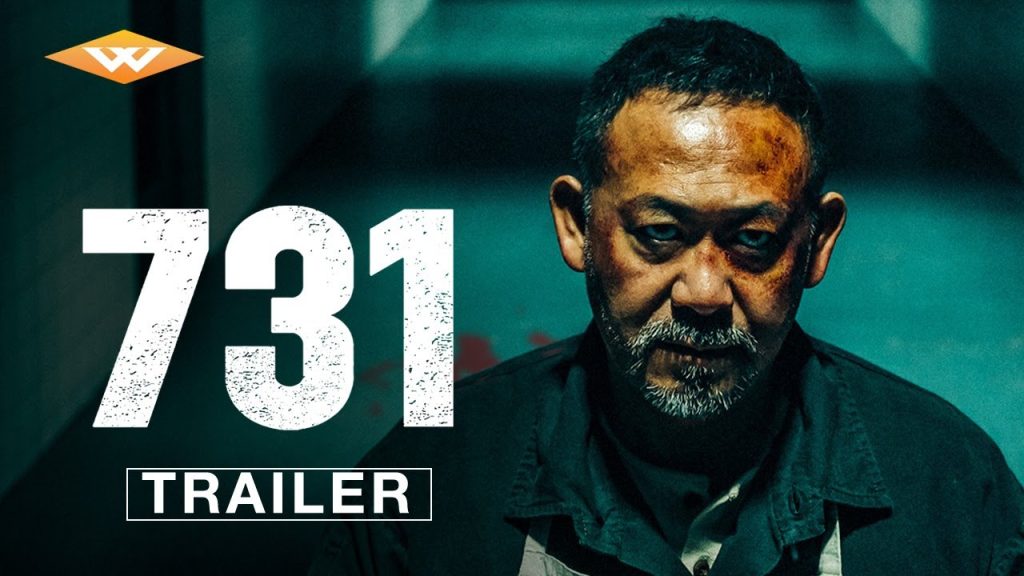
China | 2025 | 125 min | Historical War Drama / Horror
When Historical Memory Becomes Mass-Market Spectacle
One of World War II’s darkest chapters becomes a large-scale Chinese historical drama about the victims of Unit 731, turning suppressed wartime memory into a blockbuster—and igniting debate over how real atrocity should be represented as entertainment.
Set in Northeast China during World War II, 731 follows ordinary prisoners trapped within the notorious Unit 731 complex, where the Imperial Japanese Army conducted biological warfare research and human experimentation. Linshan Zhao uses Wang Yongzhang and other prisoners to give audiences a human entry point into a historical atrocity that remains considerably less familiar internationally than many other crimes of the war.
Rather than approaching that history as restrained reconstruction, Zhao combines war drama, horror, thriller and survival storytelling. The result deliberately brings traumatic history into mainstream genre cinema—a creative decision that helped the film reach a huge audience but also became central to the controversy surrounding it.
➡️ Movie Insight: 731 reveals the difficult tension between making suppressed historical trauma visible to a mass audience and turning that trauma into entertainment.
Should You Watch It?: Important History Meets Divisive Filmmaking
731 will primarily interest viewers drawn to World War II history, Chinese cinema, historical horror and stories about underrepresented wartime atrocities. Its strongest reason for existing is the history itself: Unit 731 remains relatively unfamiliar within global popular culture, giving the film the potential to introduce mainstream audiences to a disturbing chapter they may know little about.
The difficulty is execution. The film’s fragmented storytelling, tonal changes and graphic treatment of violence have produced an unusually polarized response. Its 3.3/10 IMDb rating in the supplied data illustrates that disconnect, with audience reviews repeatedly criticizing its structure and historical treatment even while acknowledging the importance of the underlying subject.
➡️ Viewing Takeaway: Watch it primarily as a controversial attempt to bring an underrepresented wartime atrocity into mainstream cinema—not as a definitive historical account of Unit 731.
Why Everyone Is Talking About It?: $274 Million Turned Historical Trauma Into a Box-Office Phenomenon
The real story surrounding 731 is its extraordinary commercial performance. The film generated approximately $274.1 million worldwide, including around $273.1 million internationally, while its US and Canada gross reached only $410,904. The numbers reveal how overwhelmingly its success was driven by China and how strongly its subject connected with domestic historical memory.
What makes that performance more striking is the contrast between massive audience demand and highly negative user reception. The supplied audience data records a 3.3 IMDb rating alongside extensive criticism of the movie’s narrative structure, historical framing and tonal choices. 731 therefore became more than a successful historical film: it became a case study in how cultural relevance and event-level demand can generate blockbuster business even when satisfaction is deeply divided.
➡️ Box Office Insight: 731 proves that historical memory can generate blockbuster-scale demand, but commercial success does not automatically translate into audience approval or artistic credibility.
Why 731 Stands Out: The Real Debate Is How Cinema Should Represent Atrocity
Historical films about mass violence carry a different creative responsibility from fictional horror because audiences know that the suffering behind the images was real. Choices involving violence, villains, suspense and spectacle therefore influence not only entertainment value but also how history itself is remembered.
That tension defines 731. Zhao uses the accessibility of genre cinema to bring viewers into a difficult historical subject, yet the same horror and thriller mechanisms risk making spectacle compete with remembrance. The film consequently becomes interesting not simply because of what it depicts, but because of the uncomfortable questions created by how it depicts it.
➡️ Standout Insight: What makes 731 significant is not simply the history it depicts, but the argument it creates about where historical remembrance ends and entertainment begins.
Movie Trend: Historical Trauma Cinema — Forgotten History Is Becoming Mainstream Entertainment
Contemporary cinema is increasingly revisiting historical trauma through accessible genre storytelling. War history can arrive through horror, thrillers, survival movies and large-scale commercial dramas rather than conventional prestige historical filmmaking alone, potentially reaching audiences who might never choose documentaries or traditional period dramas.
731 pushes that approach particularly far. It takes an underrepresented wartime atrocity and packages it through horror imagery, suspense and survival storytelling for a mainstream audience. Its enormous Chinese box office demonstrates the reach of that strategy, while its divisive reception demonstrates the creative risks.
➡️ Movie Trend Insight: Historical cinema is becoming more commercially accessible, but the more traumatic the history, the more carefully filmmakers must balance audience engagement with responsibility toward the past.
Viewer Profile: The Historical Confronter — Cinema as a Gateway Into Difficult History
The Historical Confronter is drawn to movies that expose uncomfortable chapters of the past, particularly stories about war, political violence, atrocities and experiences that mainstream global cinema has rarely represented.
|
Viewers of historical war dramas, survival films and WWII cinema |
|
|
Horror, thriller, Chinese cinema and Asian history audiences |
|
|
Broad audience, with stronger potential among historical war-film viewers |
|
|
Broad mainstream audience |
|
|
Historically curious, culturally engaged and interested in war, politics and international cinema |
|
|
Historical drama, war cinema, survival thrillers, documentaries and intense international films |
The film works best for viewers prepared for disturbing subject matter and morally uncomfortable historical material. Audiences unfamiliar with Unit 731 may find the underlying history particularly compelling, but the controversy surrounding the movie’s historical interpretation makes further reading valuable after viewing.
➡️ Audience Insight: Best suited to historically curious viewers willing to separate the importance of the real events from the film’s controversial interpretation of them.
What This Movie Means for the Industry: National History Can Become Blockbuster Cinema
The approximately $274 million worldwide gross demonstrates the commercial potential of culturally specific historical stories when they connect strongly with collective memory. 731 did not need a global franchise, superhero character or Hollywood star to achieve blockbuster-scale revenue; the historical event itself became the commercial proposition.
But the film also demonstrates the opposite lesson. When filmmakers commercialize traumatic history, audiences can demand greater responsibility rather than accepting spectacle alone. The sharply divided reception suggests that historical credibility and respectful representation increasingly function as part of the audience experience, particularly when collective trauma becomes mass entertainment.
➡️ Industry Insight: Historical memory can create blockbuster demand, but filmmakers dealing with collective trauma must treat historical credibility as part of the movie’s creative value.
Creative Analysis: Horror, History & Spectacle Fight for the Same Screen
731 attempts to combine historical remembrance, horror, melodrama, survival cinema and commercial spectacle within a 125-minute feature. That ambition gives the film scale and accessibility, but it also creates its central creative problem: these different filmmaking modes do not always reinforce one another.
Storytelling — History Through Ordinary Lives. Zhao uses individual prisoners to provide an audience entry point into Unit 731 rather than constructing an exhaustive historical account. The strategy humanizes the premise but also compresses complicated history into more conventional survival storytelling.
Direction — Spectacle Over Restraint. Zhao frequently approaches the material through heightened imagery and genre mechanics rather than documentary-style realism. That gives the film immediate cinematic intensity while creating tension between historical seriousness and entertainment.
Performances — Humanity Inside the Machinery. Jiang Wu’s Wang Yongzhang provides the central human perspective, while Wang Zhiwen, Li Naiwen, Sun Qian, Feng Wenjuan and Lin Ziye help populate a story built around individual vulnerability inside an institutional system of violence.
Visual Style — Historical Horror Becomes Spectacle. Graphic imagery, elaborate production design and horror aesthetics communicate brutality. Yet visual intensity can become spectacle in itself, creating the uncomfortable possibility that audiences consume historical suffering through the visual language normally associated with genre entertainment.
Themes — Memory Versus Erasure. Beneath the violence is a clear concern with preserving historical memory. The film positions remembrance as resistance to forgetting, particularly around wartime events that remain politically and culturally sensitive across East Asia.
What Makes It Different — Historical Trauma Became a Mass-Market Event. 731 is not a niche festival treatment of historical atrocity. It is a mainstream production that transformed an exceptionally difficult subject into a film watched by a huge theatrical audience.
➡️ Creative Insight: 731 demonstrates both the power and danger of using genre cinema to preserve traumatic history: spectacle can bring millions of viewers to the story, but it can also compete with the memory the movie is trying to protect.
If You Liked 731 (2025): War, Survival & History That Refuses to Disappear
These films explore war, occupation and historical trauma through ordinary people caught inside extraordinary events, turning survival, resistance and witnessing into ways of confronting difficult history.
Dead to Rights (2025) by Shen Ao: Preserving the Evidence of Atrocity
During the 1937 Nanjing Massacre, a postman posing as a photo developer shelters Chinese civilians while discovering photographic evidence of atrocities, transforming survival into a dangerous attempt to preserve historical truth.
➡️ Why It Connects: Like 731, it confronts Japanese wartime atrocities in China, but places greater emphasis on evidence, witnessing and ensuring that victims cannot disappear from history.
Harbin (2024) by Woo Min-ho: Resistance Against an Expanding Empire
Set during Korea’s resistance to Japanese colonial expansion, independence fighters pursue a dangerous mission while betrayal, loyalty and sacrifice test their commitment to a larger national struggle.
➡️ Why It Connects: Both films revisit the legacy of Imperial Japan through East Asian historical memory, transforming national trauma into personal stories about resistance, sacrifice and survival.
Blitz (2024) by Steve McQueen: War Through the Eyes of a Child
During the German bombing of London, a young boy escapes evacuation and attempts to return to his mother, experiencing wartime destruction through the perspective of an ordinary civilian.
➡️ Why It Connects: Where 731 approaches wartime trauma through captivity and horror, Blitz uses civilian vulnerability and survival, showing how enormous historical events ultimately become individual human experiences.
September 5 (2024) by Tim Fehlbaum: When Witnessing History Becomes a Moral Responsibility
During the 1972 Munich Olympics hostage crisis, an American sports broadcasting team unexpectedly finds itself covering a violent political event live, forcing journalists to decide what should be shown while history is still unfolding.
➡️ Why It Connects: Both films raise questions about how real human suffering should be transformed into images, connecting historical memory with the responsibility of those who determine how audiences witness trauma.
Final Verdict: Important History Overwhelmed by Uncertain Storytelling
731 matters because its subject matters. Unit 731 deserves greater international awareness, and the film’s extraordinary commercial success demonstrates that audiences are willing to engage with difficult historical material on a blockbuster scale. Its ambition, production scale and determination to keep this history visible give it cultural significance beyond conventional entertainment.
As filmmaking, however, that importance does not automatically translate into effectiveness. Horror spectacle, melodrama, thriller mechanics and historical reconstruction frequently compete for attention, while the divided audience response exposes the limitations of treating traumatic history through heightened entertainment conventions. The result is a movie whose cultural impact is considerably stronger than its artistic execution.
➡️ Final Verdict: 2.8/5 — A commercially extraordinary and historically important film whose unstable storytelling and sensationalism struggle to carry the enormous responsibility of its subject.
Quick Facts: When Historical Trauma Became a $274 Million Blockbuster
|
Historical War Drama / Horror / Thriller |
|
|
Unit 731, human experimentation, war crimes, survival, historical memory |
|
|
Chinese / Mandarin / Japanese |
|
|
Jiang Wu, Wang Zhiwen, Li Naiwen, Sun Qian, Feng Wenjuan, Lin Ziye |
|
|
Changchun Film Studio, Poly Film Investment, Beijing HY Media |
|
The film opened in China in September 2025 and became overwhelmingly dependent on its home market commercially. The supplied box-office data records $274.09 million worldwide, compared with only $410,904 in the US and Canada.
Final Insight: Remembering History Requires More Than Showing Its Horror
731 ultimately raises a larger question than whether it succeeds as entertainment: what does cinema owe the victims when it reconstructs real atrocity? Visibility matters. Millions of viewers encountering Unit 731 through a mainstream movie can create curiosity about history that might otherwise remain outside popular consciousness.
But remembrance also depends on how that history is presented. Spectacle can attract attention, while accuracy, humanity and restraint determine what audiences understand once they are watching. The enormous gap between 731’s box-office success and its divisive reception makes that tension the film’s most revealing legacy.
➡️ Final Insight: Bringing forgotten history to millions of viewers is powerful—but remembering victims means making sure spectacle never becomes more memorable than the truth.