
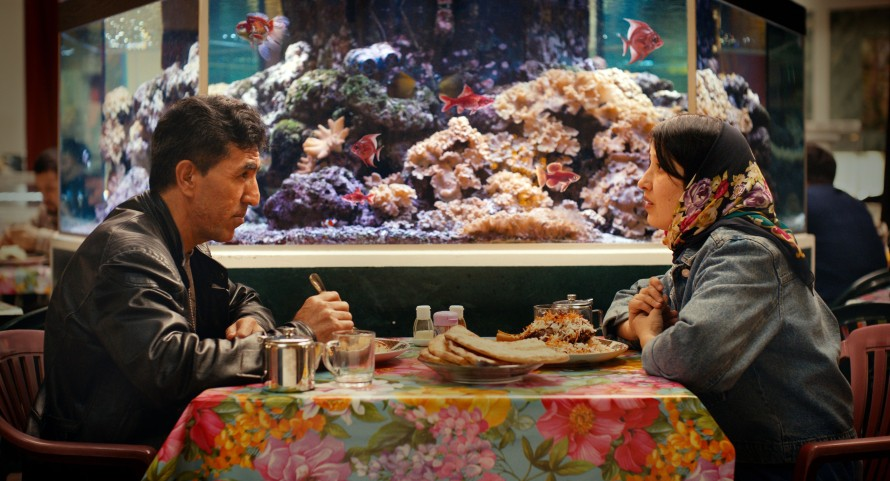
Afghanistan’s first rom-com — and its most urgent love story
Naru, the only camerawoman at Kabul’s main TV station, is a single mother convinced no good men exist in Afghanistan — until she is thrown into the field with Qodrat, the station’s star reporter, as the Taliban closes in and the city runs out of time.
Why It Is Trending: Afghanistan’s First Rom-Com Opens the Berlinale
Berlinale Director Tricia Tuttle called Sadat one of the most exciting voices in world cinema, saying No Good Men delivers on the promise of her first two features — spotlighting Afghan women’s lives with romance, humour, and rousingly political storytelling. The film’s selection as Opening Gala of the 76th Berlin International Film Festival gave it the most prestigious platform in European arthouse cinema. It is the third instalment in Sadat’s planned autobiographical pentalogy, following Wolf and Sheep (2016) and The Orphanage (2019) — both Cannes Directors’ Fortnight entries, positioning this as a significant career moment for one of Afghan cinema’s defining voices. Its five-country co-production — Germany, France, Norway, Denmark, Afghanistan — signals genuine international institutional commitment.
Elements Driving the Trend: Sadat doesn’t merely transpose rom-com tropes to a new setting — she transforms them through a lens of intimate lived experience, creating something entirely new: a genre film whose third-act stakes are not emotional but political, where the usual apologies and confessions require surmounting impossible hurdles. The director plays the lead herself, bringing autobiographical authority to every scene. The film is a high-wire tonal experiment — pitting buoyant workplace romance against devastating crashes of realism — and the inconsistency is the point. Cinematographer Virginie Surdej (The Blue Caftan) gives the film a visual intelligence that elevates it above its modest production scale.
Virality: The Berlinale opening slot generated immediate global press coverage, with the “Afghanistan’s first rom-com” angle driving discovery across mainstream and arthouse audiences simultaneously. Sadat’s self-casting and the film’s feminist premise drove strong social media conversation from the first screening.
Critics Reception: Variety called it an adventurous tonal experiment and a more universal commercial proposition than Sadat’s previous features. The Guardian’s Peter Bradshaw praised it as intelligent and urgent — a shrewd, pointed film that tells you things about Afghanistan not covered in the nightly news. The Phrase Maker awarded four stars, calling it structurally safe yet thematically courageous.
Awards and Recognitions: 1 nomination total. World premiere as Opening Gala, 76th Berlin International Film Festival, February 12, 2026. Released February 12, 2026 in Germany. US distribution and wider release dates pending.
No Good Men arrives at a moment when Afghanistan has largely disappeared from Western news cycles — and insists, through genre, on being seen. The Guardian noted it is almost a bookend to Samira Makhmalbaf’s At Five in the Afternoon (2003) — bookending the full arc of the American military presence in Afghanistan through the lives of women. For the industry, it proves that politically urgent cinema can wear genre clothes without compromising its moral seriousness. The Berlinale opening slot is both recognition and challenge: the film must now travel beyond the festival bubble to reach the audience it was built for.
What Movie Trend Is Followed: The Political Rom-Com as Acts of Feminist Resistance
The romantic comedy is being reclaimed by female filmmakers from the Global South as a vehicle for social critique — and No Good Men is its most formally daring recent example. Sadat’s avoidance of NGO language and broad women’s empowerment movements was key to evading the limiting parameters of victimhood within which Afghan women are often seen in global cinema. Where crisis films about Afghanistan foreground American wars and international intervention, this one centres the interior life of an Afghan woman — her ambitions, her friendships, her desires — and makes the political catastrophe the backdrop rather than the subject. The rom-com format is not a concession but a weapon: it insists on Afghan women’s full humanity by giving them the same genre as every other woman on earth.
Trend Drivers: Genre as Political Strategy The film opens the Berlinale — a festival that often privileges social resonance over formal fireworks — which is a deliberate signal that politically urgent cinema and popular genre are not mutually exclusive. The five-film autobiographical pentalogy model gives Sadat’s work a cumulative cultural weight that individual films cannot achieve alone. The growing international appetite for non-Western perspectives on globally significant events — delivered through accessible genre rather than arthouse abstraction — is creating new distribution pathways for films like this.
What Is Influencing Trend: Female filmmakers from Afghanistan, Iran, and the broader region are using genre cinema to circumvent the victimhood framework that Western distribution and programming still imposes on their work. The global success of politically inflected romantic drama — from Flee to Rocks — has validated personal, intimate storytelling as a vehicle for political urgency. Co-production models spanning five countries are enabling ambitious films from under-resourced national cinemas to reach international screens with genuine craft.
Macro Trends Influencing: The Taliban’s return to power has made Afghanistan’s women invisible to their own government and increasingly invisible to global media — making cinema one of the last spaces where their interiority can be documented and shared. The feminist cultural reckoning of the past decade has created an informed, globally distributed audience hungry for films that treat women’s inner lives as the centre of serious drama. Berlinale’s programming under director Tricia Tuttle has consistently championed politically committed female-authored cinema as a festival identity.
Consumer Trends Influencing: Arthouse audiences are increasingly drawn to films that blend genre accessibility with political seriousness — the either/or choice between entertainment and urgency is no longer accepted. The diaspora audience for Afghan and Central Asian cinema is growing, distributed across Europe and North America, and represents an underserved commercial opportunity. Festival-opening films have become cultural events that generate mainstream press coverage independent of box office performance.
Audience Analysis: Arthouse Audiences, Feminist Film Communities, and the Diaspora The core audience is 25–55 — politically aware, culturally engaged adults who followed the Kabul withdrawal and want cinema that does what journalism cannot. IONCINEMA noted Naru’s exceptional combativeness overrides any sense of despair — her work ethic wins over the initially dismissive Qodrat — giving the film an emotional engine that works independently of its political stakes. The rom-com format gives it an entry point for audiences who would resist a straight crisis drama. The diaspora community — Afghan, Iranian, Central Asian — will find something rare: their world treated with full dramatic seriousness and genuine affection.
No Good Men works because it refuses to choose between love story and political document — and that refusal is itself a political act. In treating Afghan women as full human beings with desire, ambition, and dark humour, it does more for their visibility than any amount of crisis journalism. The genre film as feminist resistance is a trend that is only beginning, and Sadat is its most formally accomplished current practitioner.
Final Verdict: No Good Men Is Courageous, Warm, and One of the Year’s Most Significant Films
Shahrbanoo Sadat delivers a film that is simultaneously personal and planetary — a workplace romance set against the last days of a society’s freedom, executed with autobiographical honesty and genre intelligence. Its formal imperfections — tonal unevenness, a somewhat predictable finale — are the imperfections of a filmmaker who is doing too many difficult things at once and doing most of them well. The Phrase Maker called it structurally safe yet thematically courageous — a film that uses all the right cues and details while subverting the expectations of its context and delivering a heartbreaking portrait of a society that made making it a risk.
Audience Relevance: For Anyone Who Has Ever Loved Someone in a World Designed to Prevent It Naru and Qodrat’s relationship is not just a romance — it is an act of quiet defiance against every structure that says their connection should not exist. That universality travels across cultures immediately.
The film gives its audience the pleasure of a love story and the grief of knowing exactly how it ends — which is the most emotionally complex thing genre cinema can do.
What Is the Message: There Are Good Men — and the System That Erases Women Is the Real Enemy Sadat has said: “Growing up in Afghanistan’s deeply patriarchal society, I believed there were no good men — until I found out another reality exists, and I hope this film offers young women hope and young men an example.” The film’s argument is not that men are redeemable but that the system that shapes them is the source of the damage — and that resisting that system is everyone’s responsibility.
That distinction is what separates No Good Men from films that simply condemn and move on.
Relevance to Audience: A Newsroom Comedy That Becomes a Survival Story The first half earns its laughs honestly — petty hierarchies, Valentine’s Day vox pops, a vibrator gifted as a divorce present. The second half earns its grief just as honestly, as the comedy’s architecture is dismantled by historical fact.
The Film Verdict noted that Sadat refreshingly undercuts the trite expectation that female transgression will be followed by swift retribution — which makes the eventual collapse of that freedom all the more devastating.
Social Relevance: Afghan Women’s Interiority, Finally on Screen One user review noted the film’s cultural impact is 8/10 — it foregrounds Afghan women’s interiority in a way few recent films have. The vox-pop sequence — women on Kabul streets speaking about their marriages with unvarnished honesty — is the film’s most socially resonant passage, and the most quietly radical.
The repression of women’s rights is treated as a consequence of systemic failure, not a fixed cultural fact — which is a more politically honest and more useful framing than most Western coverage provides.
Performance: Sadat Carries It With Honest, Unguarded Presence IONCINEMA described Sadat as a captivating and enigmatic screen presence who leads audiences into uncharted territory carefully. Anwar Hashimi’s Qodrat transforms convincingly from dismissive authority figure to genuinely debonair romantic lead — a character arc that earns the genre it inhabits.
The chemistry between the two leads is grounded, adult, and complicated — which is exactly what this story requires.
Legacy: The Film That Proved Afghan Cinema Can Own Its Own Genre No Good Men will be remembered as the film that established Shahrbanoo Sadat as a world-cinema figure of the first rank — and as the first Afghan rom-com, a designation that carries more cultural weight than it might initially seem. It claims a genre for a culture that has been reduced, in Western perception, to crisis and catastrophe.
Its legacy will be built film by film as Sadat completes her pentalogy — each new entry recontextualising this one as part of something larger and more significant.
Success: Berlinale Opening, Global Press, Distribution Expanding World premiere Opening Gala, 76th Berlin International Film Festival, February 12, 2026. 20 critic reviews with generally positive consensus. IMDb user rating of 7.5 from early viewers. Five-country co-production. US distribution and wider release dates pending via Lucky Number (world sales, Paris).
The Berlinale opening slot guarantees sustained critical attention throughout 2026. The distribution challenge is converting that attention into audience reach beyond the festival circuit.
Insights No Good Men proves that the rom-com is not a minor form — in the right hands, it is one of the most politically radical things cinema can do. Industry: The Berlinale opening slot validates the political rom-com as a commercially viable prestige format — and Sadat’s five-country co-production model offers a replicable blueprint for ambitious films from under-resourced national cinemas. Audience: Afghan women have been visible in global media primarily as victims — and this film’s audience will respond to the radical act of seeing them as protagonists of their own desire, ambition, and dark humour. Social: By treating patriarchy as a systemic failure rather than a cultural constant, No Good Men makes a more politically useful argument than most crisis cinema dares to attempt. Cultural: Sadat’s pentalogy is building one of the most significant bodies of work in contemporary world cinema — and No Good Men is its most accessible and most urgent entry yet.
No Good Men is a love story set in a city about to lose everything — and it insists, with warmth and fury, that the love story matters just as much as the catastrophe. That insistence is the film’s most radical act, and its most enduring gift.
Summary of No Good Men: Love, Kabul, and the Last Days of Freedom
-
Movie themes: Feminist resistance, romantic ambivalence, journalistic ambition, and the fragility of women’s rights under political collapse. A love story that refuses to be diminished by the history surrounding it.
-
Movie director: Triple-threat auteur — director, writer, lead actress. Shahrbanoo Sadat brings autobiographical honesty, genre intelligence, and genuine political courage to her third feature, the most accessible and formally daring film of her pentalogy so far.
-
Top casting: Sadat leads with honest, unguarded presence; Anwar Hashimi transforms from antagonist to romantic lead with remarkable conviction; together they generate adult, complicated chemistry the film fully earns.
-
Awards and recognition: 1 nomination. Opening Gala, 76th Berlin International Film Festival, February 12, 2026. Previous features Wolf and Sheep (2016) and The Orphanage (2019) both premiered at Cannes Directors’ Fortnight.
-
Why to watch: Afghanistan’s first rom-com is also one of 2026’s most politically urgent films — a love story set against the last days of a city’s freedom, executed with warmth, dark humour, and total moral seriousness.
-
Key success factors: Genre as political strategy — No Good Men claims the rom-com for Afghan women and in doing so insists on their full humanity in a way crisis cinema never could.
-
Where to watch: Released February 12, 2026 in Germany. World sales via Lucky Number, Paris. US distribution and wider international release dates TBC.







Leave a Reply