
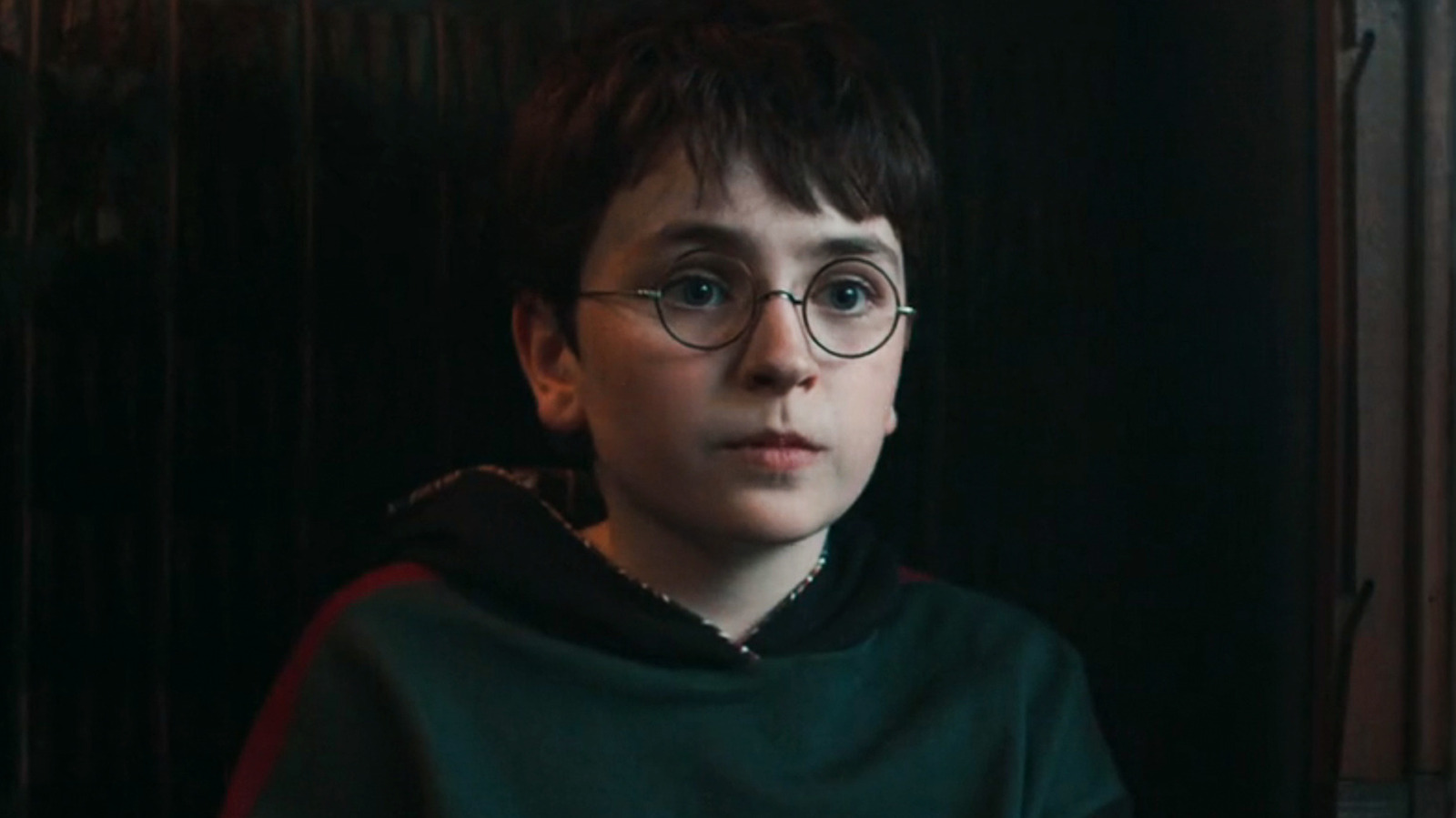
“Films are too dark now.” It’s a common refrain you hear online, and one that seems to recrudesce almost every time a new trailer drops. The first trailer for the “Harry Potter” reboot series prompted controversy upon its March 2026 arrival, and not just because a “Harry Potter” TV series is a tipping point for our nostalgia-mad monoculture. The trailer comprised incongruously desaturated clips that looked less like a spellbinding foray into the world of The Boy who Lived and more like Zack Snyder gave “The Philosopher’s Stone” the “Man of Steel” treatment.
This is hardly the only example. The online reaction to the trailer for 2023’s “Peter Pan and Wendy” suggested studios had long been waging a protracted war on vibrance, with one X user demanding a “formal investigation.” In fact, if you were to only listen to social media you’d think films and TV shows were perpetually submerged in layers of murk so thick you’d need to mount an archaeological excavation in order to watch.
The thing is, this observation about movie and TV gloom isn’t just limited to social media. Whether it’s articles from The Week complaining that 2022’s “The Batman” is literally too dark or the widespread backlash to the Battle of Winterfell in “Game of Thrones,” there is a clear sense that movies and shows have become too dreary. A 2011 study in the journal i-Perception (via the National Library of Medicine) backs up the claim. The authors examined 160 English-language films released between 1935 and 2010 and, alongside other findings, concluded that films have “gotten darker.” Or, more specifically, “the mean luminance value of frames across the length of a film has decreased over time.” But why? And perhaps more interestingly, is this as bad a thing as social media would have you believe?
Digital cinematography was a major turning point
The arrival of digital cinematography is a hinge moment in the trend towards darker films and shows. 2002’s “Star Wars: Episode II – Attack of the Clones” didn’t just set a low bar for “Star Wars,” it was the first Hollywood blockbuster shot entirely with digital cameras.In those years the technology left a lot to be desired.
Digital media creator Stronz Vanderploeg runs the “Tographer” YouTube channel. He described how the switch from celluloid to digital affected filmmaking techniques. “Early digital was terrible,” he explained. “So people had to compensate with lighting, with set design, and just how they were structuring everything, to make digital even look close to film.”
Lighting was one of the most significant changes. Blasting a scene with bright light was necessary to produce a proper exposure when celluloid was the standard. Early digital cameras, however, lacked dynamic range, and would produce blown out images when pointed at the same scene. “Lighting became much more about soft light because of these limitations,” explained Vanderploeg. “If you’re shooting with an early DSLR camera or you’re an early digital filmmaker, you need soft light, otherwise, you’re going to clip in the contrast.” (“Clipping” refers to when areas of an image become blown out and lose detail).
Cinematographer Istvan Lettang has worked on everything from Netflix’s “Border Hunters” to the 2023 thriller “Final Vow.” He recalled changing his approach for digital. “When I shot film, I overexposed the skin tones,” he explained. “(…) sometimes it looked good when you overexposed the skin a little bit (…) Where(as) digital doesn’t handle that overexposure well. It feels more hard.” Today, however, digital has evolved to a point where it can handle overexposure with ease. Why, then, are some movies and shows looking duller?
The shift to digital promoted a more naturalistic visual style
Since the advent of digital cinematography, there have been major advances in camera technology. Istvan Lettang pointed to the latest Arri Alexa 35 models, which he said are “so good at (handling) the highlights, I think it’s better than film at this point.” One of 2025’s best movies “Train Dreams” is proof of that. Director of Photography Adolpho Veloso shot the Oscar-nominated drama with the Alexa 35, using what he told Variety was 99% natural light. With only 29 shoot days Veloso created stunning visuals.
But while cameras have evolved, many of the techniques used to tame those early digital images persist. As Stronz Vanderploeg explained, “(Today) the resolution’s there, the dynamic range is there, but along that journey all these practices and aesthetics were embraced for preserving the highlights, for retaining the shadows, for low noise, soft light.” This soft lighting approach remains the standard today, which can contribute to movies generally looking flatter than they once did. But the shift wasn’t just driven by camera technology.
Whereas films of the pre-digital era were lit more theatrically, today cinematographers are actually aiming for more naturalistic “motivated” light, i.e. light from a practical, in-scene source. Cinematographer Justin Safaei confirmed that “chasing that naturalistic, realistic look, that authentic look, both in storytelling and visually, is the trend.” This trend even extends beyond lighting to the color grading process. One colorist I spoke to described how Directors of Photography frequently ask for footage to be made to look less obviously lit. “We shape the image a bit so it doesn’t feel like there was an unmotivated light in the room,” they said. “(Directors of Photography) want the light to feel like it’s coming from a practical source.”
Film and TV show makers are working in the age of visual naturalism
As cinematography has evolved to evoke a more grounded, naturalistic style, so too has post-production. As Kris Smale of color studio Rare Medium explained:
“If I were to say there was any trend in current color correction, it’s the handling of midtones, curvature of the highlights and an elliptical range of hue. Deeper midtones feel more cinematic and softer curves on highlights feel less like video, which in turn feels less lit and (more) natural.”
Clearly, then, the naturalistic look goes beyond cinematographers. It’s an all-encompassing visual style that’s very much the trend of today. This isn’t a negative thing. In fact, it’s hugely positive in so many ways. Images are more detailed than they’ve ever been, and the tools available to craft such images more numerous than ever before. Yet there is this sense that films and shows are looking flatter and muddier than they once did.
For Rare Medium’s Fergus McCall, part of that is due to the same thing animating the complaint machine that is the “Harry Potter” reboot: nostalgia. “There is a nostalgic but prevalent belief that film, film cameras, and the laboratory make a movie more authentic,” he said. “We always crave the ‘good old days.'” In reality, digital color correction is an extremely powerful tool that can craft whatever type of look filmmakers desire. “At the very least, digital color correction has 99% superseded analogue laboratory film grading,” added McCall. “(It) allows for a much greater flexibility of the image.” That said, McCall did point out that this array of tools means that “things can get really ‘stepped’ on if people get carried away in the color theater.” But getting carried away in the color theater isn’t necessarily the issue.
Films and shows being duller isn’t the same as them being darker
It’s not just that movies and shows are getting darker. There’s a distinct muddiness to the worst offenders — a certain kind of illegibility whereby everything looks washed out and objects tend to merge with backgrounds. Katie Stebbins‘ expansive collection of screenshots captures this “intangible sludge,” as she calls it, much of which comes down to the aforementioned changes in filmmaking techniques.
But another significant part of the issue is the focus on fastidious preservation of details. You see this in the rise of HDR, the TV technology that’s touted as a way of expanding brightness and dynamic range. But as Stronz Vanderploeg points out in his video “Why Movies Don’t Look Like Movies Anymore,” this can sometimes actually result in a less dynamic image. “Nothing can be white, nothing can be black. Everything’s got to be a shade of gray.” When everything is a shade of gray, dynamism is diminished not enhanced.
The other factor contributing to dull, flat, and lifeless media goes beyond technology. Culture generally seems to be getting less colorful. An analysis of more than 7,000 photographs of objects held by the Science Museum showed an unmistakable trend towards gray over time. Meanwhile, studies suggest that everything from cars to consumer electronics are becoming less vibrant and more neutral. Our movies and TV shows haven’t been immune to the trend.
Of course, gloomy visuals have their place. Greig Fraser’s dimly-lit industrial decay-scape in 2022’s “The Batman” was, contrary to what some have argued, ideal for a story about Robert Pattinson’s emo caped crusader. But the general trend towards grayness has arguably gone too far, so that “Harry Potter” or the live-action “Moana” end up looking like liminal space nightmares.
Desaturation has become De rigueur
Within the general cultural shift away from color, several films have helped promote desaturated gloom in media. The influence of David Fincher’s 1995 crime thriller “Seven” endures, but perhaps even more significant is Christopher Nolan’s 2008 superhero blockbuster “The Dark Knight,” which made it so that superhero films could be dark, serious, and to use the buzzword of the era, “gritty.” This, however, is where a major problem arises.
As Stronz Vanderploeg noted, this look has since seeped out of genre confines and into filmmaking generally: “It’s weird to me that we’ve gotten to the point where ‘Wicked,’ this charming ‘Wizard of Oz’ fantasy movie, is now embracing some of these aesthetics that I associate with thrillers and suspense and mystery.” Mikey Rossiter of Rare Medium thinks this disconnect between a story and its visuals is the main cause of viewer backlash against movie and TV gloom. “I do understand why people have a problem when photography doesn’t seem to match the tone of a story,” he said. “Or when things are genuinely so dark or under-lit that they can’t make out detail when watching at home.”
There are reasonable explanations. For one, the desaturated, moody aesthetic has become associated with premium filmmaking. As Vanderploeg explains, “A darker exposure is a very obvious way to differentiate from ‘content,’ from social media, from influencers with their iPhone.” Kris Smale of Rare Medium has certainly noticed this play out. “The current trend word over the last 15 years is ‘cinematic,'” he said. “How you define that depends on the person describing, but often it means moody or richer.” When you see a charming children’s tale given the moody lowlight treatment, then, chances are you’re witnessing an attempt by studios and/or filmmakers to signal their premium production values.
As usual, corporations are ruining everything
Filmmakers are creative people by definition, so you would think that in cases where the desaturated look is being pushed on unsuitable stories, there’d be a concerted effort to resist. Often, however, these decisions don’t actually fall to creatives.
Istvan Lettang told me about working on studio projects where the look of a film is essentially predetermined via lookbooks and shot lists. For cinematographers, that can be frustrating to say the least. “The shot list is premade,” he said. “It’s not like an indie movie where the director of photography and director create the shot list together and come up with creative stuff. It’s almost like a script (…) corporate people create the shot list.” What do those corporate people think looks good? You guessed it; dark, desaturated visuals that supposedly radiate a premium vibe. Lettang made sure to note the exceptions. “Obviously, somebody like Christopher Nolan, he’s got full control,” he said. “But there’s like, ‘Avengers.’ I assume that ‘Harry Potter’ (the reboot series) is like ‘Avengers.’ It’s a corporate project.”
25 years ago, the first “Harry Potter” movie made a magical choice by crafting a warm and immersive tone that played to the story’s strengths. This was, as detailed in an American Society of Cinematographers piece, the result of director Chris Columbus, cinematographer John Seale, and production designer Stuart Craig working together. With the reboot series, however, there’s been the undeniable whiff of excessive corporate oversight ever since David Zaslav excitedly announced that Warner Bros. Discovery would embrace “a real focus on franchises” (via Deadline). Of course, we’re not yet able to say how the specific look of the show was created, but it certainly seems likely the executives were closely monitoring every aspect of the project.
How we view films and TV matters more than you think
There’s another major factor at play in our collective sense that movies and shows getting both darker and duller: viewing options. A film or show may have been perfectly-calibrated to deliver high dynamic range, but if somebody watches on a TV set to sport mode with motion smoothing turned on, it will look awful. Stronz Vanderploeg spoke to me about the problem:
“Color and display is one of the hardest things to manage for post-production. You have iPhone screens, iPads, TVs, movie theaters. Even (with) the movie theaters, is it iMAX? Is it Dolby? Is it on a film print somewhere? (…) There’s so many ways that stuff gets displayed and you combine that with HDR and some of the new standards (…) it is an impossible target to hit.”
Mikey Rossiter concurs. “People’s displays are absolutely a limitation,” he said. “Once it leaves our room it kinda becomes the Wild West.” Just look at the time projection problems ruined the cinematography of “Solo.” Rossiter continued: “I think part of our job is to stay aware of what most consumer devices are capable of and raise a flag to our clients if we think something isn’t going to translate well.”
Rare Medium’s Fergus McCall pointed to how correctly-calibrated Dolby presentation cinema can consistently project roughly 2.25 times brighter images than a film projector while still maintaining a true black. “In the very dark environment of a theater this is a massive difference,” he said, adding that this can create a challenge for color graders who master the film for distribution. But it’s also why a lot of the online discourse revolves around media being perceived as darker when in reality it’s simply not being viewed in the correct environment.
Movie and TV darkness is one period in our cultural evolution
In a sense, movie and TV darkness is an extension of a larger trend towards endless choice. The same way the exhaustive Netflix catalog has us doom scrolling ourselves into oblivion before tapping out altogether, boundless choices in both how to shoot and display footage have produced a kind of murky middle ground. Viewers aren’t going to exclusively watch movies on Dolby projectors just to be able to see things clearly, colorists aren’t going to intentionally blow out highlights just so a film looks legible on a cheap LCD screen, and cinematographers aren’t going to light scenes up like Christmas day just so Twitter doesn’t erupt in outrage. Somewhere in the middle, there’s a happy medium, but we’ve all become the metaphorical equivalent of the proverbial Gen Z-er watching movies on their 6-inch iPhone display in direct sunlight. We struggle to see the issue clearly.
It’s hardly surprising. Movie and TV darkness isn’t the result of some evil plot but of an incredibly complex combination of factors. Technical innovations and their attendant artistic effects push-and-pull in a swirling eddy of shifting cultural preferences over which the shadow of corporate interests looms.
In that sense, the dark movie and TV trend is just part of our cultural evolution. As time goes on, the ever-changing trends will inevitably yield more vibrant media, and James Gunn’s charming crowdpleaser “Superman” is arguably proof this change has already begun. When we’re in the age of offensively oversaturated films and TV, we’ll once again find ourselves asking what on earth happened, and once again it will be down to a labyrinthine set of factors about as easy to decipher as the interrogation room visuals of the “Harry Potter” trailer.



Leave a Reply