
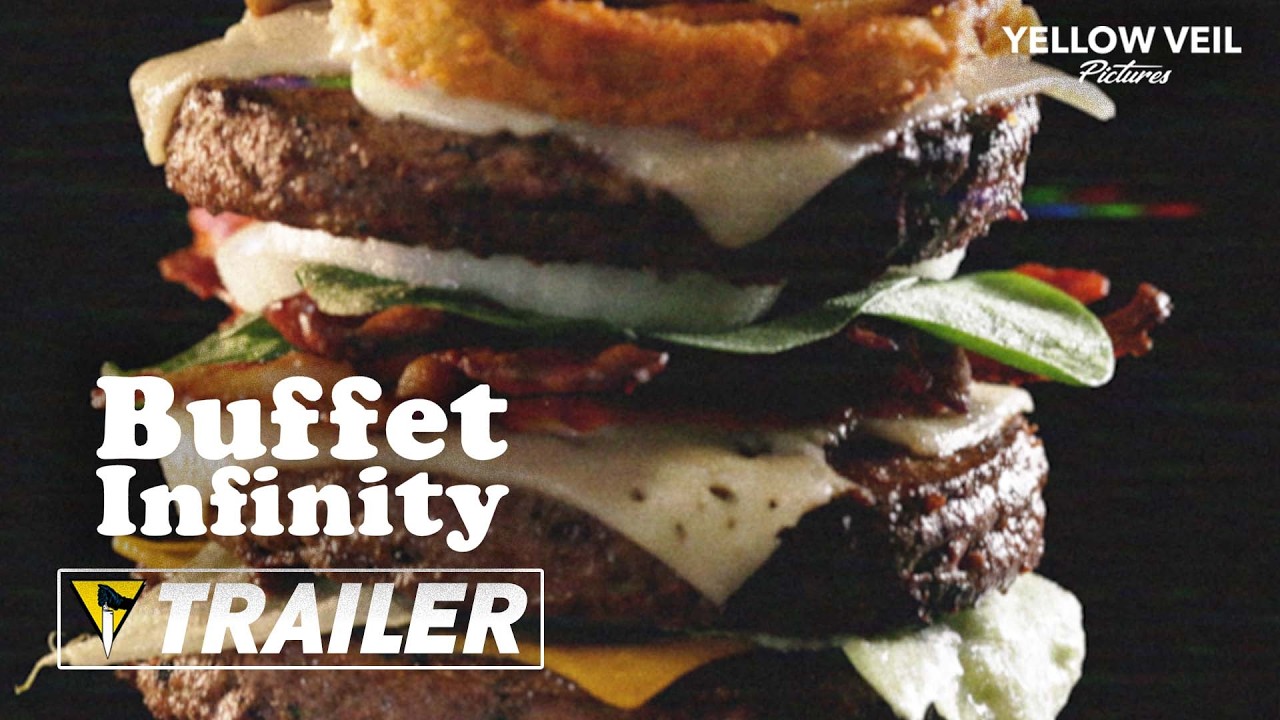
A surreal analog-horror satire where consumerism mutates into something disturbingly alive
A town consumed by ads that start consuming back
• Core premise: A bizarre rivalry between two local restaurants unfolds entirely through low-budget commercials, gradually revealing a sinister, escalating narrative
• Stakes + tone: What begins as absurd comedic competition evolves into unsettling horror, where media manipulation and psychological influence threaten an entire community
The emotional setup is deceptively playful, drawing viewers in through humor, nostalgia, and absurdity before slowly destabilizing that comfort. Narrative tension builds through repetition and escalation, as each commercial becomes more aggressive, strange, and psychologically invasive. The fragmented storytelling forces the audience to piece together meaning, creating a sense of unease and immersion. Symbolically, the film critiques consumer culture, where advertising becomes not just influence—but control, consumption, and ultimately domination over identity and reality itself.
Why It Is Trending: The rise of analog horror and experimental storytelling in digital culture
Buffet Infinity taps directly into the growing popularity of analog horror and lo-fi experimental formats that thrive on nostalgia and discomfort. In an era dominated by polished content, audiences are increasingly drawn to raw, unconventional storytelling styles. The film’s structure—told entirely through commercials and broadcast fragments—aligns with digital-native storytelling formats seen on platforms like YouTube and TikTok. Its hybrid genre of comedy and horror makes it both accessible and subversive. From a market perspective, it positions itself within niche yet highly engaged audiences seeking originality and immersive experiences.
Elements Driving the Trend: Format innovation, nostalgia aesthetics, and psychological unease
The core appeal lies in its unconventional narrative structure, which transforms advertising into storytelling. The narrative hook—a comedic rivalry spiraling into horror—creates a unique tonal shift that keeps audiences engaged. Its nostalgic recreation of old TV ads taps into collective memory while subverting expectations. The creators leverage low-budget aesthetics as a strength, enhancing authenticity and immersion. This blend of humor, horror, and experimentation defines its standout identity.
Virality of Movie (Social Media Coverage): Cult appeal driven by its bizarre and immersive format
The film gains traction through its uniqueness, with clips and segments easily shareable due to their short-form structure.
Online discussions highlight its unsettling tone, creative format, and “you have to experience it” quality
Critics Reception: Strong appreciation for originality and experimental execution
Critics have responded positively to its inventive storytelling and unconventional structure.
Genre-focused outlets and festival coverage emphasize its creativity, comparing it to emerging analog horror trends
Awards and Recognitions: Emerging festival recognition highlighting innovation
The film holds 1 win and 4 nominations, signaling early recognition within indie and genre festival circuits.
Its awards positioning reflects appreciation for originality rather than mainstream appeal
Director and Cast: A collaborative ensemble driving a concept-first narrative
Simon Glassman directs with a focus on concept-driven storytelling, prioritizing structure and tone over traditional character arcs. His vision emphasizes immersion and experimentation. The ensemble cast contributes to the film’s fragmented narrative, embodying multiple roles within commercials and broadcasts. Performances lean into exaggerated, satirical tones that gradually shift toward unease. The acting style supports the film’s transition from comedy to horror.
The film trends because: A bold, experimental satire reflecting the anxiety of media saturation
• Format-driven storytelling — The film leverages unconventional structure to create a unique viewing experience
• Industry opportunity — It aligns with rising demand for experimental, niche content in digital ecosystems
• Audience alignment — It resonates with viewers seeking originality, immersion, and psychological depth
The industry increasingly supports such projects as audiences explore beyond traditional narrative formats
Conclusion: A daring, genre-blending experiment that redefines how stories can be told
Buffet Infinity stands out through its commitment to form and concept over convention. Its emotional positioning evolves from humor to discomfort, creating a layered viewing experience. Culturally, it reflects anxieties around media, consumption, and influence. From an industry perspective, it signals the growing acceptance of experimental storytelling.
What Movie Trend Is Followed: Analog horror and experimental media-driven storytelling that blurs satire with psychological terror
Buffet Infinity follows the rising trend of analog horror and fragmented narrative storytelling where traditional plots are replaced by media artifacts such as commercials, broadcasts, and found footage. This trend thrives on discomfort, ambiguity, and audience participation in decoding the story. Emotionally, it creates unease by transforming familiar formats into something threatening. The accessibility comes from its recognizable visual language—TV ads and news segments—while subverting their intent. It resonates because it reflects how modern audiences consume fragmented, media-saturated content.
Trend Drivers: The shift toward immersive, unconventional storytelling formats
The trend exists due to audience fatigue with traditional linear narratives and polished storytelling. The industry is increasingly experimenting with format as a core storytelling device rather than just a delivery method. Digital-native audiences are more comfortable engaging with fragmented and nonlinear narratives. There is also a growing appetite for content that feels interactive and interpretive. This creates demand for films that challenge structure and expectation.
What Is Influencing Trend: Media saturation and distrust in traditional narratives
Audiences are surrounded by constant advertising and media messaging, making them more receptive to stories that critique or distort these systems
A generational shift toward digital-first content consumption influences storytelling formats
Emotionally, viewers are drawn to narratives that reflect confusion, anxiety, and overstimulation
Macro Trends Influencing: Expansion of hybrid genres and experimental cinema
The film industry is embracing genre blending, combining horror, comedy, and satire into unified experiences
Cultural evolution favors originality and boundary-pushing storytelling over formulaic content
Lifestyle changes include shorter attention spans and preference for segmented, episodic viewing formats
Consumer Trends Influencing: Demand for immersive and shareable content experiences
Audiences increasingly engage with content that feels interactive or puzzle-like
Expectations include originality, unpredictability, and strong conceptual hooks
Engagement styles favor clips, segments, and moments that can be shared and discussed online
Audience Analysis: Niche, digitally native viewers seeking originality and experimentation
The core audience ranges from 18–40, primarily consisting of digitally engaged viewers familiar with online horror and experimental formats. Their lifestyle includes heavy media consumption across platforms like YouTube, TikTok, and streaming services. Behaviorally, they seek content that challenges perception and invites interpretation. Viewing habits lean toward niche, genre-specific films and cult cinema. Preferences favor innovation, discomfort, and conceptual storytelling over traditional narratives.
Conclusion: A highly scalable niche trend driven by innovation and audience curiosity
This trend works because it offers something fundamentally different from mainstream storytelling. It is scalable within niche audiences and adaptable across platforms. Sustainability remains strong as digital culture continues to evolve. The industry is increasingly investing in experimental formats as a way to stand out in a crowded content landscape.
Final Verdict: A bold, unsettling experiment that transforms satire into a deeply immersive psychological experience
Buffet Infinity stands as a striking example of how form can become the story itself, pushing beyond traditional narrative boundaries. It reflects an industry shift toward concept-first filmmaking, where structure and medium drive engagement as much as plot. Culturally, it taps into anxieties around consumerism, media overload, and subconscious influence. Its identity relevance lies in how it mirrors modern media consumption—fragmented, repetitive, and often overwhelming. In the long term, it positions itself as a cult-style film that thrives on uniqueness rather than mass appeal.
Audience Relevance: Engagement through curiosity, discomfort, and interpretation
The film connects with audiences who enjoy decoding layered narratives and unconventional formats.
It appeals to viewers seeking immersive experiences that challenge perception rather than provide clear answers
What Is the Message of Movie: Consumerism consumes more than it sells
The film suggests that advertising and media do not just influence behavior but shape identity and reality itself.
It explores how repetition and exposure can blur the line between choice and control
Relevance to Audience: Why it resonates in a hyper-mediated world
In a world saturated with ads and digital content, the film feels eerily familiar yet distorted.
Its structure mirrors real-life media consumption, making the experience both relatable and unsettling
Social Relevance: A critique of media power and psychological influence
The film reflects growing concerns about manipulation through advertising and digital ecosystems.
It highlights how communities can be shaped—and consumed—by unchecked media influence
Performance: Strong niche reception driven by originality and concept
IMDb rating stands at approximately 7.3, indicating positive reception within its target audience.
Box office impact is limited, with the film functioning more as a festival and VOD-driven release rather than a mainstream success
Legacy: A cult experimental film with lasting conceptual influence
The film contributes to the evolution of analog horror and experimental storytelling formats.
Its legacy will likely be defined by its influence on future concept-driven, media-based narratives
Success: Measured through innovation, cult appeal, and critical recognition
Success is defined by its originality and ability to stand out within the genre landscape.
With 1 win and 4 nominations, it gains recognition for creativity rather than commercial scale
Insights: A film that weaponizes format to reflect the chaos of modern media cultureIndustry Insight: The film demonstrates how unconventional formats can become a competitive advantage in saturated markets. It highlights the industry’s willingness to support experimental storytelling. It also reinforces the value of niche audiences in driving success.Audience Insight: Viewers are increasingly drawn to content that challenges structure and invites interpretation. They value originality and immersive experiences. This film aligns with evolving audience expectations.Social Insight: The narrative reflects growing anxiety around media influence and consumer manipulation. It captures the overwhelming nature of constant content exposure. It also questions the boundaries between entertainment and control.Cultural Insight: The film contributes to the rise of analog horror as a defining aesthetic of modern experimental cinema. It redefines how stories can be told through media fragments. This reinforces its cultural significance.
Conclusion: A provocative, format-driven film that redefines narrative through media
The film’s long-term relevance lies in its bold experimentation and conceptual depth. It impacts the cinematic landscape by challenging traditional storytelling structures. From a market perspective, it proves the viability of niche, innovative content. For the industry, it signals a future where format and narrative are increasingly intertwined.
Summary of the Movie: A surreal analog horror satire where advertising spirals into psychological domination and community collapse
• Movie themes: Consumerism, media manipulation, paranoia — the film explores how advertising evolves from persuasion into control, blurring reality and perception
• Movie director: Simon Glassman delivers a concept-driven, experimental vision that prioritizes structure and tone over traditional storytelling. His intent is to create an immersive experience where format itself becomes the narrative engine
• Top casting: Kevin Singh and Ahmed Ahmed lead within an ensemble that embodies exaggerated commercial personas, gradually shifting from comedic caricatures to unsettling figures
• Awards and recognition: 1 win and 4 nominations (IMDb), reflecting early recognition in indie and genre festival circuits for innovation
• Why to watch movie: It offers a completely unique viewing experience that blends comedy, horror, and experimental storytelling into an immersive, unsettling narrative
• Key Success Factors: Its originality, format innovation, and ability to turn familiar media into psychological horror distinguish it within the genre
• Where to watch: Released October 2025 (United States); available in select theaters and VOD platforms
Conclusion: A daring cinematic experiment that transforms media into narrative and satire into horror
Buffet Infinity is defined by its bold rejection of conventional storytelling and its commitment to immersive, format-driven narrative. The emotional takeaway lies in its unsettling portrayal of how media can shape and consume reality. As a viewing experience, it is disorienting, engaging, and conceptually rich. Its lasting impression comes from its originality and its ability to provoke thought long after viewing. Ultimately, it stands as a defining example of how experimental cinema can challenge and expand storytelling boundaries.









Leave a Reply