
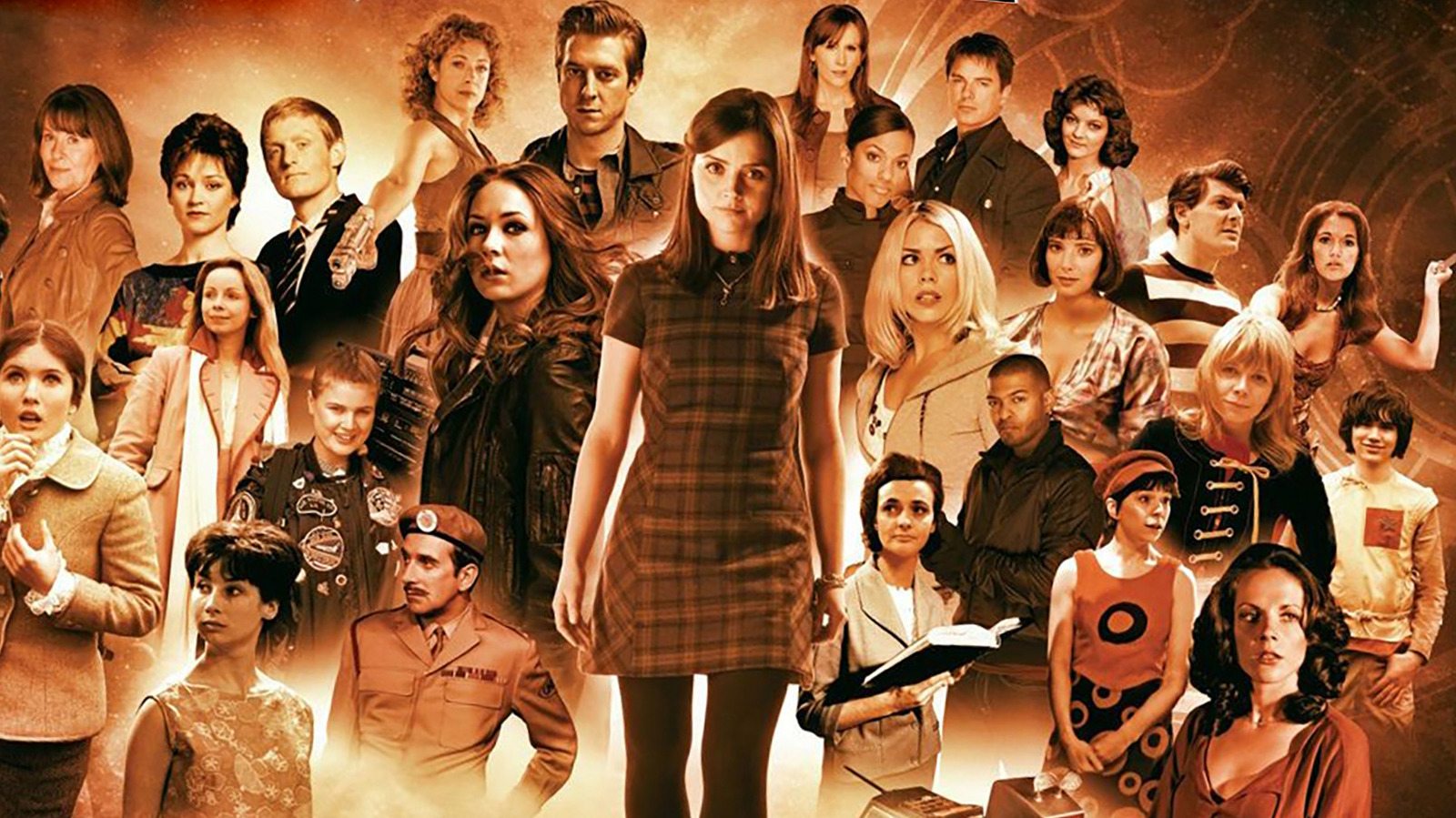
For all the cosmic adventures through time and space, the British science fiction series “Doctor Who” maintains a strong sense of humanity. The Doctor is almost always accompanied by a human companion offering a grounded counterpoint to the show’s shape-shifting extraterrestrial. Some of these partners bring a playful energy to the series while others offer hints of romantic tension, wide-eyed wonder, or a brash dynamic to the time-bending journeys. Not all companions’ lives are necessarily improved by their association with the Doctor, unfortunately, with more than one character meeting a tragic end as they explore the space-time continuum.
Simply put, while the Doctor may be steering the course of the sci-fi series, it’s their companions who inform his actions and leave the bigger impact on them personally. With a franchise spanning over 60 years, there are some supporting characters who inevitably stand out more than others. The best companions provide an entertaining pairing with the Doctor while providing fresh insight into the venerable franchise and its transformative protagonist.
These are the 15 best “Doctor Who” companions of all time ranked, standing as a crucial part of the franchise’s history.
Bill Potts
Peter Capaldi’s time as the Doctor doesn’t get enough credit for redefining what the show could be. Capaldi’s Doctor also has some significantly underrated companions, including Bill Potts (Pearl Mackie), who joins him in the 10th season of the revival series. In the season premiere, Bill meets the Doctor while he’s posing as a university professor in Bristol, joining him when her girlfriend Heather (Stephanie Hyam) is turned into a monster. At the end of the season, Bill is mortally wounded and transformed into a Cyberman to stay alive, retaining her memories and identity.
Bill is another one of the more tragic modern companions, who gets a bittersweet reunion with Heather before leaving the Doctor to commence her own tour of the cosmos. A 2020 “Doctor Who” minisode brings back Bill Potts to Earth to comment on social issues as her character is qualified to do. This highlights the unique and long overdue perspective that Bill brought to the TARDIS and her rapport with the Doctor. A shame that she only got a single season with the Doctor, Bill could bounce off the Doctor like no other, reminding him of humanity’s own complicated state of affairs.
Graham O’Brien
In contrast to the modern “Doctor Who” developing a penchant for giving the Doctor young and beautiful companions, the Thirteenth Doctor (Jodie Whittaker) got unassuming retiree Graham O’Brien. Played by Bradley Walsh, Graham debuts in “The Woman Who Fell to Earth,” the first episode to star Whittaker’s Doctor. Graham provides a more grounded and understated presence to the TARDIS while finding new purpose in his life after retirement and the loss of his wife. Intuitively understanding the unique strain and traumas that comes with being a Doctor’s companion, Graham forms a support group for surviving companions after returning to Earth.
Some saw Jodie Whittaker’s “Doctor Who” run as a disappointment, but Walsh’s Graham O’Brien was certainly a highlight. There’s just something heartwarming about an older figure experiencing the wonders of the Doctor’s adventures, giving him a second wind in life. Walsh brings an understated comedy to the proceedings to help illustrate this, along with the idea that no one is too old to join the TARDIS. After a stretch of characters with tragic endings, it’s refreshing to see Graham get his own version of a happily ever after.
Ace
One of the most fiery companions the Doctor ever had was Ace (Sophie Aldred), who teamed up with the Seventh Doctor (Sylvester McCoy). A defiant teenage rebel back on Earth, Ace was accidentally transported to an alien planet in the future after being engulfed in a time storm. The Doctor rescues her from this time-displaced existence, taking her along with his journeys into the unknown and taking on a mentorship role. Ace brings her spitfire personality to the TARDIS and fiercely defends the Doctor as they face evil throughout space and time.
Ace has the distinction of being the last companion for the classic era of the franchise, before “Doctor Who” went on a 15-year hiatus following Sylvester McCoy’s exit. Compared to the many passive companions that the series had introduced so far, Ace brought a real proactive energy to the show. Aldred reprised her role as Ace decades later in the episode “The Power of the Doctor,” helping the Thirteenth Doctor defeat a number of resurgent enemies. A legacy character that served as a strong foil for McCoy’s interpretation of the Doctor, Ace is a strong addition to the mythos.
Jack Harkness
One of the most playful companions in the modern era, Jack Harkness (John Barrowman) has been a recurring staple for much of the revival series. First teaming up with the Ninth Doctor (Christopher Eccleston), Harkness was a 51st century con artist and time-traveler who became a nobler figure through his association with the Doctor. Harkness worked with the Ninth Doctor’s successors and became a major figure with the Torchwood Institute, a Wales-based organization combatting extraterrestrial threats. In this capacity, Harkness became more of a conventional action hero without compromising his usual jocular attitude.
Harkness is such a charismatic figure that he got to star in “Torchwood,” a “Doctor Who” spin-off you may not know existed. But at a time when “Doctor Who” seemed to grow darker and more serious, Harkness provided a cavalier breath of fresh air. Harkness was also the first openly queer companion in the franchise’s history, a pansexual character that brought more representation into the series. A fan-favorite figure who has resurfaced through various iterations of the Doctor, Captain Jack Harkness brings a more unabashed sense of fun.
Clara Oswald
The companion Clara Oswald (Jenna Coleman) is introduced as something of a mystery for the Eleventh Doctor (Matt Smith). Clara initially appears in the revival’s seventh season under similarly named personas at different points of history, with her first two iterations dying. After encountering a third Clara, the Doctor discovers she was a 21st century woman who appeared throughout the timestream to aid him, leading to the multiple personas. After the Doctor regenerates, Clara continues working with the Twelfth Doctor (Capaldi), whose memories of her are erased to protect her from the other Time Lords.
While bringing a tenacious energy to the show, Coleman’s Clara Oswald distinguishes herself immediately from the then-current companion Amy Pond (Karen Gillan). Clara plays off Smith’s Doctor well, growing into a more grounded character as the mystery surrounding her role is resolved. This chemistry is retained when Clara teams up with the Twelfth Doctor, reinvented to how Capaldi plays his version of the Doctor. Helping ease the transition between the Smith and Capaldi eras, Clara Oswald is one of the most overtly fun companions in the revival series.
Susan Foreman
One of the seemingly forgotten bits of “Doctor Who” lore is that the Doctor evidently has a granddaughter in Susan Foreman (Carole Ann Ford). Susan accompanies her grandfather, the First Doctor (William Hartnell) until the second season story “The Dalek Invasion of Earth” in 1964. The story has the Doctor decide to leave Susan in the 22nd century with her love interest David Campbell (Peter Fraser), even as she insists on staying with her grandfather. Susan resurfaces several times throughout the franchise into its modern era, reminding the Doctor of his past.
Susan set the template for many “Doctor Who” companions to follow, a young woman accompanying the Doctor on his adventures, providing a youthful perspective to his journey. Despite her history in the franchise, Susan is the show’s most mysterious character, highlighted by her reintroduction. Over 60 years since the show’s debut, and Susan along with it, little remains known about the Doctor’s family, with Susan embodying that mystery. An important, foundational part of “Doctor Who,” Susan Foreman hints at a wider backstory for the enigmatic Doctor.
K9
Just as the Doctor has a granddaughter, he also has a set of canine companions in K9. Debuting during the lengthy tenure of the Fourth Doctor (Tom Baker), K9 is a line of robots designed to resemble dogs. Primarily voiced by John Leeson, the original K9 was the creation of 51st century scientist Professor Marius (Frederick Jaeger) who joins the Doctor. Several other models of K9 were introduced throughout the series, with the most recent repaired by the Tenth Doctor (David Tennant) as a companion for Sarah Jane Smith (Elisabeth Sladen).
A popular character with younger audiences, K9 also starred in his own spin-off series, including a one-off in 1981. This popularity continued when K9 made his big return in 2006, setting up his role in the spin-off series “The Sarah Jane Adventures.” The presence of a robotic dog is a firm reminder for the franchise not to take itself too seriously, encapsulating its campy roots. Though K9 hasn’t appeared in the franchise since 2010, he remains a fun fixture from its history.
Martha Jones
When the Doctor lost his beloved companion Rose Tyler (Billie Piper), it left a painful void in his life. Helping him overcome this bitter absence was Martha Jones (Freema Agyeman), a physician who helps the Doctor in the episode “Smith and Jones.” In contrast to many other companions, Martha is deeply and clearly romantically interested in the Doctor, though he doesn’t return her affections. When it becomes clear that her feelings will not be reciprocated, Martha decides to leave the TARDIS of her own accord and return to Earth.
Rose’s departure left huge shoes for future companions to fill and Martha doesn’t get enough credit in carrying the show forward in that regard. The character brings a much different energy than Rose to the TARDIS and her companionship to the Tenth Doctor and that’s rather the point. Though the one-sided romance aspect of their pairing may seem overdone by the end of Martha’s tenure, she maintains a strong rapport with the Doctor. An underrated companion of the modern era, Martha Jones helped move the revival beyond its baby steps.
Mel Bush
One of the grumpiest Doctors in the show’s history is the Sixth Doctor, played by Colin Baker. Serving as a far friendlier counterpoint is his companion Mel Bush (Bonnie Langford), who joins him in the story “Terror of the Vervoids.” A 20th century computer programmer, Mel joins the Doctor as part of his promise to the Time Lords to become a better person. When the Sixth Doctor regenerates, Mel continues working with his successor before deciding to join spacefaring adventurer Sabalom Glitz (Tony Selby).
Like the Sixth Doctor’s tenure, Mel remains a divisive character among the “Doctor Who” fanbase, though she has gained a new appreciation over time. This has been highlighted by Mel’s return to the franchise during the revival era, joining the international organization UNIT. In this capacity, Mel works alongside the Fourteenth and Fifteenth Doctors to take on threats to Earth. A character who improved and grew more nuanced over time, Mel Bush is another underrated companion.
Amy Pond
When Matt Smith burst on the scene as the Eleventh Doctor, he was joined by Amy Pond, a young Scottish woman who first encountered him when she was a child. After embarking on a grand adventure in the TARDIS, Amy is eventually joined by her husband Rory Williams (Arthur Darvill). This forms a tight trio moving forward, occasionally featuring Amy and Rory’s time-displaced daughter River Song (Alex Kingston). The group’s time together comes to a tragic end when Amy and Rory are both trapped in the past after being attacked by Weeping Angels.
Karen Gillan matched the childish energy that Matt Smith often brought to his Doctor’s more exuberant scenes. As the Eleventh Doctor’s adventures grew more serious, Amy and Rory similarly imbued an emotional vulnerability to their stories, growing alongside the Doctor. Though showrunner Steven Moffat wishes he had scrapped early scenes with Amy and the Doctor, Gillan’s performance shines through the weaker material. A perfect complement to Smith’s Doctor, Amy Pond reappeared to give him one last farewell as he regenerated into his next form.
Brigadier Lethbridge-Stewart
The Third Doctor (Jon Pertwee) had a unique status quo at the start of his adventures, exiled to Earth instead of traveling through space and time in the TARDIS. This meant the Doctor relied on his forgotten car Bessie for transportation and often worked alongside British military officer Brigadier Lethbridge-Stewart (Nicholas Courtney). Brigadier first worked with the Second Doctor (Patrick Troughton) and teamed up with many of his successors, through the Seventh Doctor. Courtney reprised his role for “The Sarah Jane Adventures,” marking his final appearance in the franchise before the actor’s death in 2011.
Rather than the younger companions that the Doctor usually found himself paired with, Brigadier brought a more mature counterpoint to the venerable Time Lord. With that in mind, Brigadier still had a sense of fun about him, with his initial military rigidity deflated by his experiences with the Doctor. Following Courtney’s death, his character is described as having passed away peacefully off-screen, visibly emotionally affecting the Doctor. Utterly dependable and unafraid to push back amicably against the Doctor’s wilder ideas, Brigadier Lethbridge-Stewart was a longstanding staple in the series.
Adric
Arguably the most tragic companion in “Doctor Who” history is Adric (Matthew Waterhouse), a young runaway from the planet Alzarius. Initially a stowaway on the TARDIS, the Fourth Doctor allows Adric to continue to accompany him as he resumes his voyages. A mathematical genius with an arrogant streak, Adric remains with the Doctor after he regenerates into his fifth iteration (Peter Davison). This leads to Adric dying when he fails to prevent a Cybermen freighter from colliding with a prehistoric Earth as the Doctor watches in horror from the TARDIS.
Adric’s death is a haunting reminder that not all “Doctor Who” stories — and, by extension, the companions — are guaranteed a happy ending. In no small part, Adric’s legacy and importance is cemented by his untimely demise rather than his living companionship with the Doctor. But that subsequent grief and guilt is only effective if we buy how much the Doctor genuinely cared for Adric, which we do by the time he dies. A consequential turning point in “Doctor Who” history, the death of Adric drives his ranking on this list.
Rose Tyler
When “Doctor Who” burst back onto airwaves in 2005, the Ninth Doctor (Christopher Eccleston) was joined by Rose Tyler as his main companion. After on-set drama made Eccleston leave “Doctor Who,” Rose continued on with his successor, deepening the characters’ rapport and chemistry. Rose’s journey ends with her trapped in a parallel universe, confessing her love for the Doctor before their communications link is severed. The character’s impact lingers in the series, including a sentimental bookend to Tennant’s tenure as the Doctor, as he sees her shortly before she meets his predecessor.
Rose Tyler really set the tone and template for “Doctor Who” companions in the 21st century with the show’s successful revival. Through her eyes, a new generation of audiences were introduced into the quirky franchise and its time-bending potential. Even in the wake of her Doctors’ departures, Rose continues to play a role in the franchise, including a season finale with its wildest ending yet. Rose Tyler brought out a more sensitive side to the normally stoic Doctor, and her impact on the wider franchise shows no signs of slowing down.
Donna Noble
All due respect to Rose Tyler and Martha Jones, but the best companion Tennant ever had on “Doctor Who” was Donna Noble. Played by Catherine Tate, Donna materializes on board the TARDIS in a wedding dress, catching the Doctor off-guard. Through her cosmic adventures, Donna realizes she’s bored with her daily life on Earth and joins the Doctor as his latest companion. Years later, Donna helps the Fourteenth Doctor, who physically resembles the Tenth, as he acclimates to his new regeneration.
As the Fourteenth Doctor observes in the episode “The Giggle,” his time with Donna is the happiest he’s ever been, and we’re inclined to agree. Donna was a much more proactive companion than Tennant’s other co-starring characters, able to throw the Doctor for a loop. The duo kept things fresh and fun, both comedically and when the emotional stakes were high. Seeing Donna return to the fold for the Fourteenth Doctor was a pleasant surprise and hopefully leaves the door open for future appearances.
Sarah Jane Smith
As far as legacy, impact, and effectiveness for companions go, there’s just no topping Sarah Jane Smith. Played by the late Elisabeth Sladen, Sarah Jane joins the series shortly after the Third Doctor regains his TARDIS. Sarah Jane later works with the Fourth Doctor, and briefly with the Fifth Doctor, before settling on Earth for a time. During the revival era, Sarah Jane reunites with the Doctor in his modern iterations before starring in the spin-off series “The Sarah Jane Adventures.”
Sarah Jane’s evolution really showcased that even the more passive companions from the franchise’s classic era could become memorably special in their own right. When Sarah Jane resurfaced during the Tennant tenure, she came back as a more worldly and wise figure, giving a real sense of history and scope to the series. More than just longevity, Sladen brought an immense warmth to her role that carried on until she passed away in 2011. If there was ever a presence that connected the two eras of “Doctor Who” while quietly forging its future it was Sladen’s Sarah Jane Smith.





Leave a Reply