
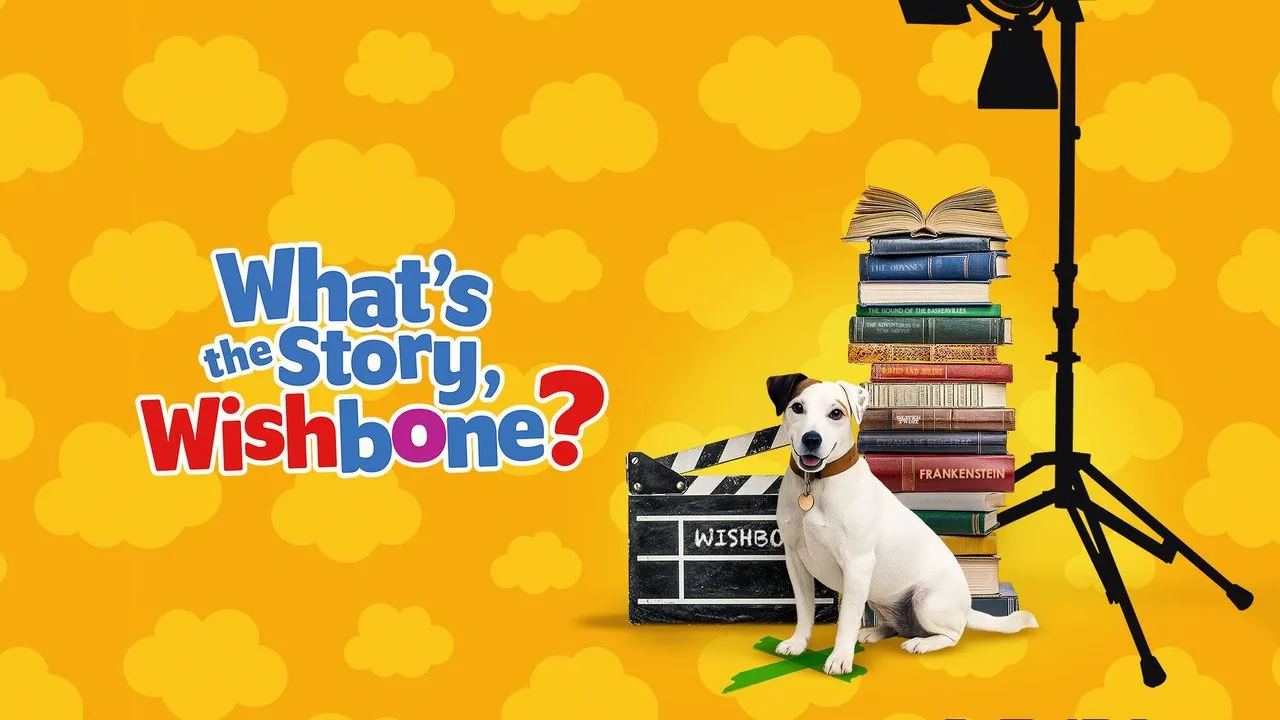
A LITTLE DOG, A BIG IMAGINATION,
AND THEIR ENDEARING LEGACY
Over past several decades, PBS (Public Broadcasting Service) has built a rich and storied legacy of children’s entertainment, blending colorful characters (both animated and live-action), engaging stories filled with morals and life lessons, and educational content designed to inspire young viewers. Many who grew up watching PBS can fondly remember these beloved programs, with several holding a special place in their childhood memories. Such shows include Sesame Street, Arthur, Mister Rogers’ Neighborhood, The Magic School Bus, Reading Rainbow, Barney & Friends, and Thomas & Friends, just to name a few. Each series is timeless in its own right. Some earned awards and critical acclaim from educators, parents, and critics alike, while others were praised for their educational value and replayability, allowing them to endure for generations through new seasons and reruns. Wishbone, which originally aired from 1995 to 1998, was one such PBS series. Despite its relatively short run, the show has continued to enjoy lasting popularity and affection long after its conclusion, maintaining a warm and wholesome legacy among its fans. For years, many viewers have wanted to learn more about the show’s behind-the-scenes stories and production history. Now, nearly twenty-eight years later, those fans finally get their wish with the documentary film What’s the Story, Wishbone? The question is: is this the definitive documentary that Wishbone fans have been waiting for, or is it merely a bland retrospective that rehashes a familiar story we’ve already heard before?

THE STORY
For those who are unfamiliar with it, Wishbone was a unique and creative television series that introduced children to classic works of literature through the imaginative adventures of a lovable Jack Russell terrier named Wishbone (voiced by Larry Brantley). Each episode was split into two narratives. The first was set in the contemporary town of Oakdale, where Wishbone lived with his teenage owner, Joe Talbot (Jordan Wall), alongside Joe’s best friends, Sam Kepler (Christie Abbott) and David Barnes (Adam Springfield), as well as Joe’s mother, Ellen (Mary Chris Wall), and their eccentric neighbor, Wanda Gilmore (Angee Hughes). In a typical episode, a situation unfolding in the modern-day storyline would remind Wishbone of a famous literary work, which he would then introduce to viewers. The episode would then transition into a second narrative, adapting a classic story with Wishbone portraying either the main character or an important supporting figure. As the episode progressed, the contemporary plot and literary adaptation would run parallel to one another, often sharing similar themes, conflicts, and resolutions that ultimately converged by the story’s conclusion. Through this inventive format, the series encouraged curiosity, critical thinking, and a love of reading, perfectly exemplifying PBS’s commitment to educational and family-friendly programming. As a result, Wishbone left a lasting impact on generations of children, fostering a lifelong appreciation for literature, storytelling, and learning.

THE GOOD / THE BAD
Growing up during the late 1980s and throughout the 1990s, I have many fond memories of watching various children’s programs across a wide range of television networks. I’m talking about channels like Cartoon Network and Nickelodeon, as well as ABC’s weekday lineup, particularly Disney Afternoon, and its Saturday morning programming. PBS was a channel that I didn’t watch quite as often. Most of the time, I tuned in when I was home sick from school or during summer vacation.
I was never particularly interested in some of PBS’s most popular shows, such as Sesame Street or Mister Rogers’ Neighborhood, as I often found them a little too slow-paced for my tastes. However, there were several PBS programs that I genuinely enjoyed, including Thomas the Tank Engine & Friends, The Magic School Bus, and Redwall. While I sometimes felt that PBS programming could lean a bit too heavily into its educational goals, I have always respected what those shows represented in helping children learn important lessons, develop a stronger understanding of the world around them, and build positive values. Because of that, PBS has established an enduring legacy, creating countless fond memories for generations of children who grew up alongside its colorful cast of characters.
I first discovered Wishbone when I was in the fifth grade. While channel surfing one day, I landed on PBS and happened to catch an episode of the series. To my surprise, I was immediately captivated by it. The show completely won me over, and I quickly became a fan. While the contemporary storylines could be a bit corny at times, they were wholesome, entertaining, and often carried meaningful lessons. I also appreciated how timeless they felt, largely because the series wasn’t overly reliant on contemporary technology or trends, allowing many of its stories to age quite gracefully.
Of course, Wishbone himself was always charming and enjoyable to watch, but the real highlight for me was the literary segments. These portions transported viewers into the worlds of classic literature, with Wishbone taking on the roles of iconic characters from some of history’s most famous stories. I absolutely loved these sequences, and even as a kid, I was impressed by the amount of detail and care that went into bringing these tales to life. What I especially appreciated was that the show didn’t completely soften some of the heavier subject matter found within the original works. While everything was presented in a family-friendly manner, the series never shied away from exploring darker themes such as murder, execution, and the effects of slavery when the stories called for it.

As a result, I always looked forward to watching Wishbone whenever it was on, and even today, I still enjoy revisiting clips and episodes online.
Now, this brings me back to What’s the Story, Wishbone?, a 2026 documentary that pulls back the curtain on how a small dog with a big imagination helped bring classic literature to life for millions of children. Featuring interviews with the writers, cast members, and creators behind the beloved PBS series, the film explores the ambition, challenges, and lasting impact of one of the most unique children’s shows ever produced.
The documentary chronicles the origins of the series, revealing how creator Rick Duffield conceived the idea and how the various cast and crew members came together to bring the project to life. What makes the film particularly engaging is seeing how much faith everyone had in the concept and how much they learned from the experience throughout the show’s production. As someone who has been a fan of Wishbone for many years, yet admittedly knew very little about what happened behind the scenes, I found much of this information fascinating.
It was especially interesting learning how many people became involved with the series, some through careful planning and necessity, while others found their way onto the project completely by chance. Hearing how Larry Brantley landed the role as the voice of Wishbone was both humorous and surprising. Likewise, learning about Soccer, the dog who portrayed Wishbone, was equally fascinating. According to those involved, Soccer was incredibly focused and obedient on set, with many cast and crew members treating him as if he were a fellow actor rather than simply a trained animal.
I was also surprised to learn that many of the literary segments were performed by theater actors rather than traditional television performers. Looking back, it makes perfect sense, especially considering the theatrical nature of those classic literary adaptations. Another revelation for me was discovering that Wishbone actually received its own television movie. Honestly, I had no idea that even existed, and now I feel compelled to track it down and watch it for myself.

Of course, this isn’t the type of documentary that uncovers some shocking hidden truth or plays out like a VH1-style behind-the-scenes drama filled with infighting and controversy. Quite the opposite, in fact. Instead, the film highlights how the key individuals behind Wishbone came together and collaborated to create something truly special. What’s particularly remarkable is learning just how difficult it was to bring the series to life. Through various interviews, the documentary details many of the challenges the production faced throughout its run, from constructing and dismantling elaborate sets for each episode to coordinating costumes, managing scheduling conflicts, and working under demanding deadlines.
By today’s standards, it’s honestly amazing that Wishbone was made at all. The documentary serves as a testament to the dedication and perseverance of everyone involved. Many of those working on the series were relatively young and ambitious, yet they found a way to collaborate effectively and overcome numerous obstacles for the benefit of the show. The end result can be seen in the final product itself, with the passion and commitment of the cast and crew shining through in every episode.
At its core, What’s the Story, Wishbone? serves as a heartfelt love letter to the series. It celebrates the dedication, passion, and creativity that the cast and crew poured into the project, and the results speak for themselves. Watching these individuals reflect on their experiences and discuss how they helped create something truly special was an absolute delight. Their affection for the show remains as strong as ever, and that enthusiasm shines through in every moment of the documentary.
The documentary’s overall structure and presentation are equally solid. While there is only so much that can be done from a technical standpoint within the documentary format, I felt that What’s the Story, Wishbone? was beautifully crafted and captured much of the same warmth and charm that made the original series so memorable. Director Joey Stewart assembles the film through a blend of traditional interview segments, clips from the television series, and animated sequences. On paper, this may sound fairly straightforward, but Stewart combines these elements in a way that feels cohesive, engaging, and surprisingly immersive.
Collectively, Stewart does an excellent job balancing the documentary’s various components, creating a narrative that feels well-paced from beginning to end. The film effectively guides viewers through the show’s conception, production process, challenges, successes, and lasting legacy without ever feeling disjointed or rushed.

Additionally, the presentation itself is quite appealing, thanks in large part to the contributions of art director Jonathan Rudak and cinematographer/editor Blake Calhoun. The documentary embraces a visual style that often feels storybook-like, which is perfectly suited for a film centered around Wishbone. Likewise, Damon Criswell’s musical score is wonderfully heartfelt throughout, enhancing many of the documentary’s emotional moments and occasionally tugging quite hard on the heartstrings. Overall, Criswell delivers terrific work here.
There wasn’t much that I actively disliked about this documentary. If I had one criticism, it’s that I would’ve liked to hear more from the contemporary storytelling side of the series. Naturally, many fans are most interested in the literary adaptations, and the documentary covers those elements in impressive detail. However, comparatively little time is spent discussing the modern-day storylines and the younger cast members who helped anchor them.
While I thoroughly enjoyed the interviews with Mary Chris Wall and Angee Hughes, I was disappointed that the documentary did not feature Jordan Wall, Christie Abbott, or Adam Springfield. As someone who grew up watching the series, I would’ve loved hearing their thoughts on the show, their experiences during production, and their reflections on its enduring legacy. Building on that point, I also would’ve appreciated more discussion regarding the production of the second season, including its stories, creative challenges, literary adaptations, and contemporary narratives. The documentary touches on these aspects, but only briefly. That being said, I suspect expanding these topics further would’ve significantly increased the film’s runtime. So while I would’ve welcomed more material in those areas, I can certainly understand why the filmmakers chose to keep things moving at a brisk pace.
And here is the real “meat and potatoes” of why I loved Wishbone. This is me being completely honest. Growing up, I had a below-average reading level, several grades behind where I was supposed to be. It was something that made me very self-conscious and embarrassed, and because of that, I had very little interest in reading. That all began to change when I discovered Wishbone in the fifth grade back in 1995. Through the eyes of a lovable Jack Russell Terrier, I was introduced to the world of classic literature, and I was completely enchanted by it.

Yes, the show was designed as an educational children’s program, but to me, it was so much more than that. It was entertaining, engaging, and an absolute joy to watch. Through Wishbone, I was introduced to timeless literary classics such as A Tale of Two Cities, Pride and Prejudice, The Odyssey, Cyrano de Bergerac, The Count of Monte Cristo, Joan of Arc, The Time Machine, The Red Badge of Courage, The Phantom of the Opera, and many others. More importantly, the series sparked something inside me. It gave me a genuine interest in reading. While it took several more years before I became the prolific reader that I am today, I wholeheartedly credit Wishbone for lighting that fire. Without realizing it, the show opened a door for me that had previously seemed closed.
So, while watching this documentary and listening to the cast and crew discuss the passion, care, and integrity they poured into the series, especially their desire to inspire children of all ages to discover the joy of reading, I couldn’t help but realize something. I was one of those kids the show was made for. This series meant so much to me growing up, and in many ways, it helped shape who I am today. As silly as that may sound to some people, it’s the truth.
So, from the bottom of my heart, and while admittedly shedding a tear or two while writing this, thank you to everyone who helped bring Wishbone to life. Thank you to creator Rick Duffield for imagining such a brilliant concept. Thank you to Soccer, the most expressive and lovable Jack Russell Terrier I’ve ever seen. Thank you to Larry Brantley for giving Wishbone his unforgettable voice. And thank you to every cast member, crew member, writer, producer, and behind-the-scenes contributor who helped create something so creative, meaningful, and memorable.
Wishbone may not have enjoyed the lengthy run that many hoped it would, but the impact it left on children’s entertainment and the legacy it created are nothing short of timeless. For me, and undoubtedly for countless others, that legacy remains pure literary magic.

FINAL THOUGHTS
What’s the Story, Wishbone? is a wholesome, sincere, and heartfelt look back at one of PBS’s most beloved children’s programs. The documentary illustrates how a seemingly wild and unconventional idea evolved into a brilliant vision for educational entertainment, blending lessons of humanity, morality, and personal growth within its contemporary storylines while transporting viewers into the imaginative worlds of timeless literary classics. The film also serves as a testament to the dedication and passion of everyone involved with the series, both in front of and behind the camera. It’s remarkable that the show was made at all, given the many challenges that accompanied its production, yet the cast and crew managed to create something truly special. Even decades later, Wishbone remains a unique viewing experience whose charm and creativity have never been fully replicated. Most importantly, the series succeeded in its ultimate goal: encouraging children to read. By introducing young viewers to classic literature in an accessible and entertaining way, Wishbone inspired countless kids to discover the joy of reading, and there is something genuinely powerful about that achievement. That “lightning in a bottle” quality is what this documentary captures so beautifully. On a personal level, this film meant a great deal to me, and I suspect it will resonate just as strongly with longtime fans of the series. Perhaps, just maybe, it might even remind television executives and content creators that there is still value in taking chances on original ideas, especially those that educate, inspire, and leave a lasting impact. As such, my recommendation for What’s the Story, Wishbone? is an easy “highly recommended.” This documentary is essential viewing for fans of the original series and equally worthwhile for anyone curious about what made a small dog dressed as literary heroes become such a beloved icon for an entire generation. The documentary concludes with the line: “But most of all to the fans, who still see the little dog with a big imagination as the hero of every classic story they love.” Truer words have never been spoken.
4.5 Out of 5 (Highly Recommended)
The Official Website for What’s the Story, Wishbone? link: HERE
Released On: June 11th, 2026
Reviewed On: June 23rd, 2026
What’s the Story, Wishbone? is 89 minutes long and is rated N/A
Related






Leave a Reply