
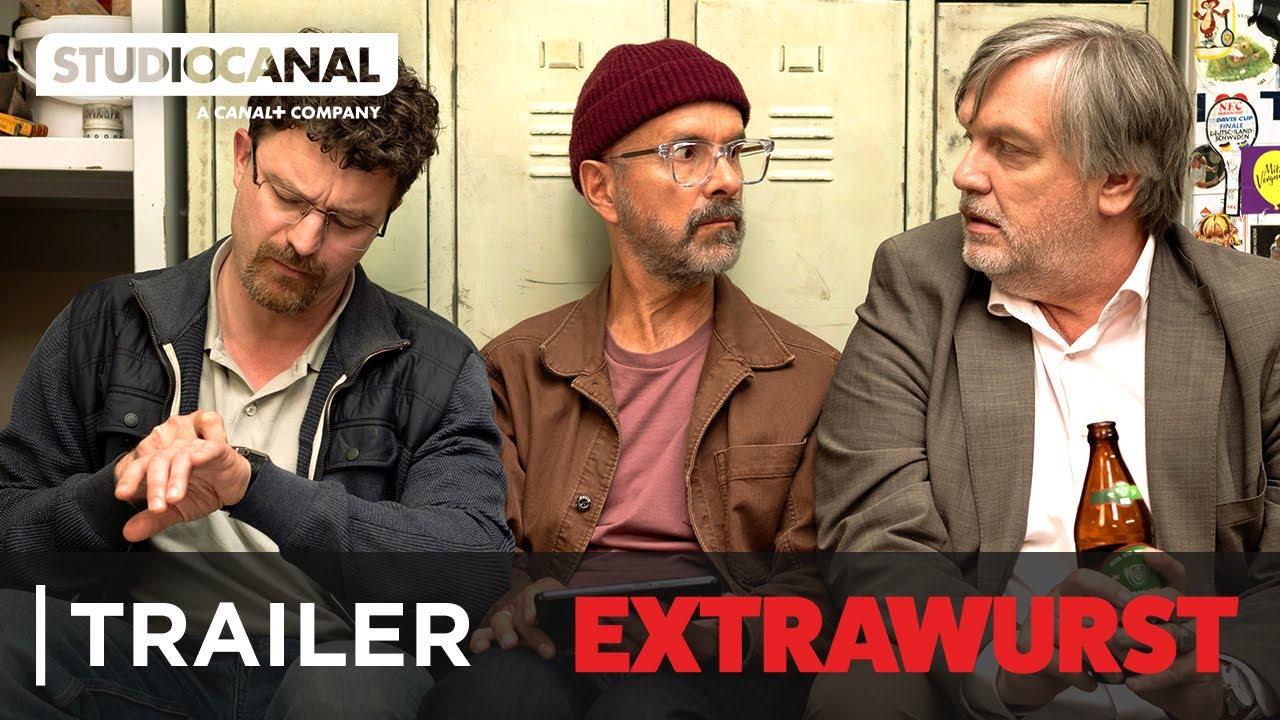
A Sharp German Comedy About Identity, Inclusion, and How Small Disagreements Become Cultural Battles
What begins as an ordinary discussion at a local tennis club quickly spirals into a hilarious and uncomfortable debate about identity, religion, tradition, and political correctness in Extrawurst. When members propose buying a separate barbecue grill for Erol, the club’s only Muslim member, a seemingly harmless gesture of inclusion exposes deep divisions within the community, transforming a routine club meeting into a battlefield of conflicting values and personal convictions.
Adapted from the acclaimed stage play by Dietmar Jacobs and Moritz Netenjakob, Extrawurst uses satire to explore one of contemporary Europe’s most sensitive cultural conversations. Rather than presenting clear heroes or villains, the film invites audiences to laugh at everyone’s assumptions, revealing how ordinary people often become trapped in ideological conflicts over issues far larger than the original disagreement.
Quick Facts: A Contemporary Satire That Turns a Barbecue into a National Debate
|
Identity, Cultural Integration, Religion, Political Polarization, Community |
|
|
Dietmar Jacobs, Moritz Netenjakob |
|
|
Hape Kerkeling, Fahri Yardim, Anja Knauer, Friedrich Mücke, Christoph Maria Herbst |
|
|
Lieblingsfilm, StudioCanal Film, ARD Degeto Film |
|
|
January 15, 2026 (Germany) |
|
➡️ Key Takeaway: Extrawurst transforms one seemingly insignificant decision into a witty exploration of modern society’s biggest cultural debates. Its theatrical origins and dialogue-driven storytelling make it one of Germany’s most topical comedies of recent years.
Should You Watch It?: One of the Year’s Smartest European Social Comedies
If you enjoy intelligent comedies that use humor to explore contemporary social issues, Extrawurst delivers an entertaining and thought-provoking experience. Instead of relying on slapstick or outrageous situations, the film builds its comedy through sharp dialogue, recognizable personalities, and the escalating absurdity of everyday disagreements. Its humor comes from watching ordinary people defend deeply held beliefs over what initially appears to be a trivial issue.
The film is particularly rewarding for audiences who appreciate ensemble performances and character-driven satire. By refusing to take easy ideological sides, Extrawurst encourages viewers to laugh at everyone’s contradictions while reflecting on their own assumptions about identity, tolerance, and coexistence.
➡️ Key Takeaway: Extrawurst is an ideal choice for viewers who appreciate socially relevant comedy that balances humor with genuine insight. Its greatest achievement is making audiences laugh while encouraging meaningful conversations long after the credits roll.
Why Everyone Is Talking About It?: A Comedy That Finds Big Questions in Everyday Situations
The premise of Extrawurst is brilliantly simple: should a sports club purchase a separate barbecue grill for one member? Yet this ordinary question quickly expands into a debate about religion, integration, political correctness, tradition, and freedom of expression. The film demonstrates how seemingly minor decisions can expose deeper social anxieties, making its comedy feel remarkably timely and universally relatable.
Critics and audiences have also highlighted the film’s ensemble cast and witty dialogue, both inherited from the successful stage play on which it is based. Rather than offering simplistic answers, the screenplay allows each character to express their perspective, creating a satire that encourages discussion instead of delivering moral lectures.
➡️ Key Takeaway: Extrawurst resonates because it reflects the way modern cultural debates often emerge from ordinary everyday situations. Its balanced satire invites audiences to laugh first and judge later.
Movie Trend: Social Satire Is Replacing Traditional Political Comedy
Across European cinema, filmmakers are increasingly moving away from overt political satire in favor of stories that explore social tensions through ordinary communities. Instead of focusing on governments or public institutions, these films examine neighborhoods, workplaces, sports clubs, and families, revealing how larger cultural debates shape everyday relationships.
Extrawurst perfectly represents this evolution. By setting its story almost entirely within a local tennis club, the film transforms a familiar community space into a microcosm of modern society. The result is a comedy that feels intimate, accessible, and internationally relevant despite being deeply rooted in contemporary German culture.
➡️ Key Takeaway: Modern European comedies increasingly explore society through everyday communities rather than political institutions. Extrawurst demonstrates how local stories can illuminate global conversations about identity, inclusion, and coexistence.
Who Should Watch It?: Essential Viewing for Fans of Intelligent European Comedy
Viewers who enjoy dialogue-driven comedies, ensemble casts, and socially observant storytelling will find Extrawurst especially rewarding. Its theatrical structure, sharp writing, and relatable conflicts make it particularly appealing to audiences who appreciate humor grounded in real human behavior rather than exaggerated situations.
Audience Profile: The Thoughtful Comedy Enthusiast
The Thoughtful Comedy Enthusiast enjoys films that combine laughter with meaningful social observation. Rather than seeking pure escapism, they appreciate stories that use wit, irony, and satire to examine contemporary issues while encouraging conversation and reflection.
-
Core Audience: Fans of European comedy, satire, and ensemble dramas
-
Secondary Audience: Viewers interested in contemporary social issues and cultural debates
-
Age: 25–70
-
Gender: Broad appeal
-
Income: Broad audience
-
Lifestyle: Socially engaged, culturally curious, and interested in current affairs
-
Shopping Behaviour: Regular cinema and streaming viewers who actively seek award-winning international films and intelligent comedies
➡️ Key Takeaway: Extrawurst is ideal for audiences who enjoy thoughtful comedies that find humor in everyday life while exploring larger questions about community, identity, and modern society.
What This Movie Means for the Industry: Social Satire Is Becoming One of European Cinema’s Strongest Storytelling Tools
Extrawurst reflects a growing movement within European cinema toward socially conscious comedies that explore contemporary issues through everyday situations rather than overt political commentary. Instead of focusing on governments, elections, or national institutions, filmmakers are increasingly turning to local communities, workplaces, sports clubs, and families to illustrate how broader cultural debates affect ordinary life. This approach allows audiences to recognize themselves in the characters, making the satire both more personal and more universally relatable.
The film also demonstrates the continued value of adapting successful stage plays for the screen. Much of Extrawurst unfolds through dialogue and character interaction rather than elaborate action sequences, proving that compelling writing and strong ensemble performances remain powerful commercial assets. As streaming platforms and theatrical distributors continue investing in high-quality local productions, dialogue-driven films like Extrawurst show that culturally specific stories can resonate well beyond their home markets when they address universal questions about identity, belonging, and coexistence.
The production further highlights the strength of contemporary German cinema in balancing entertainment with meaningful social observation. Rather than presenting ideological arguments, Extrawurst encourages conversation by allowing multiple perspectives to coexist, reflecting an industry increasingly interested in nuance instead of polarization. This positions the film alongside a new generation of European comedies that use humor to foster empathy rather than division.
➡️ Key Takeaway: Extrawurst demonstrates how modern European cinema is redefining comedy as a vehicle for social reflection rather than simple escapism. Its success reinforces the growing demand for intelligent, dialogue-driven films that transform everyday conflicts into universally relevant stories about community, identity, and contemporary society.
Creative Analysis: A Sharp Social Satire That Finds Big Ideas in Everyday Conversations
Storytelling: Turning a Simple Barbecue into a Reflection of Modern Society
The brilliance of Extrawurst lies in its remarkably simple premise. A proposal to buy a separate barbecue grill for Erol, the tennis club’s only Muslim member, appears to be an act of courtesy. Yet this seemingly ordinary decision quickly evolves into a heated debate about identity, integration, religion, tolerance, and personal values. The film demonstrates how everyday situations can unexpectedly reveal the deeper tensions that exist within modern communities.
Adapted from the successful stage play by Dietmar Jacobs and Moritz Netenjakob, the screenplay embraces dialogue as its primary storytelling tool. Rather than relying on elaborate plot twists, it allows conversations to escalate naturally, exposing each character’s fears, prejudices, contradictions, and good intentions. The result is a comedy that feels authentic because every argument could easily take place in a real community meeting.
➡️ Key Takeaway: Extrawurst proves that compelling storytelling does not require spectacular events. By expanding a small disagreement into a broader social conversation, it creates a comedy that is both entertaining and intellectually engaging.
Direction: Finding Comedy in Human Behaviour Instead of Caricature
Marcus H. Rosenmüller directs the film with remarkable restraint, allowing the comedy to emerge organically through character interactions rather than exaggerated visual gags. His theatrical approach preserves the intimacy of the original play while ensuring the conversations remain dynamic and cinematic, even within the limited setting of the tennis club.
Instead of encouraging audiences to laugh at specific individuals, Rosenmüller invites them to recognize elements of themselves in every character. Each participant enters the debate believing they are acting reasonably, making the escalating conflict both humorous and uncomfortably familiar. This balanced perspective gives the satire emotional credibility and prevents it from becoming politically one-sided.
➡️ Key Takeaway: The direction succeeds by treating every character with empathy rather than ridicule. This balanced approach transforms social satire into an engaging exploration of modern community life.
Performances: An Ensemble That Gives Every Perspective a Human Voice
Hape Kerkeling delivers a nuanced performance as Heribert Bräsemann, a club leader who finds himself struggling to maintain unity as disagreements spiral beyond his control. His portrayal captures the frustration of someone attempting to satisfy everyone while gradually realizing that compromise is becoming impossible.
Fahri Yardim brings warmth and dignity to Erol, whose presence unintentionally becomes the catalyst for the club’s divisions. Strong supporting performances from Anja Knauer, Christoph Maria Herbst, Friedrich Mücke, Milan Peschel, and the wider ensemble ensure that every viewpoint contributes to the story without reducing characters to simple stereotypes. The chemistry between the cast creates the feeling of a genuine community rather than a collection of opposing ideological positions.
➡️ Key Takeaway: The ensemble performances give equal emotional weight to every perspective, allowing the comedy to emerge from believable personalities rather than exaggerated stereotypes.
Cinematography & Visual Style: Transforming One Location into a Social Microcosm
Although much of Extrawurst unfolds within the confines of a local tennis club, the visual storytelling prevents the setting from ever feeling static. The cinematography emphasizes shifting alliances, emotional reactions, and the changing dynamics between characters, reinforcing the idea that the club represents a miniature version of contemporary society.
This restrained visual style also reflects the film’s theatrical origins. Rather than distracting audiences with elaborate visuals, the camera remains focused on expressions, gestures, and conversations, allowing performances and dialogue to remain the emotional center of the story. The simplicity of the setting reinforces the universal nature of the conflicts being explored.
➡️ Key Takeaway: The film demonstrates how thoughtful cinematography can make a single location feel dramatically rich, turning an ordinary tennis club into a compelling reflection of modern society.
Themes & Messages: Inclusion, Identity, and the Difficulty of Living Together
At its core, Extrawurst explores how communities respond to cultural diversity and changing social norms. The film asks difficult questions about tolerance, inclusion, religious accommodation, and freedom of expression without offering simplistic answers. Instead, it reveals how even well-intentioned efforts to respect differences can generate unexpected misunderstandings and conflict.
More importantly, the story highlights the fragile nature of community itself. Every character believes they are defending fairness or common sense, yet their inability to listen to one another gradually threatens the very institution they hope to protect. By focusing on ordinary people rather than political leaders, Extrawurst reminds audiences that social cohesion is built through everyday conversations and mutual understanding.
➡️ Key Takeaway: Extrawurst is ultimately less about a barbecue grill than about how societies negotiate difference, belonging, and coexistence. Its humor encourages reflection without prescribing easy solutions.
What Makes This Movie Different?: A Comedy That Satirizes Everyone Equally
Many contemporary social comedies clearly divide characters into heroes and villains, but Extrawurst deliberately avoids that approach. Every member of the tennis club is shown to possess both reasonable concerns and personal blind spots, allowing audiences to sympathize with multiple perspectives throughout the debate.
Its origins as an acclaimed stage play also give the film a distinctive rhythm rarely found in mainstream comedy. Rather than relying on constant jokes or physical comedy, Extrawurst builds humor through conversation, contradiction, and the escalating absurdity of ordinary people taking increasingly rigid positions. This intelligent balance of satire and empathy makes the film stand out within modern European comedy.
➡️ Key Takeaway: Extrawurst distinguishes itself by refusing to choose ideological winners or losers. Its even-handed satire invites audiences to laugh at human nature itself, making the film both timely and enduring.
If You Liked Extrawurst: More Smart European Comedies That Find Big Ideas in Everyday Life
The Dinner Game (Le Dîner de Cons) (1998) by Francis Veber
One of France’s greatest modern comedies, The Dinner Game transforms an ordinary dinner invitation into a brilliant satire about arrogance, prejudice, and human misunderstanding. Like Extrawurst, the humor comes almost entirely from conversation, personality clashes, and the inability of ordinary people to recognize their own flaws. Both films prove that intelligent dialogue can be just as entertaining as elaborate comic set pieces.
Perfect Strangers (Perfetti Sconosciuti) (2016) by Paolo Genovese
This acclaimed Italian comedy-drama follows a group of friends who agree to share every message and phone call during a dinner party, exposing hidden secrets and uncomfortable truths. Much like Extrawurst, a seemingly harmless social situation gradually escalates into an emotionally charged examination of trust, honesty, identity, and modern relationships. Both films demonstrate how everyday conversations can reveal profound truths about contemporary society.
The Distinguished Citizen (El Ciudadano Ilustre) (2016) by Gastón Duprat & Mariano Cohn
This Argentine satire follows a Nobel Prize-winning novelist returning to his hometown, where admiration slowly turns into rivalry and resentment. Like Extrawurst, the film explores community dynamics, personal ego, and cultural identity through sharp humor and richly observed characters. Both stories examine how ordinary communities can become arenas for surprisingly complex social and ideological conflicts.
➡️ Key Takeaway: These films demonstrate the strength of contemporary European and international social comedy, using ordinary situations to explore identity, community, and human behavior. Like Extrawurst, they replace exaggerated farce with intelligent dialogue, memorable ensemble performances, and humor that encourages audiences to reflect as much as they laugh.
Viewing Recommendation: One of Germany’s Smartest Contemporary Social Comedies
Best Suited For: Viewers Who Enjoy Intelligent Character-Driven Comedy
Extrawurst is an excellent choice for audiences who appreciate witty dialogue, ensemble casts, and stories that examine modern society through relatable everyday situations. Rather than relying on slapstick humor, the film rewards viewers who enjoy satire rooted in recognizable human behavior.
Highly Recommended For: Fans of European Satire and Conversation-Driven Cinema
If you enjoyed films such as Perfect Strangers, The Dinner Game, Carnage, or The Distinguished Citizen, Extrawurst offers a similarly engaging blend of comedy, social observation, and sharp character writing. It is also highly recommended for viewers interested in contemporary European cinema that explores current cultural debates with intelligence and humor.
You May Want to Skip It If: You Prefer Fast-Paced Comedies or Broad Physical Humor
The film unfolds primarily through dialogue and interpersonal conflict rather than action or visual comedy. Audiences looking for rapid-fire jokes, slapstick, or high-concept situations may find its theatrical pacing and conversation-driven structure less appealing.
➡️ Viewing Recommendation: Extrawurst is one of the most thoughtful European comedies of recent years, transforming an ordinary club meeting into a witty and insightful reflection on identity, inclusion, and the challenges of living together in modern society.
Final Verdict: A Clever Satire That Shows How Small Arguments Reflect Bigger Social Divides
Extrawurst succeeds because it understands that the most revealing cultural debates often begin with ordinary everyday decisions. Through outstanding ensemble performances, sharp dialogue, and an even-handed approach to satire, the film explores contemporary questions about identity, tolerance, and community without reducing its characters to simplistic stereotypes.
Marcus H. Rosenmüller’s adaptation demonstrates the enduring power of dialogue-driven storytelling, proving that compelling cinema does not require elaborate spectacle to engage audiences. By finding universal themes within a local German tennis club, Extrawurst delivers a comedy that feels culturally specific while speaking to societies around the world facing similar conversations about coexistence and change.
➡️ Final Verdict: Extrawurst is a smart, funny, and remarkably balanced social satire that uses humor to encourage empathy rather than division, making it one of the standout European comedies of 2026.









Leave a Reply