
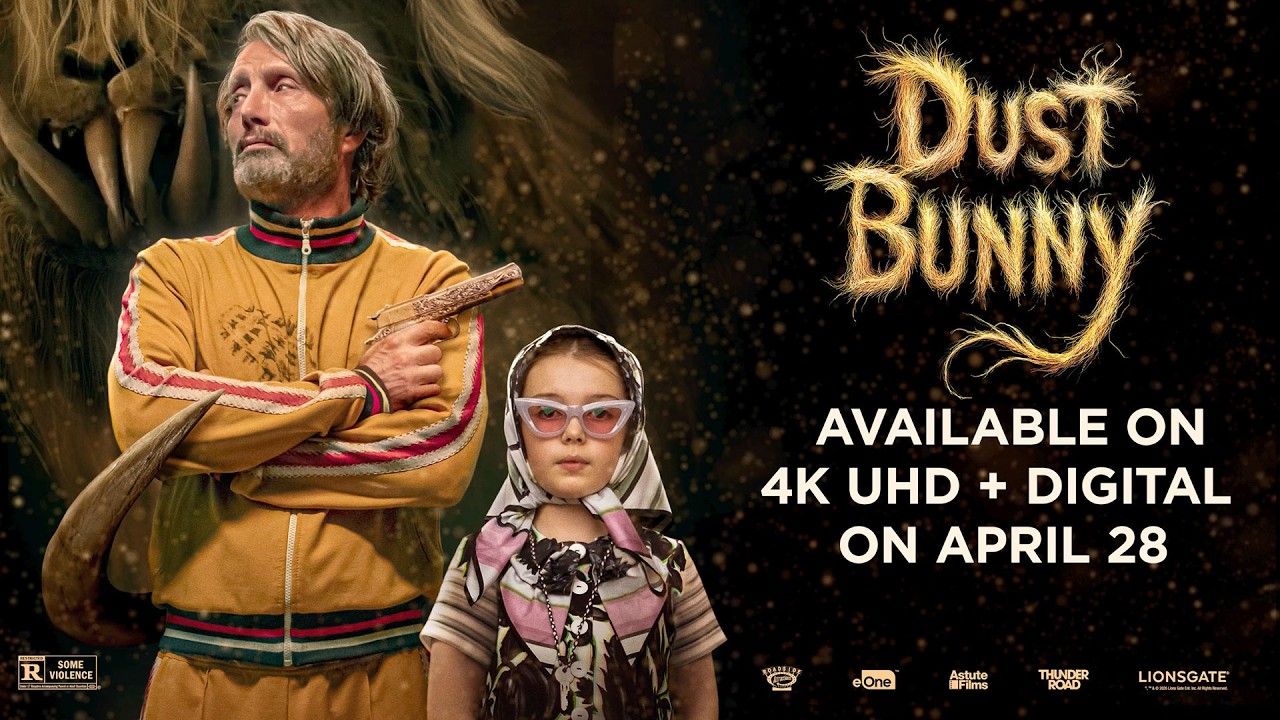
A Dark Fantasy Horror That Turns Childhood Nightmares into an Emotional Monster Adventure
For generations, parents have reassured children that there is no monster hiding beneath the bed. Dust Bunny dares to imagine the opposite. Marking the feature directorial debut of acclaimed television creator Bryan Fuller, the film blends fantasy, horror, action, and dark fairy tale into an emotionally driven adventure about grief, courage, and believing the impossible. Rather than treating childhood fears as imaginary, Fuller transforms them into a gateway to a hidden world where monsters are real and survival depends on confronting both supernatural evil and human darkness.
Anchored by breakout newcomer Sophie Sloan alongside Mads Mikkelsen and Sigourney Weaver, Dust Bunny balances whimsical imagination with genuine suspense. Its striking visual style, eccentric world-building, and heartfelt emotional core evoke the spirit of beloved fantasy classics while introducing an original mythology that is simultaneously magical, frightening, and unexpectedly touching.
Quick Facts: A Dark Fantasy That Blends Monster Horror with Childhood Wonder
|
Action, Drama, Horror, Thriller |
|
|
Childhood fears, monsters, grief, found family, courage, fantasy adventure |
|
|
Released in U.S. theaters on December 12, 2025. |
|
|
3 wins & 14 nominations. 2026 Saturn Awards: Winner – Best Independent Film, Winner – Best Supporting Actress (Sigourney Weaver); nominations for Best Screenwriting (Bryan Fuller), Best Supporting Actor (Mads Mikkelsen), Best Younger Performer (Sophie Sloan). Film Independent Spirit Awards 2026: Nominations for Best First Feature and Best Cinematography. Fangoria Chainsaw Awards 2026: Multiple nominations including Best Limited Release Movie, Best Director, Best Lead Performance (Sophie Sloan), Best Supporting Performances (Mads Mikkelsen, Sigourney Weaver), Best Cinematography, Best Creature FX, and Best Costume Design. British Film Designers Guild Awards 2026: Winner – Best Production Design (Fantasy Feature Film). |
➡️ Key Takeaway: Dust Bunny combines dark fantasy, monster horror, and heartfelt coming-of-age storytelling into an imaginative genre film that celebrates childhood courage while confronting fear in all its forms.
Should You Watch It?: A Whimsical Horror That Appeals to Both Fantasy and Monster Movie Fans
If you enjoy imaginative fantasy worlds infused with horror, Dust Bunny offers a refreshingly original experience. Bryan Fuller combines the emotional sensitivity of a coming-of-age story with the visual creativity of a fairy tale and the suspense of a monster thriller. Rather than emphasizing relentless scares, the film focuses on wonder, mystery, and the unlikely partnership between a fearless young girl and her mysterious assassin neighbor.
Mads Mikkelsen brings his trademark quiet intensity to the enigmatic Neighbor, while Sophie Sloan delivers a remarkable debut performance as Aurora, a child whose determination and curiosity drive the story’s emotional heart. Sigourney Weaver adds authority and mystery in a memorable supporting role, helping create a richly populated fantasy world filled with memorable characters. Although rated R for violence, Dust Bunny often feels closer to classic dark fantasy than conventional horror, making it especially rewarding for audiences who appreciate imaginative genre storytelling over graphic terror.
➡️ Key Takeaway: Dust Bunny is an inventive dark fantasy that rewards viewers looking for emotional storytelling, imaginative world-building, and memorable monster mythology rather than traditional horror conventions.
Why Everyone Is Talking About It?: Bryan Fuller Brings His Signature Imagination to the Big Screen
After years of earning acclaim for visually distinctive television series such as Hannibal, Pushing Daisies, and Dead Like Me, Bryan Fuller made his feature directorial debut with Dust Bunny, immediately attracting attention from both horror fans and fantasy enthusiasts. Critics praised the film’s imaginative production design, distinctive visual identity, and willingness to blend childhood fantasy with darker emotional themes instead of relying on conventional horror formulas.
The film’s awards success further cemented its reputation as one of the standout independent genre releases of 2025. Winning the Saturn Award for Best Independent Film, alongside Sigourney Weaver’s Saturn Award for Best Supporting Actress and recognition for its production design, demonstrated that Dust Bunny resonated with both critics and genre organizations. Combined with numerous nominations for cinematography, creature effects, performances, and screenplay, the film established Bryan Fuller as an exciting new voice in feature filmmaking.
➡️ Key Takeaway: Dust Bunny has become one of the year’s most celebrated independent fantasy-horror films by combining Bryan Fuller’s unique storytelling style with award-winning performances, imaginative visuals, and emotionally resonant monster mythology.
Movie Trend: Dark Fantasy Is Reclaiming Childhood Horror for Adult Audiences
One of the most fascinating developments in contemporary genre cinema is the resurgence of dark fantasy that treats childhood fears with emotional sincerity rather than irony. Films are increasingly revisiting familiar childhood myths—monsters under the bed, imaginary creatures, haunted homes—not simply as sources of horror but as metaphors for grief, trauma, loneliness, and resilience. Dust Bunny embraces this trend by transforming one of childhood’s oldest fears into an expansive fantasy adventure that speaks equally to adults and younger audiences.
The film also reflects the growing popularity of “gateway horror”—genre films that emphasize imagination, emotional storytelling, and fantastical creatures over graphic violence. While Dust Bunny contains genuine suspense, its greatest strength lies in its ability to blend wonder with darkness, recalling classics such as The NeverEnding Story, Gremlins, Pan’s Labyrinth, and Coraline while maintaining Bryan Fuller’s unmistakably eccentric visual style.
➡️ Key Takeaway: Dust Bunny represents the return of emotionally driven dark fantasy, proving that childhood fears remain one of horror’s richest storytelling foundations.
Audience Profile: Perfect for Fans of Dark Fantasy, Monster Adventures, and Imaginative Genre Cinema
|
Fans of dark fantasy, creature features, and imaginative horror |
|
|
Bryan Fuller fans, fantasy enthusiasts, independent cinema audiences, lovers of visually stylized storytelling |
|
|
Genre-film enthusiasts, fantasy readers, horror fans, festival audiences, collectors of cult cinema |
|
|
Dark fantasy, supernatural adventures, elevated horror, independent genre films |
Dust Bunny is particularly rewarding for viewers who appreciate films that balance emotional storytelling with imaginative world-building. Fans of Guillermo del Toro’s fantasy films, Bryan Fuller’s television work, or emotionally driven monster stories will likely find much to admire in its blend of action, fantasy, and horror.
The film also appeals to audiences seeking original mythology instead of franchise storytelling. Rather than relying on familiar monsters or established universes, Bryan Fuller creates an entirely new supernatural world populated by mysterious creatures, eccentric characters, and hidden rules waiting to be discovered alongside Aurora.
➡️ Key Takeaway: Dust Bunny is ideal for audiences who enjoy imaginative fantasy adventures where emotional character journeys are just as important as monsters and spectacle.
What This Movie Means for the Industry: Bryan Fuller Successfully Transitions from Television Visionary to Feature Filmmaker
For more than two decades, Bryan Fuller has been recognized as one of television’s most visually inventive storytellers. With Dust Bunny, he successfully translates that distinctive creative voice into feature filmmaking without sacrificing the whimsical darkness, stylized visuals, or emotionally layered storytelling that defined series such as Hannibal, Pushing Daisies, and Dead Like Me.
The film’s strong reception within genre awards circles—including its Saturn Award for Best Independent Film and multiple nominations across the Independent Spirit Awards, Fangoria Chainsaw Awards, and British Film Designers Guild Awards—demonstrates that ambitious original genre films continue to find enthusiastic audiences despite the industry’s increasing dependence on established franchises. Its recognition for production design, cinematography, creature effects, performances, and screenplay highlights the importance of craftsmanship in building memorable fantasy worlds.
Perhaps most importantly, Dust Bunny reinforces the continued demand for original intellectual property within horror and fantasy cinema. Rather than adapting existing material, the film introduces an entirely new mythology while delivering emotional accessibility that can appeal to mainstream audiences without compromising its artistic identity.
➡️ Key Takeaway: Dust Bunny proves that original fantasy-horror stories, supported by distinctive visual craftsmanship and emotionally rich storytelling, can still emerge as some of the most celebrated independent genre films of the year.
Creative Analysis: A Dark Fairy Tale That Reimagines Childhood Fear Through Emotional Fantasy
Bryan Fuller has always excelled at blending beauty with darkness, and Dust Bunny represents the culmination of many of the visual and thematic ideas that defined his television work. Rather than approaching monsters as purely terrifying creatures, Fuller presents them as manifestations of grief, fear, and emotional resilience. The result is a film that functions simultaneously as fantasy adventure, monster movie, coming-of-age story, and psychological fairy tale.
Although the premise sounds deceptively simple—a little girl hires a hitman to kill the monster beneath her bed—the film gradually expands into a richly imagined mythology populated by assassins, supernatural creatures, hidden conspiracies, and unlikely heroes. Throughout this journey, Fuller never loses sight of the emotional relationship between Aurora and her mysterious protector, ensuring that spectacle always serves character.
➡️ Key Takeaway: Dust Bunny succeeds because it uses fantasy not as escapism but as a way of exploring childhood grief, courage, and the power of imagination.
Storytelling: A Childhood Nightmare Evolves into an Epic Fantasy Adventure
The screenplay begins with an intimate premise before gradually revealing a much larger supernatural world. Aurora’s belief that a monster has destroyed her family initially appears to be the fantasy of a frightened child, but Bryan Fuller slowly dismantles that assumption as hidden dangers begin emerging around her. This progression allows audiences to discover the mythology alongside Aurora rather than overwhelming them with exposition.
One of the screenplay’s greatest strengths is its tonal balance. Fuller successfully moves between emotional drama, dry humor, action sequences, horror, and fantasy without allowing any single genre to dominate. Despite its increasingly elaborate mythology, the story always remains anchored by Aurora’s emotional journey and her growing relationship with the enigmatic Neighbor.
➡️ Key Takeaway: The screenplay transforms a simple childhood fear into an expansive fantasy narrative without losing its emotional intimacy.
Direction: Bryan Fuller’s Distinctive Visual Imagination Finally Reaches the Big Screen
Bryan Fuller’s direction immediately feels recognizable to audiences familiar with his television work. Every frame is carefully composed, balancing theatrical stylization with emotional sincerity. His love of heightened production design, vivid colors, unusual compositions, and eccentric characters gives Dust Bunny a visual identity that stands apart from most contemporary horror films.
Rather than emphasizing relentless tension, Fuller encourages viewers to marvel at the strange beauty of his world. Even moments of horror possess an almost storybook quality, making the film feel like a dark fairy tale where wonder and danger constantly coexist. This confidence in visual storytelling explains why the film earned significant recognition for both production design and cinematography during awards season.
➡️ Key Takeaway: Fuller demonstrates that highly stylized filmmaking can remain emotionally engaging when every visual decision serves the story’s emotional core.
Performances: Sophie Sloan and Mads Mikkelsen Form an Unexpectedly Moving Partnership
The emotional success of Dust Bunny rests largely on Sophie Sloan’s remarkable debut performance as Aurora. She portrays the character with intelligence, determination, vulnerability, and genuine curiosity, avoiding many of the clichés often associated with child protagonists. Her performance provides the emotional foundation that allows audiences to fully invest in the film’s increasingly fantastical narrative.
Mads Mikkelsen brings his characteristic quiet charisma to the mysterious Neighbor. His restrained performance perfectly complements Sloan’s youthful energy, creating an unlikely partnership that gradually evolves from suspicion into trust. Sigourney Weaver delivers another commanding supporting performance, one that earned her the 2026 Saturn Award for Best Supporting Actress, while Sheila Atim, David Dastmalchian, and Rebecca Henderson enrich the film’s eccentric supporting ensemble.
➡️ Key Takeaway: The performances ground the film’s imaginative fantasy with emotional authenticity, making its extraordinary world feel deeply human.
Cinematography & Visual Style: Storybook Fantasy Meets Gothic Horror
Nicole Hirsch Whitaker’s cinematography gives Dust Bunny an immediately recognizable visual identity. The film embraces rich color palettes, dramatic lighting, expansive ultra-wide compositions, and carefully choreographed camera movement that evoke both classic fantasy cinema and illustrated fairy tales. Every location feels meticulously designed to invite curiosity while concealing hidden dangers.
The production design deserves equal recognition. Apartments, underground spaces, secret corridors, and monster-filled environments all contribute to a believable fantasy universe that exists just beneath everyday reality. This exceptional visual craftsmanship was rewarded with the British Film Designers Guild Award for Best Production Design (Fantasy Feature Film) and nominations recognizing both cinematography and creature effects.
➡️ Key Takeaway: Every visual element contributes to a world that feels simultaneously magical, unsettling, and emotionally immersive.
Themes & Messages: Courage Begins When Adults Stop Dismissing Childhood Fears
At its heart, Dust Bunny argues that children often perceive truths adults refuse to acknowledge. Aurora’s unwavering belief in the monster beneath her bed becomes a metaphor for trusting one’s instincts, even when authority figures dismiss those fears as imagination. Rather than treating childhood innocence as naïveté, the film celebrates curiosity and emotional honesty as genuine strengths.
The story also explores grief, found family, and healing. Aurora’s partnership with the Neighbor gradually becomes less about defeating monsters and more about helping two emotionally damaged individuals find hope through mutual trust. Fuller suggests that confronting fear requires compassion as much as courage, transforming the monster story into a deeply human emotional journey.
➡️ Key Takeaway: Dust Bunny uses fantasy to explore grief, trust, and resilience, reminding audiences that imagination can become a powerful source of healing.
What Makes This Movie Different?: An Original Monster Mythology with the Heart of a Fairy Tale
While many modern fantasy films depend on established franchises or familiar mythology, Dust Bunny introduces an entirely original supernatural universe. Bryan Fuller creates a richly detailed mythology populated by mysterious creatures, secret organizations, and unforgettable characters, allowing audiences to experience genuine discovery rather than nostalgia.
What ultimately distinguishes the film is its emotional generosity. Even amid violence, horror, and supernatural danger, Dust Bunny remains fundamentally optimistic about courage, friendship, and the enduring power of hope. It feels less interested in frightening audiences than in reminding them why monsters fascinated them as children in the first place.
➡️ Key Takeaway: Dust Bunny stands apart by combining original world-building, heartfelt emotion, and storybook imagination into one of the most distinctive fantasy-horror films of recent years.
If You Liked Dust Bunny (2025): Dark Fantasy and Monster Stories with Heart
If Dust Bunny captivated you with its blend of childhood wonder, supernatural creatures, emotional storytelling, and dark fantasy, these films offer similarly imaginative experiences. Each balances horror and fantasy with memorable characters, visually rich worlds, and emotionally resonant stories that linger long after the credits roll.
The Legend of Ochi (2025) by Isaiah Saxon
Like Dust Bunny, The Legend of Ochi follows a young protagonist who discovers that the creatures adults fear may not be the true monsters. Set within a beautifully realized fantasy world, the film emphasizes empathy, adventure, and the bond between humans and mythical beings while delivering breathtaking practical creature effects and stunning visual storytelling.
➡️ Where to Watch: Streaming on Max. Also available to rent or purchase on Apple TV, Prime Video, and Fandango at Home.
Bring Her Back (2025) by Danny Philippou & Michael Philippou
Although considerably darker in tone, Bring Her Back similarly uses supernatural horror to explore grief, family, and emotional trauma. Like Dust Bunny, the horror grows from deeply personal relationships rather than simple monster encounters, creating a haunting emotional experience beneath its terrifying imagery.
➡️ Where to Watch: Streaming on Max. Also available on Apple TV, Prime Video, and Fandango at Home.
Guillermo del Toro’s Pinocchio (2022)
Viewers who appreciated the fairy-tale atmosphere and emotional warmth of Dust Bunny should not overlook Guillermo del Toro’s Oscar-winning reimagining of Pinocchio. While less overtly horrific, it shares Bryan Fuller’s fascination with monsters, innocence, grief, and beautifully handcrafted fantasy worlds where emotional storytelling takes precedence over spectacle.
➡️ Where to Watch: Streaming on Netflix.
➡️ Key Takeaway: These films demonstrate how modern fantasy and horror increasingly rely on emotional storytelling, imaginative creatures, and richly crafted worlds rather than traditional genre formulas.
Final Verdict: Bryan Fuller’s Imaginative Feature Debut Is a Modern Dark Fantasy Worth Discovering
With Dust Bunny, Bryan Fuller successfully brings his unmistakable storytelling voice from television to the big screen, creating a film that feels both nostalgic and refreshingly original. Blending childhood fears, supernatural mythology, action, and heartfelt emotion, the film offers an imaginative adventure that refuses to fit neatly into a single genre. Instead, it embraces the spirit of classic dark fairy tales while introducing an entirely new world populated by unforgettable characters and mysterious creatures.
Sophie Sloan delivers an impressive breakout performance that anchors the film’s emotional core, while Mads Mikkelsen once again proves why he remains one of modern cinema’s most compelling screen presences. Sigourney Weaver’s award-winning supporting role adds further gravitas, and Bryan Fuller’s visual imagination shines through every frame, supported by exceptional production design and cinematography that earned widespread industry recognition.
The film’s success at the Saturn Awards, British Film Designers Guild Awards, and nominations across the Independent Spirit Awards and Fangoria Chainsaw Awards confirms that Dust Bunny is far more than an eccentric curiosity. It is a confident, emotionally rich fantasy that reminds audiences why original genre filmmaking still matters.
➡️ Final Verdict: 4.5/5 — A beautifully crafted dark fantasy that combines heartfelt storytelling, memorable performances, imaginative monsters, and Bryan Fuller’s distinctive visual style into one of the most original independent genre films of 2025.




Leave a Reply