
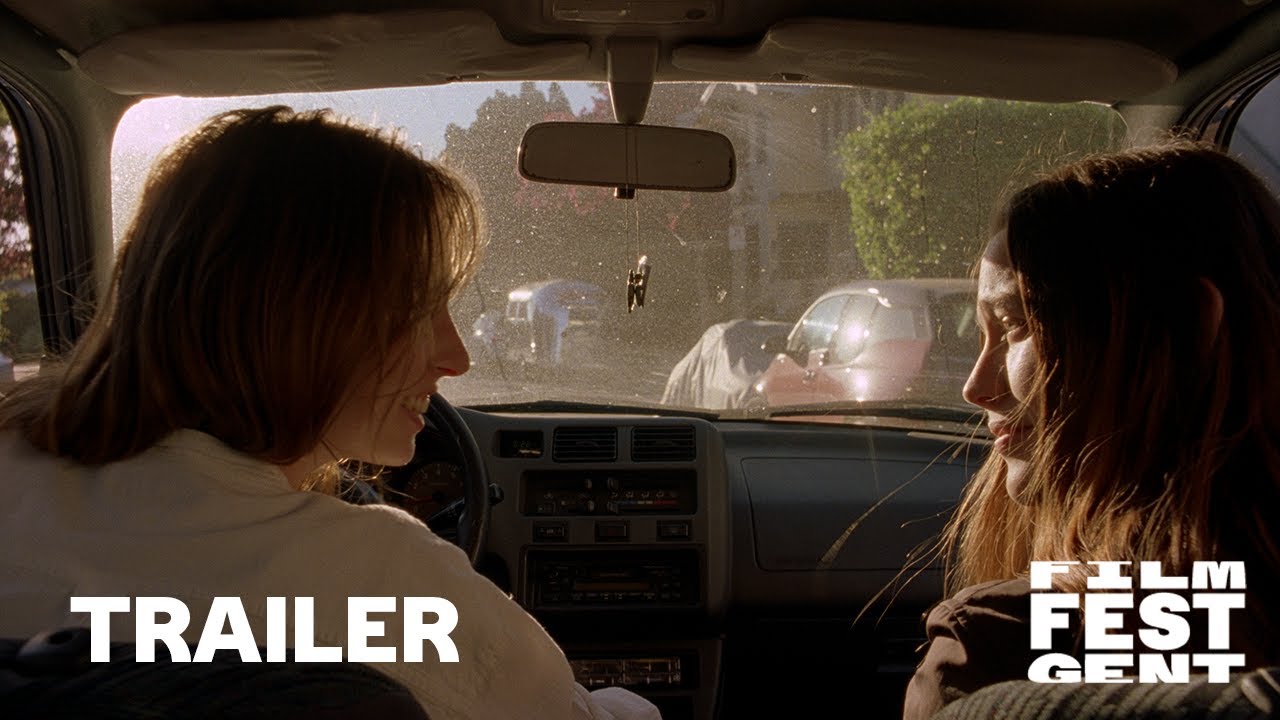
United States | 2025 | 18 min | Drama
When Losing Sound Creates an Unexpected Connection
Elliot is staying with her ex-partner’s new girlfriend, Bella, while participating in a medical trial connected to her recent and unexplained loss of hearing. Suddenly separated from the sonic environment she once took for granted, Elliot has to renegotiate how she experiences everyday spaces, physical presence and communication. Inside that unusual situation, an intimate connection begins developing between the two women.
Eliza Callahan turns this compact 18-minute premise into a sensory relationship drama starring Victoria Pedretti as Elliot and Maya Hawke as Bella. Rather than treating hearing loss only as a narrative complication, the film makes changing perception central to Elliot’s emotional experience: as her relationship with sound changes, so does the way she understands proximity, vulnerability and her connection with another person.
➡️ Key Takeaway: The Non-Actor uses the sudden absence of sound to create an intimate story about how losing one familiar way of experiencing the world can open an unexpected form of connection.
Should You Watch It?: An Intimate Short Where Silence Changes How Connection Feels
The Non-Actor is particularly suited to viewers who enjoy small-scale, character-driven shorts built around a single unusual emotional situation. Elliot’s unexplained hearing loss immediately changes the way she interacts with her surroundings, while staying with Bella creates an interpersonal tension that is unusual even before attraction begins to emerge.
Its 18-minute runtime makes restraint essential. Instead of expanding the premise into a conventional romance or medical drama, Callahan concentrates on Elliot’s changing sensory experience and the intimacy developing between two women connected through an already complicated relationship. Pedretti and Hawke give the film a recognizable central pairing, but the conceptual hook remains Elliot’s altered relationship with sound.
➡️ Key Takeaway: Watch The Non-Actor for a concise and unusual drama where silence, vulnerability and unexpected attraction become closely intertwined.
Why Everyone Is Talking About It?: Victoria Pedretti and Maya Hawke Lead a Festival-Recognized Short
The immediate attraction is the pairing of Victoria Pedretti and Maya Hawke inside an intimate two-character premise. But The Non-Actor also developed a notable festival profile for an 18-minute short, receiving three nominations across the 2025 circuit: Best International Short Film at Ghent, the IMDbPro Short Cuts Award for Best Film at Toronto International Film Festival, and the jury prize competition for American shorts at Champs-Élysées Film Festival.
That festival journey gives Eliza Callahan’s film visibility beyond its recognizable leads. Its combination of hearing loss, changing sensory perception and an unexpected connection between women provides a distinctive conceptual identity without requiring a feature-length narrative. The result sits comfortably within contemporary short filmmaking that uses one highly specific experience to explore much larger questions of intimacy and perception.
➡️ Key Takeaway: The Non-Actor stands out by combining two high-profile performers, an unusual sensory premise and intimate queer connection within just 18 minutes.
Movie Trend: Queer Relationships & Self-Discovery — Losing Sound Changes How Intimacy Feels
The Non-Actor fits particularly well within LGBT/Queer, Relationships and Self Discovery from the FestivalScope Pro-inspired taxonomy. Its distinctive idea is that Elliot’s unexplained hearing loss changes more than her relationship with sound. As she learns to experience her surroundings differently, she also becomes more receptive to an unexpected intimacy with Bella—the new girlfriend of her former partner. IFFR describes the film as capturing the difficult process of letting go and embracing change, while TIFF characterizes it as a sensorial exploration of a brief encounter.
Rather than constructing the relationship around a conventional romantic setup, Eliza Callahan brings together two women who would normally be positioned as rivals and lets vulnerability create another possibility. Elliot’s changing sensory world strips away familiar ways of interpreting people and environments, making connection itself something that has to be rediscovered. The result links queer intimacy with personal transition rather than treating sexuality as the film’s central conflict.
➡️ Key Takeaway: The Non-Actor turns hearing loss into a catalyst for emotional change, showing how an altered way of experiencing the world can also transform the way we experience another person.
➡️ Movie Trend: Queer Relationships & Self-Discovery
Who Should Watch It? (Audience Profile): For Viewers Drawn to Sensory Cinema and Unexpected Intimacy
|
Short-film, queer cinema and character-driven independent film audiences |
|
|
Victoria Pedretti and Maya Hawke fans; viewers interested in relationships, sensory storytelling and self-discovery |
|
|
Broad adult appeal, with particular relevance to LGBTQ+ audiences |
|
|
Middle to upper-middle income, culturally engaged audience |
|
|
Film-literate, culturally curious and interested in intimate contemporary storytelling |
|
|
More likely to use curated film platforms, attend festivals and seek independent cultural experiences |
The film should particularly appeal to viewers who appreciate small stories built around unusual emotional circumstances. At only 18 minutes, Callahan does not need an elaborate romantic narrative. Elliot and Bella’s encounter becomes meaningful precisely because it is brief, complicated and connected to a moment when Elliot’s understanding of herself is already changing.
There is also a strong audience proposition in its pairing of Pedretti and Hawke. But the performances are supported by an unusually important sonic dimension: IMDb credits Jack Sobo and Jake Aron with sound design, while IFFR explicitly frames the film around Elliot reconfiguring her relationship with her sonic environment.
➡️ Key Takeaway: The Non-Actor is especially suited to viewers who want queer intimacy, sensory experimentation and emotional change compressed into a focused short-film experience.
What This Movie Means for the Industry: Short Films Can Turn Sensory Ideas Into Accessible Emotional Stories
The Non-Actor demonstrates how short-form cinema can build a strong identity around one precise experiential idea. Elliot’s hearing loss immediately changes how audiences are invited to think about environment, communication and intimacy, allowing sound design to participate directly in character development rather than functioning merely as technical support. The film’s festival path—from its world premiere at IFFR to its North American premiere in TIFF’s Short Cuts programme—shows the international programming potential of that approach.
There is another important development behind the film: IFFR identifies The Non-Actor as a loose adaptation of Callahan’s semi-autobiographical novel The Hearing Test. Instead of attempting to compress an entire novel into 18 minutes, the film appears to extract a specific emotional and sensory experience and rebuild it for cinema. That is a particularly effective model for literary adaptation in short form.
➡️ Key Takeaway: The Non-Actor shows how short films can transform a highly specific sensory experience into an accessible story about relationships, vulnerability and personal change.
Creative Analysis: Losing Sound Changes the Way Elliot Experiences Intimacy
The Non-Actor builds its emotional world around a simple but distinctive disruption: Elliot can no longer rely on sound in the way she once did. While participating in a medical trial for her unexplained hearing loss, she stays with Bella, her ex’s new girlfriend, creating an already complicated relationship before attraction enters the picture.
Eliza Callahan uses that sensory change to make intimacy feel newly uncertain. Elliot must pay closer attention to bodies, gestures, physical distance and her surroundings, allowing the developing connection with Bella to become part of a larger process of learning how to experience both herself and other people differently.
➡️ Key Takeaway: The Non-Actor makes hearing loss part of its emotional language, connecting changing perception with changing intimacy.
Storytelling: Two Women Who Could Be Rivals Find Unexpected Intimacy
The relationship setup immediately gives the short tension. Elliot is not staying with a stranger but with the woman now dating her ex, a connection that could easily produce jealousy, resentment or competition. Instead, Callahan moves the characters toward curiosity and intimacy.
That reversal makes the relationship more interesting than a straightforward romantic encounter. Both women are connected to an absent third person, yet the film concentrates on what develops directly between them. In only 18 minutes, this allows an emotionally complicated situation to emerge without requiring an elaborate backstory.
➡️ Key Takeaway: By bringing an ex-partner and the new girlfriend into unexpected emotional proximity, the film turns potential rivalry into surprising connection.
Direction: Eliza Callahan Makes a Small Encounter Feel Sensory and Personal
Callahan keeps the scale deliberately intimate. With only Victoria Pedretti and Maya Hawke in the principal cast, the film can concentrate on subtle changes in Elliot and Bella’s interactions rather than expanding outward into a larger ensemble narrative.
That restraint suits the subject. Elliot is already experiencing her surroundings differently, so small gestures and moments of proximity can carry unusual significance. The short-film format intensifies that effect: this is less about watching a complete relationship develop than witnessing one encounter capable of changing how someone sees herself.
➡️ Key Takeaway: Callahan uses intimacy and restraint to make a brief encounter feel like a meaningful turning point rather than a miniature conventional romance.
Performances: Victoria Pedretti and Maya Hawke Build Intimacy Through Uncertainty
Victoria Pedretti’s Elliot carries the more complex sensory challenge. The character is adjusting to unexplained hearing loss while entering an unfamiliar domestic and emotional situation, requiring vulnerability without making Elliot simply passive.
Maya Hawke’s Bella provides the other half of that tension. Because of their connection through Elliot’s former relationship, closeness between the women already carries emotional complications. Their chemistry therefore works through curiosity, discomfort and attraction rather than immediate romantic certainty.
➡️ Key Takeaway: Pedretti and Hawke make the film’s unusual relationship convincing by allowing awkwardness and attraction to exist together.
Sound & Sensory Style: Silence Becomes Part of the Storytelling
Sound is particularly important because Elliot’s relationship with her sonic environment is explicitly central to the premise. Her hearing loss gives the filmmakers an opportunity to make audiences conscious of something cinema usually encourages them to accept automatically: the everyday sounds through which people understand space, distance and other people.
That makes changes in sound potentially as important as dialogue or imagery. Rather than treating hearing purely as a medical issue, the film connects sensory perception with Elliot’s emotional state, making the way she experiences her environment part of how audiences understand her changing relationship with Bella.
➡️ Key Takeaway: The film makes sound—and its absence—an emotional storytelling device, allowing audiences to experience Elliot’s changing perception rather than simply being told about it.
Themes & Messages: Connection Can Begin When Familiar Ways of Experiencing Life Change
The Non-Actor is fundamentally interested in adaptation. Elliot cannot experience her surroundings exactly as she did before, and that disruption requires her to reconsider habits that previously felt automatic. At the same time, she enters an unexpected relationship that challenges another familiar assumption: how she should relate to her ex’s new partner.
These two forms of change reinforce each other. Losing something familiar creates uncertainty, but uncertainty also makes different experiences possible. The film therefore avoids reducing Elliot’s journey to loss alone and instead examines how disruption can alter the possibilities for connection and self-understanding.
➡️ Key Takeaway: The Non-Actor suggests that adapting to change is not simply about recovering what was lost—it can also mean discovering new ways of connecting with yourself and someone else.
What Makes This Movie Different?: Hearing Loss and Queer Intimacy Become One Sensory Experience
The distinctive element is how closely The Non-Actor connects its sensory premise with its relationship story. Elliot’s hearing loss is not one storyline while her attraction to Bella is another. Both concern a woman learning to navigate experiences that no longer operate according to familiar expectations.
That makes the 18-minute format particularly effective. Callahan does not need to resolve every implication of Elliot’s condition or define exactly what her connection with Bella will become. Instead, the film captures the moment when a changed sensory world and an unexpected emotional connection begin opening something new.
➡️ Key Takeaway: What makes The Non-Actor distinctive is its ability to turn silence, attraction and changing perception into different expressions of the same intimate transformation.
If You Liked The Non-Actor (2025): Recent Films About Queer Intimacy, Connection and Self-Discovery
The Little Sister (2025) by Hafsia Herzi
The Little Sister is a strong next choice for viewers interested in The Non-Actor’s connection between queer desire and discovering a different version of yourself. Fatima, a young French-Algerian woman in Paris, begins exploring relationships and sexuality while negotiating the expectations of her family and the increasingly independent life opening around her.
The scale is much larger than Callahan’s 18-minute encounter, but the emotional connection is clear. Neither film treats queer desire simply as a revelation; intimacy becomes part of a broader process through which a young woman begins understanding what she wants and how she wants to live.
Love Me Tender (2025) by Anna Cazenave Cambet
Love Me Tender offers a more difficult perspective on queer self-discovery, following a woman whose decision to live more openly transforms her relationships and family life. Like The Non-Actor, it is interested in the consequences that appear when personal transformation changes the way existing relationships function.
Where Callahan captures a brief moment when unexpected intimacy becomes possible, Love Me Tender explores what happens when a changing identity must survive beyond that moment. Together, they present queer self-discovery not as a neat destination but as an emotional transition capable of reorganizing relationships.
Girls Will Be Girls (2024) by Shuchi Talati
Girls Will Be Girls approaches intimacy through heterosexual desire rather than queer romance, but it makes a useful companion because of its attention to female desire, physical awareness and the complicated process of discovering yourself through another person. Its intimate scale and sensitivity to small behavioral changes are particularly close to what makes The Non-Actor compelling.
Both films are interested in experiences that can be difficult to articulate directly. Attraction is communicated through proximity, hesitation and changing emotional boundaries, allowing the body and environment to become important parts of the storytelling.
➡️ Key Takeaway: Start with The Little Sister for queer self-discovery, Love Me Tender for the consequences of living more openly, and Girls Will Be Girls for another intimate exploration of desire, vulnerability and discovering yourself through connection.
Final Verdict: A Brief Encounter Where Silence Creates a New Kind of Intimacy
The Non-Actor makes its 18-minute runtime an advantage. Eliza Callahan does not attempt to explain every dimension of Elliot’s unexplained hearing loss or turn her connection with Bella into a complete romantic arc. Instead, she concentrates on a transitional moment when Elliot’s relationship with both her surroundings and another woman suddenly begins to change.
Victoria Pedretti and Maya Hawke make the unusual relationship setup particularly effective. Elliot and Bella could easily have been positioned as rivals because of the former partner connecting them, yet the film discovers vulnerability and attraction inside that potentially uncomfortable situation. Their intimacy consequently feels less like a conventional romance than an unexpected possibility emerging at precisely the moment Elliot’s familiar world has become uncertain.
Its strongest creative idea is connecting sensory and emotional transformation. Elliot is not simply losing access to sound while independently developing feelings for Bella; the two experiences become intertwined, making changing perception part of the film’s language of intimacy.
➡️ Final Verdict: 4.1/5 — A concise, sensory and emotionally curious short that turns hearing loss and unexpected queer intimacy into a distinctive exploration of vulnerability, perception and connection.
Quick Facts: Losing Sound Opens an Unexpected Path to Intimacy
|
Hearing loss, queer intimacy, relationships, perception and self-discovery |
|
|
Victoria Pedretti, Maya Hawke |
|
|
Queer Relationships & Self-Discovery |
|
|
Toronto International Film Festival, Ghent International Film Festival, Champs-Élysées Film Festival |
|
➡️ Key Takeaway: The Non-Actor is worth watching because it accomplishes something unusually intimate in only 18 minutes: it makes a changing relationship with sound inseparable from the possibility of connecting with someone new.






Leave a Reply