
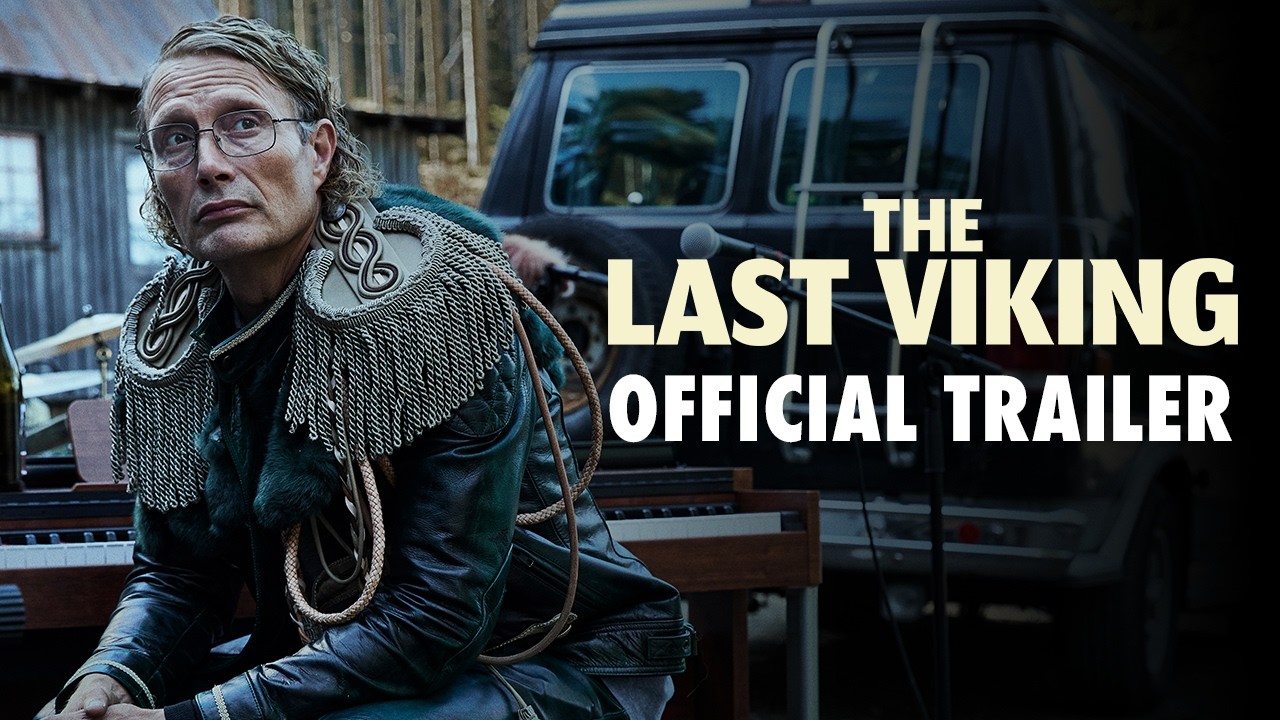
Denmark / Sweden | 2025 | 116 min | Dark Comedy
Two Brothers, Stolen Money and a Very Strange Reunion
The Last Viking reunites Mads Mikkelsen and Nikolaj Lie Kaas with director Anders Thomas Jensen for an eccentric Danish dark comedy that mixes crime, absurd humor and an unexpectedly emotional story about brotherhood. Anker (Lie Kaas) is released after 15 years in prison and immediately sets out to recover the money from his robbery—but only his brother Manfred (Mikkelsen) knows where it was buried.
There is one major problem: Manfred can no longer remember where the money is and now believes he is John Lennon. What begins as a hunt for stolen cash gradually becomes a journey into childhood trauma, identity and the complicated relationship between two brothers who understand themselves far less than they initially believe.
Why This Movie Matters Right Now: Nordic Dark Comedy Finds a Wider Audience
The Last Viking is a strong example of Anders Thomas Jensen’s distinctive approach to dark comedy: extreme characters, sudden violence and absurd situations are used to explore much more serious questions about trauma, loss and identity. The Danish Film Institute describes the film as a story about identity, while festival programming has emphasized its combination of pitch-black comedy, slapstick and emotional complexity.
That unusual balance has connected with critics. Rotten Tomatoes currently reports a 90% Tomatometer score from 60 reviews, with the critical consensus highlighting the chemistry between Mikkelsen and Lie Kaas and the film’s ability to be bizarre, funny and affecting at the same time.
➡️ Key Takeaway: The Last Viking turns an absurd crime story into a surprisingly emotional exploration of brotherhood and identity. Its weirdness gives it personality.
Why Everyone Is Talking About It: Mads Mikkelsen Returns to Anders Thomas Jensen’s World
A major attraction is the return of Mads Mikkelsen and Nikolaj Lie Kaas to Anders Thomas Jensen’s distinctive cinematic universe. Both actors have appeared across Jensen’s films, and The Last Viking again uses their contrasting personalities and chemistry to balance grotesque comedy with genuine emotion.
Mikkelsen’s transformation into Manfred gives the film an especially memorable hook: a psychologically troubled man convinced he is John Lennon becomes central to what initially appears to be a straightforward hunt for missing robbery money. The eccentric performance helps distinguish the film from conventional European crime comedy.
➡️ Key Takeaway: The reunion of Jensen, Mikkelsen and Lie Kaas gives The Last Viking both established creative pedigree and a memorable comic identity. Their chemistry drives the film.
Awards & Recognition: 3 Wins and 15 Nominations
The Last Viking has received 3 wins and 15 nominations, with recognition extending across its ensemble, direction and lead performances. The cast won the 2026 Bodil Award for Best Ensemble, while Mads Mikkelsen received a European Film Award nomination for European Actor.
The Danish Film Awards also nominated the film for major categories including Best Film, Best Director and Best Actor, with both Mikkelsen and Nikolaj Lie Kaas recognized in the lead-actor category. Internationally, Jensen won the Méliès d’Argent for Best Feature at Imagine Film Festival, while the film competed for the Golden Giraldillo at the Seville European Film Festival.
➡️ Key Takeaway: The awards recognition confirms that The Last Viking’s appeal extends beyond its eccentric premise, particularly highlighting its ensemble and performances. The cast is one of its biggest strengths.
Why The Last Viking Stands Out: Mads Mikkelsen Makes Nordic Weirdness Emotional
The Last Viking stands out because it refuses to choose between crime caper, absurdist comedy and emotional family drama. A robber searching for millions with a brother who believes he is John Lennon provides the comic hook, but Jensen gradually uses that ridiculous situation to explore childhood memories, trauma and what it means to construct an identity.
Add the reunion of Mikkelsen and Lie Kaas, strong critical reception and an awards run spanning Danish and European recognition, and the film becomes more than another eccentric Nordic comedy. The absurdity gets your attention; the relationship between the brothers gives it emotional weight.
➡️ Key Takeaway: The Last Viking stands out through its award-recognized ensemble, Mads Mikkelsen’s eccentric performance and Anders Thomas Jensen’s distinctive mixture of absurd comedy and emotional darkness. It is strange for a reason.
Movie Trend: Nordic Dark Comedy — Absurdity Makes Trauma Easier to Confront
The Last Viking fits the Nordic Dark Comedy tradition, using crime, eccentric characters and increasingly absurd situations to explore much heavier subjects. Anker’s search for the stolen money provides the narrative engine, but the deeper story concerns identity, childhood trauma and the damaged relationship between two brothers. The film was presented out of competition at Venice, where its genre-bending approach positioned it as distinctive Danish auteur cinema.
Anders Thomas Jensen repeatedly allows comedy and sadness to occupy the same scene. Manfred’s fractured identity can generate bizarre humor, yet it also reveals vulnerability, allowing the film to move from ridiculous situations toward surprisingly sincere emotional territory.
➡️ Key Takeaway: The Last Viking uses absurd comedy to approach trauma, identity and brotherhood without becoming conventional family drama. The humor makes the darkness more human.
➡️ Movie Trend: Nordic Dark Comedy
Who Should Watch It? (Audience Profile): Mads Mikkelsen and European Dark Comedy Fans
|
Mads Mikkelsen and Nordic dark-comedy fans |
|
|
European arthouse, crime-comedy and festival-film viewers |
|
|
Middle to higher-income cinema and streaming audiences |
|
|
Film-aware viewers interested in international cinema, festivals and unconventional storytelling |
|
|
Audiences influenced by actors, directors, reviews, festival recognition and awards |
The strongest audience is viewers already attracted to Mads Mikkelsen, Anders Thomas Jensen or unconventional Scandinavian cinema. Jensen and Mikkelsen have developed a recognizable creative partnership built around eccentric characters, violence, black humor and unexpected emotional warmth.
It should also appeal to festival audiences looking for films that resist straightforward genre classification. The Last Viking played Venice Out of Competition and TIFF Centrepiece, while its later awards recognition gives viewers another reason to discover it beyond the cast.
➡️ Key Takeaway: The Last Viking is best suited to audiences who enjoy strange European comedies with darker emotional themes underneath. Mikkelsen provides the strongest entry point.
What This Movie Means for the Industry: Distinctive European Cinema Can Travel
The Last Viking demonstrates how strongly authored European films can reach international audiences without abandoning their local identity. It remains rooted in Danish and Swedish language, Nordic humor and Jensen’s distinctive storytelling, yet its journey through Venice, Toronto, Seville and other international festivals has given the film visibility well beyond Scandinavia.
Mads Mikkelsen’s international profile provides an important bridge, but the film’s recognition goes deeper than star power. Its ensemble won the 2026 Bodil Award, Mikkelsen received a European Film Award nomination, and the film accumulated extensive Danish Film Awards recognition. That combination shows how local creative identity and internationally recognizable talent can reinforce each other.
➡️ Key Takeaway: The Last Viking shows that distinctly Nordic storytelling can travel internationally when strong authorship, recognizable talent and festival recognition come together. Local identity becomes an advantage.
Creative Analysis: Absurd Comedy Hides a Story About Broken Brothers
The Last Viking begins like a crime caper: Anker leaves prison after 15 years and wants the robbery money his brother Manfred buried. But Anders Thomas Jensen gradually turns the hunt for cash into something more personal, as returning to their childhood home forces both brothers to confront memories they have spent years avoiding.
The result is deliberately unpredictable. Slapstick, violence and bizarre behavior sit beside trauma and loss, allowing Jensen to make the brothers’ emotional damage funny without reducing the story entirely to comedy.
➡️ Key Takeaway: The Last Viking disguises a story about trauma and brotherhood inside an increasingly absurd crime comedy. The money starts the journey; the brothers give it meaning.
Storytelling: The Heist Is Really About Identity
Finding the missing money provides a simple objective, but the film gradually shifts attention toward a more complicated question: who are Anker and Manfred after everything that happened to them? Their search takes them back to the family home and toward memories connected to their childhood.
This gives the film two simultaneous journeys. One searches for something physically buried, while the other uncovers experiences the brothers have psychologically buried.
➡️ Key Takeaway: The missing money gives the story momentum, but identity and memory become its real destination. The past is the greater discovery.
Direction & Tone: Anders Thomas Jensen Makes Darkness Funny
Jensen’s distinctive approach depends on extreme tonal contrasts. Brutal violence can be followed by slapstick, while apparently ridiculous characters gradually reveal emotional vulnerability. Critics have particularly noted the film’s mixture of offbeat humor and surprising sincerity.
That balance makes The Last Viking difficult to classify as either straightforward comedy or drama. Its strangeness is intentional: humor becomes a way of approaching painful subjects without turning the movie into a conventional trauma narrative.
➡️ Key Takeaway: Jensen places absurd humor beside emotional pain instead of choosing between them. Comedy becomes a way into the darkness.
Performances: Mads Mikkelsen and Nikolaj Lie Kaas Make the Absurdity Human
Mads Mikkelsen’s Manfred provides the film’s most immediately unusual character, while Nikolaj Lie Kaas’s Anker gives the story a more grounded counterweight. Their contrasting performances allow scenes to move between frustration, comedy and genuine affection.
Their chemistry is also one of the film’s most widely praised qualities, with the critical consensus highlighting how the pair anchor the movie’s bizarre humor and violence with emotional sincerity. This is their sixth film with Jensen as director, giving the collaboration an established creative rhythm.
➡️ Key Takeaway: Mikkelsen supplies the eccentricity while Lie Kaas helps ground it, making the brothers believable beneath the absurdity. Their chemistry is the emotional anchor.
Setting & Atmosphere: Returning Home Means Confronting the Past
The brothers’ return to their former family home gives the setting emotional significance. What initially appears to be simply the location where the robbery money was hidden becomes connected to childhood memories, trauma and the origins of their damaged relationship.
The isolated woodland environment also suits Jensen’s increasingly strange collection of characters and events. The search becomes almost detached from normal society, creating a contained world where the film can push its eccentricity further.
➡️ Key Takeaway: The childhood home turns the treasure hunt into a confrontation with memories neither brother has fully escaped. Going back means digging deeper.
Themes & Messages: Who Decides What Is Normal?
Identity sits at the center of The Last Viking. Manfred’s changing understanding of himself initially appears to separate him from everyone around him, but Jensen gradually expands the idea by surrounding the brothers with other outsiders and unconventional personalities. Zentropa itself describes the film as an unconventional comedy about identity.
The broader message questions the usefulness of defining people through conventional ideas of normality. Beneath its extreme comedy, the film develops considerable affection for damaged, eccentric and socially uncomfortable characters.
➡️ Key Takeaway: The Last Viking questions whether fitting conventional definitions of normality should determine someone’s value. Difference becomes part of identity.
What Makes This Movie Different?: Mads Mikkelsen Thinks He Is John Lennon
The film’s most memorable hook is also its best illustration of Jensen’s approach: Mads Mikkelsen plays a man convinced he is John Lennon while his criminal brother desperately needs him to remember where millions in stolen money are buried.
That premise could sustain a broad comedy on its own, but The Last Viking uses it to reach much more emotional territory involving trauma, family and self-understanding. The collision between a ridiculous setup and genuine tenderness is what separates it from a conventional crime caper.
➡️ Key Takeaway: The Last Viking turns an outrageous John Lennon identity crisis into an unexpectedly tender story about two damaged brothers. The absurd premise hides real emotion.
If You Liked The Last Viking (2025): More Dark Crime Comedy and Dysfunctional Characters
The Phoenician Scheme (2025) by Wes Anderson
The Phoenician Scheme follows wealthy businessman Zsa-zsa Korda as assassination attempts, family tensions and an elaborate business project collide. Like The Last Viking, it places deeply eccentric characters inside a story involving crime and danger while refusing to behave like a conventional thriller.
The connection is strongest in their shared taste for deadpan absurdity, dysfunctional relationships and characters whose strange behavior hides more emotional concerns. Wes Anderson is more meticulously controlled than Jensen, but both filmmakers create worlds governed by their own peculiar comic logic.
Riff Raff (2025) by Dito Montiel
Riff Raff mixes crime, family dysfunction and black comedy as a former criminal’s attempt at a peaceful life is disrupted when figures from his past return. Its ensemble includes Jennifer Coolidge, Ed Harris, Gabrielle Union and Bill Murray.
For The Last Viking viewers, the strongest similarity is the idea that crime provides the setup while damaged family relationships provide the real story. Both films surround serious threats with eccentric personalities and uncomfortable comedy.
The Instigators (2024) by Doug Liman
The Instigators pairs Matt Damon and Casey Affleck as unlikely partners whose robbery goes disastrously wrong, forcing them into an increasingly chaotic escape. Crime provides the structure, but mismatched personalities and escalating mistakes generate much of the comedy.
It is a lighter and more conventional alternative to Jensen’s film, but viewers who enjoyed the combination of stolen money, criminal incompetence and reluctant companionship should find familiar territory.
The Phoenician Scheme offers stylized absurdity, Riff Raff combines crime with dysfunctional family dynamics, and The Instigators delivers chaotic criminal companionship. All three turn crime into a vehicle for character-driven comedy. The people matter more than the loot.
Final Verdict: Nordic Absurdity Gives Brotherhood Unexpected Emotional Weight
The Last Viking succeeds because Anders Thomas Jensen understands that its bizarre characters are more interesting when the film takes their emotions seriously. What begins as a hunt for buried robbery money becomes a dark fable about identity, memory and two brothers trying to understand each other. Jensen himself describes the film as a story about how identities are shaped by other people’s perceptions.
Mads Mikkelsen and Nikolaj Lie Kaas are essential to making that tonal mixture work. Their established chemistry grounds the cartoonish violence and eccentric humor, something also emphasized in the film’s critical consensus.
The result is deliberately strange, occasionally abrasive and far removed from mainstream crime comedy. But that specificity is precisely why it stands out: Jensen turns an outrageous premise into something unexpectedly compassionate.
➡️ Final Verdict: 4.2/5 — A wonderfully strange Nordic dark comedy elevated by Mads Mikkelsen, Nikolaj Lie Kaas and an unexpectedly tender exploration of identity and brotherhood. The absurdity makes the emotion hit harder.
Quick Facts: Anders Thomas Jensen Reunites His Danish Ensemble
|
Brotherhood, identity, memory and trauma |
|
|
Nikolaj Lie Kaas, Mads Mikkelsen, Sofie Gråbøl, Søren Malling, Bodil Jørgensen |
|
|
Venice International Film Festival 2025 — Out of Competition |
|
The film premiered Out of Competition at the 2025 Venice International Film Festival, with Jensen presenting it as a darkly comic fable about identity. Its critical reception has also remained strong, with Rotten Tomatoes currently reporting a 90% Tomatometer from 60 reviews.
➡️ Key Takeaway: The Last Viking brings together an established Danish creative team, international festival recognition and a highly distinctive approach to dark comedy. Its weirdness has genuine emotional purpose.






Leave a Reply