
UK | 95 min | Horror / Comedy
When Influencer Paradise Becomes a Creature-Horror Nightmare
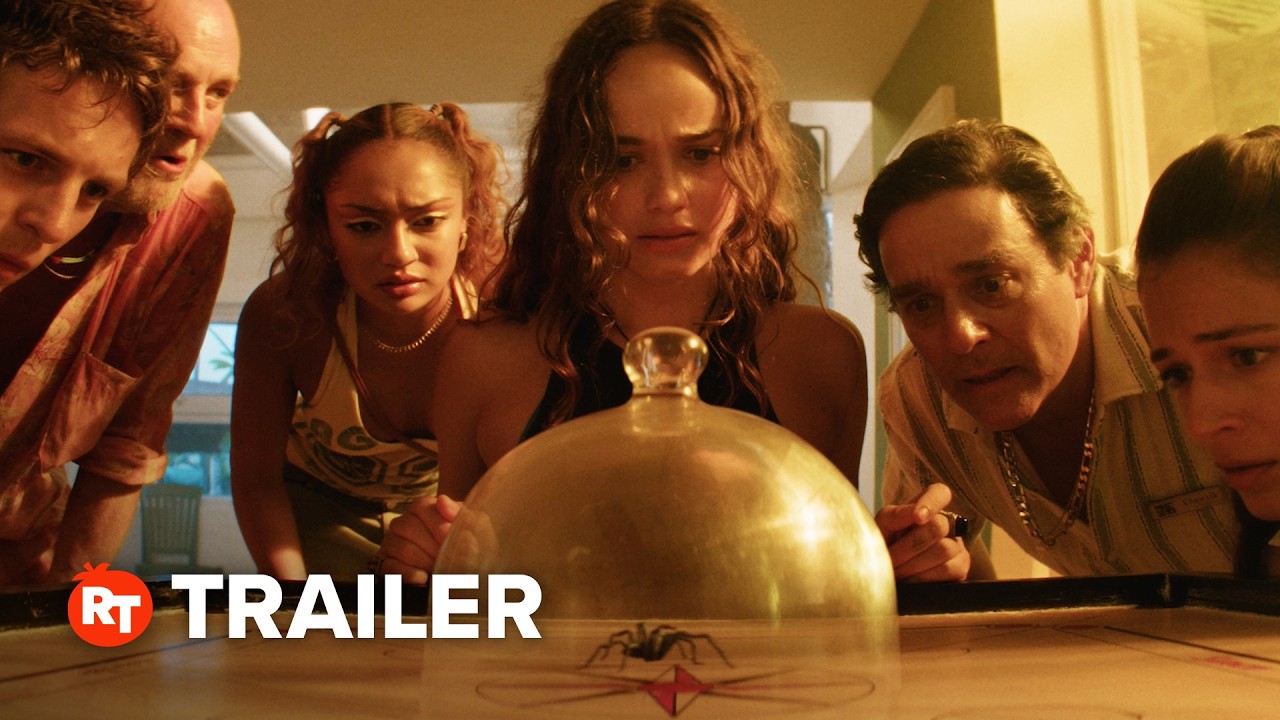
Spider Island takes one of the most polished fantasies of the social-media era—a luxury resort filled with famous influencers—and lets nature destroy the content strategy. A group of creators arrives at the exclusive Oceania Pearl Hotel on a secluded tropical island to promote its glamorous opening, only to discover that construction has disturbed underground caves containing a far less marketable attraction: deadly spiders.
Director Christopher Smith understands exactly what kind of movie he is making. Instead of treating the influencer premise as decoration around a conventional creature feature, Spider Island brings contemporary internet celebrity directly into the survival-horror formula, putting people whose careers depend on controlling their image into an environment they cannot control at all.
➡️ Movie Insight: Spider Island turns influencer culture into the setup for a knowingly contemporary creature feature. The luxury resort provides the fantasy, social media provides the satire and the spiders provide the chaos. It is an old-school survival-horror engine redesigned for an audience that lives online.
Why This Movie Matters Right Now: Horror Is Coming for Influencer Culture
Influencers have become such a recognizable part of contemporary life that cinema no longer needs to explain what they represent. Their obsession with visibility, access, luxury experiences and constant documentation provides filmmakers with an instantly understandable social ecosystem—and horror is increasingly discovering how easily that ecosystem can be disrupted.
Spider Island makes the contrast especially clean. Everything about the Oceania Pearl Hotel has been constructed to look desirable, exclusive and shareable, while everything underneath it represents something uncontrollable. The film therefore has a very current comic-horror tension: what happens when a lifestyle designed for perfect images collides with a threat that cannot be filtered, branded or turned into content?
➡️ Why It Matters: Horror works best when it attacks something audiences immediately recognize from contemporary life. Spider Island takes the glossy fantasy of influencer travel and places something primitive underneath it. The result makes social-media culture part of the genre mechanism rather than simply a topical reference.
Should You Watch It?: For Viewers Who Want Their Creature Horror Fast, Funny and Self-Aware
Spider Island is positioned for audiences who enjoy horror with a strong entertainment instinct. The central promise is refreshingly direct: attractive tropical location, recognizable personalities, escalating chaos and a swarm of deadly spiders turning a luxury getaway into a survival nightmare.
Christopher Smith’s involvement gives that simple premise additional genre credibility. From Creep and Severance to Triangle, Smith has repeatedly shown an interest in placing characters inside contained environments where the situation becomes progressively more dangerous, while Spider Island gives him an opportunity to push the comedy further without abandoning the horror mechanics.
➡️ Viewing Recommendation: Watch Spider Island if creature horror is more fun for you when it knows exactly how outrageous its premise is. The combination of influencer satire, tropical isolation and survival horror gives the film an accessible crowd-pleasing identity. Expect entertainment first, but with enough contemporary commentary to make the spiders bite a little harder.
Why Everyone Is Talking About It?: The Cast Turns Influencer Culture Into Part of the Movie
Spider Island has a promotional advantage built directly into its casting. Alongside established performers including Rose Williams, Tim McInnerny and Andy Nyman, the ensemble includes real-world social-media personalities such as Avani Gregg and Léna Mahfouf, deliberately bringing professional acting and creator culture into the same production.
That decision makes the film’s influencer premise more than a fictional gimmick. Vertigo Films has explicitly positioned the project as an attempt to bring filmmakers, actors and social creators closer together, while Smith has described the combination of real creators, actors, scares and comedy as central to making the film feel contemporary. The movie therefore tests whether creator reach can become part of genre-film audience building rather than remaining separate from traditional entertainment marketing.
➡️ Viral Potential: Spider Island has a concept that can be understood almost instantly: influencers versus deadly spiders on a luxury island. Casting actual digital creators gives that premise direct access to audiences already built around online personalities. If the film travels socially, the creators are not simply promoting the joke—they are inside it.
Why Spider Island Stands Out: The Influencers Are Part of the Horror Experiment
Casting recognizable creators inside a movie about influencers creates an unusually direct relationship between fiction and marketing. Spider Island does not merely imitate creator culture through actors; it places performers and digital personalities together, making the cultural world being satirized part of the film’s actual production strategy.
That makes the movie particularly interesting as an industry experiment. Traditional film casts bring performance credibility and genre recognition, while creators bring direct audience relationships that conventional movie marketing often struggles to reproduce. Spider Island effectively asks whether those two forms of celebrity can strengthen each other inside a mainstream-accessible genre package.
➡️ Cinema Insight: Spider Island turns casting into part of its concept. The collision between established actors and real digital creators mirrors the collision happening between traditional entertainment and creator culture more broadly. That gives the movie relevance beyond its deliberately simple spiders-versus-influencers hook.
Movie Trend: Influencer Horror — When Online Visibility Becomes a Survival Problem
Influencer horror is emerging as one of the clearest ways genre cinema can interrogate contemporary digital culture. These stories take characters whose lives depend on being watched and place them inside situations where visibility, image management, followers and online status become vulnerabilities rather than advantages.
The genre works because influencer culture already contains many classic horror ingredients: isolation disguised as luxury, strangers performing identities for audiences, competition for attention, dependence on technology and the pressure to keep documenting experiences even when circumstances become uncomfortable. Add a remote location and an uncontrollable threat, and the aspirational content machine can quickly become a survival scenario.
➡️ Movie Trend: Influencer horror is turning digital celebrity into a new source of genre tension. Characters accustomed to controlling how the world sees them are being placed in situations where image becomes irrelevant and survival takes over. Spider Island makes that trend literal by sending creators into paradise and then removing their control completely.
Viewer Profile: Horror Fans Who Want Entertainment With a Social-Media Edge
Spider Island is designed around accessibility. The creature-feature concept can attract traditional horror audiences, while the influencer setup and creator casting give younger digital audiences an immediate cultural reference point even if they are not dedicated genre fans.
The comedy is equally important to that positioning. Rather than asking viewers to take the premise with complete seriousness, the movie can lean into the absurdity of glamorous creators attempting to survive a spider infestation, creating the kind of communal horror experience that works particularly well with groups and theatrical audiences.
|
Deadly spiders and contained survival deliver a classic monster-movie hook. |
|
|
The absurd collision between luxury influencers and lethal nature creates natural comedy. |
|
|
Gen Z / Digital Audiences |
Influencer culture and creator casting connect the movie directly to online entertainment. |
|
The director returns to contained genre territory after films including Creep, Severance and Triangle. |
|
|
The luxury-resort setup provides room to play with image, status and digital celebrity. |
|
|
The high-concept premise is designed for immediate reactions, scares and shared entertainment. |
➡️ Audience Insight: Spider Island bridges audiences that do not always arrive at horror through the same door. Genre fans come for the creatures, younger viewers can come through the creators and mainstream audiences can understand the concept from one sentence. That crossover potential is one of the movie’s strongest commercial advantages.
What This Movie Means for the Industry: Creators Are Moving From Marketing Into Casting
For years, film studios have used influencers primarily as promotional channels. Spider Island suggests a more integrated model in which creator personalities can become part of the entertainment product itself, appearing alongside established performers rather than simply being invited to premieres or paid to promote trailers.
Vertigo Films’ strategy is especially interesting because the movie concept makes that crossover feel organic. Casting creators in a film about creators means their existing public identities strengthen the premise instead of distracting from it. If audiences respond, this could encourage more producers to think of digital creators as potential casting and audience-development partners rather than external marketing tools.
➡️ Industry Insight: The creator economy is moving closer to traditional film production. Spider Island tests whether established actors, filmmakers and social personalities can occupy the same commercial ecosystem without one feeling like a marketing accessory to the other. Horror may be an ideal testing ground because high-concept genre films already depend heavily on personality, community and viral conversation.
Creative Analysis: Turning Influencer Luxury Into Creature-Feature Chaos
Christopher Smith builds Spider Island around contrast: polished luxury against uncontrolled nature, digital celebrity against physical vulnerability and aspirational travel against survival horror. Shooting on location in Mauritius gives the production a genuine tropical scale, making the paradise worth believing in before the spiders begin dismantling it.
Storytelling — A Simple Premise With Contemporary Packaging
The narrative uses one of horror’s most durable structures: isolate a group, introduce a threat and progressively remove their ability to escape. What updates the formula is the identity of the victims. Making them social-media influencers allows familiar survival mechanics to collide with a culture built around attention, performance and constant visibility.
Direction — Balancing the Laughs With the Threat
Smith has described the project as an opportunity to balance scares and laughter, and that tonal combination is essential to the premise. Push the comedy too far and the spiders lose their threat; make the horror completely serious and the influencer concept loses much of its satirical potential. The creative challenge is keeping both energies alive at once.
Performances — Actors and Creators Share the Same Playground
Rose Williams, Tim McInnerny and Andy Nyman bring established screen experience, while Avani Gregg, Léna Mahfouf and other creator personalities introduce a different form of performance familiarity. That mixture can give the ensemble an intentionally uneven social texture appropriate to a story about personalities brought together for a promotional event.
Visual Language — Paradise Has Something Underneath It
Mauritius provides exactly the contradiction the film needs visually. Tropical landscapes, luxury architecture and resort imagery establish the aspirational fantasy before caves, confined spaces and spiders expose what the perfect surface has been hiding.
Sound & Music — Making the Swarm Feel Bigger
Creature horror depends heavily on anticipation, and spiders offer sound design an opportunity to make danger present before audiences necessarily see it. Ilan Eshkeri’s involvement as composer also gives the movie an experienced genre-adjacent musical voice capable of supporting both suspense and the heightened energy demanded by horror comedy.
Pacing & Structure — From Launch Party to Survival Mode
The setup naturally provides a strong escalation curve. The movie can begin inside influencer-event energy—arrivals, promotion, luxury and social performance—before progressively stripping away the environment’s glamour as the group realizes that the island is no longer a content opportunity but a trap.
Themes — When Image Stops Protecting You
Underneath the creature-feature fun sits an obvious contemporary irony. Influencer culture is built around visibility, personal branding and the ability to control presentation, while survival horror removes those privileges until characters are reduced to physical instinct.
What Makes It Different — The Marketing Concept Is Inside the Movie
Spider Island’s smartest conceptual move is that the casting strategy and narrative premise reinforce each other. Real creators playing within a story about creator culture make the movie itself part of the conversation it is depicting.
➡️ Creative Insight: Spider Island updates classic creature horror by changing the people trapped with the monsters rather than reinventing the monsters themselves. Christopher Smith uses influencer culture, real creators and luxury-travel imagery to give an old-school survival structure a contemporary personality. The creative hook is simple but highly marketable: when the cameras stop mattering, survival becomes the only content left.
If You Liked Spider Island: Survival Horror Gets a Social and Darkly Comic Upgrade
If Spider Island appeals because it combines contained survival, genre fun and characters whose social dynamics become almost as dangerous as the physical threat, these films explore related territory. Each takes a recognizable horror structure and gives it a distinctive contemporary personality.
Crawl (2019) by Alexandre Aja: When Nature Turns the Escape Route Into a Trap
Alexandre Aja strips creature horror down to an intensely physical survival scenario as a hurricane traps a daughter and father inside a flooded Florida home with increasingly aggressive alligators. Like Spider Island, the concept is instantly understandable and depends on turning a dangerous animal into the engine for escalating confinement.
➡️ Why It Connects: Both movies understand the pleasure of uncomplicated creature-horror stakes: survive the environment and survive what is hunting you inside it. Spider Island adds comedy and influencer satire, while Crawl pushes the survival mechanics toward pure tension.
Bodies Bodies Bodies (2022) by Halina Reijn: When Privileged Young People Become Their Own Worst Threat
Halina Reijn takes a group of wealthy young friends, isolates them inside a mansion and lets social performance collapse into paranoia. The movie’s horror-comedy energy comes from watching characters shaped by contemporary language, online culture and status discover how quickly their carefully constructed identities disintegrate under pressure.
➡️ Why It Connects: Spider Island replaces interpersonal paranoia with literal creatures, but both films find comedy and horror in putting digitally fluent young people somewhere their social identities cannot protect them. The joke becomes increasingly dangerous because the characters cannot stop behaving like themselves even when survival takes priority.
Triangle (2009) by Christopher Smith: When Paradise Becomes a Psychological Trap
Christopher Smith’s Triangle provides the clearest connection to Spider Island through the director himself. A seemingly straightforward yachting trip becomes an increasingly disorienting nightmare after the characters board an apparently deserted ocean liner, demonstrating Smith’s longstanding ability to turn leisure environments into spaces of escalating genre danger.
➡️ Why It Connects: Watching Triangle alongside Spider Island reveals how Smith returns to isolation while changing the tone and cultural context around it. Triangle makes the trap psychological and existential; Spider Island makes it social, comic and creature-driven.
➡️ If You Liked Insight: These films show why contained horror remains so adaptable: filmmakers can keep the survival structure while completely changing the cultural conversation around it. Creature threats, social paranoia and psychological loops all become more effective once characters lose the safety of ordinary life. Spider Island pushes that tradition into creator culture by asking what happens when people accustomed to being followed online suddenly become the ones being followed.
Final Verdict: Influencers Meet Their Most Unfriendly Followers
Spider Island understands the commercial power of a premise audiences can grasp before the trailer has finished. Influencers, tropical luxury and killer spiders create an immediate horror-comedy equation, while Christopher Smith’s genre experience gives the project more credibility than its deliberately playful setup might initially suggest.
More interestingly, the movie connects its subject to its production strategy by placing real creators alongside established actors. That makes Spider Island simultaneously a creature feature, social-media satire and experiment in how traditional genre cinema can work with the creator economy.
➡️ Final Verdict: Spider Island looks designed as crowd-friendly horror that knows exactly which contemporary buttons it is pressing. Christopher Smith takes an old-school creature feature and gives it a social-media makeover without losing the simple pleasure of watching humans discover they are no longer at the top of the food chain. Eight legs may be the threat, but influencer culture gives the movie its personality.
Quick Facts: Spider Island at a Glance
|
Christopher Smith, Christopher Jolley, David Quantick; story by Ben Jacques and Christopher Jolley |
|
|
Horror / Comedy / Creature Feature |
|
|
Rose Williams, Tim McInnerny, Andy Nyman, Avani Gregg, Owen Warner, Léna Mahfouf, Carlotta Banat, Anuschka van Lent |
|
|
Vertigo Films / NOW Films / Fiction Films |
|
|
Social-media influencers become trapped at a luxury island resort overrun by deadly spiders |
|
|
Creature-horror fans, horror-comedy audiences, Gen Z viewers and Christopher Smith followers |
|
|
International theatrical rollout beginning Aug 2026 |
|
|
HU / US / ZA theatrical; UK FrightFest from Aug 30 |
Final Insights: Influencer Horror Is Turning the Creator Economy Into Genre Entertainment
Horror has always been quick to identify cultural anxieties, and creator culture is becoming unusually rich material. Influencers represent aspiration, visibility, self-branding and digital status, but horror can reverse every one of those qualities: visibility becomes vulnerability, luxury becomes isolation, followers become threats and the carefully controlled image collapses when survival takes over.
The industry opportunity goes beyond storytelling. As creators move closer to traditional film and television production, movies can potentially use their existing audience relationships as part of casting, marketing and distribution strategy. Spider Island makes that crossover unusually visible because creator culture is simultaneously its subject, part of its cast and part of its commercial hook.
➡️ Final Insight: Influencer horror is evolving because online celebrity has become recognizable enough to function as a genre archetype. The next generation of horror does not need to choose between social commentary and crowd entertainment when contemporary culture can provide both. Spider Island captures that shift by putting the creator economy on a tropical island—and then releasing the spiders.



Leave a Reply