
Major “Carrie” spoilers follow!
Mike Flanagan’s Prime Video take on Stephen King’s “Carrie” is finally here, and anyone who has read the book or seen the Brian De Palma film can tell you that this series adaptation is different. There are some big changes made throughout the entire series, perhaps none bigger than the grand finale.
The ending of “Carrie” is one of the most well-known conclusions of King’s career, and it’s been solidified into the pop culture consciousness thanks to De Palma’s movie. Even if you’ve never read the book or seen that film, you likely know what happens: bullies dump pig’s blood on Carrie’s head at the prom, Carrie snaps and uses her telekinetic powers to kill everyone.
While Flanagan’s “Carrie” does end with a big prom night massacre, things play out much, much differently. Let’s take a look at all the major changes.
‘It wasn’t just Carrie’
In the very first episode of “Carrie,” we see some survivors being interviewed by a mysterious film crew. These survivors talk about the prom night massacre, and one of them, Sue Snell (Siena Agudong) drops a surprising reveal that there were other people at the prom that night who might have been involved in the tragic events. “It wasn’t just Carrie,” she says.
In Flanagan’s version, there’s a mysterious organization of psychics and telekinetics monitoring Carrie. Throughout the show, Carrie (Summer H. Howell) has one real friend (other than Sue, who is kind to her but also not above resorting to some bullying of her own), Emaline (Thalia Dudek). The show gives us a bit of a fake-out and makes us think Emaline is Carrie’s imaginary friend, since no one else can see her. But it turns out she’s real! She’s just been astral-projecting herself into Carrie’s mind, which is why only Carrie can see her.
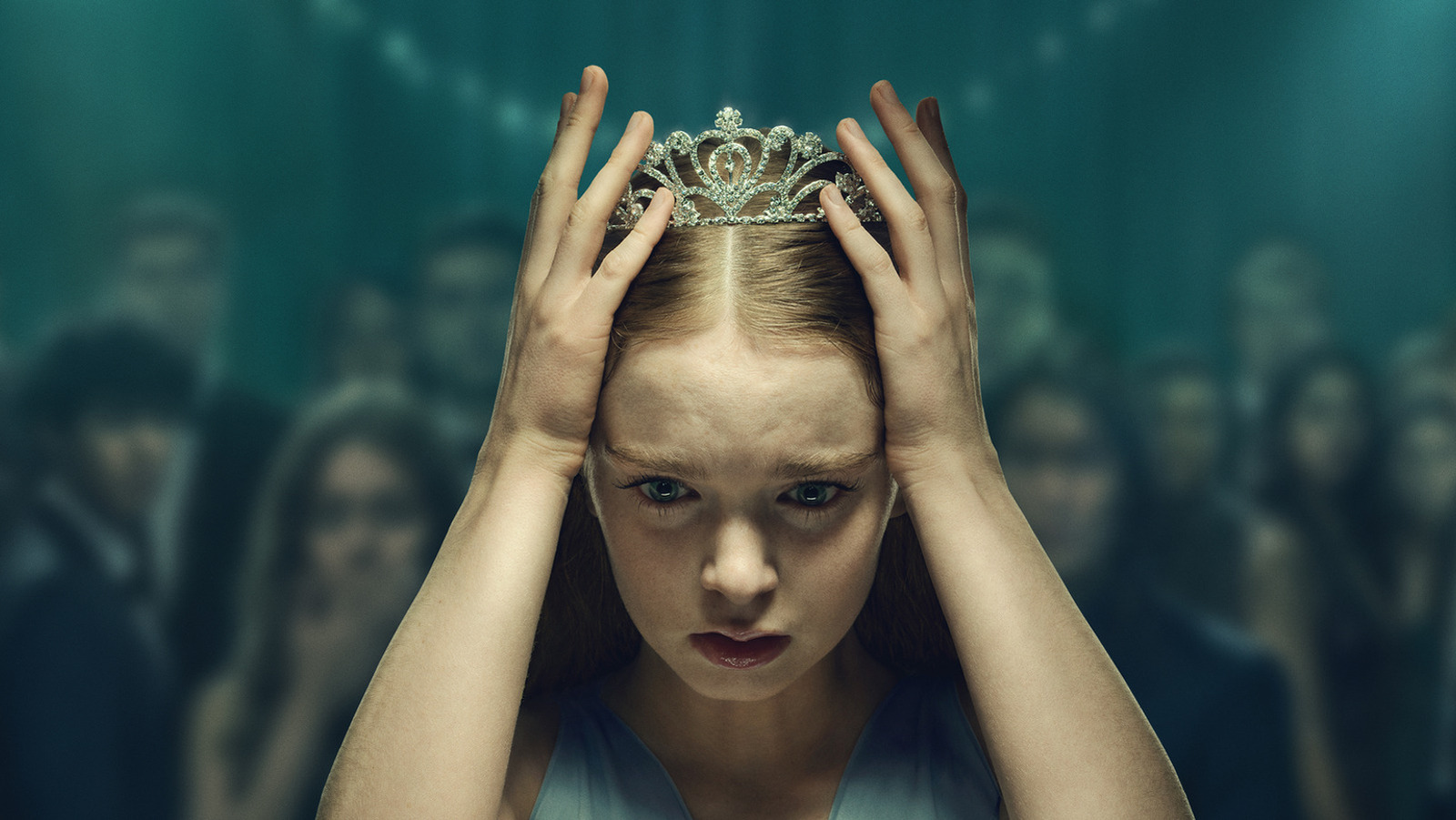
In the last episode, prom night arrives, and the show hits some of the familiar beats: Carrie is crowned prom queen, and bully Chris (Alison Thornton) and her psychotic boyfriend Billy (Arthur Conti) dump pig’s blood on Carrie’s head. The prom attendees laugh at Carrie’s misfortune. And here’s where things start to go down a different path.
Carrie is seemingly being controlled by someone else
In King’s book, Carrie snaps during this moment, locks the doors, and proceeds to use her powers to kill practically everyone at the prom. She also destroys almost the entire town after that. But here, while Carrie is being laughed at, Emaline asks Carrie if she can “take over.” Which strongly suggests that it’s not Carrie who kills everyone at the prom — it’s Emaline, using Carrie’s body.
This is bound to be controversial to fans of the book, since it seems to be letting Carrie completely off the hook. Instead of getting bloody revenge, Carrie is seemingly completely innocent of the prom massacre. In any case, like in the book, many prom goers are killed — including Chris and Billy, who Carrie (or rather, Emaline) crushes to death in Billy’s car.
And then Carrie heads home to her mother Margaret, causing a huge rift in the ground as she goes. And the changes keep on coming.
The fate of Margaret White
In the book, Margaret is a monster who abuses and fears Carrie. In Flanagan’s version, however, Margaret (played by Samantha Sloyan) seems to genuinely love Carrie. However, she’s still afraid of Carrie’s powers. And when Carrie returns home from the prom and tells Margaret what happened, Margaret plans to kill her daughter.
This is what happens in the book, too. But again: things are different here. In the book, Carrie uses her powers to literally stop Margaret’s heart after Margaret stabs her with a knife. Carrie eventually succumbs to her wounds and dies. De Palma’s movie makes things a bit more dramatic: Carrie uses her powers to stab Margaret to death, crucifixtion-style, with a bunch of knives, and then makes the house collapse, killing herself in the process.
The house collapses in Flanagan’s version, too. But both Carrie and Margaret survive. This is the biggest change of all: Carrie lives, and she escapes with Emaline. As for Margaret, she does eventually die here, but in a much different way. And oh yeah: Margaret has telekinetic powers, too! It seems Carrie inherited them. After surviving the house collapse, Margaret is later interviewed by that same film crew we saw in the first episode. As it turns out, this crew is actually the secret telekinetic organization, lead by a character played by Flanagan’s wife and frequent star Kate Siegel. They proceed to kill Margaret and cover up her murder, because it’s clear these folks are up to no good.
In the end, Carrie survives
In interviews, Mike Flanagan has said that his dream scenario would be for “Carrie” to run three seasons, and the ending here certainly leaves plenty of room for that. Not only is Carrie still alive and able to come back for more seasons, but Flanagan has introduced an entire organization of evil telekinetics. Could Carrie turn into a hero and fight these people in future seasons? Maybe.
And hey, maybe she could even meet up with another Stephen King character with mind powers: Charlie McGee, the girl from “Firestarter,” who has pyrokinetic abilities (“Firestarter” was adapted into a movie in 1984, and Stephen King hated it).
In “Firestarter,” Charlie is being pursued by an evil government organization known as The Shop. Perhaps the telekinetic group introduced in Flanagan’s “Carrie” could be his version of The Shop, and Charlie and Carrie have to take them down together. But this is all just speculation. For now, though, Carrie has made it out of her story alive. She lives to fight another day.



Leave a Reply