
Found footage movies are a dime a dozen these days, and I say that as someone who has juried a found footage film festival and considers herself an avid and seasoned consumer of the subgenre (or medium, depending on how you look at it, but that’s an article for another day). They’re everywhere, and many of them don’t even register in the public consciousness because much of the found footage lot these days are, sadly, low-effort attempts to cash in on the subgenre’s most tried and true stereotypes.
But there are some films that really show us what can be done with the subgenre and remind fans that there’s still fresh angles to be explored and toyed with within that framework. Not everything is just a bunch of folks running around somewhere haunted and screaming their heads off (not that those movies can’t be good, but I digress). The thing about found footage is that it’s truly versatile. You can do a lot with it — and the following movies, some of which make an appearance on our list of the 25 scariest found footage movies, represent the wealth of creativity and ingenuity that can be achieved at its absolute best, most inventive, and most true to the subgenre.
These are the 10 best found footage movies that truly elevate the subgenre.
The Blair Witch Project (1999)
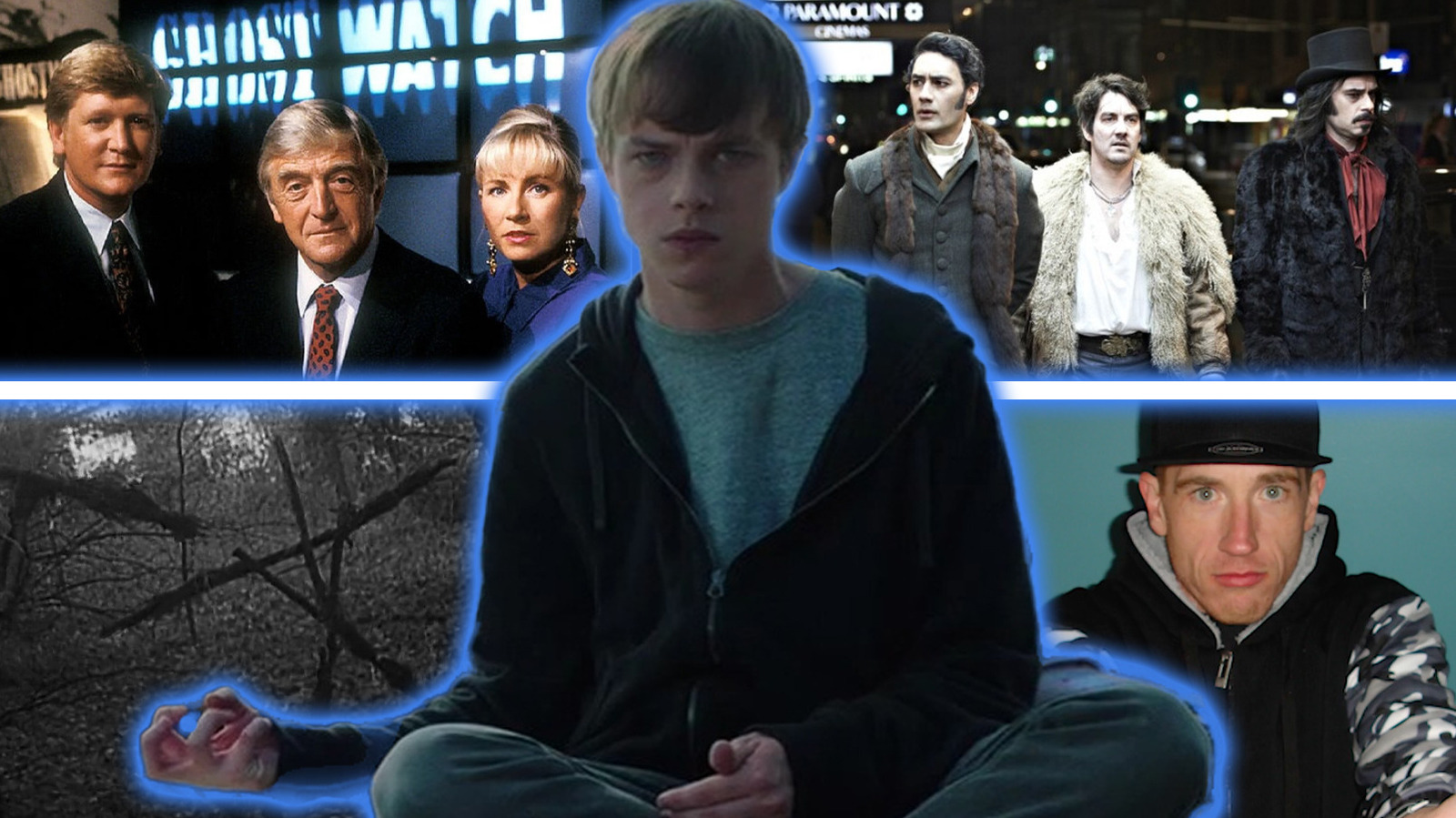
It might seem obvious or even a little too much to put “The Blair Witch Project” on every found footage list, but there’s no denying the groundbreaking movie deserves a spot here. After all, “Blair Witch” is the original show-us-what-found-footage-can-do movie. Sure, it’s exactly what I said found footage doesn’t have to be — a bunch of folks running around somewhere haunted and screaming their heads off, precisely — but it gets a pass from that standpoint. It’s one of the originals in the subgenre and helped cement so many of the stereotypes and tropes relied on (and abused) by found footage filmmakers to this day, so their usage here doesn’t feel tired and overdone. It’s a beautifully preserved memory of when those ideas felt fresh.
But more still, it’s truly a triumph of improvisational cinema — and as a result, it was a nightmare to film. With this wholly new and experimental feel at the time it was made, the film gave an edge of vérité to the entire nightmare at hand. It’s well-directed by Eduardo Sanchez and Daniel Myrick with undoubtedly masterful performances from the three protagonists — Heather Donahue, Michael C. Williams, and Josh Leonard — that expertly play in the terrifying sandbox filled for them by the filmmakers. Their commitment coupled with the execution of a tight narrative laced with genuinely scary lore made this movie a masterpiece, and it continues to remind audiences what found footage has to offer at its best.
Dooba Dooba (2026)
This is the newest film on this list, but there’s always room for incredible found footage flicks like Ehrland Hollingsworth’s nightmare “Dooba Dooba” to join the ranks of the most elevated titles of the subgenre. “Dooba Dooba” is a January 2026 release from Dark Sky Films, and it’s a real breath of fresh air when it comes to twisted found footage horror that feels modern and inventive. The story focused on a young woman who ends up getting terrorized by a stranger 16-year-old girl she babysits, and it would do the utter bizarreness of what this film turns into a disservice if I gave you any more information than that. Just know that “Dooba Dooba” is a dark and intrinsically modern found footage film destined to become one of the greats.
In fact, the film pulls from two innately modern aesthetics in horror these days. First, there’s the specifically Adult Swim style of surreal, unsettling, and uncomfortable. After all, Adult Swim is the only channel that’s still making TV that feels dangerous. “Dooba Dooba” is all of those things and more, taking on a twisted “Tim and Eric” edge in its dialogue and even the quirky composition of its shots, which are all on home security cameras. Second, the movie uses analog horror tropes to carefully craft a sinister tone and visual language that sticks with the viewer long after the credits roll. It’s a downright horrifying combo that comes out looking something like “Get Out” meets “This House Has People In It” (an incredible Adult Swim short you have to see if you haven’t).
Chronicle (2012)
Superhero movies aren’t for everyone, and most of the time that includes me — except, of course, when we’re talking about Josh Trank’s “Chronicle,” a superpowered teenage riot that felt utterly revolutionary for the found footage subgenre when it hit theaters in 2012. I remember seeing this one on the big screen at the time, feeling so incensed and energized off the filmmaking and story. This feeling totally stuck and still, to this day, “Chronicle” feels just as smart and special as it did when it arrived in the world. The movie follows a trio of unlikely high school friends who end up with telekinetic powers after searching in a secret underground tunnel. It’s the product of a smart script and a set of powerhouse performances from a group of actors primed for stardom.
Dane DeHaan, Michael B. Jordan, and Alex Russell all star in very early-career roles that feel so deeply human and bolster the fantastical elements of the narrative in a way that allows the audience to truly suspend their disbelief. That’s necessary with this story, but DeHaan, Jordan, and Russell’s chemistry, not to mention their command of each of the high school stereotypes they represent, cements the whole thing as a film worth watching. As for the found footage of it all, the things that are great about “Chronicle” shine even brighter through the intimacy of the in-world camera, and it’s because of the subgenre that the narrative gains its strength, not the other way around.
Rap World (2024)
At this point, comedian Conner O’Malley is known for pushing boundaries with his twisted yet topical edge. His Vines, his YouTube videos, his standup specials, and his short films all have a sense of chaos about them that feels exciting, alive, and innovative in its blunt stupidity. And that, believe it or not, is why his 2024 mockumentary “Rap World” succeeds as both a found footage film exploring new heights and an experiment in getting an audience to not just connect with his work comedically but emotionally too. The movie follows a group of bumbling idiots from the boonies in Pennsylvania who put their heads together to record a rap album in one night — and needless to say, nothing goes as planned over the course of the evening.
Just as the strengths of Josh Trank’s “Chronicle” lie in the intimacy of its in-world camera, “Rap World” has the same sort of closeness with its subjects. They’re just friends doing stupid things they’re proud of, making sure to capture each and every one. Because we’re seeing it through their camera and, for all intents and purposes, their eyes, the comedy hits harder, the triumphs feel more triumphant, and the losses are as monumental as they would be if we were part of the crew. “Rap World” is hardly a movie to be taken seriously in its narrative, but that doesn’t make it any less strong in its approach or execution.
The Den (2013)
Technically, Zachary Donahue’s horrifying odyssey “The Den” predates “Unfriended” by a year, making it the original screenlife movie. The film just didn’t hit the mainstream in the same way the Levan Gabriadze film did. It’s a shame “The Den” never had the same fanfare as “Unfriended” — which deserved every bit of it, especially considering they shot the entire movie in one take — but it’s also not hard to see why: It’s utterly depraved.
“The Den” plays with the screenlife concept differently than “Unfriended,” honing in on the Chatroulette phenomenon of the 2010s and turning it on its ear. The film focuses on a young woman who is doing her dissertation on communicating through platforms like Chatroulette (or The Den, as it’s known in this film). She ends up witnessing a heinous crime on the site while doing research, and her convictions lead her down a dark path in the name of trying to help the wronged individual in the footage.
The depth of the depravity of this film is definitely a huge reason you’re seeing it on this list, and its willingness to go deeper and not shy away is potentially the biggest part of how it succeeds in that depravity. It’s best if you go into this with as little information as possible to preserve the horrific descent into the rabbit hole — not to mention the diabolical ending, which will make your skin crawl — but this is one of the most underrated found footage movies out there. When it comes to how the medium is used here, the found footage element brings the audience dangerously close to evil, and that amps up the terror tenfold.
Cloverfield (2008)
I don’t have to tell you that the Drew Goddard-Matt Reeves breakout “Cloverfield” was groundbreaking when it premiered in 2008, because if you don’t remember it firsthand, you’ve definitely heard about it since then. The film’s reputation precedes it, and for good reason: It’s only the scariest found footage monster movie ever made. Why, though? After all, monster movies of one kind or another make up a big part of the subgenre. However, “Cloverfield “took it a step further, not only giving us a monster of epic proportions both in terror capacity and size but also giving us a rapidly degrading mayhem so real that the film’s immersion almost makes it too hard to watch. It captures the spirit of a bygone world in chaos.
“Cloverfield,” a film that follows a group of young people in New York City documenting a friend’s going away party as a kaiju-style monster descends on the city with reckless abandon, is a classic because of its ability to immerse. The characters we follow are achingly real in their desires, their motivations, their choices, and their impulses, both in regular life and in dire straits. To immerse the audience in their surroundings, which go from familiar to unfamiliar and dangerous very quickly. And finally, to immerse the audience in the breakdown of the human psyche under traumatic life-or-death circumstances beyond comprehension. “Cloverfield” is able to do all of these things, and excel at them, through the use of found footage, and it’s one of the classics for this reason.
Ghostwatch (1992)
This 1992 British masterpiece might be the most unique entry on this list, simply because of the circumstances surrounding its release — and believe it or not, that’s the very thing that gives this film the foundation to be on this list. This TV movie was originally shot as an episode of the BBC series Screen One. Broadcast on BBC under the guise that it was airing live with well-known anchors playing pivotal roles, “Ghostwatch” took England by storm and has developed a long-standing legacy over the years. It centers on a family who are plagued by what appears to be a ghost in their home, an entity the children of the house call Pipes, and they call the BBC show to investigate. Needless to say, things get a bit crazy for both the family and the newspeople on the scene.
When I think of the masterclass that was the release of this film, which has never repeated on television in the United Kingdom, I think about Orson Welles’ 1938 radio dramatization of the iconic story “War of the Worlds,” which many people listening thought was a play-by-play of real events. The fact that a project could have the same effect in the modern era (even though this was now over 30 years ago) really highlights the authenticity found footage can bring to a narrative if the performances and the plot are there. “Ghostwatch” is revered for a reason: It feels hauntingly real, and that’s the goal of every found footage horror story.
What We Do in the Shadows (2014)
The only horror comedy on the list, Taika Waititi and Jemaine Clement’s “What We Do in the Shadows” is on this list precisely for the second word in that descriptor: comedy. Found footage, more often than not, lives in the horror side of things. This film turns that on its ear, telling a story of a group of vampires, which, on its face, could be scary — except they’re all neurotic and weird and silly and are in a crappy roommate situation laden with neglected chores and family meetings. It’s a hilarious twist to the idea of what the premise could be, and getting to see them as intimately as we do due to the found footage format allows the audience to meet these characters on their silly, and somewhat sad, little level.
Ultimately, “What We Do in the Shadows” is a sneakily sad satire about what makes life worth living. To that point, the movie would be nothing without its performances, found footage or not. Clement and Waititi lead an ensemble cast full of hilarious timing and unstoppable wit. The film is truly a laugh a minute and the found footage nature gives this wonderful closeness to the audience that makes everything that much funnier. I’d argue this is one of the best found footage comedies out there, and it’s one of the best representations of the diversity of the subgenre.
Concrete Paradise (2020)
This is easily the heaviest film on this list, but it’s a remarkable look at the human psyche in its most vulnerable and troubled moments. “Concrete Paradise,” a barely-seen indie found footage drama by unknown filmmaker Jonathan Christian, presents a group of you’d never expect to be friends who have met on Zoom for one purpose: to plan a mass shooting.
Somewhat of an anti-“Mass,” a gripping drama about four parents struggling in the aftermath of a school shooting, “Concrete Paradise” deserves a place on this list because of its willingness to show us everything, to be unfiltered and unabashed in its cruelty and lack of care for the world. If you’re going to make a movie like this, it’s crucial to tap into that deep lack of shame, that twisted sense of pride and duty that makes these types of bad faith actors and enactors of violence so hard to understand by the standards of normal people.
Setting the majority of this film on a series of Zoom calls gives the viewer this demented bird’s eye view of the planning, a real fly on the wall quality that allows us to spectators while also somewhat serving to implicate us as a society that thrives on violence as entertainment, especially in the age of true crime consumption. We’re always spectators to violence in some way, shape, or form, and this film reminds us of that. Between that key element and the group of unknown actors giving some deeply natural and chilling performances, the fact remains that “Concrete Paradise” is, on top of criminally underseen, devastatingly effective.
The Outwaters (2022)
Robbie Banfitch’s “The Outwaters” is a cosmic horror hellmouth dying to swallow you whole, and it brings something fresh to the whole “a bunch of people running around the woods screaming” trope that found footage is famous for. The movie follows a group of friends who make their way out to the Mojave Desert to film a music video for one of their songs, but they end up in a hellish otherworldly loop that threatens everything they know and hold dear. I can’t lie, “The Outwaters” absolutely knocked me out the first time I saw it, from the devastating performances to the intricacy of the plot and how that was strategically obscured throughout.
Speaking of which, the way Banfitch, who wrote and directed as well as starred in the film, uses his flashlight to mask what exactly is happening to our four protagonists throughout the course of the movie is inspired. In fact, it’s probably the main reason why this movie deserves a spot on this list. This tactic is employed throughout much of the film, and it gives the audience the space to really imagine what is out there in the darkness waiting for the characters, which is key to getting in their headspace and feeling their primal terror. “The Outwaters” is a petrifying rollercoaster of a film that refuses to shy away from the unfathomable, proving that cosmic horror caught in the found footage medium can make audiences feel just as terrified as the characters enduring it.



Leave a Reply