
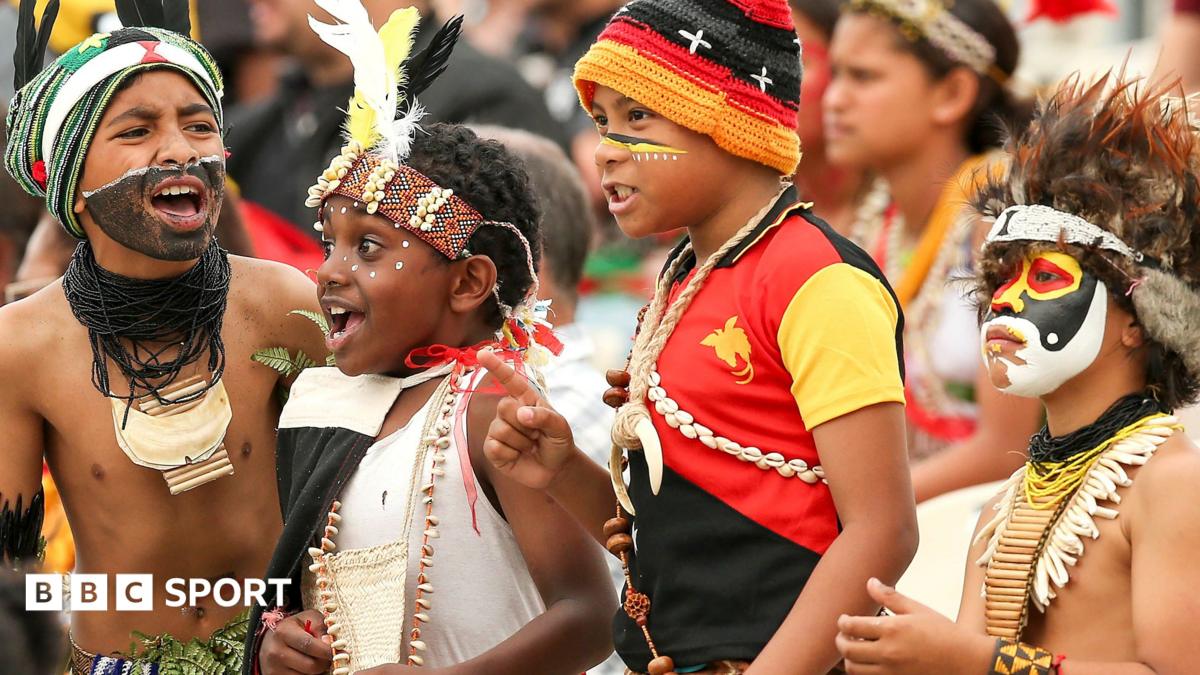
The seeds were sown by Australian miners in the 1930s, who introduced the game, one with deep roots in New South Wales and Queensland, to the local population.
It took hold as the devotion spread. The ferocious physicality of rugby league sat easily with the Papuans, who had long fought battles without a ball on their soil.
These days, the people of PNG are among the most knowledgeable and passionate. Only the Cook Islands can lay similar claims to an all-out obsession with the game in terms of national importance.
Sometimes that fervour spills over, with violence souring matches in their domestic league,, external something the authorities are keen to stamp out. In the past, tear gas was needed to quell over-excited crowds, such as when Great Britain came to tour in the early 1990s.
Generally though, rugby league is more of a peacekeeper. Villages will settle around a television set to watch rugby league, whether it is the NRL or Super League.
Participation levels are high. There are thousands of would-be Edwin Ipapes across the island, running about on bits of grass, on gravel, on the scrawniest patch of clear land somewhere, anywhere they can get the ball out and play.
The games can be rough, bordering on brutal. They are the perfect breeding ground for talent. But kit can be basic.
“If you’re lucky enough, you play with a rugby league ball,” Ipape recalled of his childhood, growing up in Mount Hagen, in the Highlands of Papua New Guinea.
“Otherwise, you play with containers, you put stuff in it, fill it up and then make it like a ball and whatever… whatever we can get our hands on, we may pretend that it was our rugby ball.
“I remember saving up my lunch money to buy myself one of those American footballs and using it as a rugby ball so we could play.”




Leave a Reply