
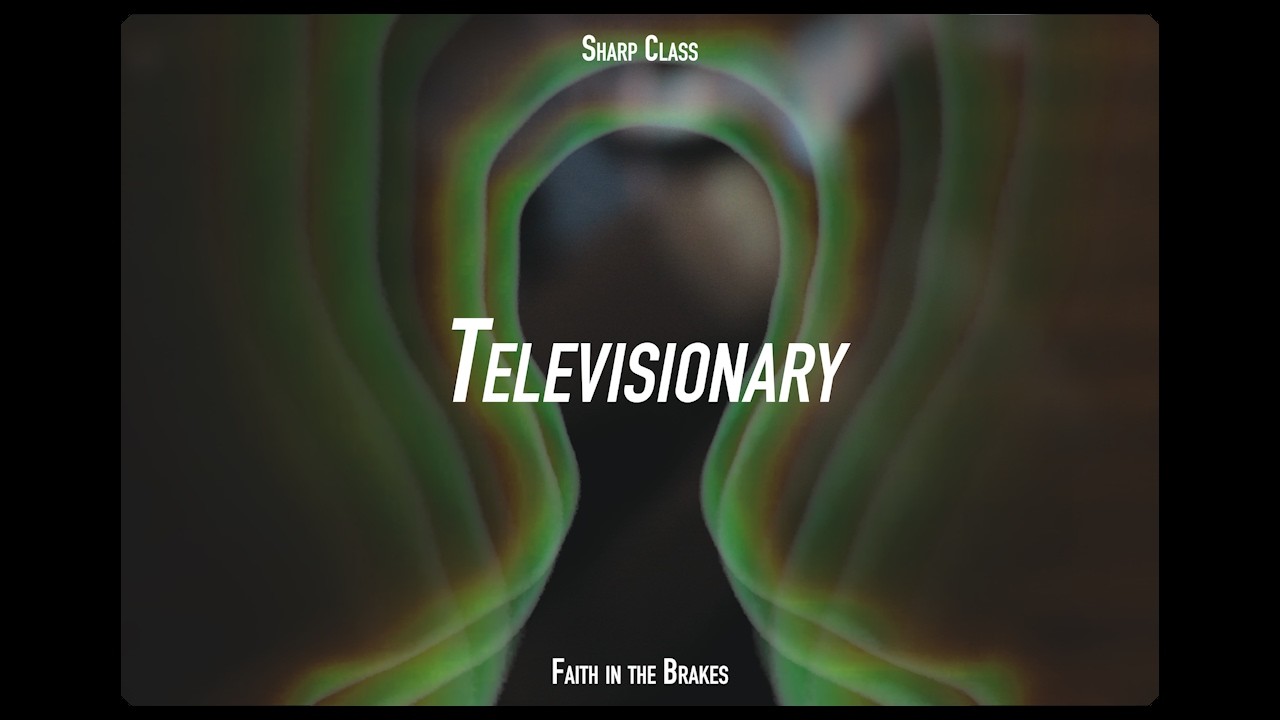
New Single • Standalone (2026). Nottingham, England, UK.
Sharp Class Turn British Guitar Tradition into Media Dissent
Sharp Class bring punk urgency, power-pop melody and mod precision to songs concerned with the pressures of contemporary life. The Nottingham trio—Oliver Orton on guitar and vocals, Billy Woodfield on bass and Declan Mills on drums—introduced that approach on Tales of a Teenage Mind, before expanding it on 2024’s Welcome to the Matinee Show (Of the End of the World). Their musical reference points carry a history of sharp social observation, giving their interest in media manipulation a natural foundation. Released on September 25 through Elodie Records, “Televisionary” brings that concern into a compact, 2:47 single.
Televisionary: When Attention Becomes Allegiance
“Televisionary” centres its argument on a recurring question: “Are we free?” That refrain gives the song a direct, confrontational structure, repeatedly interrupting the promises of a figure demanding attention and claiming privileged access to the truth. Within Sharp Class’s power-pop and new-wave framework, the repetition serves a pointed purpose: a song questioning persuasion builds its own memorable verbal hook.
My reading of the lyrics is that its target extends beyond television to the portable authority of screens. The speaker’s influence travels through domestic space, handheld devices and private thought, turning exposure into recruitment. What begins as watching becomes belief, anxiety and hostility towards outsiders. The closing instruction to switch off offers a small, practical act of refusal: withdrawing attention from someone who depends on possessing it.
Why It Matters: Updating the Social Conscience of Power Pop
British guitar music has a long tradition of making social criticism concise and accessible. “Televisionary” gives that tradition a contemporary subject: the relationship between persuasive personalities, constant access and the surrender of independent judgment. Its central question asks listeners to consider how freely they choose what occupies their minds.
For Sharp Class, that focus develops the media anxiety already present in the title and premise of their second album. Here, the concern becomes more intimate, following the distance between a public broadcast and a private nervous state. The song’s strongest idea is that manipulation succeeds through ordinary habits of attention—and that interrupting those habits can be a meaningful beginning.






Leave a Reply