
This article contains spoilers for “Godzilla Minus Zero.”
One of the most anticipated sequels of the year is finally upon us. “Godzilla Minus Zero” is the follow-up to 2024’s “Godzilla Minus One,” with director Takashi Yamazaki returning to once again put his stamp on the legendary franchise. And since “Godzilla Minus One” was officially the first movie in the franchise to win an Oscar, the pressure is on.
Thus far, the first reactions to “Godzilla Minus Zero” have been glowing, so it’s fair to say mission accomplished. A big reason for that is because Yamazaki picked up where he left off, centering the action on the same characters two years later as Japan attempts to dig itself out of the devastation left behind by Godzilla’s attacks. Specifically, Ryûnosuke Kamiki is back as Kōichi Shikishima and Minami Hamabe is back as Noriko as they both try to build a life for their adopted daughter, Akiko (Sae Nagatani).
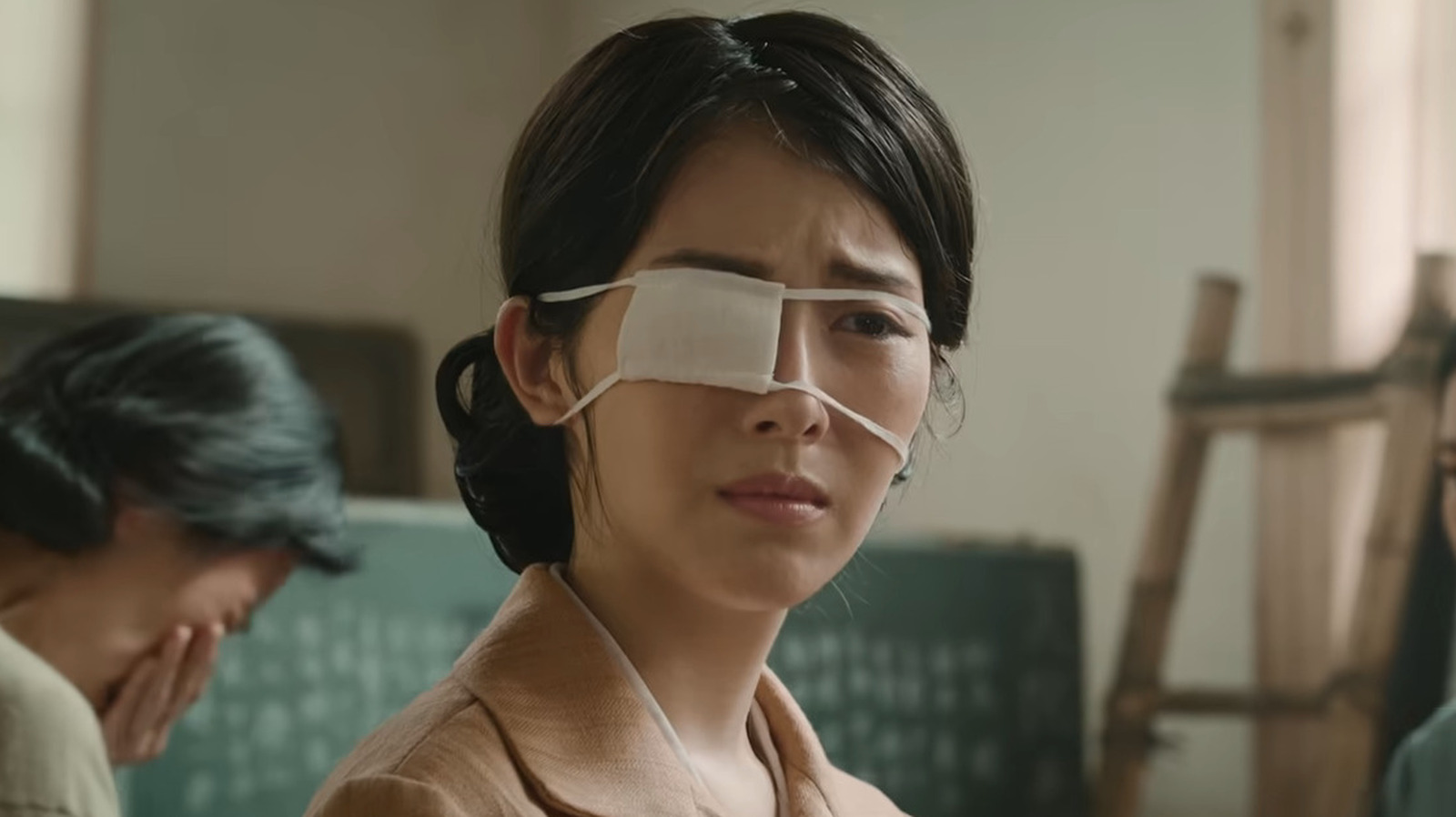
As viewers will surely recall, Noriko was left for dead after Godzilla annihilated the Ginza District in “Minus One,” which is one of the worst things that Godzilla has ever done. Miraculously and somewhat inexplicably, Noriko survived the attack. Shikishima and Akiko reunited with her in the hospital at the very end of the movie, and all seemed well — or mostly well, anyway. Noriko had a very strange, scaly growth on her neck, implying that something was amiss.
One of the biggest questions viewers were left with was how in the heck Norkiko survived Godzilla’s devastating blast. It seemed like it was just for the sake of giving the movie a happy ending. However, “Minus Zero” not only explains how Noriko survived, but uses that as a major plot device that the sequel hinges on.
Godzilla’s G cells are powerful but dangerous
“Godzilla Minus Zero” shows the horrifying aftermath of a kaiju attack like never before, revisiting key events from “Minus One” from new perspectives. One of these scenes explains how Noriko survived. We meet Dr. Ogata (Jun Kunimura), who treated Noriko after the attacks in 1947. He explains that there’s no way this woman should have survived. She was on death’s door — so much so that he told a nurse to leave her and tend to someone else.
Miraculously, the following day, she was breathing with a strong heartbeat. Within days of that, her wounds had all but disappeared, save for her eye. The explanation? Godzilla’s G cells were infused into several survivors. These cells have regenerative properties, which explains why Noriko’s terrible wounds healed. Unfortunately, it’s not all good news.
Every other person who was infected with the G cells died, with scaly growths emerging from their skin. This explains the markings on Noriko’s neck at the end of “Minus One.” But she was also the only one who managed to live this long with the G cells in her body. Those G cells are later used to help lure Godzilla to the final battle with King Ghidorah, using Dr. Murakami’s amplification device. Throughout the movie, Noriko says she doesn’t have much time left, as the scaly growths continue to spread.
In retrospect, it’s interesting that the happy ending in “Godzilla Minus One” almost didn’t happen. That ending teed up much of the sequel’s plot and some of the more harrowing scenes in the franchise. Whether or not Noriko survives much longer is an open-ended question, but at the very least, Takashi Yamazaki didn’t merely save her for the sake of putting a nice bow on the previous movie. There was a meaningful, in-universe explanation for that decision.





Leave a Reply