

“Son, are you ready to go back to Columbus and kick their ass?”
I’ll never forget visiting Ann Arbor with my dad and having the opportunity to spend a few moments with the late Michigan head coach, Bo Schembechler. Upon being introduced, Schembechler was told I was from Columbus, Ohio. He shook my hand, looked me dead in the eyes and delivered that line.
My father was floored. He thought it was one of the coolest interactions of my recruitment. Keep in mind, he had two degrees from Ohio State, but he would have signed my letter of intent to play for Michigan that very day had I let him.
That ultimately wasn’t my destiny, but the encounter made something abundantly clear: Whether you choose Ohio State or Michigan, you go there to play in “The Game.”
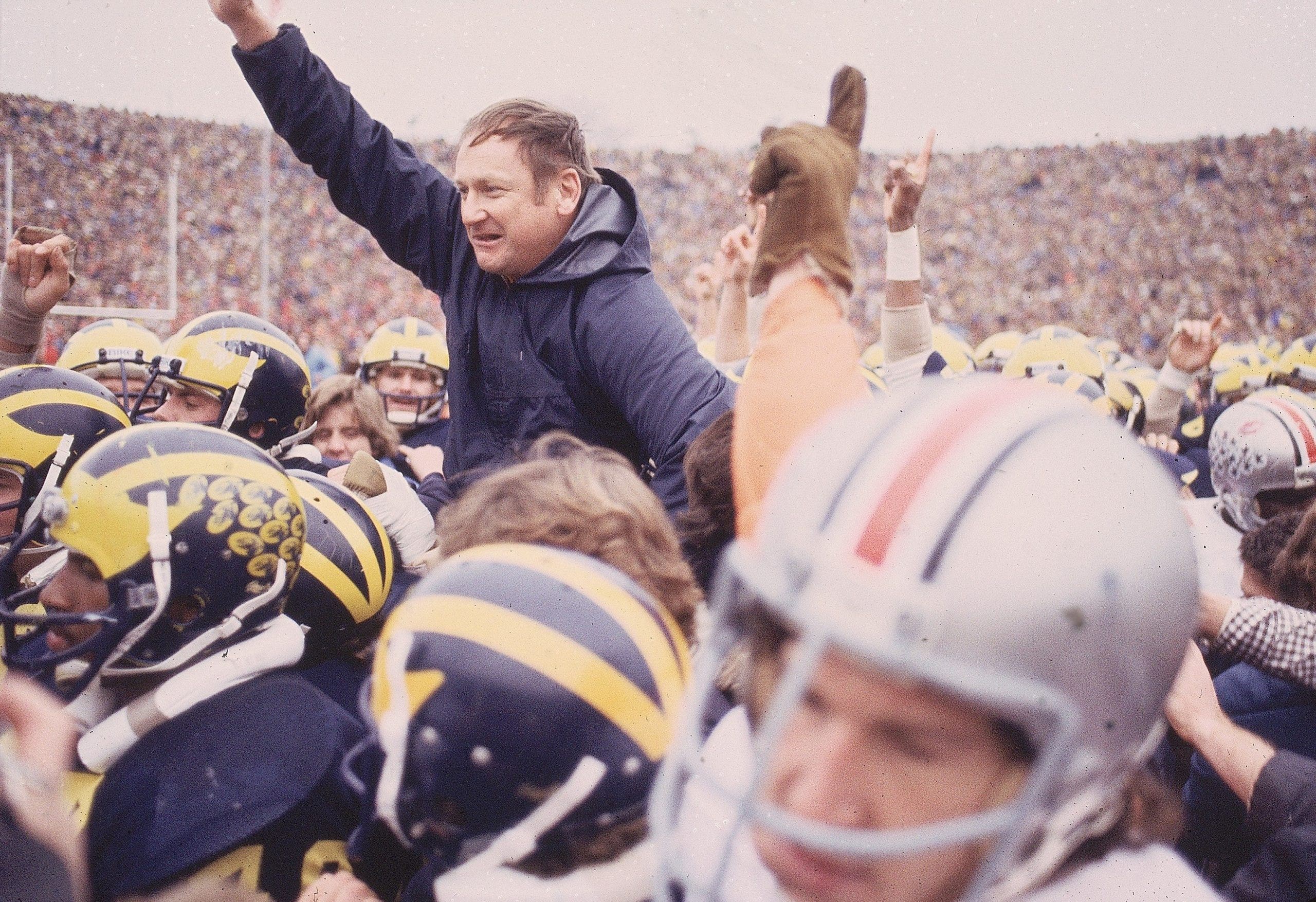
Michigan head coach Bo Schembechler was 11-9-1 against Ohio State. (Photo by John Iacono/Sports Illustrated via Getty Images)
There is no greater rivalry in sports.
I know, that’s a lofty statement, but hear me out. I played in some heated rivalries in my day — Notre Dame vs. USC, Notre Dame vs. Michigan, Cleveland vs. Pittsburgh — but nothing compares.
Growing up in Columbus, I witnessed firsthand the ramifications of this rivalry. Most people think of Thanksgiving as a time for family and food. In Ohio, it’s family, food and football. More specifically, watching Ohio State beat “The Team Up North.”
Stories have been told of drivers with Ohio license plates being pulled over in Michigan for driving one mile over the speed limit. This might sound like simple shenanigans, but the origins of this rivalry date back to the 1800s and a heated border dispute known as the “Toledo War.”
Militias mobilized. Minor clashes occurred. Federal intervention ultimately awarded Ohio the Toledo Strip, while Michigan became the 26th state and received control of most of the Upper Peninsula. The compromise was reached in 1836, but hostility remained.
My first recollection of the rivalry was the turmoil surrounding Ohio State head coach Earle Bruce, who was relieved of his duties following a disappointing 1987 season. Despite his dismissal, Bruce was permitted to coach the regular-season finale against that team up north, having lost to the Wolverines in each of the previous two years. The Buckeyes responded with a 23-20 victory, honoring their head coach by wearing “Earle” headbands.
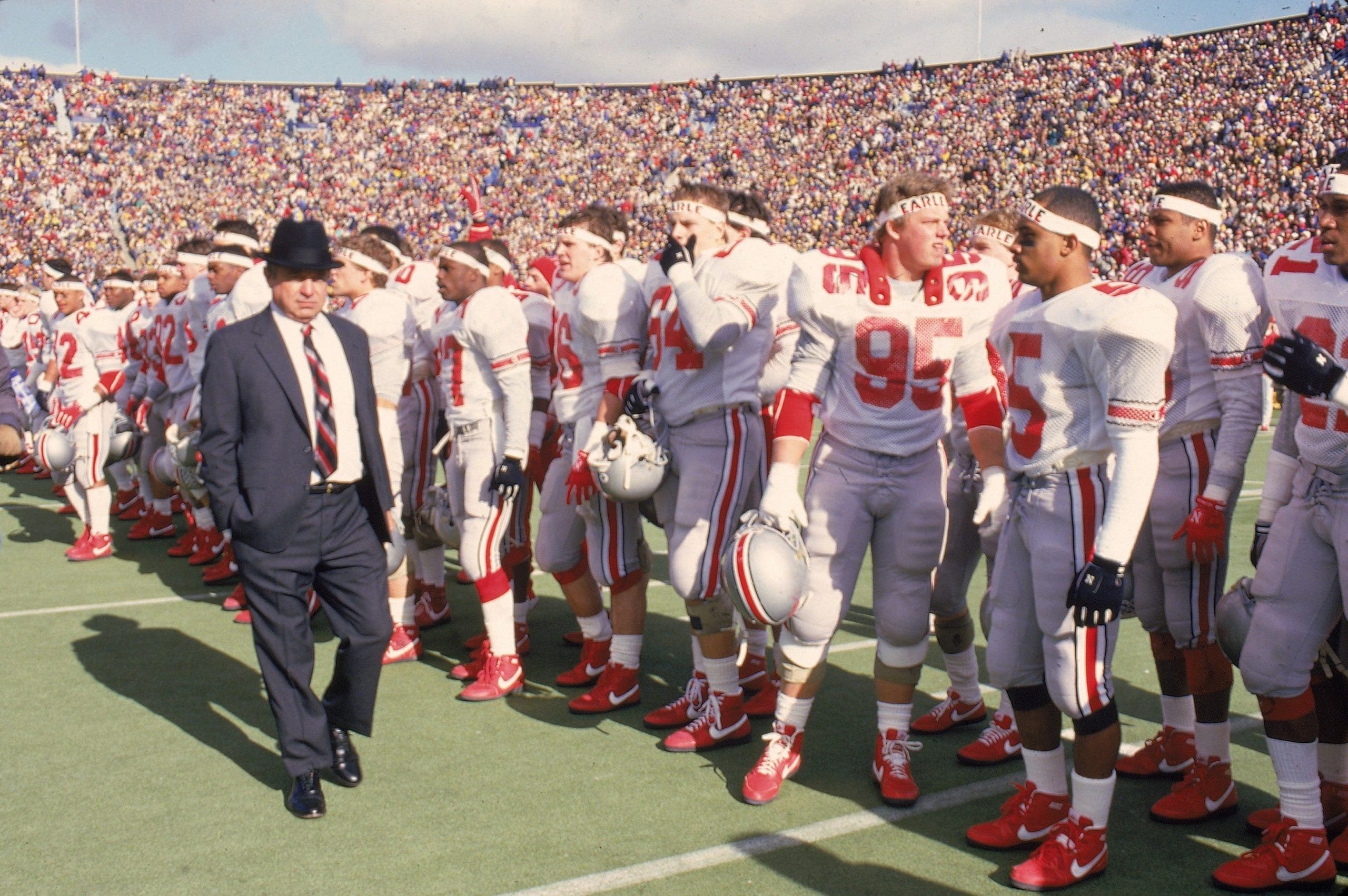
Ohio State players honored former head coach Earle Bruce by wearing “Earle” headbands against Michigan. (Photo by Tony Tomsic/Sports Illustrated via Getty Images)
Ohio State replaced Bruce with an up-and-comer from the South named John Cooper. Cooper had led Arizona State to three consecutive winning seasons, including a top-five finish capped by a Rose Bowl victory over, you guessed it, Michigan.
Recruiting was never an issue for Cooper. His rosters were loaded with talent. Orlando Pace, Eddie George, Antoine Winfield, Andy Katzenmoyer, Terry Glenn and David Boston were just a few of the names who came through Columbus during his tenure.
Cooper’s greatest flaw wasn’t his ability to build a team or win games. The Buckeyes’ head coach amassed 111 victories during his tenure in Columbus. Ohio State finished in the top 20 seven consecutive seasons, including two campaigns that ended with a No. 2 ranking.
But despite having all that talent, Cooper’s teams struggled to finish the season strong. They went 3-8 in bowl games and, even worse, 2-10-1 against Michigan.
Ohio State’s next move would prove unconventional.
Former athletic director Andy Geiger tabbed Youngstown State head coach Jim Tressel to lead the Buckeyes. Tressel had previously coached quarterbacks and wide receivers on Bruce’s Ohio State staff in the 1980s before leaving to take the head coaching job at Youngstown State, where he won four Division I-AA national championships.
Tressel was an Ohio native and understood the magnitude of the rivalry. He made his intentions crystal clear during his introduction at an Ohio State men’s basketball game on Jan. 18, 2001. I was there on a recruiting visit and witnessed his proclamation firsthand. Much like Schembechler, Tressel understood that “The Game” was more than a football game. It was a recruiting pitch.
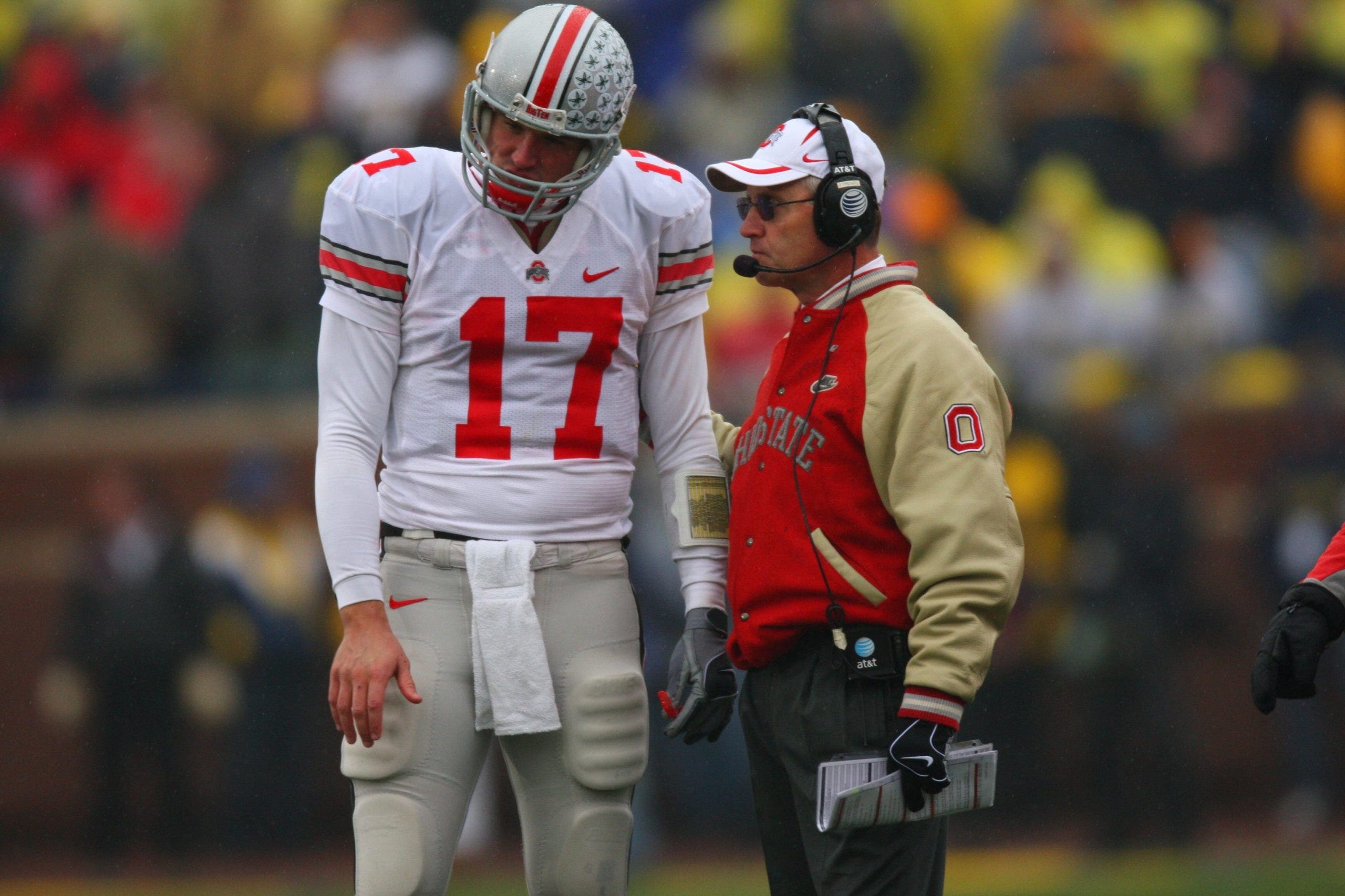
Former Ohio State head coach Jim Tressel posted a 9-1 record against Michigan. (Photo by Al Tielemans/Sports Illustrated via Getty Images)
Tressel went 9-1 against Michigan during his time in Columbus. After his departure, another Ohio native, Urban Meyer, would follow in his footsteps, finishing a perfect 7-0 against the Wolverines.
Given their roots, both coaches understood what the rivalry meant, not just to each program, but to the residents of their respective states.
This is more than a game. It’s a reflection of who you are.
Preparation for “The Game” goes well beyond putting together a game plan the week before. Coach Meyer has often said, “Preparing for ‘The Game’ is a way of life.” Countdown clocks serve as constant reminders of the next matchup. Portions of practice are devoted every day to preparing for that opponent, even months before the teams meet. For players and coaches alike, the rivalry represents an opportunity to define — or potentially undermine — a legacy.
In the past, this rivalry has determined Big Ten championships and a chance to play for a national title. Yes, this year’s contest may not carry those same stakes, but that’s all the more reason to appreciate what this game represents.
There is nothing else to play for. Just “The Game.”
So don’t tell me it doesn’t matter. There are plenty of people in both states who would tell you it’s the only game that matters.






Leave a Reply