
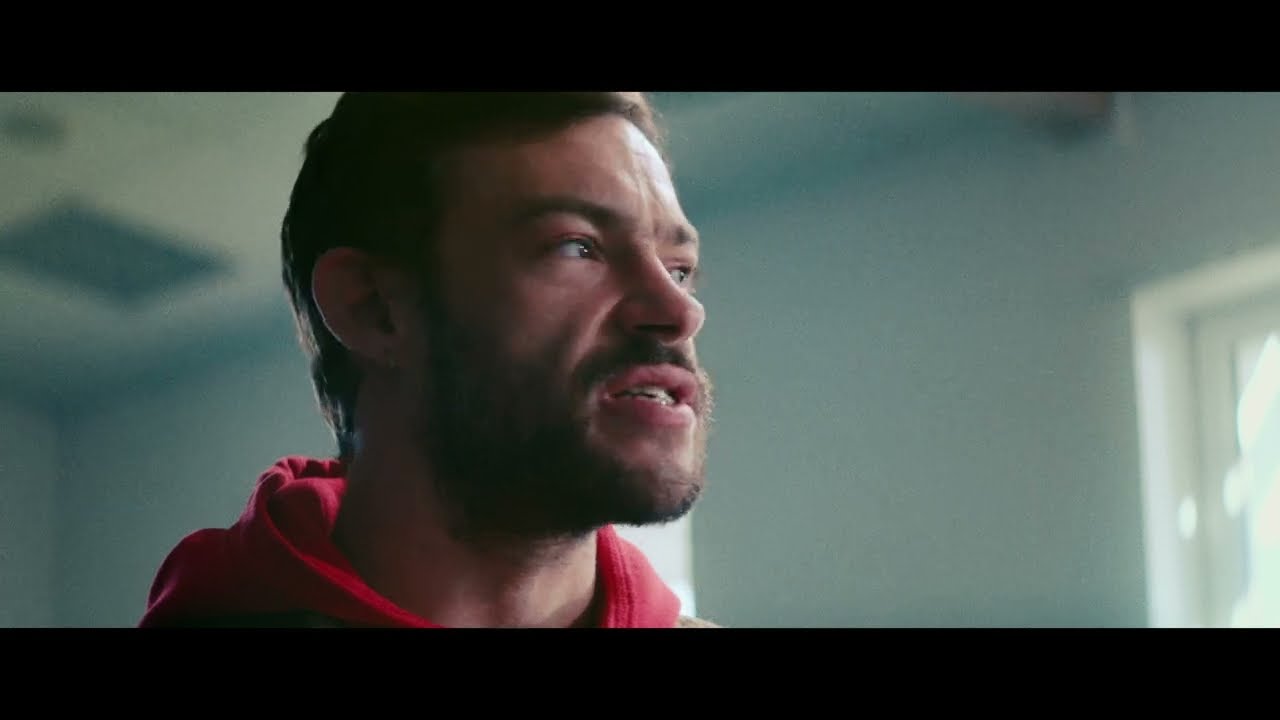
A French noir that turns a smash-and-grab into a portrait of a nation breaking apart
Sam and Paul, warehouse workers in rural France, rob a truck full of iPhones with their secretary accomplice — but when the driver dies resisting, their paths diverge violently: Sam drowning in guilt, Paul willing to do anything to stay out of prison.
Why It Is Trending: The France That Votes Yellow Vest Finally Gets Its Thriller
Un Monde Violent arrives as French cinema reckons with peripheral France — the forgotten rural working class that erupted in the Gilets Jaunes movement and has barely appeared on screen since. Caperan and co-writer Thomas Finkielkraut play the story in a minor, taut mode that borrows from Chabrol’s study of manners and the nervous energy of James Gray — these small-time criminals are losers of globalisation, cut from the map of winners. Its January 2025 French theatrical release placed it squarely in the awards and critical conversation for debut features. Caperan conceived the film at FEMIS, where he fantasised about a noir that spoke of human tragedy — close to the cinema of James Gray.
Elements Driving the Trend: Violence is omnipresent but stays lurking — a beast waiting for its moment — amplified by Gaspar Claus’s score, alternately strident and melancholic. The brother dynamic — one mutilated by guilt, one by survival instinct — gives the film its emotional engine. Shot in Scope format in the Creuse — one of France’s least populated departments — the film proceeds through topographic tightening: from the dehumanising warehouse to the protective forest that finally delivers them to the police. Kacey Mottet Klein and Félix Maritaud, two of French cinema’s most compelling young actors, anchor every scene.
Virality: The film’s Gilets Jaunes backdrop gave it immediate political resonance in French media, with critics and audiences debating whether it justifies or merely depicts working-class crime.
Critics Reception: Trois Couleurs praised its intelligent, romantic use of rural locations and called it a taut noir with real flashes of brilliance. aVoir-aLire was more divided, noting the script moves too fast for the characters to breathe — though all agreed on the quality of the performances.
Awards and Recognitions: Selected for UFO Distribution’s French theatrical slate, January 29, 2025. Emerging from FEMIS — France’s most prestigious film school — gives the debut immediate institutional credibility.
Caperan wanted to anchor the film in a specific territory to speak of peripheral France, social downgrading, and determinism — not as a political film, but as a tragedy of ordinary men in a world that isn’t going very well. The film lands at a moment when French audiences are hungry for genre cinema that reflects their lived reality rather than Parisian sophistication. Its rural Scope-format aesthetic positions it as an heir to both the French polar tradition and American westerns. For distributors, it signals a new generation of FEMIS-trained directors willing to work in genre without abandoning social intelligence.
What Movie Trend Is Followed: The Social Noir Returns to Rural France
French genre cinema is rediscovering its peripheral territories — and Un Monde Violent is among the most formally committed entries in that wave. Caperan plays on two registers simultaneously: a social chronicle of a France that simmers with resentment, and a taut noir thriller that begins with a heist and ends with a chase — the result would have little interest without its remarkable trio of actors. The rural noir format — crime rooted in social desperation rather than ambition — gives the film a moral gravity that pure genre mechanics cannot. The film explores rebellion against an oppressive system, aspiration to freedom, and the search for humanity — through two brothers who are opposites of the same coin.
Trend Drivers: Genre Cinema as Social X-Ray The French polar tradition — from Melville to Corneau — has always used crime as a lens for class and identity, and Un Monde Violent inherits that lineage with formal seriousness. A new generation of FEMIS-trained directors is fusing genre energy with sociological precision, producing films that work as thrillers and as portraits of a fracturing nation. The Gilets Jaunes movement gave French cinema a ready-made social canvas that has been underused until now.
What Is Influencing Trend: The normalisation of smartphone theft as a mass criminal economy — driven by resale markets and warehouse insider access — gives the film’s premise an uncomfortable plausibility. French regional cinema is attracting renewed attention as a space for stories that Paris-set productions systematically ignore. The success of socially grounded crime dramas on French streaming platforms has trained audiences for this register.
Macro Trends Influencing: Economic precarity and social immobility are generating a new wave of fiction about ordinary people pushed into crime by structural failure rather than moral weakness. The Scope format — traditionally associated with American westerns and epics — is being reclaimed by European directors as a widescreen tool for landscape-driven social cinema. Rural France as a dramatic setting is emerging from decades of cinematic neglect.
Consumer Trends Influencing: French audiences are increasingly drawn to crime narratives that reflect their own class experience rather than aspirational or cosmopolitan crime fantasy. The appetite for fraternal relationship dramas — built on loyalty, betrayal, and moral divergence — remains one of genre cinema’s most durable emotional engines. Short, taut runtimes (85 minutes here) are becoming a competitive advantage in a streaming landscape that rewards density over duration.
Audience Analysis: Working-Class France, Genre Fans, and Anyone Who Has Ever Felt Trapped by a Dead-End Job The core audience is 25–45 — French viewers with a connection to provincial life, genre film fans, and cinephiles who follow Mottet Klein and Maritaud across their careers. The film holds you in its story — the naturalisme adds to a palpable urgency, the anxiety and inevitable tragedy transparent at every moment. The Gilets Jaunes framing extends its appeal to viewers politicised by the movement and its aftermath. Internationally, its Scope rural aesthetic and James Gray-influenced tone give it arthouse crossover potential in markets receptive to French genre cinema.
Un Monde Violent works because it refuses to separate the crime from its social cause — the iPhone truck is not a random target but a symbol of the globalised economy that has already robbed Sam and Paul of everything else. That moral clarity is what elevates it above the average debut polar. The trend it rides — social genre cinema from provincial France — is accelerating, and Caperan is its most formally precise current practitioner. For the industry, this debut signals a FEMIS generation ready to make genre films with real political bite.
Final Verdict: Un Monde Violent Is a Flawed but Vital Debut That Announces a Director Worth Watching
Maxime Caperan delivers a first feature of genuine formal ambition — a rural noir that uses the Gilets Jaunes as moral backdrop without reducing it to a poster. The social drama is depicted with precision and without caricature — actors are all very good, clearly well-directed — the film fully delivers on its promise. Its weaknesses are real: the script moves too fast, the final act accumulates missteps, and the social commentary can feel underlined rather than embedded. But the camera, the landscape, and above all the two leads make it impossible to dismiss.
Audience Relevance: For Anyone Who Has Ever Watched a Door Close and Chosen the Wrong One Un Monde Violent speaks to anyone who has felt the weight of a life already written — the warehouse job, the dead town, the fantasy of one big score that changes everything. Sam’s guilt and Paul’s desperation are not character quirks; they are the two possible responses to the same impossible situation.
The film’s refusal to judge its protagonists is its most honest quality. It invites identification before it allows consequences.
What Is the Message: The System Creates the Criminal — Then Punishes Him for It Caperan wanted to speak of peripheral France, social downgrading, and determinism — not as a political film, but as the tragedy of ordinary men in a world that isn’t going well. The iPhone truck is not just a target — it is a symbol of everything the global economy promised and withheld.
The film’s message is structural, not moral. Sam and Paul are not bad men — they are men in a bad world, and the film refuses to let that distinction collapse.
Relevance to Audience: Rural France as Dramatic Territory, Not Backdrop From the dehumanising warehouse where the brothers wander like robots to the protective forest that finally delivers them to the police, the film proceeds through topographic tightening. The Creuse is not set dressing — it is the film’s third protagonist, shaping every decision the characters make.
That sense of place gives Un Monde Violent a specificity that most crime dramas lack. You know exactly where these men are — and why they cannot leave.
Social Relevance: The Gilets Jaunes Finally Get Their Genre Film The Gilets Jaunes movement generated enormous political and media coverage but almost no serious cinematic response — until now. Un Monde Violent does not dramatise the protests directly; it dramatises the conditions that produced them.
That indirection is more powerful than any march sequence could be. The anger is structural, the violence is inevitable, and the state’s response is as mechanical as the warehouse that employed them.
Performance: Mottet Klein and Maritaud Are the Film’s Entire Moral Universe Kacey Mottet Klein and Félix Maritaud form a duo the audience grips onto — oscillating between fraternal love and destructive rivalry. Olivia Côte anchors the story in a profoundly human universe. Mottet Klein in particular carries the film’s guilt-driven emotional register with remarkable restraint.
Maritaud, always magnetic, makes Paul’s survival logic feel simultaneously repellent and understandable. The two performances together constitute the film’s best argument for its own existence.
Legacy: A Debut That Marks the Return of the Provincial French Polar Un Monde Violent establishes Caperan as a director with a distinctive formal sensibility — Scope rural landscapes, social precision, James Gray’s fatalism filtered through Chabrol’s moral irony. It will be remembered as the opening statement of a career that should develop significantly.
Its legacy within French cinema may be as much about territory as tone — a film that proved peripheral France is dramatically rich and cinematically underexplored.
Success: Debut Credibility, Strong Cast, Limited Commercial Footprint January 29, 2025 French theatrical release via UFO Distribution. One critic review in international press; strong French critical reception overall. IMDb user rating of 6.0 from early viewers. No significant box office data available.
Its commercial life will be built through streaming and festival retrospectives rather than theatrical numbers. For a debut feature in this register, critical respect is the primary currency — and Caperan has earned it.
Insights Un Monde Violent is the film the Gilets Jaunes deserved — not a manifesto, but a tragedy that explains everything without explaining anything. Industry: FEMIS-trained debut directors working in genre with social intelligence are producing some of the most formally rigorous French films of the decade. Caperan’s model — rural setting, Scope format, social backdrop, star casting — offers a replicable template for mid-budget French crime cinema with international arthouse potential. UFO Distribution’s commitment to this kind of work signals confidence in a market that has historically underinvested in provincial genre filmmaking. Audience: The audience for socially grounded French crime cinema is broader than its box office typically reflects — driven by streaming, repertory, and critical reputation rather than opening weekends. Mottet Klein and Maritaud’s combined fan bases give the film a built-in discovery path across European arthouse markets. The Gilets Jaunes backdrop extends its relevance beyond genre fans to politically engaged viewers across France and Europe. Social: Un Monde Violent arrives as France continues to process the class fractures exposed by the Gilets Jaunes movement — and offers cinema as a space for that processing. By framing working-class crime as structural rather than moral failure, the film participates in a broader cultural renegotiation of who gets blamed for social breakdown. That argument will only become more urgent as economic precarity deepens. Cultural: The rural French polar is re-emerging as a culturally significant form — a space where national anxieties about class, geography, and belonging can be staged without Parisian mediation. Caperan’s use of Scope format and western-influenced landscape cinematography positions French provincial cinema as heir to a much older tradition of moral geography in genre filmmaking. Un Monde Violent is a small film with a large cultural ambition — and it largely delivers.
Un Monde Violent will not be remembered for its box office. It will be remembered as the debut that proved provincial France still has stories to tell in Scope — and that the social polar, properly handled, remains one of French cinema’s most vital forms.
Summary of Un Monde Violent: Two Brothers, One Mistake, No Exit
-
Movie themes: Social precarity, fraternal loyalty, guilt, and determinism. A rural noir about ordinary men pushed past a point of no return by a world that was already failing them.
-
Movie director: Debut social noir lens — formally precise, landscape-driven, fatalist. Maxime Caperan (FEMIS) channels James Gray’s moral fatalism and Chabrol’s social irony into a compact, Scope-format thriller rooted in peripheral France.
-
Top casting: A duo that carries the film entirely. Kacey Mottet Klein (guilt, silence, vulnerability) and Félix Maritaud (survival, menace, desperation) oscillate between fraternal love and mutual destruction. Olivia Côte anchors the emotional centre as their complicit accomplice.
-
Awards and recognition: Debut theatrical release via UFO Distribution, January 29, 2025. FEMIS pedigree; co-written with Thomas Finkielkraut (Baron Noir, Tapie).
-
Why to watch: A taut, socially precise crime film that uses the iPhone economy and Gilets Jaunes backdrop to say something true about a France mainstream cinema rarely visits — powered by two of the best young performances in recent French noir.
-
Key success factors: Social intelligence plus genre craft — Caperan refuses to choose between them, and the result is a debut that works both as thriller and as portrait of a fractured nation.
-
Where to watch: French theatrical release January 29, 2025 via UFO Distribution. Streaming availability via French platforms; international VOD not yet confirmed.





Leave a Reply