


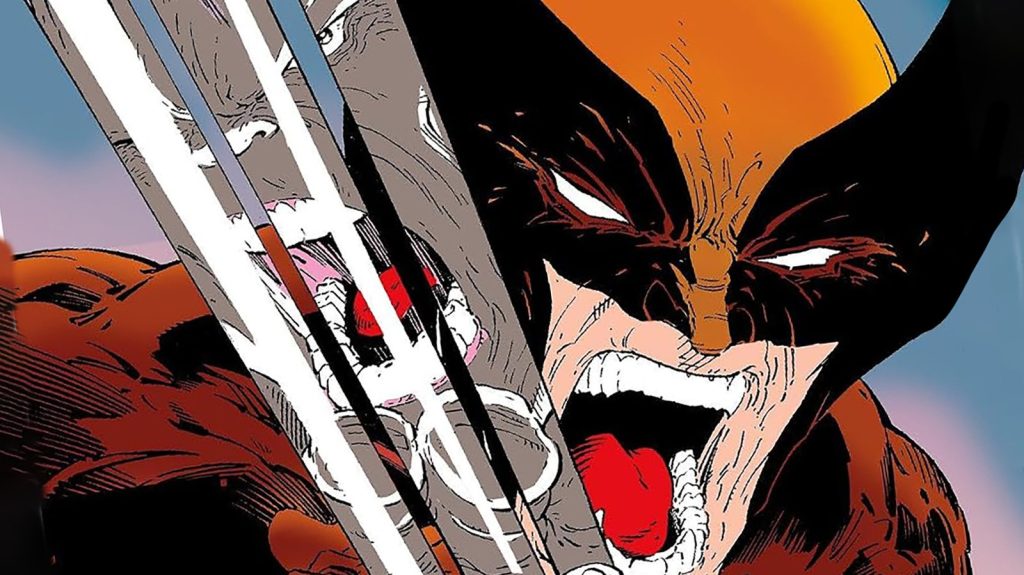

Can you imagine the X-Men without Wolverine? Well, as strange as it seems now that he’s the face of the franchise, Logan only joined the X-Men in 1975, over a decade after the team’s comic debut.
In those early years, “X-Men” struggled. Stan Lee and Jack Kirby’s hearts weren’t in it, and the character chemistry between the original team wasn’t there. There weren’t many strong villains, either. Magneto was well over a decade from his reinvention as a traumatized Holocaust survivor. In fact, most of the defining qualities and characters of “X-Men” came not during that original stretch but during writer Chris Claremont’s enormous 16-year-run (1975-1991). Things would get worse for the X-Men before they got better.
“X-Men” sales weren’t too impressive in the 1960s. The book didn’t just face cancellation, it was effectively canceled in 1970. After “X-Men” #66, the comic only reprinted previous “X-Men” stories for five years. Roy Thomas, the former Marvel editor in chief who wrote the last leg of the original “X-Men” run that ended at #66, said that Marvel’s publisher Martin Goodman was attempting to get some value out of the book without the cost of producing new stories.
The X-Men still showed up as guest stars in other series, like Steve Englehart’s Watergate scandal-inspired arc of “Captain America,” “Secret Empire,” so they hadn’t been completely forgotten. Then, in 1975, the Marvel powers that be decided to give the X-Men another shot. Writer Len Wein got the job of writing the relaunch, “Giant-Size X-Men” #1, and used a character he’d debuted in a 1974 “Incredible Hulk” issue as part of the team.
In Wein and artist Herb Trimpe’s “Incredible Hulk” #180-181, the Hulk stumbles across the Canadian border. There, he fights a short, ornery mutant with adamantium claws: Weapon X, aka the Wolverine.
Marvel’s X-Men comics rose again like a Phoenix
The exact creation of Wolverine remains a disputed piece of comics history. The general historical consensus is that Roy Thomas came up with the notion for a Canadian superhero and possibly the name “Wolverine,” while Len Wein and artist John Romita Sr. (then Marvel’s art director) designed Wolverine as we know him. In recent years, Thomas has tried (and succeeded, at least officially) to claim a co-creator credit on Wolverine, which has angered many in the professional comics community, along with Wein’s widow, Christine Valada.
Regardless, Wein is the one who wrote Logan’s debut appearance in those “Incredible Hulk” issues — sparking the enduring Hulk and Wolverine rivalry — and then added him to the X-Men, where he went from team jerk to breakout character. It’s worth noting that the Hulk himself survived a brush with cancellation. (His first ongoing series lasted only six issues.) Incidentally, the Hulk had also guest-starred in “X-Men” #66, the last one before its pseudo-cancellation. Perhaps the Hulk left some of his incredible invincibility behind in “X-Men” during that appearance. In any case, the Hulk was present for both the X-Men’s end and the beginning of their resurrection.
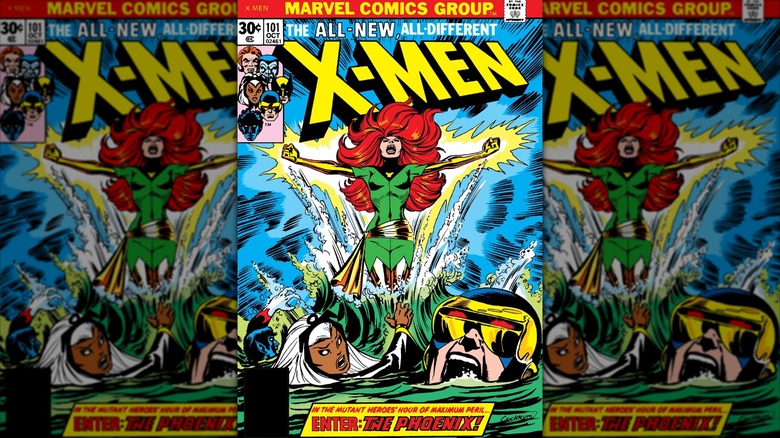
“X-Men” began publishing new stories again with issue #94, starring the “Second Genesis” team introduced in “Giant-Size X-Men.” Wein soon departed, leaving the team in Chris Claremont’s hands alongside artist Dave Cockrum, and together, they made comics history. But while Wolverine’s popularity grew, he didn’t immediately become the book’s star.
In fact, it was Colossus who was intended to be the new lead. That’s why, per Claremont, Colossus has the traditional muscular, square-jawed superhero build. According to Cockrum’s successorJohn Byrne, Claremont, and Cockrum even considered dropping Wolverine. Byrne, a Canadian like Logan, pushed to keep him, and that paid off.
The X-Men went from Marvel’s black sheep to their golden goose
The first X-Man who Chris Claremont made a star was Jean Grey, who’d been the token girl and little else in the original run. Claremont has a thing for powerful women (see: how he wrote Storm). So, he remade Jean into the team’s powerhouse and changed her moniker from “Marvel Girl” to “The Phoenix.”
Jean’s transformation culminates in “The Dark Phoenix Saga,” which is also when Logan solidified his place as the book’s star. In “X-Men” #132, the X-Men are captured one-by-one by the Hellfire Club, with Wolverine being dropped into a sewer and written off as dead. The very last page of the comic shows Wolverine, claws brandished, rising out of the water to rescue his friends, then #133 features him tearing through the Hellfire Club.

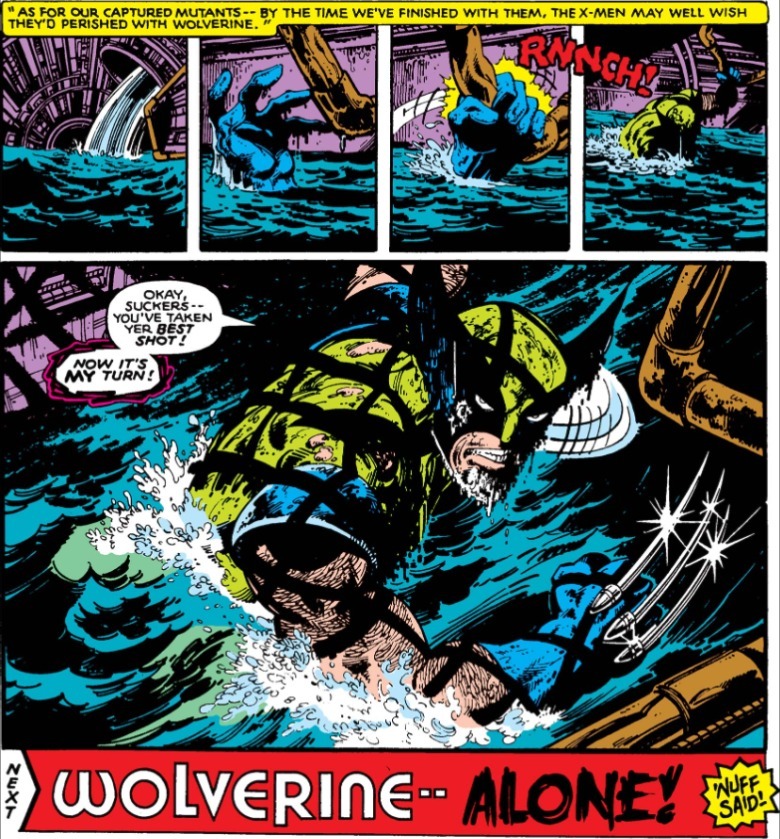
Yes, Logan was an “obnoxious loudmouth,” as Dave Cockrum put it, but his bad attitude actually made him cooler. So did his mysterious past, which only grew in mystery as the years went on. Plus, let’s face it, there’s no superpower more badass or metal (literally) than adamantium claws.
Through the 1980s, the X-Men became Marvel’s premier team. Wolverine, in turn, became the X-Man who got solo stories written/drawn by prestige talent, like Claremont and Frank Miller’s 1982 “Wolverine” mini-series or Barry Windsor-Smith’s horror-infused origin story “Weapon X.” The “X-Men” movies and cartoons have always made Wolverine a star from the beginning, too.
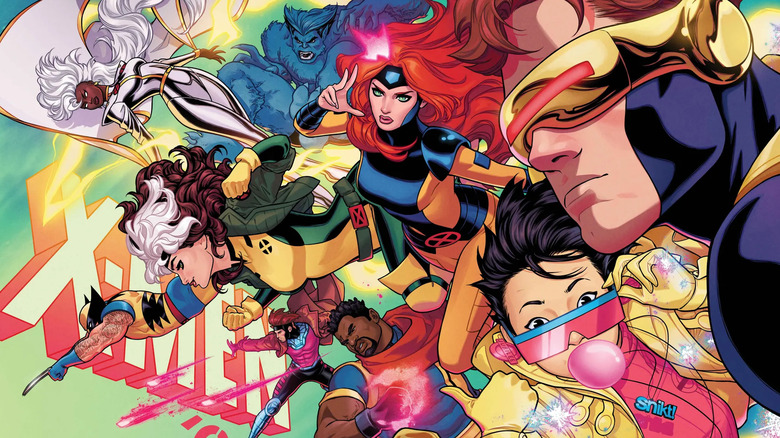
The “X-Men” comics faced marginalization during the 2010s due to Marvel Studios not owning the “X-Men” movie rights. Now that this has changed, Marvel is preparing the X-Men to lead the next Marvel Cinematic Universe saga. Based on its casting choices, it’s not messing around.