
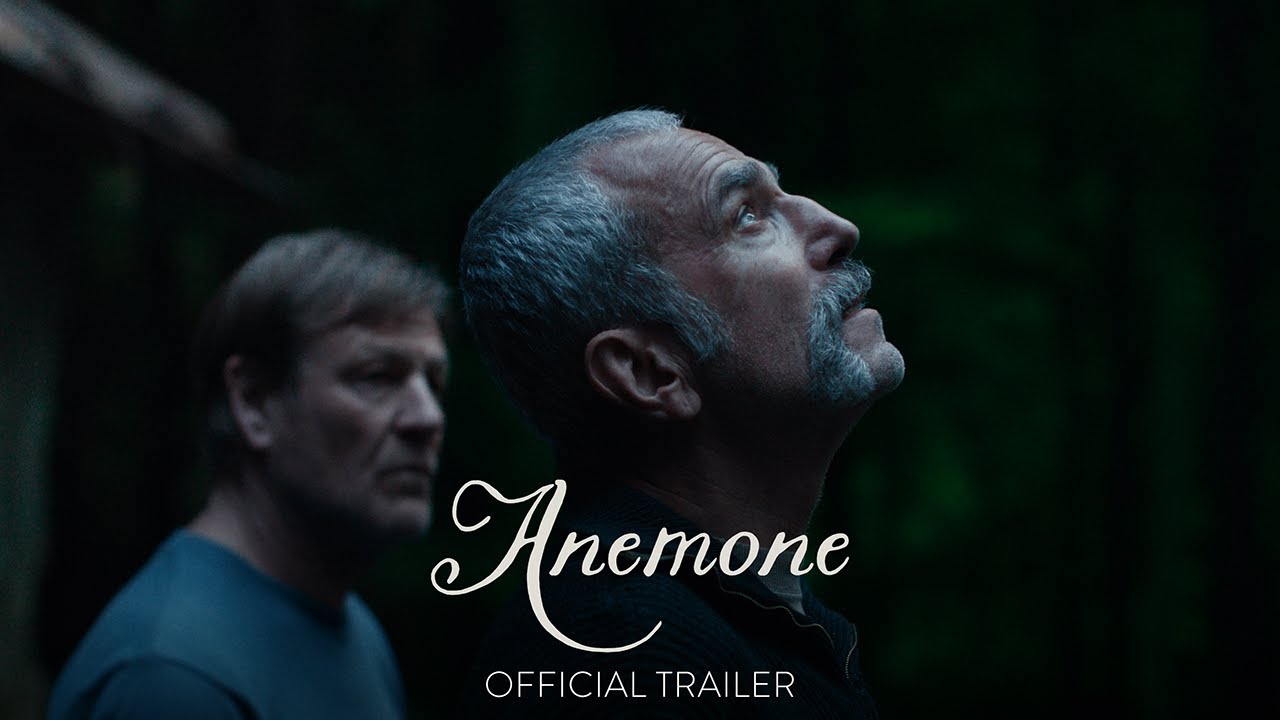
Daniel Day-Lewis returns — and brings the Troubles, a hermit brother, and eight years of unfinished business with him
Ray Stoker is a recluse in a Northern English cabin, eight years removed from his family and his past. When his brother Jem arrives unannounced, what follows is a slow, tense, and eventually devastating excavation of violence from the Troubles, generational trauma, and the war crimes that silence builds around. Meanwhile, Ray’s biological son Brian — raised by Jem — is discovering that rage might be inherited.
Why It Is Trending: Daniel Day-Lewis Ends His Retirement — With His Son’s Debut Feature
Day-Lewis announced his retirement after Phantom Thread (2017). Eight years later, he returns to co-write and star in his son Ronan’s debut film — executive produced by Brad Pitt, produced by Plan B Entertainment, distributed by Focus Features. The film premiered in the NYFF 2025 Main Slate on September 28, 2025, before limited US release October 3, expanding October 10. UK release via Universal Pictures November 7. Screened at Stockholm International Film Festival, November 2025. The cultural event of Day-Lewis’s return overshadows — and, in many critical readings, exposes — the film’s actual qualities. Worldwide gross $1.57M reflects a limited arthouse theatrical run rather than commercial positioning.
Elements Driving the Trend: Cinematographer Ben Fordesman — fresh from Love Lies Bleeding — delivers some of the richest forest and seaside imagery of 2025. Bobby Krlic (The Haxan Cloak) — composer on Midsommar and Beau Is Afraid — provides a score that, for many reviewers, is the film’s most consistent pleasure. The film’s two Day-Lewis monologues — one about abandoning his child, one about a war crime — are universally cited as its best moments and genuine confirmation that the actor remains one of the medium’s great instruments. Deadline compared the film’s mantra to Magnolia’s “We may be through with the past, but the past ain’t through with us.”
Virality: The Day-Lewis return generated enormous pre-release anticipation and a sharp post-release divide — audiences at the extremes (greatest thing they’d seen in years; worst film of 2025) with relatively little middle ground. The nepo baby discourse around Ronan Day-Lewis generated its own parallel cultural conversation.
Critics Reception: Rotten Tomatoes 53% — mixed. Metascore 53. Variety called it aridly pretentious and static, a dud of a movie. Deadline praised it as an assured debut with a spectacular final act. RogerEbert.com found the writing and direction leave much to be desired despite excellent performances. Hollywood InToto called it one of the best films of 2025. The consensus: Day-Lewis is magnificent; the film around him is uneven.
Awards and Recognitions: 1 win and 8 nominations total. NYFF 2025 Main Slate premiere. Stockholm International Film Festival, Icon section, November 2025. US theatrical Focus Features, October 3, 2025. UK theatrical Universal Pictures, November 7, 2025.
Anemone is the film the industry was watching to assess both a returning actor and an emerging director — and its split reception tells the story of those two stories existing in unresolvable tension.
What Movie Trend Is Followed: The Troubles Legacy Drama Finds a New Generational Voice
Anemone belongs to a British tradition of Troubles-adjacent drama — In the Name of the Father, Some Mother’s Son, Bloody Sunday — but approaches the material from a rarely explored angle: the intimate perspective of a perpetrator haunted by what he did, rather than what was done to him. The NYFF reviewer noted that collective violence often demands decades of amnesia before it can be spoken — and Ronan Day-Lewis’s generation may be the first able to confront this material directly. The film uses private guilt as a national allegory: family silence mirrors the silence a country builds around its unresolved violences. That ambition is genuine even where the execution falters.
Trend Drivers: A Father-Son Film in Every Sense The Day-Lewis father-son collaboration gives the film a biographical dimension no amount of casting can manufacture — Daniel co-wrote, Ronan directed, and the film’s subject (fathers, sons, estrangement, inherited violence) maps onto the creative relationship that produced it. That layer of meaning is either the film’s richest quality or its most self-indulgent, depending on the viewer. Sean Bean holds his own against Day-Lewis through restraint rather than competition — a career-best example of how silence can match ferocity.
What Is Influencing Trend: The slow-cinema tradition — Tarkovsky, Bergman, early Haneke — is the film’s formal aspiration, and Ronan Day-Lewis’s ambition to work in that register is legible throughout. Northern English landscape as a site of psychological drama has a powerful tradition, and Fordesman’s cinematography honours it. The father-son creative collaboration as a cultural event — inherently compelling, inherently risky — is the film’s most effective marketing fact.
Macro Trends Influencing: British independent cinema’s consistent engagement with the Troubles — both as historical subject and as ongoing political resonance — gives the film a serious thematic context. Arthouse theatrical distribution continues to support formally challenging drama with literary ambitions and limited commercial appeal. Day-Lewis’s return — and whatever it means about his announced retirement — is the year’s most discussed single piece of casting news.
Consumer Trends Influencing: The Day-Lewis fanbase is devoted and will see the film regardless of reviews. Slow-cinema audiences — comfortable with extended silences, open to formal austerity — are the film’s natural constituency. The Brian/Nessa subplot gives the film an entry point for audiences less invested in the Day-Lewis/Bean cabin dynamic. Bobby Krlic’s composer profile — built through horror-adjacent arthouse scoring — brings the soundtrack’s existing fanbase to the theatrical experience.
Audience Analysis: Day-Lewis Devotees, Arthouse Slow-Cinema Fans, and Northern British Drama Audiences The core audience is 30–65 — cinephiles who have followed Day-Lewis’s career and will tolerate formal austerity for the performance alone; slow-cinema audiences who respond to extended silences and landscape cinematography as emotional registers; and audiences interested in the Troubles as dramatic subject. Casual viewers expecting There Will Be Blood-style intensity will be frustrated. Patient viewers who align with the film’s tempo will find the final act’s revelation genuinely devastating. The film is explicitly not for everyone — and most of its reviewers acknowledge this without apology.
Ronan Day-Lewis positions his generation as the first ready to look at the Troubles not as history but as inheritance. Anemone is the most personal entry in that emerging canon — the father-son dynamic behind the camera mirroring the one on screen. If this is where British Troubles drama is heading, it is finally asking the right questions.
Final Verdict: Anemone Is a Flawed, Beautiful, Deeply Ambitious Debut That Offers Daniel Day-Lewis at His Most Controlled — and Ronan Day-Lewis as a Director to Watch
Ronan Day-Lewis delivers a debut that announces a real cinematic sensibility — a painter’s eye for landscape, a genuine commitment to formal austerity, and the courage to write material that implicates both his family and his country’s unresolved history. The film is too slow, too self-conscious, and too reliant on its star to function as a fully achieved drama. But Day-Lewis Sr.’s two monologues are among 2025’s most powerful screen moments, the Fordesman cinematography is extraordinary, and the Troubles revelation restructures everything that preceded it with the force of genuine dramatic intelligence. This is a debut worth the investment, even when it tests it.
Audience Relevance: For Patient Viewers Ready to Work for the Revelation Anemone withholds its central disclosure until late — and everything that comes before it retroactively reorganises. That structural gamble requires an audience willing to sit in uncertainty for two hours. Those who make the commitment will find the final act genuinely devastating.
The film’s refusal to hold the audience’s hand is its most divisive quality and its most formally honest one.
What Is the Message: Healing Is Impossible Until the Silence Is Broken Ray’s isolation is not hermitage — it is guilt management. The cabin in the woods is not a retreat from the world but a holding pen for what he cannot speak. His brother’s arrival does not offer absolution but forces the beginning of articulation — which is, the film argues, the only alternative to disappearance.
The anemone — symbol of mourning and new beginnings simultaneously — names that tension precisely.
Relevance to Audience: A Rarely Told British Perspective on the Troubles Most Troubles drama is told from the perspective of victims or activists. Anemone looks at the material from inside a perpetrator’s conscience — and connects private guilt to national silence in ways that feel both specific and universal. Brian’s discovery of his father mirrors a generation’s relationship to history they inherited but didn’t make.
That thematic ambition gives the film a seriousness its formal execution only partially earns.
Social Relevance: The Violence That Fathers Pass to Sons Brian’s trajectory — a soldier’s son discovering his own capacity for violence — is the film’s most socially pointed thread. Ray’s war crime haunts not just his own conscience but his child’s genetics of rage. Nessa’s question — “How much do you know about the Troubles in Northern Ireland?” — echoes across generations as both personal and political interrogation.
The film’s most important social argument is quiet and structural: unspoken violence does not disappear — it migrates.
Performance: Day-Lewis Is Magnificent, Bean Is Perfect, Morton Is Underused Day-Lewis’s Ray is more controlled and interior than his Oscar vehicles — closer to In the Name of the Father than There Will Be Blood. The two monologues — both written with his son — are confirmation that he remains the medium’s most precise emotional instrument. Bean matches him through stillness and restraint in a career-defining supporting performance. Samantha Morton is criminally underused — glimpses of a richer film exist in her scenes.
The Day-Lewis/Bean cabin dynamic is the film’s heart, and it beats with genuine force when both men are in the room.
Legacy: A Debut That Shows Its Seams — and Its Promise Ronan Day-Lewis will make better films. The ambition, the visual intelligence, and the willingness to work with difficult historical and personal material are all present and pointing toward something. Anemone is the rough first statement of a filmmaker who has something to say and is still learning how to say it.
If this is Day-Lewis Sr.’s final performance — and it may be — it is a performance of genuine distinction. A hermit’s monologue about abandoning his child has the intensity of a man settling something with himself as much as with the character.
Success: NYFF Main Slate, $1.57M Worldwide, Focus Features Theatrical 1 win and 8 nominations. NYFF 2025 Main Slate premiere. Stockholm International Film Festival Icon section. US theatrical Focus Features, October 3, 2025. UK theatrical Universal Pictures, November 7, 2025. Worldwide gross $1,568,977.
The modest box office reflects limited theatrical positioning — the film’s audience will grow significantly through streaming and critical retrospective.
Anemone is what happens when a great actor comes out of retirement for his son — a film that is touched by greatness, held back by inexperience, and made unforgettable by two performances that remind you why cinema exists.
Insights Industry: Ronan Day-Lewis’s debut demonstrates that nepotism in cinema can produce something genuinely ambitious — and that the argument about nepo babies obscures the more interesting question of whether the film itself has merit. Anemone has merit. It also has considerable problems. Both things are true. Audience: Day-Lewis’s return is the year’s most anticipated single casting event — and the film’s modest box office confirms that name recognition alone cannot substitute for the commercial positioning a more accessible film would have required. Social: A film that uses private family violence as an allegory for national historical silence is doing something rare in British cinema — and the Troubles frame gives the father-son drama a moral weight that purely domestic drama could not achieve. Cultural: If Anemone is Daniel Day-Lewis’s final film, it is one of cinema’s great swan songs — not because the film is perfect, but because his performance within it is fully inhabited, formally specific, and impossible to replicate. The hermit in the cabin is a role he co-wrote for himself. That tells you everything you need to know about what he was working through.
Anemone is a film about what happens when men refuse to speak — and then, finally, do. It is also a film about what happens when a son asks his father to be in his film. Both stories are worth 125 minutes.
Summary: Brothers, Fathers, Sons — and the War Crime at the Centre of Everything
-
Movie themes: The Troubles’ generational legacy, inherited violence, estrangement, guilt, silence as self-punishment, and whether catharsis is possible after decades of lost time.
-
Movie director: Ronan Day-Lewis — painter turned filmmaker — announces a genuine visual sensibility in his debut. The formal ambition is real, the execution is uneven, and the future is promising.
-
Top casting: Daniel Day-Lewis returns to the screen with two monologues that alone justify the film’s existence. Sean Bean matches him through restraint. Samantha Morton is underused. Samuel Bottomley holds the Brian subplot together.
-
Awards and recognition: 1 win and 8 nominations. NYFF 2025 Main Slate. Stockholm International Film Festival Icon section. US theatrical Focus Features, October 3, 2025. UK theatrical Universal Pictures, November 7, 2025.
-
Why to watch: Two of British cinema’s great actors at full power, in a film about the violence that silence sustains — imperfect but unforgettable, and containing scenes that remind you why Daniel Day-Lewis is irreplaceable.
-
Key success factors: Day-Lewis’s performance plus Fordesman’s cinematography plus Bobby Krlic’s score plus the Troubles-legacy subject matter plus the father-son biographical resonance — a combination that gives the film a significance beyond its modest theatrical reach.
-
Where to watch: Focus Features theatrical (US) and Universal Pictures (UK). Streaming availability expanding.





Leave a Reply