


UK | 2025 | 100 min | Dark Comedy / Satire / Thriller
A Desperate Teacher Kidnaps Her Troublemaking Student and Discovers Her Classroom Works Better Without Him
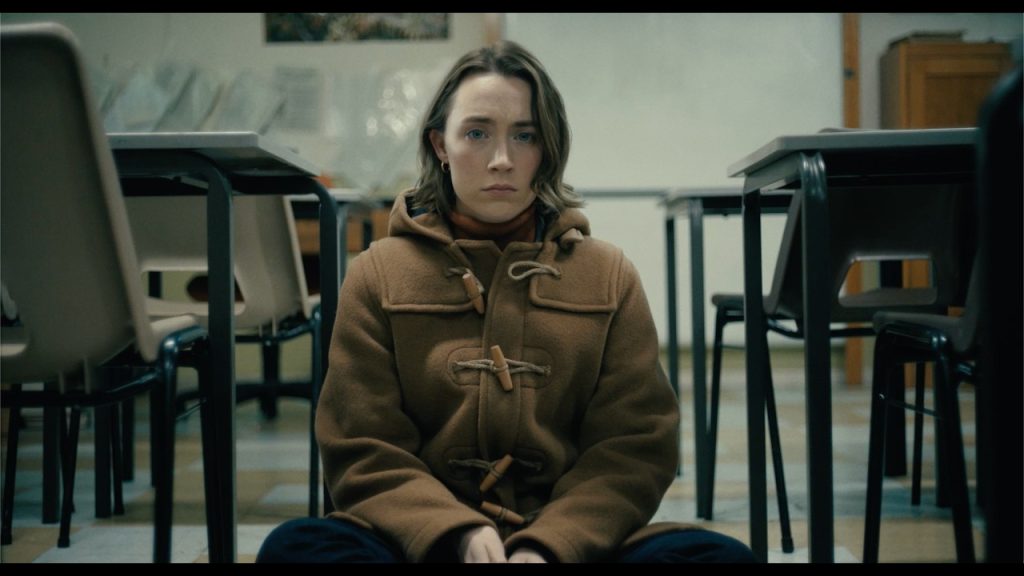
In Bad Apples (2025), Maria (Saoirse Ronan) is a struggling primary school teacher whose professional life is increasingly disrupted by Danny (Eddie Waller), a volatile pupil whose behavior affects the entire classroom. After a confrontation leaves Danny injured, Maria panics and makes the shocking decision to confine him in her home. As the boy disappears from school, the remaining students begin to thrive, creating an unsettling contradiction between Maria’s criminal actions and the apparent benefits experienced by others. Directed by Jonatan Etzler, the film transforms an extreme situation into a darkly comic examination of education, parental responsibility and moral compromise. Beneath its provocative premise, the story questions whether collective wellbeing can ever justify the unfair treatment of an individual.
➡️ Storyline: Disruptive Student → Teacher Under Pressure → Accidental Injury → Kidnapping → Classroom Improves → Moral Dilemma → Justice and Responsibility Questioned.
Why to Watch Bad Apples: A Dark Comedy About Education, Justice and Moral Compromise
Bad Apples combines Saoirse Ronan’s central performance with a provocative story about classroom discipline, institutional responsibility and the uncomfortable relationship between individual rights and collective wellbeing.
|
1. Jonatan Etzler’s Direction |
The director blends dark comedy, psychological tension and social satire to examine the consequences of an ordinary teacher’s extraordinary decision. |
|
2. Saoirse Ronan’s Performance |
Ronan portrays Maria as a desperate, morally conflicted teacher whose actions become increasingly difficult to justify. |
|
3. Justice and Moral Fairness |
The film questions whether improving the lives of many students can ever justify violating the rights of one child. |
|
4. Education System Satire |
The story exposes tensions surrounding classroom discipline, parental responsibility, teacher burnout and institutional accountability. |
|
5. Uncomfortable Storytelling |
Adapted from Rasmus Lindgren’s novel De Oönskade, the film uses an outrageous premise to challenge conventional ideas about right and wrong. |
➡️ Reason to Watch: A provocative dark comedy that uses Saoirse Ronan’s morally conflicted teacher to question whether collective benefits can ever justify an individual’s suffering.
Why Bad Apples Stands Out: A Classroom Improvement Creates an Uncomfortable Moral Dilemma
Bad Apples distinguishes itself by turning a familiar educational problem into an extreme ethical experiment. Maria’s decision to confine Danny is clearly indefensible, yet the resulting improvement in her classroom challenges viewers to confront an uncomfortable contradiction: what happens when a harmful act appears to benefit a larger group? The film uses dark humor to expose the pressures placed on teachers, the responsibilities of parents and the limitations of institutions struggling to support difficult children. Rather than presenting clear heroes and villains, it explores how frustration, fear and inadequate support can contribute to destructive decisions. Its distinctive appeal lies in transforming a school-based comedy into a broader examination of justice, accountability and the dangerous temptation to prioritize collective convenience over individual rights.
➡️ Why It Stands Out: An outrageous classroom situation becomes a provocative examination of fairness, exposing how apparently positive outcomes can conceal serious moral injustice.
Movie Trend: Dark Social Satire Comedies — Humor Exposes the Contradictions of Modern Institutions
Dark Social Satire Comedies use exaggerated situations, uncomfortable humor and morally ambiguous characters to expose contradictions within everyday social systems. Bad Apples reflects this trend by transforming the frustrations of a primary school teacher into a criminal scenario that reveals tensions between educational responsibility and institutional effectiveness. Maria’s actions create a disturbing contrast between what is morally acceptable and what appears practically beneficial, forcing viewers to question the values guiding schools, families and communities. The film’s humor emerges from the absurdity of its premise, but its underlying concerns are recognizable: overworked teachers, disruptive classroom behavior and competing expectations surrounding children’s wellbeing. By refusing to offer simple moral answers, the story demonstrates how satire can challenge audiences to reconsider the fairness of familiar social arrangements.
➡️ Movie Trend Insight: Dark Social Satire Comedies expose institutional contradictions through uncomfortable humor, using morally extreme situations to question accepted definitions of responsibility, success and fairness.
Broad Trend: Justice / Fairness — Collective Wellbeing Cannot Erase Individual Rights
Justice / Fairness reflects the fundamental expectation that individuals should be treated equitably, held accountable for their actions and protected from disproportionate harm. In Bad Apples, Maria’s decision creates a direct conflict between the rights of one disruptive child and the apparent wellbeing of an entire classroom. Although the other students benefit from Danny’s absence, the film challenges the idea that positive outcomes automatically make harmful actions acceptable. Its moral tension raises questions about proportionality, institutional accountability and the responsibility of adults to protect vulnerable individuals, even when doing so creates difficulties for others. Beyond cinema, this broad trend connects with debates about education, workplace fairness, social inclusion and how institutions balance individual needs with collective interests. The central question is not simply whether an action produces results, but whether those results are achieved through justifiable means.
➡️ Broad Trend Insight: Justice and fairness require protecting individual rights while considering collective wellbeing, challenging the belief that beneficial outcomes can excuse unethical decisions.
Viewer Profile: Audiences Interested in Dark Comedy, Moral Dilemmas and Social Justice
Bad Apples is likely to appeal to viewers who enjoy provocative satire, psychologically complex characters and stories questioning conventional moral judgments. Its combination of educational pressures, dark humor and ethical uncertainty offers a distinctive perspective on responsibility and fairness. These profiles are editorial audience interpretations rather than verified demographic research.
|
Dark comedy enthusiasts, social satire viewers, psychological thriller fans and Saoirse Ronan followers |
|
|
Primarily adult audiences interested in mature humor, moral complexity and contemporary social issues |
|
|
Interested in education, social justice, institutional responsibility, parenting and cultural commentary |
|
|
Dark comedies, morally ambiguous thrillers, social satire and character-driven independent films |
|
|
Understanding whether Maria’s harmful decision can ever be justified by the apparent improvement in her classroom |
|
|
Cast-driven recommendations, film festivals, provocative story premises and discussions about social issues |
|
|
Frustration, guilt, fairness, empathy and curiosity about difficult moral choices |
Key Profiles: Three Audiences, Three Reasons to Watch
1. Dark Comedy and Social Satire Enthusiasts
Viewers attracted to uncomfortable humor and exaggerated situations that expose contradictions in everyday life. The film’s provocative premise turns classroom frustrations into a disturbing examination of institutional responsibility.
2. Moral Dilemma and Psychological Thriller Audiences
Audiences interested in stories where characters make questionable decisions and the distinction between right and wrong becomes increasingly complicated. Maria’s actions challenge viewers to consider the limits of moral justification.
3. Education and Social Issues Audiences
Viewers interested in school systems, parenting, teacher wellbeing and the challenges of balancing individual needs with collective interests. The film offers a fictional but thought-provoking perspective on institutional accountability.
➡️ Audience Insight: Bad Apples connects dark comedy with moral complexity and educational criticism, appealing to viewers who enjoy provocative stories that challenge assumptions about justice, responsibility and collective wellbeing.
What This Movie Means for the Industry: Dark Comedy Turns Institutional Problems Into Provocative Entertainment
Bad Apples illustrates how dark comedy can transform recognizable social frustrations into engaging narratives that challenge audiences’ moral expectations. Jonatan Etzler uses an extreme classroom situation to examine institutional responsibility, educational pressure and the contradiction between individual rights and collective benefits. Saoirse Ronan’s central performance gives the film emotional credibility, allowing viewers to understand Maria’s desperation without necessarily accepting her decisions. Its mixed reception, reflected in a 6.7/10 IMDb rating and 63/100 Metascore, also demonstrates the challenges of balancing provocative satire with narrative plausibility and audience expectations. The broader creative opportunity lies in developing socially relevant comedies that use uncomfortable humor to explore complex ethical questions rather than offering straightforward judgments.
➡️ Industry Insight: Dark social satire can make difficult institutional problems more accessible through humor, creating opportunities for films that entertain while challenging audiences to reconsider accepted ideas about fairness and responsibility.
Final Verdict: A Provocative Dark Comedy That Challenges the Meaning of Fairness
Bad Apples (2025) is an unsettling dark comedy that turns a teacher’s desperate decision into a provocative examination of justice, education and institutional failure. Jonatan Etzler combines absurd humor with psychological tension, while Saoirse Ronan delivers a compelling performance as a woman whose increasingly unethical choices create uncomfortable questions about collective wellbeing. The film’s strongest qualities lie in its central performance, moral ambiguity and social commentary, although implausible developments and an inconclusive ending may frustrate some viewers.
➡️ Final Verdict: Bad Apples transforms a classroom crisis into a darkly comic examination of justice, responsibility and moral compromise. Saoirse Ronan’s performance and the film’s provocative premise provide its strongest appeal, even when the storytelling stretches credibility. It is best suited to audiences who appreciate uncomfortable humor, morally ambiguous characters and films that challenge conventional definitions of fairness.
Final Insights: Fairness Cannot Be Measured Only by Who Benefits
The Justice / Fairness trend reflects the expectation that individuals should receive equitable treatment and protection, even when their needs conflict with those of a larger group. Bad Apples challenges this principle by presenting a situation in which one child’s suffering appears to improve the wellbeing of an entire classroom.
The Dark Social Satire Comedies trend transforms this contradiction into provocative entertainment, using exaggerated circumstances to expose the moral weaknesses of everyday institutions. Through Maria’s increasingly questionable decisions, the film suggests that positive outcomes do not automatically justify harmful actions. A fair society must consider not only who benefits from a decision, but also who bears its consequences.
➡️ Final Insight: Justice / Fairness → Dark Social Satire Comedies → The Moral Cost of Collective Wellbeing. Bad Apples explores how apparently beneficial outcomes can conceal serious ethical compromises when individual rights are sacrificed for collective convenience. The creative opportunity lies in using dark comedy to expose institutional contradictions and challenge audiences to reconsider what genuine fairness requires.