
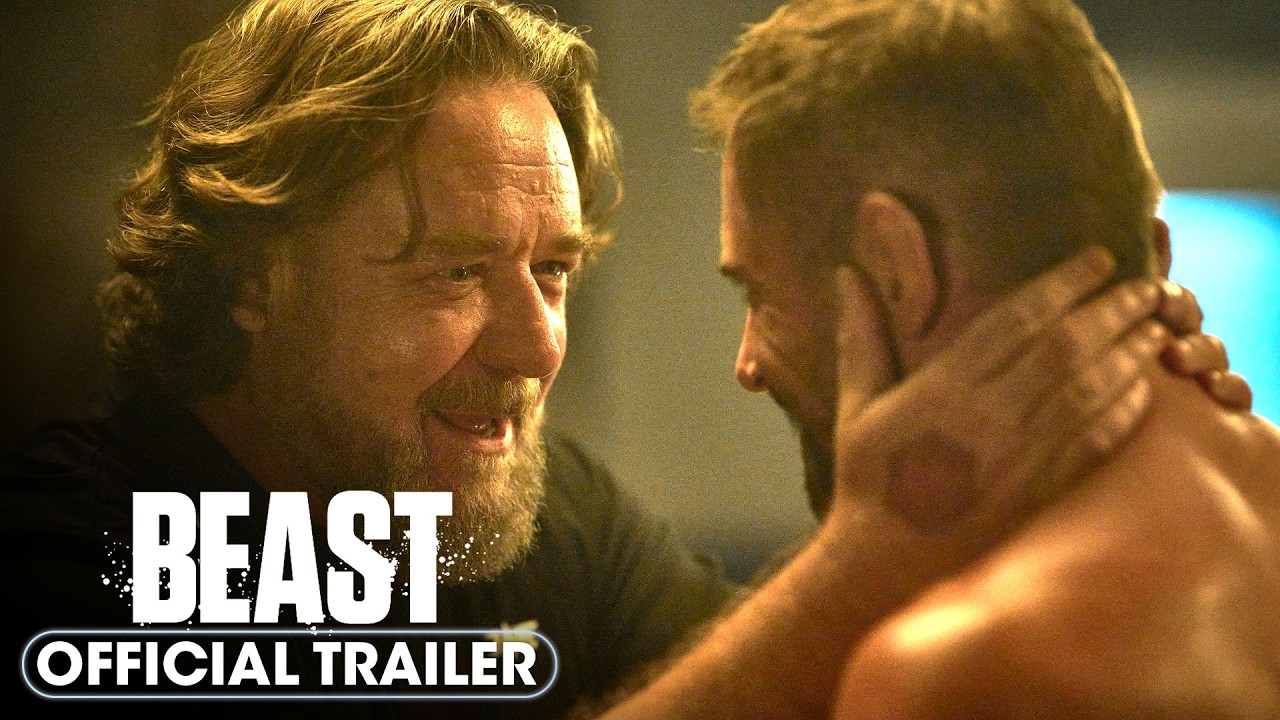
An MMA legend pulled back into the cage when his brother’s life is on the line — one final fight, one brutal champion, one chance at redemption
He left the cage a decade ago. Now his brother is in danger, and the only way out is back in: Patton James was MMA royalty before a knockout cost him everything — his freedom, his career, his identity. Now a commercial fisherman barely scraping by, he’s dragged back into ONE Championship when his younger brother Malon is threatened. His old coach Sammy (Crowe) is waiting, still holding a grudge. His nemesis Xavier Grau is the champion. Three years of fight preparation, 114 minutes, and the most technically rigorous MMA choreography an Australian production has ever assembled. Filmed at Bangkok’s Impact Arena during a live ONE Championship event.
Why It Is Trending: Russell Crowe Co-Writes and Produces an Australian MMA Film Filmed Inside a Real ONE Championship Event
Crowe co-wrote the screenplay with David Frigerio — his first writing credit on a feature — and serves as a central cast member playing Sammy, Patton’s old coach. Filming took place at Bangkok’s Impact Arena during the live ONE 170: Tawanchai event, giving the film genuine ONE Championship integration that distinguishes it from fictional MMA productions. Bren Foster — who plays villain Xavier Grau — is a World Champion in Taekwondo and Karate with black belts in five disciplines and over 180 first-place medals; he also served as the film’s fight choreographer, giving the sequences an authentic technical authority. Amy Shark (Australian musician) makes her feature film debut. Luke Hemsworth plays the unscrupulous promoter. Lionsgate distribution, US theatrical April 10, 2026.
Elements Driving the Trend: Third Coast Review praised the final fight sequence specifically — Atkins mixing cinematic takes with clips stylised like traditional MMA TV footage, creating an intensely unique approach to the genre’s climactic sequence. The grappling sequences are unanimously called the film’s strongest action element. The ONE Championship partnership gives the film institutional MMA legitimacy that fictional fight promotions in comparable films lack. MacPherson’s three years of fight preparation is visible in the physical performance — multiple reviewers noted his commitment as the film’s primary asset when the script falls short.
Virality: Crowe’s writing credit is the film’s most unexpected element — an Oscar winner best known for Gladiator and Cinderella Man co-writing an MMA sports drama with genuine fight knowledge generates immediate curiosity. The real ONE Championship filming location gives the fight sequences an authenticity advantage that the MMA community responds to.
Critics Reception: Mixed-to-moderate. Third Coast Review — fight coordination is the real sustenance, final fight sequence genuinely inventive, Crowe elevates every scene he’s in despite limited screen time. MMA Mania — solid fights can’t save familiar MMA story, MacPherson likeable and carries emotional weight, fights look good but feel choreographed. Movie Nation — nothing new, MacPherson lacks presence to carry the film, Crowe neither trains nor tames this Beast. Next Best Picture — hollow emotional beats, serviceable fight sequences, grappling impressive when uninterrupted. RT consensus: Atkins knows what his audience wants, flaws too big to ignore. Letterboxd: formulaic but satisfying for MMA fans.
Awards and Recognitions: No awards confirmed. US theatrical April 10, 2026 via Lionsgate. ONE Championship co-production. Filmed Bangkok, Thailand.
Beast occupies the reliable mid-range of the MMA sports drama — better than most, not as good as Warrior, technically more rigorous than anything comparable in the Australian production space.
What Movie Trend Is Followed: The One-Last-Fight MMA Drama Gets Its Australian Entry
Beast belongs to a lineage — Rocky, Warrior, Cinderella Man, Creed — of sports comeback films in which a fallen champion is forced back into competition by circumstances outside their control, with a coach relationship providing the film’s emotional spine. The specific MMA context and Australian production origin distinguish it from American entries in the genre. Atkins’s decision to film inside a live ONE Championship event gives the film a documentary authenticity layer that purely staged productions cannot achieve. The Crowe-as-coach dynamic — a former Gladiator physically inhabiting the corner rather than the ring — is the film’s most interesting casting inversion.
Trend Drivers: Bren Foster’s Technical Mastery as Fight Choreographer and Villain The single most significant production decision in Beast is casting the film’s villain as a genuine world champion martial artist who also designed the fight choreography. Foster’s five black belts and 180+ competition medals give him a physical vocabulary that no actor trained for a role can replicate — and his credibility as Xavier Grau gives the climactic fight a legitimacy that the genre’s history of unconvincing screen villains consistently lacks. The grappling sequences he choreographed are universally cited as the film’s technical high point.
The ONE Championship institutional partnership — real venue, real production values, integration into live event footage — is the second most significant authentic choice, distinguishing Beast from fictional promotions.
What Is Influencing Trend: The MMA sports drama has underperformed commercially relative to its cultural moment — the UFC’s global reach and ONE Championship’s Asian dominance provide enormous narrative material that Hollywood has barely tapped. Beast is the most technically authentic MMA film since Warrior, and its ONE Championship partnership positions it as the genre’s best institutional cinema venture. Lionsgate’s distribution gives the film North American theatrical reach that independent MMA productions rarely access.
The Australian production base — Crowe, MacPherson, Atkins, Hemsworth — gives the film a Southern Hemisphere talent pool that brings genuine MMA culture authenticity without American sports film clichés.
Macro Trends Influencing: MMA’s continued global growth — ONE Championship specifically dominates Southeast Asian markets — gives Beast commercial reach beyond Western fight film audiences. The genre’s commercial ceiling (Warrior at $23M domestic, Creed franchise at $100M+) gives the film clear reference points for what success looks like at different levels. Crowe’s enduring international profile across Asian and Western markets is specifically suited to a film with ONE Championship’s Southeast Asian institutional base.
Consumer Trends Influencing: MMA fans are an intensely loyal audience who reward authentic representation of the sport — the technical accuracy of Foster’s choreography and the real ONE Championship setting give Beast the credibility this community requires. Crowe’s presence gives the film crossover appeal beyond the core MMA audience. MacPherson’s Poker Face and Land of Bad profile gives the film visibility with the streaming action audience.
Audience Analysis: MMA Fans, Crowe’s Established Action Audience, and Australian Cinema Supporters The core audience is 20–50 — MMA fans who prioritise authentic fight representation, Crowe’s established action film demographic, and the ONE Championship audience in Southeast Asia for whom the real-venue filming is a significant appeal. The sports drama audience that responded to Warrior and Creed will find Beast a reliable if formulaic entry. Critics who require narrative originality alongside fight quality will be disappointed.
Final Verdict: Beast Delivers Technically Rigorous MMA Filmmaking Inside a Familiar Formula — Elevated by Bren Foster’s Choreography, Crowe’s Screen Presence, and MacPherson’s Physical Commitment
Atkins delivers a film that knows exactly what its audience wants and mostly delivers it — authentic MMA choreography in a real ONE Championship venue, an easy-to-root-for protagonist with a clear emotional motivation, and enough Crowe screen presence to elevate every scene he inhabits. The formula is airtight and entirely predictable; the character development is surface-level; the fight sequences are the film’s genuine achievement. For MMA fans, it’s the most technically credible entry in the genre in years. For everyone else, it’s a reliable sports drama that doesn’t try to be more than it is.
Audience Relevance: For the MMA Community That Has Waited Decades for a Film That Actually Knows the Sport Beast’s primary achievement — authentic grappling sequences choreographed by a genuine world champion — addresses the MMA film’s most persistent credibility problem. For fans who have spent years watching boxing films dressed up as MMA, Foster’s choreography is exactly what the genre has needed.
What Is the Message: The Cage Is the Only Place Where a Man Like Patton James Can Be Fully Honest About Who He Is The film’s emotional argument — a man who left the sport still defined by it, whose identity outside the octagon is a performance rather than a life — is sports drama’s most durable premise and the one Beast executes most reliably. Crowe’s Sammy understands this better than Patton does, and their dynamic is the film’s most emotionally substantive relationship.
Relevance to Audience: A ONE Championship Film Filmed at a Real ONE Championship Event The institutional authenticity that Beast achieves through its ONE Championship partnership is unprecedented in MMA cinema — and for the sport’s global fanbase, watching a fictional narrative unfold inside a venue they recognise and respect is a qualitatively different experience from watching a fictional octagon in a studio.
Social Relevance: Australian MMA Cinema Finds Its Largest Platform Beast is the most ambitious Australian MMA production in the sport’s cinema history — Crowe’s involvement giving it a production profile that comparable Australian action films rarely access, and the Bangkok filming giving it Southeast Asian cultural credibility alongside its Western theatrical release.
Performance: MacPherson Carries the Physical and Emotional Weight; Crowe Steals Every Scene He’s In; Foster Is the Villain the Genre Needed MacPherson’s three-year preparation is the foundation the film’s believability rests on — the physicality is credible, the emotional investment is genuine, and his commitment sustains the film through its most formulaic passages. Crowe’s Sammy is brilliant in 15 minutes of screen time, which is both his film’s greatest asset and its most frustrating limitation. Foster’s Grau is a genuinely menacing villain precisely because his physical capabilities are real.
Legacy: The Best Technically Authentic MMA Film Since Warrior — and the ONE Championship Partnership That May Define Future Institutional MMA Cinema Beast will be remembered by the MMA community as the film that finally got the grappling right — and by the industry as the first major institutional collaboration between a fictional narrative and ONE Championship that could serve as a model for future sports-cinema partnerships.
Success: US Theatrical April 10, 2026 via Lionsgate, ONE Championship Co-Production No awards confirmed. US theatrical April 10, 2026, Lionsgate. ONE Championship institutional collaboration. Filmed Bangkok, Thailand at Impact Arena. IMDb 6.3.
Beast proves that MMA has been waiting for a filmmaker who understands the sport — and that Bren Foster, who designed every fight sequence and plays the villain, is the most technically credible contribution the genre has received in years.
Industry Insights: Beast’s ONE Championship institutional partnership — filming inside a live event, integrating real promotional infrastructure — is the sports film genre’s most commercially significant authenticity model since real NBA venues appeared in basketball cinema, and establishes a co-production blueprint that future MMA films should study. Audience Insights: The MMA community is one of sport cinema’s most underserved and most demanding audiences — they reward authentic representation with fierce loyalty and punish inauthenticity with contempt, and Beast’s Foster-choreographed grappling sequences are the most significant gift the genre has given that audience since Warrior’s training sequences. Social Insights: Crowe co-writing an MMA drama — an Oscar winner whose most iconic role is a gladiator, now sitting in the coaching corner of a real ONE Championship arena — is one of 2026’s most unexpected creative decisions, and the film’s primary cultural curiosity driver beyond the MMA community. Cultural Insights: Beast positions Australian action cinema at the intersection of ONE Championship’s Southeast Asian commercial dominance and Western theatrical distribution — a specific cultural geography that no previous Australian sports film has navigated, and one that Crowe’s international profile uniquely enables.
Beast is the MMA film the sport has been waiting for — not perfect, not Warrior, but technically honest in ways that matter to the people who love the sport most.
Summary: One Retired Champion, One Corrupt Promoter, One World Title Fight That Was Always Inevitable
-
Movie themes: Redemption through physical discipline, the identity costs of leaving a sport that defined you, brotherly loyalty as the force that overrides self-protection, and the specific authenticity of a man whose body still knows what his mind tried to forget.
-
Movie director: Tyler Atkins brings ground-and-pound sensibility to Australian MMA cinema’s most ambitious production — technically rigorous in the fight sequences, formulaic in the dramatic architecture, and genuinely inventive in the final fight’s hybrid cinematic-TV footage approach.
-
Top casting: MacPherson carries three years of physical preparation into a committed lead performance. Crowe steals the film in 15 minutes of screen time. Foster is the most technically credible MMA villain in cinema history — World Champion in Taekwondo and Karate, architect of every fight sequence. Hemsworth is reliably sleazy. Amy Shark makes her feature debut.
-
Awards and recognition: No awards confirmed. US theatrical April 10, 2026 via Lionsgate.
-
Why to watch: The most technically authentic MMA film since Warrior — Foster’s choreography, the real ONE Championship venue, MacPherson’s three-year preparation, and Crowe in the corner delivering the career’s most unexpected co-writing credit.
-
Key success factors: Foster’s genuine martial arts mastery as both villain and choreographer plus Crowe’s screenwriting and performance investment plus the ONE Championship institutional partnership plus MacPherson’s physical commitment plus Lionsgate’s theatrical distribution — a combination that gives the MMA genre’s most credible recent entry its best possible platform.
-
Where to watch: US theatrical via Lionsgate, April 10, 2026.




Leave a Reply