


The French Near-Future Drama Where Elderly People Live in Secret on an Island — and Start Dying When Outsiders Arrive
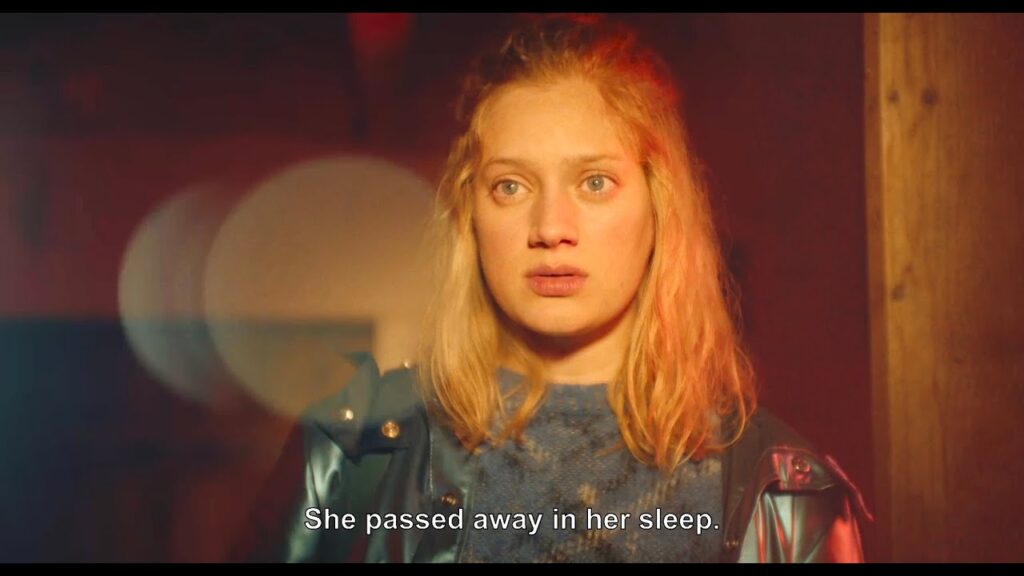
In the near future, the elderly are forcibly placed in state-run institutions. Gaëlle — 30, solitary — cares for a small group of elderly residents living in secret on an isolated island, outside the system’s reach. Her world is disrupted when a mysterious sailboat arrives carrying outsiders, including a woman claiming to be a doctor. The newcomers bring energy and renewal. The elderly begin to die one by one. Directed by Lithuanian-born Alanté Kavaïté. Written with Sara Wikler and Raphaëlle Desplechin. Cinematography by Manuel Alberto Claro. Nadia Tereszkiewicz leads alongside Dali Benssalah, Daphné Patakia, and a veteran French ensemble including Miou-Miou, Patrick Chesnais, and Jean-Claude Drouot. France-Finland co-production. Wild Bunch distribution. French theatrical March 19, 2025.
Why It Is Trending: A Dystopian End-of-Life Drama With Nadia Tereszkiewicz at Its Centre — and a Premise That Arrives Precisely When Elder Care Policy Is Europe’s Most Urgent Social Question
Tereszkiewicz — César-nominated, one of French cinema’s most closely watched young actors — carries the film as Gaëlle in a performance that multiple reviewers cite as its most secure foundation. The film co-produced with the Finnish Film Foundation and distributed by Wild Bunch gives it international arthouse infrastructure. Cinematographer Manuel Alberto Claro — known for his work with Lars von Trier — gives the film a visual register that exceeds its budget. The near-future dystopia premise — elderly people forcibly institutionalised by the state, a secret island community as refuge — connects to live European political debates about elder care, institutional care quality, and the autonomy of old age.
Elements Driving the Trend: Tereszkiewicz’s Performance, Claro’s Cinematography, and a Premise That Trades on Genuine Social Anxiety
-
Manuel Alberto Claro’s cinematography gives every frame deliberate austerity — the island functions as an extension of Gaëlle’s inner solitude, with setting and psyche inseparable.
-
Nicolas Becker and Quentin Sirjacq’s atmospheric score builds tense dread from stillness rather than conventional horror mechanics.
-
The dystopian premise — state institutionalisation of the elderly as near-future policy — is one of contemporary French drama’s most politically resonant conceits, connecting the film to live debates about elder autonomy and institutional care.
-
The arrivals-and-deaths structure creates a whodunit architecture that the film consciously declines to resolve through conventional thriller mechanics — generating critical division between those who find this austere and those who find it evasive.
Virality: The Dystopian Elder Care Premise and the Tereszkiewicz Discovery Circuit
-
The premise self-describes as politically urgent — a world where the state removes elderly autonomy is a near-future extrapolation of debates already happening in France and across Europe.
-
Tereszkiewicz’s profile gives the film discovery access to the audience following her career after César recognition.
Critics Reception: Divided — Atmospherically Precise But Premise Underexplored
-
Apartment No. 26 — quietly arresting, Tereszkiewicz carries the film single-handedly, every frame carries meaning, island as extension of Gaëlle’s psyche, immersive and quietly unsettling.
-
IMDb user review — missed opportunity, the dystopian setup abandoned almost immediately for conventional French drama, too austere and emotionally distant to fully connect.
-
Letterboxd — promising concept, veteran French cast, script never generates enough interest, very glum.
-
Spanish review (Destino Arrakis) — failed film, no emotional impact, chaotic narrative structure, contemplative atmosphere full of unanswered questions. IMDb 5.0 from 84 viewers. 4 critic reviews.
Awards and Recognitions: No Awards — French Theatrical March 19, 2025
Director and Cast: A Lithuanian Director Bringing Nordic Restraint to a French Dystopia — With Veteran French Cinema and Tereszkiewicz as Its Core
-
Alanté Kavaïté — Lithuanian-born, based in France — brings a formal restraint and atmospheric precision that sits closer to Nordic arthouse than conventional French drama. Her control over tone and mood is consistent; the screenplay’s commitment to the dystopian premise is not.
-
Nadia Tereszkiewicz (Gaëlle) — the film’s most universally praised element — carries Gaëlle’s emotional arc with subtlety and presence, giving the film its tether to the audience when the narrative loses its direction.
-
Dali Benssalah (David) and Daphné Patakia (Aline) provide the outsider energy whose arrival drives the film’s central tension.
-
Miou-Miou, Patrick Chesnais, Jean-Claude Drouot, and Alexandra Stewart give the elderly community veteran French cinema gravitas that the film’s thematic ambitions require.
The premise generates strong initial engagement; the film’s decision to abandon its dystopian architecture in favour of atmospheric fable produces the critical division that defines its reception. Tereszkiewicz is consistently the film’s most reliable asset regardless of critical position.
What Movie Trend Is Followed: The Near-Future French Drama Deploys Dystopian Architecture as Backdrop Rather Than Subject
Belladone belongs to a specific strand of European arthouse science fiction — The Lobster, Never Let Me Go, Supernova-adjacent — in which a near-future speculative premise serves as emotional and philosophical backdrop rather than genre engine. The film uses the elderly institutionalisation premise to explore questions about autonomy, care, and what people actually need at the end of life — questions the dystopian setup frames but the fable register addresses. Kavaïté’s formal choice is to treat the speculative elements as given rather than developed, which is either the film’s most honest artistic decision or its most frustrating evasion depending on the viewer’s expectations.
Trend Drivers: The Abandoned Dystopia and the Fable Register That Replaces It
-
The film’s central formal choice — establishing a politically charged dystopian premise and then declining to develop it generically — positions Belladone as a philosophical fable rather than a speculative thriller.
-
The island-as-refuge dynamic — a secret community living outside institutional control — gives the film its most commercially legible pitch while the film itself is interested in something quieter and more ambiguous.
-
The arrivals-and-deaths structure creates a thriller architecture that the film consciously deflates — the whodunit question is raised and then abandoned, generating the critical frustration that the IMDb score reflects.
-
The end-of-life questions the film pursues — whether safety and hygiene actually meet the deeper needs of the dying — are more interesting than the genre mechanics it teases and discards.
The film’s most honest audience is one that comes for the fable and the atmosphere rather than the genre premise. The disconnect between what the trailer and premise suggest and what the film delivers is its primary commercial liability.
What Is Influencing Trend: Near-Future European Arthouse and the Elder Care Political Moment
-
The near-future European arthouse tradition — The Lobster most prominently — has established a formal model for deploying speculative premises to address contemporary social questions without committing to genre mechanics.
-
The elder care political debate in France — questions about institutional autonomy, the quality of state care facilities, and what constitutes dignity in old age — gives the film’s premise political currency that the narrative doesn’t fully capitalise on.
-
Wild Bunch’s distribution infrastructure gives the film the international arthouse reach that French drama with speculative elements needs to find an audience beyond France.
Macro Trends Influencing: Ageing Populations, Autonomy Politics, and the Secret Community Fantasy
-
The near-future institutionalisation of the elderly is a politically extrapolative premise that Europe’s ageing population makes immediately legible — it is not an implausible fantasy but a foreseeable policy debate.
-
The secret island community as refuge from institutional control is a fantasy that has specific resonance in a cultural moment characterised by surveillance, compliance, and reduced personal autonomy.
-
French drama’s ongoing engagement with end-of-life questions — from Amour to Plan 75’s influence — gives Belladone a cultural context in which its thematic ambitions are recognisable even when the execution is contested.
Consumer Trends Influencing: Tereszkiewicz’s Discovery Audience and Wild Bunch’s Arthouse Network
-
Tereszkiewicz’s rising profile gives the film discovery access to the audience following her career — a French arthouse demographic that is specific and active.
-
Wild Bunch’s international distribution gives the film pathways to European arthouse audiences in territories where the elder care premise has immediate political resonance.
-
The near-future arthouse genre hybrid has a specific and loyal international audience that responds to formally restrained speculative drama — the same audience that sustained The Lobster and Never Let Me Go.
Audience Analysis: French Arthouse Drama Audiences, Near-Future Speculative Film Enthusiasts, and Tereszkiewicz Followers
The core audience is 30–60 — French arthouse drama viewers who respond to atmospheric philosophical fable, near-future speculative film enthusiasts who value restrained dystopian premises, and Tereszkiewicz followers who will find the film through her profile. The premise-to-execution gap will divide this audience: those who meet the film on its fable terms will find atmospheric and thematic rewards; those who came for the dystopian thriller will find evasion where they expected development.
Belladone finds its most receptive audience when approached as a philosophical fable about autonomy and care rather than a dystopian thriller. Kavaïté’s formal restraint is consistent and deliberate. The gap between premise and delivery is the film’s most honest commercial challenge.
Final Verdict: A Quietly Atmospheric French Fable That Abandons Its Most Interesting Premise — Anchored by a Tereszkiewicz Performance That Carries More Than the Script Provides
Kavaïté delivers a film of genuine atmospheric precision — Claro’s cinematography, the island setting as psychological landscape, Tereszkiewicz’s contained emotional authority — whose central failure is its disinterest in its own dystopian architecture. The near-future premise is established with enough specificity to generate strong initial engagement, then abandoned almost immediately for a quieter philosophical register that the film handles with more restraint than conviction. The result is a film that is not boring but is frustratingly below the potential of its own best idea.
Audience Relevance: For Near-Future Arthouse Audiences Who Can Accept Fable Over Genre
Works best for viewers who approach the film as a philosophical meditation on autonomy, care, and end-of-life dignity rather than a dystopian thriller. Less suited for those expecting the premise to be developed generically. Tereszkiewicz alone justifies the 91 minutes for viewers invested in her career.
What Is the Message: Safety and Hygiene Are Not the Same as Care
The film’s most precise question — whether extreme control and institutional safety genuinely meet the deeper needs of people nearing the end of their lives — is one of contemporary social policy’s most important unresolved debates. The island community’s secret existence is the film’s argument that what the elderly actually need is autonomy, connection, and risk rather than protection, compliance, and isolation.
Relevance to Audience: A French Drama That Asks the Right Question and Then Doesn’t Quite Trust Itself to Answer It
Belladone raises genuinely important questions about institutional care and elder autonomy in a near-future frame that gives them political urgency. The film’s unwillingness to follow those questions to their most uncomfortable conclusions is both its formal character and its most frustrating limitation. The questions are worth sitting with even when the answers are deliberately withheld.
Social Relevance: Elderly Institutionalisation as Near-Future Policy Extrapolation
The premise — a future where the state removes elderly autonomy and places them in institutional care regardless of their wishes — is not a distant speculative scenario but an extrapolation of debates already active in French and European elder care policy. The secret island community is a fantasy of resistance to that institutional logic. The film’s social argument is clear even when the narrative is not.
Performance: Tereszkiewicz Carries More Than the Script Provides — the Veteran French Ensemble Gives the Community Its Credibility
Tereszkiewicz’s Gaëlle — contained, committed, emotionally precise without melodrama — is the film’s consistent anchor across its most narratively uncertain passages. Miou-Miou, Chesnais, and Drouot give the elderly community the lived weight of veteran French cinema that non-professional casting could not achieve. Benssalah and Patakia provide the outsider energy whose arrival drives the film’s central ambiguity.
Legacy: A Missed Opportunity With a Tereszkiewicz Performance Worth Seeing
Belladone will be remembered as a film that had one of French cinema’s most interesting near-future premises and chose not to use it — and that had Tereszkiewicz at the centre carrying what the script didn’t provide. Kavaïté’s formal control is evident throughout. The screenplay’s courage is not.
Success: No Awards — French Theatrical March 19, 2025, Wild Bunch Distribution
The atmospheric precision attracted the arthouse audience. The premise-to-execution gap limited its reach. Tereszkiewicz is the reason to seek it out.
Belladone is the film that asked whether safety is the same as care — and then answered that question more quietly than it needed to.
Insights: A formally restrained French near-future fable that abandons its most commercially interesting premise for a philosophical register the script doesn’t fully earn — sustained almost entirely by Tereszkiewicz’s performance and Claro’s cinematography. Industry Insight: Wild Bunch’s distribution confirms that near-future French drama with arthouse credentials has an international circuit, but the premise-to-execution gap limits the film’s reach to the audience that comes for atmosphere rather than genre development. Audience Insight: Tereszkiewicz’s rising profile is the film’s most reliable discovery mechanism — an audience following her career will find a performance that exceeds the material, which is both a recommendation and a warning. Social Insight: A film about a secret island where the elderly live free from state institutionalisation is asking one of contemporary Europe’s most urgent social policy questions — and the fact that its answers are deliberately withheld makes the question linger longer than a resolved narrative would. Cultural Insight: Belladone positions Kavaïté as a filmmaker with genuine formal precision and a specific auteurist voice — and confirms that her next project, with a screenplay that matches her visual intelligence, will be worth watching.
The premise was the most interesting thing about the film. Tereszkiewicz was the most interesting thing about the performance. Neither is quite enough — but together they make a case for both.
Summary: One Island, One Caregiver, One Secret Community, One Sailboat That Changes Everything
-
Movie themes: Elder autonomy versus institutional safety, the state’s claim on old age, care as control versus care as freedom, the secret community as resistance to institutional logic, and the specific question of what dying people actually need that systems cannot provide.
-
Movie director: Alanté Kavaïté — Lithuanian-born, working in France — brings Nordic formal restraint to a French near-future premise. Her atmospheric control is consistent; the screenplay’s commitment to its own most interesting ideas is not.
-
Top casting: Tereszkiewicz carries Gaëlle with emotional precision that exceeds the script’s demands. Miou-Miou, Chesnais, and Drouot give the community veteran French cinema weight. Benssalah and Patakia provide the outsider disruption the plot requires.
-
Awards and recognition: No awards. French theatrical March 19, 2025. Wild Bunch distribution. France-Finland co-production.
-
Why to watch: Tereszkiewicz’s performance, Claro’s cinematography, and a near-future premise about elder autonomy and institutional control that raises genuinely important questions — even when the film doesn’t fully trust itself to answer them.
-
Key success factors: Tereszkiewicz’s rising profile plus Claro’s cinematography plus Wild Bunch’s arthouse distribution network plus the politically resonant elder care premise plus the veteran French ensemble — a combination that gives a quietly ambitious French drama its fullest available arthouse reach.
-
Where to watch: French theatrical from March 19, 2025. Wild Bunch international distribution.