


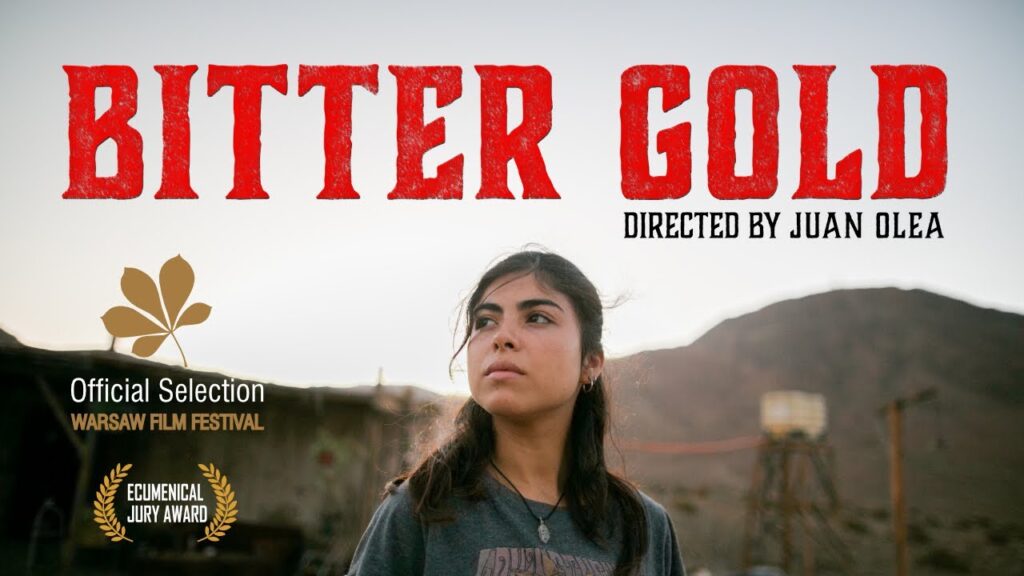
A Neo-Western Drama About Survival, Greed, and Female Resilience
A teenage girl is forced to take control of a remote mining operation after her father’s injury, confronting violence, greed, and entrenched misogyny in one of the world’s harshest landscapes.
Set in Chile’s Atacama Desert, Bitter Gold follows Carola, a young woman whose life changes dramatically when her father Pacífico is seriously injured. Suddenly responsible for managing a small mining operation, Carola must navigate a dangerous environment dominated by men, economic uncertainty, and constant threats from those seeking control of the family’s future. As greed, suspicion, and violence begin to intensify around her, she is forced to mature quickly while defending both her livelihood and her independence. Against the breathtaking yet unforgiving backdrop of the desert, the film combines coming-of-age drama, survival thriller, and neo-western storytelling. Director Juan Francisco Olea uses this harsh environment to explore themes of resilience, power, and gender inequality.
➡️ Implication: The film reflects growing interest in female-led survival stories set within traditionally male-dominated worlds.
Why It Is Trending: A Female Perspective on the Neo-Western Genre
Bitter Gold has attracted attention because it reimagines the western genre through a young female protagonist operating within a harsh mining environment. Traditionally, westerns have centered on male characters confronting lawlessness, greed, and survival. Here, Carola occupies that role, challenging both genre expectations and the patriarchal structures surrounding her. The film also stands out because of its unusual setting in the Atacama Desert, a landscape rarely explored in international cinema. Combined with strong visual storytelling and social commentary, the film offers a fresh perspective on familiar genre themes. Its blend of coming-of-age drama and neo-western suspense has helped distinguish it within contemporary Latin American cinema.
➡️ Implication: Audiences increasingly embrace genre stories that challenge traditional perspectives and introduce new voices.
Elements Driving the Trend: Survival and Independence in an Unforgiving World
One of the film’s strongest elements is its focus on survival under extreme conditions. Carola faces not only physical dangers but also social obstacles created by misogyny and power imbalances. The desert environment becomes both a literal and symbolic representation of isolation and resilience. Rather than relying on constant action, the film builds tension through social dynamics, mistrust, and escalating threats. The result is a story where psychological endurance is as important as physical survival. This layered approach gives the film emotional and thematic depth.
➡️ Implication: Modern westerns increasingly focus on personal resilience rather than traditional heroism.
Virality of Movie (Social Media Coverage): Stunning Landscapes and Strong Female Leadership
Much of the conversation surrounding Bitter Gold centers on its visual beauty and its portrayal of a young woman navigating a hostile environment. Viewers frequently highlight the cinematography of the Atacama Desert and the atmospheric use of light and darkness within the mining setting. Discussions also focus on Carola’s role as a female protagonist in a genre traditionally dominated by men. The film’s combination of social realism and suspense has attracted interest among arthouse and international cinema audiences. Positive reactions often emphasize its unique setting and emotional intensity.
➡️ Implication: Visually distinctive films often gain attention when their imagery reinforces the emotional themes of the story.
Critics Reception: Strong Visual Storytelling and a Compelling Lead Performance
Critical responses have generally praised the film’s cinematography, atmosphere, and central performance. Many reviewers have highlighted Katalina Sánchez for her portrayal of a young woman navigating fear, responsibility, and determination. Critics have also noted the film’s ability to create tension through social relationships rather than constant violence. The Atacama Desert setting has been widely recognized as one of the production’s greatest strengths. While some reviews questioned aspects of the narrative, the film’s visual storytelling and emotional authenticity have received significant praise.
➡️ Implication: Strong atmosphere and character-driven tension remain key ingredients for successful independent thrillers.
Awards and Recognitions: Festival Recognition Highlights Emerging Talent
Bitter Gold received 4 nominations across international festivals and industry awards. Its most notable recognition came through a nomination for the Warsaw Grand Prix at the Warsaw International Film Festival. Director Juan Francisco Olea was also nominated in the Ibero-American Competition at the Seattle International Film Festival. Additionally, Katalina Sánchez received a nomination for Best Leading Actress at the Caleuche Awards, while Moisés Angulo earned a Best Supporting Actor nomination. These recognitions helped establish the film as an emerging voice within Latin American cinema.
➡️ Implication: Festival recognition often serves as a valuable platform for showcasing regional stories to international audiences.
Director and Cast: Katalina Sánchez Leads a Harsh and Emotional Journey
Director Juan Francisco Olea approaches the story with a focus on realism, atmosphere, and character development. His direction allows the environment and social tensions to shape the narrative organically, creating a sense of constant uncertainty and danger.
The film is anchored by Katalina Sánchez, whose performance captures the emotional complexity of a young woman forced into leadership under extreme circumstances. She is supported by Francisco Melo and Matías Catalán, whose performances help establish the difficult world Carola must navigate. Together, the cast creates a believable portrait of survival in a lawless environment.
➡️ Implication: Strong central performances are essential in survival dramas where emotional endurance drives the narrative.
Conclusion: A Powerful Neo-Western About Courage and Survival
Bitter Gold transforms a remote mining operation into the setting for a compelling story about resilience, ambition, and self-determination. Through Carola’s journey, the film explores the challenges of leadership, the realities of gender inequality, and the moral complexities of survival. Juan Francisco Olea combines western influences with contemporary social themes to create a story that feels both timeless and modern. The stunning Atacama landscapes provide visual grandeur while reinforcing the film’s emotional isolation. Supported by a strong lead performance and festival recognition, Bitter Gold stands as a notable contribution to contemporary Latin American cinema. Ultimately, it is a story about finding strength in a world that constantly tests the limits of endurance.
➡️ Implication: The film demonstrates how classic genre frameworks can be revitalized through fresh perspectives and socially relevant themes.
What Movie Trend Is Followed: Female-Led Neo-Westerns Reclaiming Traditionally Masculine Genres
Bitter Gold follows the growing trend of contemporary neo-westerns that place women at the center of stories traditionally dominated by male protagonists. Rather than focusing on classic frontier heroes, the film explores survival, leadership, and economic struggle through Carola’s perspective. Like many modern westerns, it replaces clear distinctions between heroes and villains with morally complex social realities. The mining community functions as a modern frontier where power, greed, and survival determine human behavior. By combining western imagery with contemporary gender and class issues, the film reinvents the genre for modern audiences.
➡️ Implication: Modern westerns increasingly succeed by using familiar genre structures to explore contemporary social realities.
Trend Drivers: Women Taking Control of Traditionally Male Spaces
One of the strongest drivers behind this trend is the growing demand for stories that challenge traditional gender roles. Bitter Gold places Carola in a position of leadership within an environment historically associated with male authority and physical labor. Her struggle is not only against external threats but also against assumptions about who deserves power and respect. The film reflects broader cultural conversations about women entering industries and leadership positions where they have traditionally been marginalized. This perspective gives the story emotional and social relevance.
➡️ Implication: Audiences increasingly embrace stories that challenge established power structures and gender expectations.
What Is Influencing Trend: Economic Survival as Contemporary Frontier Storytelling
Modern westerns often replace territorial conquest with economic survival. In Bitter Gold, the conflict revolves around protecting a mining operation and securing a future rather than defending land or property in the traditional western sense. Financial insecurity, resource competition, and social inequality become the new frontier challenges. The film reflects contemporary concerns about economic uncertainty and access to opportunity. These themes make the story feel relevant despite its classic genre influences.
➡️ Implication: Economic survival has become one of the defining conflicts within modern neo-western storytelling.
Macro Trends Influencing: Latin American Cinema Embraces Regional Landscapes
Across international cinema, filmmakers are increasingly using local landscapes and cultural realities to tell universally relevant stories. Bitter Gold reflects this movement by placing the Atacama Desert at the center of the narrative. The environment is not merely a backdrop but an active force shaping the characters’ decisions and experiences. This focus on place gives the film authenticity while distinguishing it from more conventional westerns. Regional storytelling continues to attract international audiences seeking fresh perspectives.
➡️ Implication: Cultural specificity often strengthens global appeal by offering unique storytelling environments.
Consumer Trends Influencing: Audiences Seeking Realistic Survival Narratives
Many viewers are increasingly drawn to stories grounded in realistic challenges rather than fantasy or spectacle. Bitter Gold creates tension through social conflict, environmental hardship, and human behavior rather than exaggerated action sequences. The film’s focus on practical survival and emotional endurance aligns with audience interest in grounded storytelling. Carola’s journey feels believable because her struggles are rooted in recognizable realities. This authenticity strengthens emotional engagement.
➡️ Implication: Realistic survival stories continue to resonate because they reflect genuine human resilience.
Audience Analysis: Fans of Neo-Westerns, Survival Dramas, and Independent Cinema
The primary audience for Bitter Gold includes viewers who enjoy neo-westerns, survival dramas, coming-of-age stories, and international independent films. Fans of character-driven narratives will appreciate the film’s focus on emotional growth and personal responsibility. Audiences interested in female-led stories and socially conscious cinema are also likely to connect with its themes. The Atacama setting and visual style may attract viewers drawn to atmospheric and visually immersive filmmaking. Its genre blend broadens its appeal across multiple audience groups.
➡️ Implication: Cross-genre storytelling allows independent films to connect with wider and more diverse audiences.
Conclusion: A Neo-Western About Survival, Power, and Determination
Bitter Gold reflects several major trends shaping contemporary international cinema, including female-centered storytelling, neo-western reinvention, and regional authenticity. Through Carola’s journey, the film explores how resilience is forged through adversity and responsibility. The mining operation becomes a modern frontier where power, greed, and survival constantly collide. By placing a young woman at the center of this conflict, the story challenges traditional genre expectations while maintaining the tension and isolation associated with classic westerns. Its combination of social realism and genre storytelling gives it lasting relevance. Ultimately, Bitter Gold demonstrates that the frontier remains a powerful cinematic space for exploring human strength and ambition.
➡️ Implication: Contemporary neo-westerns thrive when they use classic genre foundations to examine modern struggles and evolving social roles.
Final Verdict: A Visually Striking Neo-Western About Resilience and Survival
Bitter Gold succeeds by combining the tension of a survival thriller with the emotional depth of a coming-of-age drama. Juan Francisco Olea uses the harsh realities of mining life and the unforgiving Atacama Desert to create a world where every decision carries consequences. The film’s greatest strength lies in its portrayal of Carola, a young woman forced into leadership under circumstances far beyond her years. Rather than relying on conventional western action, the story builds suspense through social conflict, greed, and the struggle for autonomy. The result is a grounded and emotionally engaging film that feels both intimate and epic. Through its modern perspective, Bitter Gold revitalizes familiar genre themes while addressing contemporary social issues.
➡️ Implication: The film proves that modern westerns can remain relevant when they focus on human resilience rather than traditional frontier mythology.
Audience Relevance: Speaking to a Generation Facing Uncertainty
Carola’s journey resonates because it reflects the challenges many young people face when forced to assume responsibility earlier than expected. Her struggle to secure a future while confronting systemic barriers mirrors broader concerns about economic uncertainty and opportunity. The film also speaks to audiences interested in stories about perseverance and self-reliance. By portraying leadership as a burden rather than a privilege, the narrative feels realistic and relatable. These themes extend far beyond the mining setting.
➡️ Implication: Stories about resilience continue to resonate because they reflect universal experiences of growth and responsibility.
What Is the Message of Movie: Strength Emerges Through Adversity
At its core, Bitter Gold argues that true strength is often discovered under pressure. Carola’s transformation is driven not by ambition but by necessity. Faced with greed, misogyny, and constant threats, she learns to trust her instincts and assert her authority. The film suggests that resilience is built through perseverance rather than innate confidence. Through her journey, it celebrates courage in the face of overwhelming odds.
➡️ Implication: Personal growth often emerges when individuals are forced to confront challenges they never expected to face.
Relevance to Audience: A Story About Claiming Your Place in the World
Many viewers will connect with Carola’s struggle to earn respect in an environment that doubts her abilities. The film explores universal questions about self-worth, leadership, and determination. Her experiences reflect broader challenges faced by individuals attempting to break barriers and redefine expectations. By grounding these themes within a realistic setting, the film creates a strong emotional connection with audiences. This relatability strengthens its impact.
➡️ Implication: Audiences are drawn to stories where determination overcomes deeply entrenched obstacles.
Social Relevance: Challenging Gender Roles in Traditional Industries
Bitter Gold examines how women continue to face resistance in industries and environments historically dominated by men. Carola’s leadership is constantly questioned not because of her abilities but because of societal assumptions about gender. The film highlights the challenges of navigating patriarchal structures while pursuing independence and security. Rather than presenting these issues through overt activism, it allows them to emerge naturally through the story. This approach gives the social commentary authenticity and power.
➡️ Implication: Stories that challenge traditional gender expectations remain highly relevant in contemporary cinema.
Performance: Katalina Sánchez Anchors the Film with Confidence
Katalina Sánchez delivers an impressive performance that captures both vulnerability and determination. She successfully conveys the emotional complexity of a young woman carrying responsibilities beyond her years. Francisco Melo provides a strong supporting presence as Carola’s father, while Matías Catalán helps reinforce the tensions surrounding the mining operation. Together, the cast creates a believable and emotionally engaging world.
➡️ Implication: Strong lead performances are often the foundation of successful character-driven survival stories.
Legacy: A Fresh Voice in Latin American Neo-Western Cinema
Bitter Gold contributes to the growing evolution of the western genre within Latin American cinema. Its combination of regional authenticity, social realism, and female-centered storytelling distinguishes it from more traditional genre entries. The film also highlights the cinematic potential of the Atacama Desert, one of the world’s most visually distinctive landscapes. As audiences continue to seek fresh perspectives within established genres, the film’s approach may influence future regional productions. Its themes ensure relevance beyond its initial release.
➡️ Implication: Genre reinvention often emerges when filmmakers combine local stories with universal themes.
Success: Festival Recognition and Critical Appreciation
Bitter Gold earned 4 nominations, including a nomination for the Warsaw Grand Prix at the Warsaw International Film Festival and an Ibero-American Competition nomination at the Seattle International Film Festival. Katalina Sánchez also received a nomination for Best Leading Actress at the Caleuche Awards. While the film achieved modest commercial visibility, it gained recognition for its performances, cinematography, and unique setting. These accomplishments helped establish it as an important independent Chilean production.
➡️ Implication: Festival recognition remains a valuable platform for showcasing distinctive regional cinema to international audiences.
Insights: Bitter Gold succeeds because it combines female resilience, survival drama, and neo-western storytelling within a visually unforgettable landscape. Industry Insight: Contemporary westerns increasingly thrive when they feature diverse perspectives and modern social themes. Audience Insight: Viewers continue to respond strongly to stories about perseverance, self-reliance, and overcoming adversity. Social Insight: The film highlights ongoing challenges faced by women in traditionally male-dominated industries and environments. Cultural Insight: Regional stories rooted in specific landscapes and communities often achieve the strongest emotional authenticity.
Conclusion: A Powerful Story of Survival in a Harsh World
Bitter Gold transforms the Atacama Desert into a compelling stage for a story about courage, responsibility, and determination. Through Carola’s journey, the film explores how resilience is forged under pressure and how leadership often emerges from necessity rather than choice. Juan Francisco Olea combines western influences, social realism, and coming-of-age themes to create a story that feels both timeless and contemporary. The stunning cinematography and strong performances elevate the narrative beyond a conventional survival drama. Supported by festival recognition and critical praise, the film stands as a notable entry in modern Latin American cinema. Ultimately, Bitter Gold reminds audiences that true strength is often discovered in the harshest circumstances.
➡️ Implication: The film demonstrates that resilience, courage, and self-belief remain some of the most powerful themes in contemporary storytelling.
Summary of the Movie: A Neo-Western Coming-of-Age Story About Survival and Determination
• Movie Themes: Bitter Gold explores resilience, survival, greed, family responsibility, economic hardship, gender inequality, leadership, and personal growth. Through Carola’s struggle to protect her family’s mining operation, the film examines how adversity can force individuals to mature quickly and redefine their sense of identity. The story also explores the tension between ambition and morality within a harsh and unforgiving environment.
➡️ Implication: The film demonstrates how difficult circumstances can become catalysts for personal transformation.
• Movie Director: Juan Francisco Olea combines elements of the western, thriller, and coming-of-age genres to create a grounded and atmospheric story. His direction emphasizes realism, environmental tension, and emotional authenticity. By using the Atacama Desert as both setting and narrative force, he creates a visually striking film that feels deeply connected to its landscape.
➡️ Implication: Strong environmental storytelling can transform a setting into an active character within the narrative.
• Top Casting: Katalina Sánchez delivers a breakout performance as a young woman forced to take responsibility for her family’s future. Her portrayal balances vulnerability, courage, and determination throughout the film. She is supported by Francisco Melo as her injured father and Matías Catalán, who contribute to the tension and complexity surrounding the mining operation.
➡️ Implication: A compelling central performance can elevate a survival story into an emotionally engaging character study.
• Awards and Recognition: Bitter Gold received 4 nominations, including a nomination for the Warsaw Grand Prix at the Warsaw International Film Festival and selection in the Ibero-American Competition at the Seattle International Film Festival. Katalina Sánchez earned a nomination for Best Leading Actress at the Caleuche Awards, while Moisés Angulo received a Best Supporting Actor nomination. These recognitions helped increase the film’s visibility within international festival circuits.
➡️ Implication: Festival recognition highlights the growing international interest in contemporary Latin American cinema.
• Why to Watch Movie: Bitter Gold offers a fresh take on the western genre through its female protagonist, unique setting, and emotionally grounded storytelling. Audiences who enjoy survival dramas, coming-of-age narratives, and visually immersive cinema will find much to appreciate. The film combines suspense, social commentary, and character development without relying on traditional genre clichés.
➡️ Implication: The film appeals to viewers looking for both emotional depth and atmospheric storytelling.
• Key Success Factors: The film’s strengths include its stunning cinematography, authentic performances, unique Atacama Desert setting, and strong female lead. Its ability to merge social realism with neo-western tension creates a distinctive cinematic identity. The story’s focus on resilience and survival gives it universal appeal while remaining rooted in a specific cultural context.
➡️ Implication: Authentic regional storytelling often creates the strongest emotional and visual impact.
• Where to Watch: Bitter Gold was released in Chile on May 8, 2025, and later reached international audiences through festival screenings and streaming distribution, including availability on Max in selected regions.
➡️ Implication: Streaming platforms continue to expand global access to independent international films.
Conclusion: A Compelling Neo-Western About Courage and Survival
Bitter Gold is a powerful story about resilience in the face of overwhelming adversity. Through Carola’s journey, the film explores leadership, responsibility, and the determination required to survive in an environment shaped by greed and inequality. Juan Francisco Olea combines breathtaking landscapes with emotionally grounded storytelling to create a film that feels both intimate and epic. Katalina Sánchez’s performance provides the emotional core that drives the narrative forward. Supported by strong festival recognition and critical praise, the film stands as a notable contribution to contemporary Latin American cinema. Ultimately, Bitter Gold demonstrates that true strength often emerges when individuals are forced to confront challenges they never expected to face.
➡️ Implication: The film reinforces the enduring power of stories about perseverance, courage, and self-discovery in difficult circumstances.