


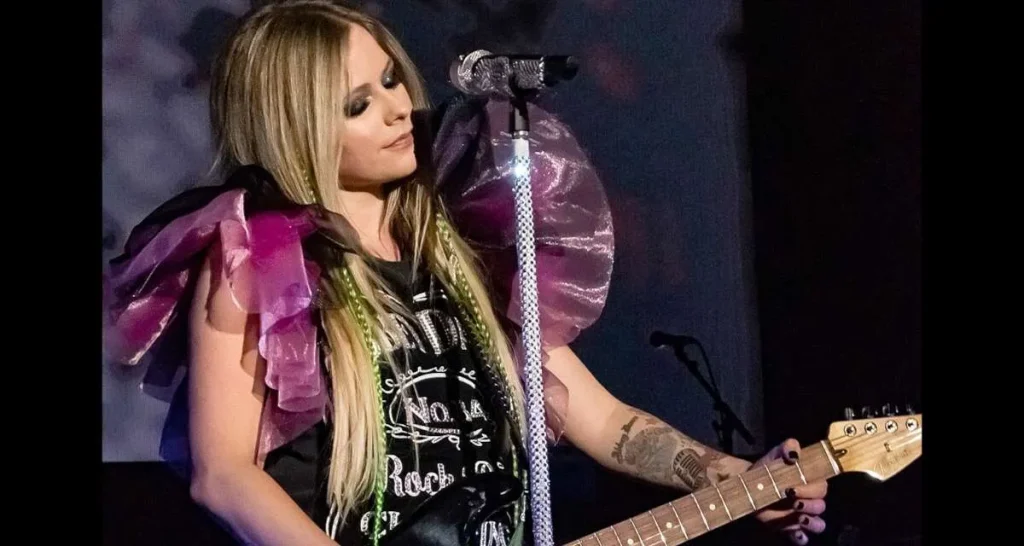


Avril Lavigne, whose ‘Sk8er Boi’ is among the many works that Suno allegedly infringed upon in outputs. Photo Credit: Justin Higuchi
When it rains, it pours: SOCAN has filed a Suno copyright lawsuit of its own, accusing the platform of unlawfully training on protected works and then generating infringing outputs.
SOCAN submitted the straightforward complaint to Canada’s Federal Court today, moments after activist artist David Lowery as well as Latin label Gerencia 360 fired off distinct actions against Suno in the U.S.
(Also, late July saw GEMA secure a copyright legal victory over Suno in Germany; the defendant is appealing.)
Despite the clear-cut differences between those plaintiffs and to some extent their precise claims, the suits touch on the same main points.
Letting the SOCAN action take the wheel, Suno allegedly “acted in bad faith by helping itself to a massive number of SOCAN Works” – meaning the works of its members – “without first seeking or obtaining a license to do so.”
And that allegedly enabled the well-funded AI upstart to create its models, develop a huge userbase in part by dealing in “identical or substantially similar” outputs, and “build a commercial enterprise that is now worth billions of dollars.”
Regarding Suno’s purported user-prompt guardrails, the entity “knows that those guardrails are woefully inadequate,” per SOCAN, which further maintains that the safeguards demonstrate Suno’s knowledge “of the infringing nature of its business model.”
Far from leaving its allegations at that, SOCAN opted to include detailed comparisons of Canadian-penned works like “Life Is a Highway” and “Sk8er Boi” as well as allegedly infringing Suno outputs.
At the time of this writing, these outputs, all linked in the complaint, appeared to still be available to stream via Suno.
Moreover, with said outputs representing “the tip of the iceberg” on the infringement front, SOCAN is demanding CA$10 million in punitive and exemplary damages for Suno’s “knowing, high-handed, willful, and malicious disregard for” the performing rights in question.
Additionally, the plaintiff is seeking a piece of the profits stemming from the alleged infringement or, alternatively, statutory damages of CA$20,000 per allegedly infringed work.
Time will tell whether the case delivers the desired result for SOCAN – and whether it spurs different gen AI litigation from PROs. But at present, it doesn’t seem like an exaggeration to say that Suno is staring down a mountain of IP complaints.
On the other side of that coin, as mentioned, there’s significant overlap between the cases’ core allegations. Consequently, Suno’s (or another AI giant’s) scoring a definitive fair use win would seemingly wipe away many of the complaints and much of the liability.
(However, it could be a different story when it comes to the liability associated with the multitude of allegedly infringing outputs from Suno and rival platforms.)
Regardless of where the cards fall here – actually, some stateside courts have been receptive to the idea that training models on protected media constitutes fair use – it’ll take a while yet for a precedent to emerge.
More immediately, the past month has also seen Suno resolve a couple copyright cases and prevent a BMG/Concord confrontation by inking a licensing pact.