
A mother, her son, and an Italian road that gives both of them back to themselves
Ester, a single mother exhausted by years of solo caregiving, plans a rare escape to Italy. When she is asked to move her disabled teenage son David out of her friend’s house and into a caravan, she steals it instead — and sets off through Calabria with David, discovering along the road the life she had stopped believing was still available to her.
Why It Is Trending: Czech Cinema Returns to Cannes — and Arrives With Something Personal and Urgent
Caravan marks the return of a Czech production to the Cannes official selection after more than 30 years — a cultural milestone that gives the film institutional significance beyond its intimate subject matter. Kirchnerová herself is the mother of a disabled son, and the film draws directly from that experience — giving it a fundamental tenderness throughout, while its tougher scenes earn their place with a sense of authenticity and personal testimony. World premiering in Un Certain Regard at the 78th Cannes Film Festival on May 22, 2025, it subsequently released in Italy and Czech Republic through the summer. The autobiographical foundation gives the film a moral authority that scripted disability narratives often lack.
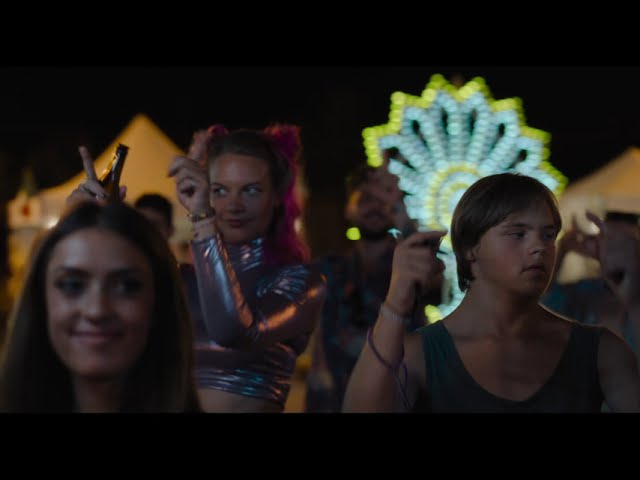
Elements Driving the Trend: From its hauntingly beautiful first moments, Caravan establishes itself as a poetic ode to motherhood — covering both the joys and challenges of being a parent to someone who is not equipped to tackle life alone. The Calabrian landscape — shot across Melito di Porto Salvo, Bova, and the surrounding coastline — functions as both backdrop and emotional register, its warmth and openness contrasting with Ester’s isolation. Kirchnerová provides lyrical moments where both mother and son have time to stop and reflect — nights of dancing, the tentative possibility of romance, a guilty taste of the life beyond caregiver. The road movie structure gives the film forward momentum without sacrificing emotional depth.
Virality: Cannes Un Certain Regard selection drove sustained festival circuit discovery, with the film’s autobiographical foundations and Geislerová’s performance generating strong critical word-of-mouth across European arthouse communities.
Critics Reception: High On Films called it emotionally authentic and minutely observed — the surge of emotion and candour in the telling elevates it far beyond the trite. Screen Daily praised Geislerová’s commanding central performance conveying both strength and vulnerability. IONCINEMA highlighted it as potentially one of Geislerová’s most prominent performances in her career.
Awards and Recognitions: 16 nominations total. World premiere Un Certain Regard, 78th Cannes Film Festival, May 22, 2025. Czech theatrical release August 28, 2025. Italian release August 7, 2025. Czech Republic submission for various European awards.
Caravan arrives at a moment when caregiver burnout — one of the most widespread and least discussed forms of emotional labour — is finally entering mainstream cultural conversation. The film’s willingness to portray a mother’s desire for freedom from her disabled child without judgment or apology is its most radical and most honest quality. For the industry, Kirchnerová’s debut confirms that personal, autobiographical drama carries genuine festival currency — and that Central European cinema has something urgent to say.
What Movie Trend Is Followed: The Caregiver Drama Breaks Its Own Silence
European arthouse cinema is increasingly turning its attention to the hidden emotional costs of caregiving — the exhaustion, the guilt, the desire to exist beyond the role that consumes every waking hour. Caravan is one of its most personally grounded and formally precise recent entries. The film taps into precise instants that only the bonded can feel — crafting a cinematic revelation about fitting ourselves into an imperfect world and discovering liberation in the process. The road movie structure gives the caregiving narrative a physical liberation to match its emotional one — Ester and David literally driving away from the social frameworks that have defined and constrained them both. The Italian setting amplifies the film’s central metaphor: sunlight, space, and possibility as the landscape of a life briefly reclaimed.
Trend Drivers: Autobiographical Debut Features With Social Authority The film’s conversations around motherhood and its various challenges are beautifully complemented by Geislerová’s heartfelt performance, realising the underlying themes in a simple but very effective way. Kirchnerová’s 2009 Cinéfondation prize at Cannes for her short film Baba — also about motherhood and disability — gives this feature debut a lineage that legitimises its ambition. The Czech-Italian-Slovak co-production structure gives the film international reach while retaining the emotional specificity of its Central European cultural context.
What Is Influencing Trend: The global conversation around carer burnout — amplified by the COVID-19 pandemic’s acceleration of home caregiving — has created an informed, emotionally ready audience for films that name the experience without sentimentalising it. Cannes Un Certain Regard continues to be the most reliable platform for debut features with strong personal foundations and social urgency. The disability representation debate in cinema is shifting from tokenism to genuine authorship — and Kirchnerová’s lived experience gives Caravan a credibility that commissioned scripts cannot replicate.
Macro Trends Influencing: European social drama is increasingly centring the invisible labour of caregiving — from Ordinary People to Quo Vadis, Aida? — as one of the defining moral questions of contemporary society. The road movie structure has proven itself the most commercially accessible vehicle for interior emotional journeys in European arthouse cinema. Czech cinema’s international profile, boosted by successive Cannes appearances, is positioning it as one of the continent’s most creatively vital national cinemas.
Consumer Trends Influencing: The audience for caregiver drama is large, underserved, and emotionally engaged — adults who recognise the experience from their own lives and seek fiction that validates rather than sentimentalises it. Un Certain Regard selections consistently find arthouse theatrical audiences that sustain films through festival-to-release arcs. The autobiographical debut feature is one of the most trusted categories in contemporary film criticism — audiences respond to the authority of direct personal experience.
Audience Analysis: European Arthouse Devotees, Parents, Caregivers, and Anyone Who Has Ever Wanted to Run The core audience is 30–60 — adults who have experienced caregiving in any form and recognise Ester’s specific exhaustion, guilt, and desire for escape as entirely comprehensible and entirely human. Geislerová is so emotionally transparent, holding a stolid centre, that we feel intensely for Ester throughout her journey of individual reclamation — including a bold moment where she asserts her desire to be free of her son, even if for a passing moment. The Calabrian setting gives the film aesthetic pleasure that makes its emotional demands bearable. The free-spirited Zuza’s arrival opens both the film and its protagonist — a reminder that connection can come from anywhere when we allow it.
Caravan works because it refuses to make Ester either saint or villain — she is simply a woman who has given everything for years and wants, very briefly, to be someone else. That refusal of moral simplicity is the film’s most important gift to its audience.
Final Verdict: Caravan Is a Beautifully Personal, Emotionally Honest Debut That Announces a Filmmaker Who Has Lived What She Films
Zuzana Kirchnerová delivers a debut feature of remarkable emotional authority — a film that earns every moment of its tenderness and every moment of its difficulty because it comes from a place no screenwriter can manufacture. Geislerová’s performance is the anchor and the engine, and David Vodstrčil’s portrayal of David shatters the usual conventions of disability representation with genuine authenticity. The road movie structure occasionally constrains the material, but the film’s directness — its refusal to apologise for its emotions — is also its greatest strength.
Audience Relevance: For Anyone Who Has Loved Someone Unconditionally and Found That Love Exhausting Ester’s desire for freedom is not a failure of love — it is the honest expression of what sustained, solitary caregiving actually costs. The film grants her that honesty without judgment, which is what makes it feel genuinely compassionate rather than merely sympathetic.
The audience who will find this film will find something in it they have never seen acknowledged on screen before — and that recognition is the most powerful thing cinema can offer.
What Is the Message: Love Is Not Enough Without Space to Also Be Yourself Ester is granted a guilty taste of the life she might have beyond mother and caregiver — and the film treats that taste as necessary rather than shameful. The caravan is not an escape from David but a space in which both of them can exist as more than their roles.
The film’s most radical argument is its simplest: a mother’s need for selfhood is not a betrayal of her child but a condition of her survival.
Relevance to Audience: A Road Movie That Goes Somewhere Real The Calabrian landscape — open, sun-drenched, and indifferent to Ester’s burden — gives the film an expansiveness that mirrors its emotional project. Each stop on the road is a new opportunity for Ester and David to encounter the world without the social frameworks that have defined them at home.
The life they find on the road resembles a caravan — an assembly of memories carrying both chaos and tenderness, yet standing sturdy and manageable in every direction.
Social Relevance: Caregiver Burnout, Finally Named and Taken Seriously The film’s depiction of David’s unpredictability — loving and playful one moment, physically violent the next — is unflinching without being sensationalising. It documents the reality that most caregiving films avoid: that the child’s needs are genuine and the parent’s exhaustion is equally genuine, and both truths must coexist.
That coexistence is what the film insists on, and it is what makes it socially essential rather than merely moving.
Performance: Geislerová and Vodstrčil Create a Language of Their Own The camera clearly adores Geislerová — so much of the impact of her performance comes in her use of expressions and gestures that communicate more than dialogue ever could. David Vodstrčil’s portrayal is equally remarkable — refusing the usual condescension of disability representation in favour of genuine presence and unpredictability.
Juliana Brutovská’s Zuza is the film’s emotional catalyst — her ease with David and her instinctive warmth unlock possibilities in both mother and son that the film’s first act barely allows the viewer to hope for.
Legacy: A Czech Debut That Matters — to European Cinema and to Everyone Who Has Lived Its Subject Caravan will be remembered as the film that returned Czech cinema to the Cannes official selection — and as a debut of genuine moral authority from a director who has lived her subject more completely than any commissioned project could replicate. Its festival life will be sustained by the audience it was built for — the one that recognises itself in Ester and has never seen that recognition offered so honestly before.
Kirchnerová’s next film will be eagerly anticipated.
Success: Cannes Premiere, European Festival Circuit, Deeply Personal Cultural Resonance 16 nominations total. World premiere Un Certain Regard, Cannes, May 22, 2025. Czech theatrical release August 28, 2025. Italian release August 7, 2025. Worldwide gross $79,212 — a figure that reflects its arthouse distribution scope, not its cultural significance. IMDb 6.2 from 117 early viewers.
The film’s true audience will be found through festival retrospectives, streaming discovery, and the word-of-mouth of everyone who has recognised their own life in Ester’s.
Insights Caravan is proof that the most socially urgent films are often the most personally specific — and that a director who has lived her subject cannot be matched by one who has merely researched it. Industry: Kirchnerová’s Cinéfondation prize in 2009 and Cannes Un Certain Regard debut in 2025 confirm a filmmaker who has developed with patience and purpose — and the Czech-Italian-Slovak co-production model gives Central European debuts international reach without sacrificing cultural specificity. Audience: The caregiver audience is vast, underserved, and hungry for fiction that names their experience honestly — and Caravan delivers that naming with the authority of lived experience and the artistry of a genuinely skilled filmmaker. Social: Caregiver burnout affects millions of families across Europe and the world — and cinema has rarely treated it with the honesty and non-judgment that Caravan offers. The film’s willingness to show a mother’s desire for freedom without making her a villain is a socially significant act. Cultural: Czech cinema’s return to Cannes after 30 years is a cultural event in itself — and Caravan is a worthy representative, combining the social realism of Central European film tradition with the emotional intimacy of the best European debut features of the decade.
Caravan is a film about a road trip that is really about the longer journey of learning to love without losing yourself. For the audience it was made for, it will feel like a revelation.
Summary of Caravan: One Mother, One Son, One Road Through Southern Italy
-
Movie themes: Caregiver burnout, maternal selfhood, the desire for freedom without abandonment, and the unexpected liberation of being forced off plan. A road movie about two people learning to inhabit the world differently.
-
Movie director: Autobiographical debut of genuine moral authority. Zuzana Kirchnerová — Cinéfondation prize winner, mother of a disabled child — brings lived experience and formal confidence to a film that no commissioned script could have generated.
-
Top casting: Geislerová is the film’s foundation. Anna Geislerová delivers one of the most emotionally transparent performances in recent Czech cinema. David Vodstrčil’s David is equally extraordinary — genuine, unpredictable, and fully present. Juliana Brutovská’s Zuza is the catalyst that unlocks both of them.
-
Awards and recognition: 16 nominations total. World premiere Un Certain Regard, Cannes Film Festival, May 22, 2025. Czech theatrical release August 28, 2025.
-
Why to watch: A deeply personal debut that treats caregiver burnout with more honesty and compassion than any film in recent memory — anchored by a performance of extraordinary emotional transparency and set against the luminous landscape of Southern Italy.
-
Key success factors: Autobiographical authenticity plus Geislerová’s career-best performance plus the Cannes platform — a combination that gives a deeply personal film the cultural standing it deserves.
-
Where to watch: Italian release August 7, 2025. Czech Republic release August 28, 2025. Festival circuit continuing. Streaming availability expanding internationally.






Leave a Reply