


United States | 91 min | Drama / Romance
➡️ Where to Watch: UK
When Casual Love Is No Longer Enough
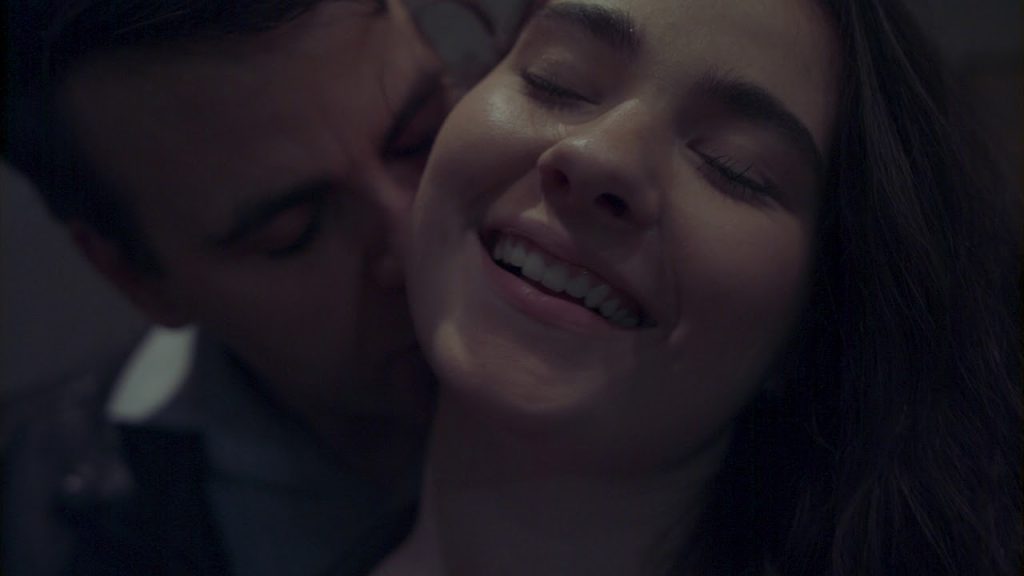
Shane Becker has built his life around women, sex and short-term desire, but meeting Lily forces him to confront the emotional damage underneath that lifestyle. Chaste turns one man’s attempt to live differently into a relationship drama about sexual addiction, self-control and whether finding real intimacy requires changing yourself first.
Why This Movie Matters Right Now: When Dating Stops Feeling Meaningful
Chaste arrives at an interesting cultural moment because Shane’s problem goes beyond simply finding the right woman. He is a womanizer whose repeated pursuit of sex has become destructive, while Lily represents the possibility of a relationship that asks something more difficult from him: emotional honesty, restraint and commitment. His decision to pursue a chaste life therefore turns romance into a test of whether he can change the behavior that has shaped his identity.
That gives the movie relevance beyond its specific story. Contemporary dating offers enormous choice and increasingly casual ways to meet people, but more choice does not automatically create stronger relationships. Chaste approaches that tension from an extreme personal position, asking whether stepping away from constant sexual pursuit can create room for intimacy that feels more substantial.
➡️ Why It Matters: Chaste turns the search for love into a question of behavior: finding something real may require giving up the habits that keep relationships temporary.
Should You Watch It?: Romance With a More Serious Edge
Chaste is best suited to viewers who prefer relationship dramas that explore what people bring into romance rather than simply whether two characters will end up together. Shane’s attraction to Lily creates the romantic entry point, but the deeper story is his confrontation with sexual addiction, painful memories and patterns of behavior that cannot disappear simply because he has met someone new.
That makes the movie potentially more reflective than a conventional date-night romance. The attraction is not a fantasy about finding a perfect partner who automatically changes your life; it is watching whether Shane can take responsibility for himself before he is capable of building the relationship he says he wants.
➡️ Viewing Recommendation: Best for adult viewers interested in intimate relationship dramas about desire, addiction, emotional baggage and the difficult work behind lasting change.
Why Everyone Is Talking About It?: Chastity Becomes the Provocation
The title itself gives Chaste an unusual conversation hook. In a movie landscape filled with dating, sex and romantic pursuit, a story about a self-described womanizer attempting to stop that cycle and live chastely immediately reverses expectations. Shane’s struggle between sexual compulsion and meaningful intimacy gives the movie a premise capable of generating discussion around whether abstinence represents repression, recovery, discipline or a route toward healthier relationships.
There is also an independent-film story behind the project. Chaste is Cole Meyer’s first feature, was produced on a micro-budget through The Cinematics, features H.T. Altman alongside Sarah DeYong and Jamie Houk, and has since secured a distribution deal. That gives the film another useful conversation angle: a locally built Twin Cities production moving from independent filmmaking into commercial distribution.
➡️ Viral Potential: “A womanizer decides to become chaste to find real love” is an unusually direct hook because audiences can immediately have an opinion about it. The contrast between modern sexual freedom and voluntary restraint gives the title natural debate value. Positioning the movie around that contradiction could create stronger conversation than selling it as a conventional independent romance.
Why Chaste Stands Out: Romance Starts With Changing Yourself
Many romantic dramas make meeting another person the catalyst that solves emotional dissatisfaction. Chaste appears to take a less comfortable route: Lily may awaken Shane’s desire for something different, but she cannot simply erase the compulsive behavior and unresolved past that he brings into the relationship. The central romantic obstacle consequently exists inside Shane as much as between Shane and Lily.
That gives Chaste a distinct position beside lighter dating movies and traditional redemption romances. Sexual addiction, chastity, painful memory and romantic possibility occupy the same story, allowing the film to explore the distance between wanting a meaningful relationship and actually becoming capable of maintaining one. Love is therefore less a reward than a reason Shane finally has to confront himself.
➡️ Cinema Insight: Chaste distinguishes itself by making self-control and emotional accountability part of the romantic journey rather than treating attraction itself as the solution.
Movie Trend: Modern Romance — The Return of Real Relationships
Chaste fits a form of Modern Romance moving away from endless romantic choice and toward questions about what makes relationships meaningful enough to last. Shane has already experienced the opposite model: repeated sexual encounters and womanizing have not produced emotional stability. His attraction to Lily therefore creates a conflict between two versions of intimacy—immediate desire and the slower possibility of emotional commitment.
The broader trend is not necessarily a rejection of casual dating. It is a renewed cinematic interest in what happens after audiences become familiar with swiping, situationships, hookup culture and relationships built around unlimited choice. Movies can increasingly ask what people actually want once novelty stops being enough: trust, emotional availability, commitment, stability and the feeling that another person genuinely matters.
➡️ Movie Trend: Modern Romance is moving beyond simply finding someone attractive and back toward the harder question of building something real—using commitment, emotional honesty and personal change as the new romantic stakes.
Viewer Profile: Relationship Realists — Adults Rethinking Modern Dating
The strongest audience is likely to be adults and younger adults interested in relationship stories with a psychological or personal-growth dimension, broadly spanning viewers in their 20s through middle age rather than teenagers or children. Shane’s sexual behavior, addiction and adult relationships make the subject matter inherently mature. The story can potentially connect across men and women: male viewers may recognize the pressure surrounding sex, masculinity and emotional avoidance, while female viewers can engage with the consequences those behaviors have for partners and relationships. The premise itself does not suggest a strongly gender-exclusive audience.
Lifestyle and attitude are more useful than precise demographics. Chaste is positioned for viewers who follow independent cinema, relationship dramas, character studies and conversations around modern dating, self-improvement, emotional health and commitment. It can also speak to audiences experiencing dating fatigue or questioning whether constant romantic choice is producing meaningful connection. The micro-budget independent identity gives it additional relevance for viewers and filmmakers interested in regional American cinema outside the studio system.
➡️ Audience Insight: Chaste has the clearest opportunity with adult relationship audiences who are less interested in idealized romance and more interested in why people struggle to create the intimacy they say they want.
What This Movie Means for the Industry: Romance Can Move Beyond the Meet-Cute
Chaste points toward an opportunity for independent filmmakers to explore romance through behavioral problems audiences already recognize. Instead of relying on a high-concept meet-cute, celebrity fantasy or idealized couple, the dramatic engine can come from the habits preventing someone from forming a healthy relationship. Dating fatigue, commitment avoidance, sexual compulsion, loneliness and emotional unavailability can all become accessible romantic conflicts when attached to recognizable characters.
Its production story matters here as well. Cole Meyer and H.T. Altman built Chaste as a micro-budget feature through The Cinematics before securing distribution, demonstrating how character-driven relationship stories can be developed outside the conventional studio pipeline. For independent producers, the opportunity is to combine an immediately understandable emotional problem with a provocative hook strong enough to differentiate a smaller movie in a crowded romance market.
➡️ Industry Insight: Independent romance can compete through specificity rather than scale—using recognizable modern relationship problems and a provocative central choice to create a clearer identity.
Creative Analysis: Desire Becomes a Fight for Change
Storytelling: Love Forces Shane to Face Himself
The story is built around an internal obstacle rather than a conventional romantic complication: Shane is a womanizer struggling with sexual addiction when Lily enters his life and triggers painful memories from his past. That structure makes the pursuit of love inseparable from his attempt to change, giving the romance a personal-recovery dimension rather than allowing a new relationship to function as an automatic solution.
Direction: Cole Meyer Keeps the Story Character-First
As writer, director and editor, Cole Meyer has unusually direct control over the film’s perspective, and his own description of Chaste emphasizes a moving drama centered on Shane’s unpredictability rather than a conventional romantic fantasy. Making the film as a first micro-budget feature also naturally places emphasis on character, performance and intimate dramatic conflict rather than spectacle.
Performances: Shane and Lily Carry the Emotional Conflict
H.T. Altman’s Shane occupies the center of the movie as a man caught between compulsive behavior and the possibility of change, while Sarah DeYong’s Lily provides the relationship that forces those contradictions toward the surface; Jamie Houk and a substantial Twin Cities supporting cast expand the world around them. The central performance challenge is consequently not simply romantic chemistry but making Shane’s desire for change believable without erasing the behavior that created his crisis.
Visual Style: Intimacy Drives the Movie’s Identity
Available filmmaker information describes Chaste as having carefully considered cinematography designed to support its emotional drama, while the Minneapolis–St. Paul production background gives the feature a regional independent identity. Rather than suggesting a glossy romantic world, that approach fits a story concerned with Shane’s unstable emotional state and the personal consequences of his relationships.
Themes: Desire Is Different From Intimacy
The central thematic distinction is between wanting another person and being capable of sustaining a meaningful relationship with them. Shane’s sexual addiction has made desire repetitive rather than fulfilling, while his attempt at chastity introduces restraint as a way of confronting what his previous behavior may have been avoiding; Lily therefore represents not simply another romantic target but a challenge to the way Shane has understood intimacy.
What Makes It Different: Romance Doesn’t Solve Everything
The most distinctive creative choice is putting chastity at the center of a story about a womanizer. Instead of increasing sexual freedom as the romantic journey progresses, Chaste reverses the familiar direction and asks whether voluntarily limiting desire can help someone understand what he actually wants, turning abstinence into a dramatic device for exploring addiction, memory, love and personal responsibility.
➡️ Creative Insight: Chaste builds its identity around an unusual reversal: the romantic journey begins when its protagonist tries to stop pursuing sex. That allows desire, restraint and emotional connection to work against each other rather than treating them as the same thing. The result gives a familiar redemption romance a more provocative behavioral conflict.
Final Verdict: Real Love Starts With Real Change
Chaste has its clearest identity when viewed not simply as a romance but as a story about whether someone accustomed to pursuing desire can learn to sustain intimacy. Shane’s attraction to Lily gives the movie its emotional direction, but his sexual addiction and unresolved memories prevent the relationship from becoming an easy rescue fantasy. That makes personal responsibility as important as romantic chemistry.
Its independent production background also suits the material. Rather than requiring a large-scale concept, the movie depends on an uncomfortable but easily communicated question: can someone who has built his identity around sexual conquest genuinely choose another way of living? That gives Chaste a specific place within contemporary relationship cinema and connects naturally with wider conversations about dating fatigue, emotional availability and the renewed appeal of commitment.
➡️ Verdict: Chaste turns chastity into something more dramatically interesting than abstinence—it becomes a test of whether Shane can replace compulsive desire with genuine emotional connection.
Quick Facts: Desire, Restraint and Real Connection
|
H.T. Altman, Sarah DeYong, Jamie Houk |
|
|
Modern Romance — The Return of Real Relationships |
|
|
Shane Becker, a photographer and womanizer confronting destructive sexual behavior |
|
|
Lily enters Shane’s life as he attempts to leave his old patterns behind |
|
|
Sexual addiction, intimacy, self-control, painful memory, love and personal change |
|
|
Adult relationship-drama and independent-film audiences |
|
|
Cole Meyer’s first feature, developed as a micro-budget independent production |
|
|
A womanizer attempts to live chastely while pursuing a meaningful relationship |
|
|
An unconventional romance that makes changing yourself as important as finding someone to love |
If You Liked Chaste: Modern Romance Gets Real
These recent movies also question the assumptions surrounding contemporary dating rather than treating romance as a simple search for the perfect partner. They connect with Chaste through characters forced to decide whether attraction, compatibility and endless romantic choice are enough—or whether a meaningful relationship demands something deeper.
Materialists (2025) by Celine Song: Love Is More Than a Checklist
A successful New York matchmaker has learned to evaluate romance through money, status and compatibility until her own relationships make that logic much harder to maintain. Materialists turns contemporary dating into a conflict between the person who appears perfect on paper and the imperfect emotional connection that cannot be reduced to a list of desirable qualities.
➡️ Why It Connects: Like Chaste, Materialists questions whether modern romantic behavior is actually helping people find what they want. Both move beyond attraction toward the more uncomfortable question of what makes a relationship emotionally real.
Oh, Hi! (2025) by Sophie Brooks: When Casual Means Different Things
Iris believes a romantic weekend with Isaac means their relationship is becoming serious, only to discover that he sees their connection very differently. What begins as a familiar mismatch between romantic expectations and commitment becomes a much darker comedy about what happens when two people have completely different definitions of the same relationship.
➡️ Why It Connects: Chaste asks whether a man accustomed to casual sexual relationships can choose commitment; Oh, Hi! examines the chaos created when one person wants commitment and the other refuses to define the relationship the same way.
➡️ Where to Watch: US
Final Insights: Real Relationships Are Becoming Aspirational Again
Modern romance is increasingly interesting when it moves beyond the mechanics of meeting someone. Dating apps, casual relationships and unlimited romantic choice have made finding another person easier to imagine, but they have also created new storytelling territory around commitment, emotional availability and the difference between having options and feeling connected. Chaste pushes that conversation to an extreme by making its protagonist voluntarily step away from sexual pursuit in order to discover whether he can build something more meaningful.
The opportunity for filmmakers is to treat commitment not as the automatic ending of a romance but as a dramatic challenge in itself. Characters can struggle with giving up alternatives, changing destructive habits, becoming emotionally vulnerable or accepting that a lasting relationship demands more than chemistry. That gives contemporary romance a fresh source of conflict while reconnecting the genre with something audiences have always understood: finding someone is only the beginning; learning how to build a relationship is the harder story.
➡️ Recommendation: Filmmakers should explore commitment as an active choice rather than the predictable reward at the end of a romance. Producers can build contemporary relationship stories around recognizable pressures such as dating fatigue, emotional avoidance, casual intimacy and fear of commitment, then give those tensions a simple character-led hook. Distributors should market the central relationship dilemma first, because audiences are more likely to engage with a provocative question about modern love than with another generic promise of romance.