


MX | 2024 | 1h 48m | Family Drama, Social Drama
When Someone Disappears, Everyone Left Behind Has to Keep Living
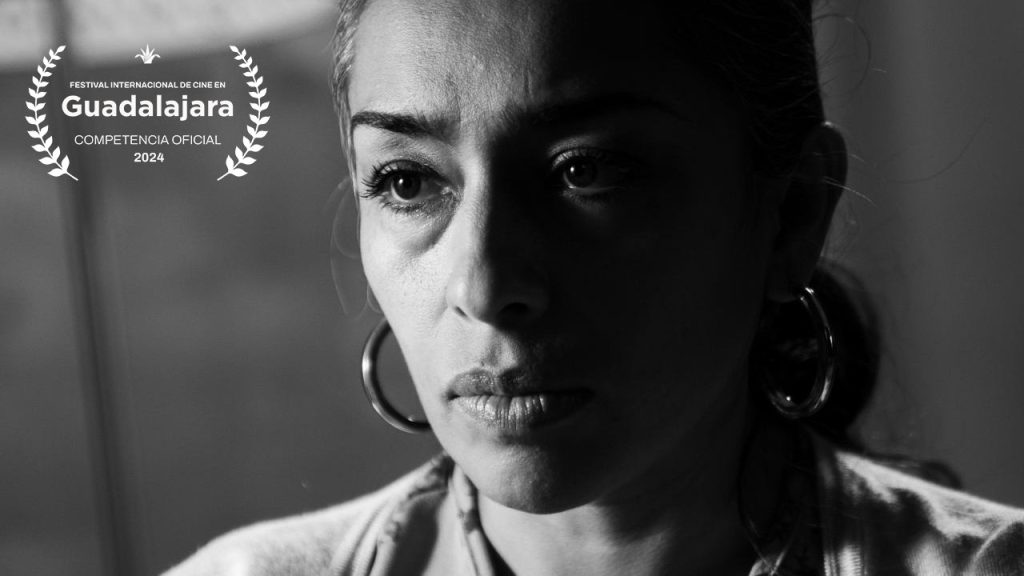
Dalia is a 42-year-old Mexico City subway driver whose husband suddenly disappears without leaving a trace. What begins as a search for one missing man gradually destabilizes everything around her: her work, her relationship with her two children, her affair and her ability to navigate a city whose institutions seem incapable of responding to her loss.
Alejandro Gerber Bicecci is less interested in turning that disappearance into a conventional mystery than in showing what happens to the people who remain. Dalia moves through procedures, suspicions and investigations while repeatedly confronting institutional and social indifference. The director has described the film as an intimate story about a woman confronting generalized indifference around her husband’s disappearance rather than a heroic search narrative.
➡️ Movie Insight: Dead Man’s Switch makes disappearance the beginning rather than the conclusion of the tragedy. Dalia must continue being a mother, worker and partner while uncertainty consumes the structure of her everyday life. The missing person becomes an absence around which an entire family must reorganize itself.
Why This Movie Matters Right Now: Disappearance Is Also a Crisis for the Families Left Behind
Stories about missing people frequently concentrate on solving the mystery: where did the person go, who was responsible and can they still be found? Dead Man’s Switch shifts attention toward another question—what happens to a family when there is no answer? Gerber has explicitly connected Dalia’s experience with the reality faced by families living with disappearances in Mexico, while emphasizing society’s relationship with the violence rather than constructing a straightforward denunciation of government inaction.
That makes the film’s family dimension particularly important. Dalia’s relationship with her two children deteriorates alongside her work and intimate relationships, while administrative processes and repeated revictimization prevent disappearance from ever becoming a private grief. The family cannot mourn because it does not know what happened, yet it cannot continue unchanged either.
➡️ Why It Matters: Disappearance creates a form of loss without closure. Families remain suspended between hope, grief and the obligation to continue everyday life. Dead Man’s Switch turns that emotional limbo into the center of a family drama.
Should You Watch It?: A Difficult Family Drama Where Uncertainty Becomes Everyday Life
Dead Man’s Switch is best suited to viewers interested in socially grounded family dramas rather than conventional missing-person thrillers. There is investigation and suspense, but the film repeatedly returns attention to Dalia herself: her exhaustion, relationships, work and growing realization that the systems surrounding her may never provide the certainty she needs.
Adriana Paz is the principal reason to enter that difficult emotional territory. Her performance received a Silver Ariel nomination for Best Actress, while Noé Hernández received a supporting-actor nomination. The film also attracted positive critical attention for Paz’s layered performance and its social-realist treatment of disappearance.➡️ Viewing Recommendation: This is a film for viewers comfortable with uncertainty rather than clean resolution. Its emotional power comes from watching ordinary responsibilities continue while Dalia’s private world disintegrates. Adriana Paz gives that experience its human center.
Why Everyone Is Talking About It: Adriana Paz Turns a National Crisis Into an Intimate Story
Dead Man’s Switch premiered in the Mezcal Competition at the 39th Guadalajara International Film Festival, placing it among the festival’s Mexican fiction selections. It subsequently built recognition around Adriana Paz’s central performance and received four major nominations documented in the supplied awards material.Its reach has continued beyond the initial festival circuit. The film has appeared internationally at festivals and educational/cultural distribution channels, while its subject gives the project significance beyond conventional festival discovery. The Mexican Film Institute describes it as a new perspective on both violence and Mexico City, with the Metro transformed into an environment populated by figures that feel simultaneously ghostly and realistic.
➡️ Viral Potential: Dead Man’s Switch is not built around conventional viral spectacle but around cultural urgency and a recognized lead performance. Festival exposure gives an intensely Mexican story a route toward international arthouse audiences. Adriana Paz provides the strongest bridge between the film’s difficult subject and wider discovery.
Why Dead Man’s Switch Stands Out: The Mystery Matters Less Than What Not Knowing Does to a Family
Missing-person movies usually generate momentum by accumulating clues. Someone disappears, relatives investigate, hidden information emerges and the narrative promises that eventually the audience will understand what happened. Dead Man’s Switch deliberately shifts the dramatic emphasis from solving disappearance to surviving it.
Gerber has said the film is neither a denunciation centered exclusively on government inaction nor an epic about a heroic woman searching for her husband. Instead, he focuses on generalized indifference across Dalia’s life. That makes disappearance less a narrative puzzle than an expanding emotional void affecting her children, work, relationships and identity.
➡️ Cinema Insight: Dead Man’s Switch changes the missing-person drama by refusing to make investigation its only destination. The real story is what uncertainty does to those who remain. Disappearance becomes a continuing family condition rather than simply a mystery waiting to be solved.
Movie Trend: Family Drama — When Disappearance Leaves Families Searching for Answers
Trend Formula:family routine → loved one disappears → no explanation → search begins → uncertainty replaces normality → institutions fail to provide answers → relationships fracture → hope and grief coexist → family remains suspended → life must continue without closure
Disappearance is becoming powerful material for family drama because it creates something conventional bereavement cannot: absence without certainty. Death permits mourning, however painful; disappearance leaves relatives moving between the possibility that someone could return and the fear that they never will.
Dead Man’s Switch places that tension inside Dalia’s everyday relationships. Her husband’s disappearance destabilizes her role as mother, worker and intimate partner while the outside world continues functioning around her. The family’s inability to obtain an answer becomes the mechanism through which every other relationship is tested.
➡️ Movie Trend: Family dramas are using disappearance to explore what happens when loss arrives without closure. The search for the missing person becomes inseparable from the struggle to preserve the family that remains. Dead Man’s Switch turns uncertainty itself into the force breaking that family apart.
Viewer Profile: Social Realists – Adult Arthouse Viewers Discovering Contemporary Latin American Cinema
Social Realists are viewers attracted to character-driven cinema that connects intimate lives with larger social conditions. They are more likely to discover films through festivals, critical coverage, awards, curated platforms and international cinema recommendations than through mainstream genre marketing.
Dead Man’s Switch fits this audience particularly well because it refuses to separate Dalia’s personal crisis from the environment surrounding her. Mexico City’s Metro, bureaucracy, violence and social indifference are not background details; they continually shape the family’s experience of disappearance.
|
Culturally engaged, urban and festival-aware |
|
|
Social realism, family drama, contemporary Latin American cinema and international arthouse |
|
|
Selective viewing across curated services, festival discoveries and critically recognized international releases |
|
|
Driven by performances, filmmakers, festivals, awards and social relevance |
➡️ Audience Insight: Social Realists look for cinema where personal stories reveal something larger about the society surrounding them. Dead Man’s Switch offers exactly that intersection through Dalia’s family and Mexico’s disappearance crisis. Festival recognition and Adriana Paz’s performance provide natural discovery signals for this audience.
What This Movie Means for the Industry: Social Issues Become More Powerful When the Family Comes First
Dead Man’s Switch demonstrates why socially engaged cinema does not necessarily need to begin with institutions, statistics or political argument. Gerber instead begins with Dalia. The scale expands naturally because every obstacle she encounters reveals another part of the environment surrounding disappearance.
That approach makes difficult social subjects more internationally accessible without stripping away their local specificity. A viewer does not need extensive prior knowledge of Mexico’s missing-person crisis to understand the terror of a partner failing to come home or a family being unable to discover why. The personal experience becomes the gateway into the systemic issue.
➡️ Industry Insight: Social cinema can reach broader audiences when large issues are experienced through intimate relationships. Family drama provides filmmakers with an emotional structure capable of carrying difficult political and social realities. Dead Man’s Switch shows how local specificity and universal family fear can strengthen rather than compete with each other.
Creative Analysis: Turning Mexico City Into a Tunnel Without an Exit
The film’s creative strategy connects Dalia’s psychological state with the physical environment through which she moves every day. Mexico City’s underground Metro system becomes particularly important: tunnels, platforms, trains and repetitive journeys create a visual and narrative environment where movement does not necessarily mean progress.
Gerber and cinematographer Hatuey Viveros reinforce that idea through black-and-white photography. The director has explained that the aesthetic provides a container for the film’s realism, while its high contrast gives entirely realistic situations an unexpectedly horrific quality.
Storytelling: The Search Expands Into Every Part of Dalia’s Life
The disappearance supplies the narrative engine, but Dalia’s search repeatedly opens into other relationships and pressures. Her children, lover, colleagues, authorities and people connected to her missing husband all become part of an increasingly exhausting process.
That prevents the story from functioning simply as an investigation. Each potential route toward information also reveals another emotional or institutional complication.
Direction: Alejandro Gerber Bicecci Keeps the Crisis Intimate
Gerber’s stated intention is important to understanding the film. He deliberately rejects the idea of constructing Dalia as a heroic crusader and instead emphasizes an ordinary woman confronting widespread indifference.
That choice keeps vulnerability inside the character. Dalia can be frightened, exhausted, contradictory and imperfect without being required to become a symbolic hero for the issue the film addresses.
Performances: Adriana Paz Makes Uncertainty the Emotional Center
Adriana Paz carries the film as Dalia, with Noé Hernández as Carlos and Gina Morett as Marta among the principal supporting cast. The uploaded material confirms Paz’s Silver Ariel Best Actress nomination and Hernández’s supporting-actor nomination.The performance matters because Dalia cannot respond to a single confirmed tragedy. She has to move continuously between fear, suspicion, guilt, hope and the mundane obligations of ordinary life.
Visual Style: Black-and-White Mexico City Becomes a Psychological Landscape
The film was shot in black and white, with Mexico City serving as both location and dramatic environment.
IMCINE describes Hatuey Viveros’s cinematography as brutalist and Gerber’s Metro environment as a space where ghostly and realistic presences coexist. The visual strategy allows the city’s infrastructure to mirror Dalia’s experience: enormous systems surround her, yet none seem capable of leading her toward an answer.
Themes: Disappearance, Family, Indifference and Life Without Closure
The central theme is disappearance, but the movie expands it through family instability, institutional indifference, revictimization, guilt and uncertainty. Dalia is not only searching for her husband; she is discovering how quickly the structures that supposedly support ordinary life can become ineffective.
Her family becomes the emotional measure of those failures. Every day without an answer creates another day in which relationships must function around an absence that cannot be explained.
What Makes It Different: The Missing Person Becomes an Absence Rather Than a Mystery
Dead Man’s Switch is distinctive because it does not need the missing husband to remain the most important character. His absence becomes more narratively powerful than his physical presence.
The movie can therefore explore disappearance without becoming dominated by detective mechanics. What matters increasingly is not simply where he went, but what his absence does to everyone who cannot stop waiting for an answer.
➡️ Creative Insight: The Metro, black-and-white photography and missing-person narrative all revolve around the same idea of searching through darkness without knowing where the route ends. Dalia keeps moving even when emotional progress seems impossible. Form and story therefore reinforce the experience of living without closure.
If You Liked Dead Man’s Switch (2024): Families Living in the Shadow of Violence
These recent films similarly examine how violence extends beyond an individual event and reorganizes families, identities and everyday life.
Sujo (2024) by Astrid Rondero and Fernanda Valadez: A Child Inherits the Violence That Destroyed His Family
After a hitman is murdered, his four-year-old son Sujo grows up under the shadow of the violence that killed his father. Like Dead Man’s Switch, the movie focuses less on violence as spectacle than on the lives forced to continue after it.
➡️ Why It Connects: Both films examine how violence survives inside families after the immediate event has passed. Ordinary life becomes shaped by an absence that cannot simply be escaped. Mexican social reality remains inseparable from the characters’ most intimate relationships.
We Shall Not Be Moved (2024) by Pierre Saint-Martin: A Family Wound Becomes a Search for Justice
Socorro has spent decades unable to leave behind the death of her brother during the 1968 Tlatelolco massacre. When she believes she has identified the soldier responsible, unresolved family grief becomes an obsessive opportunity for justice and revenge.
➡️ Why It Connects: Both Mexican dramas show how unresolved violence refuses to remain in the past. Family relationships become shaped by a search that promises answers but also threatens the people still present. Each places an older woman’s emotional fixation inside a wider history of institutional violence.
➡️ Where to Watch: US
Emilia Pérez (2024) by Jacques Audiard: Disappearance Creates a New Family Reality
A cartel leader orchestrates a disappearance from the life shared with a wife and children before returning under another identity. Although stylistically radically different from Dead Man’s Switch, the film also places disappearance, organized violence and families living with incomplete knowledge inside a contemporary Mexican setting.
➡️ Why It Connects: Both stories understand disappearance as something that transforms the people left behind. Families are forced to construct new realities around information they do not possess. The films take dramatically different routes toward the same question of what absence does to intimate relationships.
➡️ If You Liked Insight: These films treat violence through the families required to live after it rather than simply through the people who commit it. Absence, grief and incomplete justice become forces capable of reshaping entire lives. Dead Man’s Switch belongs to a broader contemporary Latin American cinema examining what happens after violence enters the family.
Final Verdict: A Missing Husband Reveals Everything That Was Already Breaking
Dead Man’s Switch begins with an apparently simple dramatic question—where is Dalia’s husband?—but gradually makes another question more important: how long can a person continue searching when every institution, relationship and routine seems to be collapsing around the search?
Adriana Paz gives that question its emotional weight, while Gerber’s black-and-white Mexico City turns the everyday journey through the Metro into a powerful metaphor for uncertainty. The result is less a mystery about finding a missing man than a family drama about learning what disappearance does to those who remain.
➡️ Final Verdict: Dead Man’s Switch transforms disappearance from a mystery mechanism into a condition a family must learn to survive. Adriana Paz anchors its social observations in an intimate and complicated character rather than an idealized victim. Its strongest achievement is making the absence of one person reveal the fragility of everything surrounding him.
Quick Facts: A Family Search Becomes a Journey Through Institutional Indifference
|
Adriana Paz, Noé Hernández, Gina Morett |
|
|
Gabo Anguiano, Andrea Camacho, Mariel Molino, Ramón Medina |
|
|
Family Drama, Social Drama |
|
|
Production Design / Art Direction |
|
|
Albricias Producción, Corporativo Simplemente, JP&K Films, Gárgamel Estudio |
|
|
Juan Pablo Miquirray, Alejandro Gerber Bicecci |
|
|
Guadalajara International Film Festival — Mezcal Competition |
|
|
4 documented nominations, including Silver Ariel nominations for Adriana Paz and Noé Hernández |
|
|
Family Drama — When Disappearance Leaves Families Searching for Answers |
|
|
A subway driver searches for her missing husband while her family, work and personal life collapse around the unanswered disappearance |
|
|
A missing-person story where living without answers matters more than solving the mystery |
|
|
Disappearance, family, uncertainty, institutional indifference, revictimization, guilt, violence |
|
|
Adriana Paz’s central performance, stark black-and-white photography and an intimate approach to Mexico’s disappearance crisis |
The core technical credits are corroborated by the official IMCINE catalogue, which identifies Viveros on cinematography, Ríos Legaspi on editing, Otaola on music and Aguilar on art direction. The uploaded material confirms the 108-minute runtime, Mexico as country of origin and Mexico City as the filming location.
Final Insights: Disappearance Is Becoming a Story About the People Who Never Get to Stop Searching
Family dramas built around disappearance occupy an unusually powerful emotional territory because they remove the certainty normally required for grief. The missing person remains psychologically present precisely because nobody knows whether that absence is temporary or permanent. The family therefore cannot fully mourn, rebuild or return to the life it had before.
That makes disappearance particularly relevant for socially engaged cinema. A single missing person can expose institutional failure, violence, family tension and social indifference without reducing the characters to representatives of those issues. Dead Man’s Switch demonstrates how the strongest stories in this space can begin with a national crisis but ultimately remain focused on something profoundly intimate: what happens to a family when someone disappears and nobody can tell them why.
➡️ Final Insight: Disappearance stories are moving beyond the mystery of where someone went toward the emotional consequences of never knowing. Family drama makes that uncertainty visible through the people forced to continue living around an unresolved absence. Dead Man’s Switch shows why the families left searching may ultimately be more important than the mystery itself.