


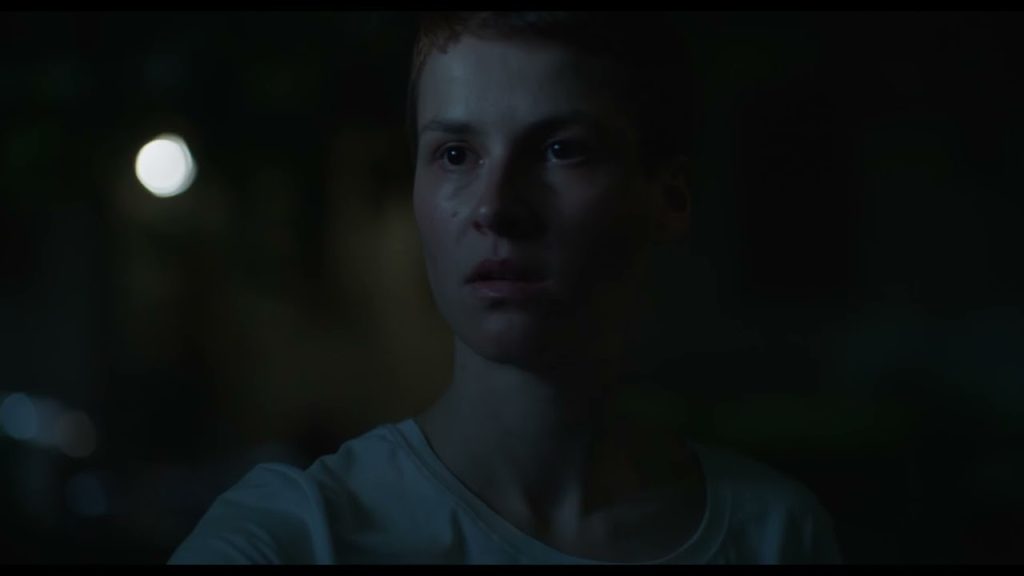
IT | 2026 | 79 min | Drama / Mother-Daughter Drama / Mythic
➡️ Where to Watch: IT — MYmovies ONE — available September 3, 2026 at 20:00 through September 8, 2026 at 20:00 on the Biennale Cinema Channel
A Mother Holds On as Her Daughter Breaks Away
Milan is almost empty during a hot, silent summer. Daria no longer leaves the apartment she shares with her young daughter Lia, filling their home instead with a carefully maintained ecosystem of plants. Lia looks after her mother, handles the shopping and ventures outside to work on an artistic project inspired by the ancient Greek myth of Demeter and Persephone.
Their quiet routine gradually becomes a story about separation. The images Lia films outside the apartment begin leading her toward a recognition of her own destiny, while Daria remains inside the enclosed world she has created. The ancient story of a mother unable to keep her daughter permanently beside her becomes a contemporary drama about care, dependence and the difficult moment when love also requires letting go.
➡️ Movie Insight: Demetra in esilio turns a mother and daughter living together into a modern version of Demeter and Persephone. Daria wants to preserve the world she shares with Lia, while Lia is beginning to discover a life beyond it. Their love makes separation more difficult, but separation may also be exactly what both need.
Why This Movie Matters Right Now: Growing Up Can Mean Leaving Someone You Love Behind
Mother-daughter stories often explore conflict between generations, but Demetra in esilio approaches that relationship through something quieter and more complicated: care. Lia’s life has become organized around Daria’s isolation. Leaving the apartment means temporarily leaving her mother alone, so even ordinary independence carries emotional responsibility.
That makes Lia’s growing desire for her own path especially important. Independence is not presented simply as rebellion against a controlling parent; it emerges from a relationship where affection, responsibility and dependence have become intertwined. The Demeter and Persephone myth turns that into a recognizable contemporary question: how can a daughter become independent without feeling that choosing her own life means abandoning her mother?
➡️ Why It Matters: Demetra in esilio understands that letting go can be one of the hardest parts of loving another person. A daughter’s independence can feel like loss to a mother while still being necessary for the daughter to grow. The film makes that emotional contradiction the center of its modern myth.
Should You Watch It?: A Quiet Mother-Daughter Drama Where Myth Enters Everyday Life
This should appeal most strongly to audiences comfortable with atmospheric, symbolic and visually driven cinema. The story is deliberately small: an apartment, an almost empty Milan, a mother who stays inside and a daughter whose journeys outside gradually begin opening another possibility. The drama comes from small changes in routine rather than large external events.
The mythology gives those ordinary details another dimension. Plants, summer heat, seasonal change, disappearance, images and Lia’s movement between inside and outside can echo Demeter and Persephone without requiring the movie to become a literal retelling of Greek mythology. Instead, the myth enters contemporary life through the mother-daughter relationship.
➡️ Viewing Recommendation: Watch it for an intimate mother-daughter story where care and independence gradually pull in opposite directions. Its strongest audience should be viewers interested in slow cinema, contemporary mythology, female relationships and films where visual ideas carry as much meaning as conventional plot. Its compact runtime also suits the film’s contained and concentrated emotional world.
Why Everyone Is Talking About It?: Biennale College Cinema Brings a Modern Demeter and Persephone to Venice
Demetra in esilio arrives at the 83rd Venice International Film Festival through Biennale College Cinema, giving Maria Giovanna Cicciari’s first feature a major international launch. Its Venice positioning immediately introduces Cicciari as a filmmaker using a small contemporary story to explore much larger ideas around motherhood, independence and mythology.
The concept gives the film an equally strong cultural hook. Cicciari takes one of mythology’s most recognizable mother-daughter relationships and relocates its emotional logic to a suffocating Milan summer. The changing seasons of the original myth become connected to something deeply human: a mother confronting the possibility that her daughter cannot remain permanently inside the world they share.
➡️ Viral Potential: The Demeter and Persephone connection gives Demetra in esilio an idea audiences can immediately recognize and discuss. Its plant-filled apartment, deserted summer city and mother-daughter separation also offer distinctive visual hooks around that concept. Venice can introduce the film as both an intimate family drama and a contemporary reinvention of an ancient story.
Why Demetra in esilio Stands Out: An Ancient Myth Becomes an Everyday Mother-Daughter Story
Demetra in esilio does not need gods, underworlds or supernatural spectacle to retell Demeter and Persephone. Cicciari finds the myth inside ordinary behavior: a mother remains at home, a daughter repeatedly leaves and returns, and their shared routine becomes increasingly difficult to preserve. The enormous mythology is reduced to two people whose lives can no longer remain permanently synchronized.
The contrast between Daria’s plants and Lia’s camera makes that transformation especially interesting. Daria creates life inside the apartment, attempting to maintain a controlled ecosystem, while Lia points her camera toward the outside world. One builds inward; the other increasingly looks outward. Those opposing movements give the mother-daughter relationship a visual structure before either character needs to explain it.
➡️ Cinema Insight: Demetra in esilio shows how mythology can become powerful without being recreated literally. Demeter and Persephone survive through the emotional pattern of a mother fearing separation and a daughter moving toward another life. Ancient mythology becomes recognizable because the human relationship underneath it has never disappeared.
Movie Trend: Myth Meets Modern Life — Mothers, Daughters and Letting Go
Mythology becomes especially interesting when filmmakers bring its emotional structures into recognizable contemporary lives instead of simply recreating ancient worlds. Gods can become ordinary people, mythical journeys can become psychological ones and stories thousands of years old can reveal how little certain relationships have changed.
Demetra in esilio makes that approach particularly intimate. Demeter’s grief over losing Persephone becomes Daria’s difficulty facing Lia’s movement toward independence, while Persephone’s movement between worlds becomes Lia’s repeated movement between the enclosed apartment and the city outside. The mythology gives a familiar mother-daughter transition a larger emotional dimension.
➡️ Movie Trend: Myth Meets Modern Life — Mothers, Daughters and Letting Go uses ancient stories to reveal emotions that remain immediately recognizable today. Mythology gives ordinary relationships a larger symbolic dimension without taking away their intimacy. Demetra in esilio makes Demeter and Persephone feel contemporary by finding their story inside a mother who holds on and a daughter who increasingly needs to move forward.
Viewer Profile: Audiences Drawn to Mother-Daughter Stories, Mythology and Quiet Arthouse Cinema
Demetra in esilio should connect most strongly with international arthouse and festival audiences comfortable with repetition, symbolism and restrained storytelling. Its mother-daughter relationship creates an accessible emotional foundation, while its use of Greek mythology, artistic filmmaking and an almost deserted Milan gives that relationship a more experimental cinematic language.
The film also has a clear entry point for younger adult audiences through Lia. She balances responsibility toward her mother with a growing need to follow her own creative instincts. That tension between caregiving and independence can resonate beyond the film’s mythological framework, particularly with viewers familiar with the emotional difficulty of separating their own future from family expectations.
|
International arthouse, festival and female-led drama audiences |
|
|
Viewers interested in mythology, mother-daughter relationships and experimental cinema |
|
|
Primarily young adults and adults |
|
|
Broad audience, with particularly strong relevance to audiences drawn to female-centered relationship stories |
|
|
Broad, with strongest appeal among culturally engaged cinema audiences |
|
|
Arts-oriented, culturally curious, visually minded and interested in literature, mythology and contemporary art |
|
|
Film festivals, independent cinema, MUBI-style discovery, slow cinema and visually driven European arthouse |
➡️ Audience Insight: The strongest audience connection comes from the tension between caring for someone and needing a life beyond them. Daria and Lia make that conflict specific to a mother and daughter, but the emotional experience is much broader. The mythology deepens the story without making its central relationship difficult to recognize.
What This Movie Means for the Industry: Ancient Stories Can Create New Contemporary Cinema
Demetra in esilio demonstrates how mythology can give independent filmmakers recognizable intellectual and emotional foundations without requiring large-scale period production. Cicciari does not need to reconstruct ancient Greece because the essential Demeter and Persephone story survives through separation, maternal attachment, disappearance, return and a daughter’s movement toward another world.
That approach creates opportunities for filmmakers working with modest production resources. A contained story built around an apartment, Milan locations and a small group of performers can still carry the cultural weight of an ancient myth. Its scale remains intimate while the mythology makes its emotional world feel considerably larger.
➡️ Industry Insight: Mythology can give contemporary independent cinema powerful storytelling foundations without requiring literal adaptations or expensive spectacle. Familiar myths already contain recognizable conflicts around family, desire, power, loss and independence. Demetra in esilio shows how filmmakers can translate those structures into small modern stories that still carry a much larger cultural memory.
Creative Analysis: Turning a Mother-Daughter Routine Into a Modern Myth
Cicciari’s central creative idea is deceptively simple: place Demeter and Persephone inside an apartment in contemporary Milan. Daria and Lia do not need to behave like mythological characters because their relationship gradually reproduces the emotional structure of the myth through care, separation and the fear of change.
The film’s creative language grows from repetition. Lia shops, cares for her mother and works on her art project; Daria remains surrounded by the plant world she has created. Small variations begin disrupting that routine until a life that appeared suspended can no longer remain unchanged.
Storytelling: Repetition Makes Change Feel Inevitable
Lia’s days create a loop rather than a conventional dramatic progression. Routine initially appears to preserve stability, but each repetition can contain small differences that gradually reveal emotional change underneath the surface.
That makes Lia’s movement toward independence more meaningful. She does not simply rebel against her mother; her desire accumulates through repeated journeys outside, the images she records and the growing recognition that another life exists beyond the apartment.
Direction: Maria Giovanna Cicciari Turns Myth Into Everyday Behavior
Cicciari makes the relationship between mythology and cinematic images central to the film. Persephone’s movement between worlds finds a contemporary equivalent in Lia’s repeated movement between the enclosed apartment and the outside city.
That allows Lia’s camera to become more than a character detail. Filming the outside world gives her a way of looking beyond the life she currently inhabits, while the images gradually become connected to her recognition of another possible future.
Performances: A Mother and Daughter Carry the Emotional Myth
Ioana Miruna Drajneanu, Roberta Rovelli and Michele Di Stefano form the principal cast, with the mother-daughter relationship providing the film’s emotional center.
The relationship requires intimacy without simplicity. Daria’s dependence cannot merely make her an obstacle to Lia’s freedom, just as Lia’s desire for independence cannot reduce her care for her mother to resentment. The drama becomes meaningful because love and separation can both be necessary at the same time.
Visual Style: Plants, Images and an Empty Milan Divide Two Worlds
The cinematography has a strong visual opposition to explore. Daria surrounds herself with plants inside the apartment, creating an artificial ecosystem that can be protected and maintained, while Lia increasingly uses her camera to encounter the world outside.
The summer setting intensifies that separation. An apparently endless season can represent the emotional state Daria wants to preserve, while Lia’s movement outward introduces the possibility that change must eventually arrive.
Themes: Loving Someone Also Means Allowing Them to Leave
The central theme is separation, but the film makes separation inseparable from care. Lia does not simply need to escape Daria; she must discover whether caring for her mother has become incompatible with recognizing her own desires.
The Demeter and Persephone myth gives that conflict unusual emotional scale. A mother’s inability to accept her daughter’s disappearance changes the seasons in the ancient story; here, the same fear becomes an intimate struggle over whether mother and daughter can continue living inside the same emotional cycle.
What Makes It Different: The Daughter Finds Her Future Through Images
Lia’s artistic project gives the film a distinctive connection between mythology and cinema itself. She is not simply studying Demeter and Persephone; she films the city and gradually discovers something about her own future through the images she creates.
Art therefore becomes part of Lia’s emancipation. Looking outward through the camera becomes a way of imagining an existence beyond the apartment, while filmmaking allows an ancient myth to reveal something about the life she is already living.
➡️ Creative Insight: Demetra in esilio makes an ancient myth feel contemporary by reducing it to the emotional distance slowly opening between a mother and daughter. Plants, repetition, summer heat and Lia’s camera turn their apartment into a world that feels increasingly difficult to leave and impossible to preserve forever. Its creative power comes from understanding that letting go can simultaneously feel like loss, growth and love.
If You Liked Demetra in esilio (2026): Mothers, Daughters and Stories Between Reality and Myth
These films connect with Demetra in esilio through mother-daughter relationships, separation, mortality, memory and worlds where everyday reality begins touching something more symbolic or fantastical. Each approaches the relationship differently, but all understand that mothers and daughters can love one another while still needing emotional space between them.
Tuesday (2024) by Daina O. Pusić: A Mother Must Face the Possibility of Losing Her Daughter
Zora struggles to accept that her terminally ill daughter Tuesday is dying, until Death itself arrives in the unexpected form of a talking macaw. Daina O. Pusić turns a painful mother-daughter separation into a strange contemporary fable where fantasy makes an almost unbearable emotional reality visible.
➡️ Why It Connects: Both movies use an unreal or mythic framework to explore a deeply human mother-daughter experience. Daria fears Lia moving toward a life beyond her, while Zora must confront a separation far more final; both stories ask whether love can survive the act of letting someone go.
Petite Maman (2021) by Céline Sciamma: A Daughter Discovers Her Mother as Another Person
After the death of her grandmother, eight-year-old Nelly encounters a mysterious girl in the woods who gradually transforms her understanding of her own mother. Céline Sciamma uses gentle fantasy to collapse generations and allow a daughter to see maternal identity from an entirely different perspective.
➡️ Why It Connects: Both films turn a mother-daughter relationship into something larger through a simple fantastical idea. Petite Maman bends time while Demetra in esilio bends mythology, but each uses cinema to reveal that a mother has an identity beyond motherhood and a daughter must eventually discover a world of her own.
The Lost Daughter (2021) by Maggie Gyllenhaal: Motherhood Contains Love, Ambivalence and the Desire for Freedom
A woman’s seaside holiday becomes increasingly unsettled after observing a young mother and daughter, forcing her to confront memories of her own complicated experience of motherhood. Maggie Gyllenhaal rejects idealized ideas about maternal devotion and instead explores how love, exhaustion, identity and the desire for personal freedom can exist simultaneously.
➡️ Why It Connects: Demetra in esilio looks at separation largely through the daughter moving outward, while The Lost Daughter examines motherhood from the opposite direction. Together they complicate the idea that a healthy mother-daughter relationship requires permanent closeness and show how individual identity can struggle against expectations of unconditional maternal attachment.
➡️ If You Liked Insight: These movies connect because mother-daughter love never guarantees emotional simplicity. Care can become attachment, independence can resemble abandonment and separation can sometimes be necessary for a relationship to change. Demetra in esilio gives those tensions a mythological shape by turning the ancient cycle of Demeter and Persephone into a contemporary struggle between holding on and letting go.
Final Verdict: A Mother-Daughter Story Finds New Life Inside an Ancient Myth
Demetra in esilio has an elegantly simple idea: take the ancient relationship between Demeter and Persephone and discover it inside a mother and daughter living through a silent Milan summer. Maria Giovanna Cicciari does not need to retell mythology literally. Instead, Daria’s isolation, Lia’s caregiving, the plant-filled apartment and the daughter’s increasingly important journeys outside allow the old story to emerge through contemporary behavior.
What makes the film particularly intriguing is the way Myth Meets Modern Life remains connected to a recognizable emotional problem. Lia needs independence without ceasing to care about Daria, while Daria must confront the possibility that protecting their shared world could also prevent her daughter from finding her own. The mythology gives that intimate conflict scale, but the mother-daughter relationship keeps it human.
➡️ Final Verdict: Demetra in esilio looks designed for audiences drawn to quiet films where images, repetition and atmosphere gradually reveal the emotional story. Its modern Demeter and Persephone relationship turns a daughter’s independence into both a necessary beginning and a mother’s feared loss. For festival audiences interested in mythology, female relationships and formally adventurous Italian cinema, its simplicity could become its greatest strength.
Quick Facts: Demetra in esilio at a Glance
|
Ioana Miruna Drajneanu, Roberta Rovelli |
|
|
Ioana Miruna Drajneanu, Roberta Rovelli, Michele Di Stefano |
|
|
Drama / Mother-Daughter Drama / Mythic Drama |
|
|
Santiago Rivas Bao, Eva Rivas Bao |
|
|
Amarena Film / Biennale College Cinema |
|
|
Venice 2026 — Biennale College Cinema |
|
|
Myth Meets Modern Life — Mothers, Daughters and Letting Go |
|
|
Daria and Lia, a mother and daughter living together during a quiet Milan summer |
|
|
Lia’s growing desire for independence collides with her responsibility toward a mother who has withdrawn from the outside world |
|
|
The myth of Demeter and Persephone becomes a contemporary mother-daughter story about care, separation and finding an independent path |
|
|
Motherhood, daughterhood, care, independence, separation, mythology, desire, creativity and letting go |
|
|
A quiet contemporary reimagining of Demeter and Persephone that turns an ancient myth into an intimate story about a mother learning to let her daughter go |
Final Insights: Ancient Myths Are Finding New Meaning Inside Modern Relationships
Mythology remains powerful because its most memorable stories are often built around relationships that have never stopped being recognizable. Parents fear losing children, children need to leave parents, desire pulls people toward unfamiliar worlds and love cannot always prevent separation. Contemporary filmmakers can strip away gods and supernatural spectacle while preserving those emotional structures underneath.
Demetra in esilio demonstrates how intimate that approach can become. Demeter and Persephone are transformed into Daria and Lia, seasonal change becomes an oppressive summer moving toward inevitable transformation, and the daughter’s journey toward another world becomes the quieter process of recognizing her own desire. The result suggests that modern myth-inspired cinema does not need to make ancient stories bigger—it can make them smaller, closer and more human.
➡️ Final Insight: Myth Meets Modern Life works because ancient stories can make ordinary relationships feel newly visible. Demetra in esilio uses Demeter and Persephone to reveal the difficult moment when maternal care and a daughter’s independence can no longer occupy exactly the same space. Its broader cinematic idea is timeless: sometimes loving someone means accepting that their story must continue beyond the world built together.