


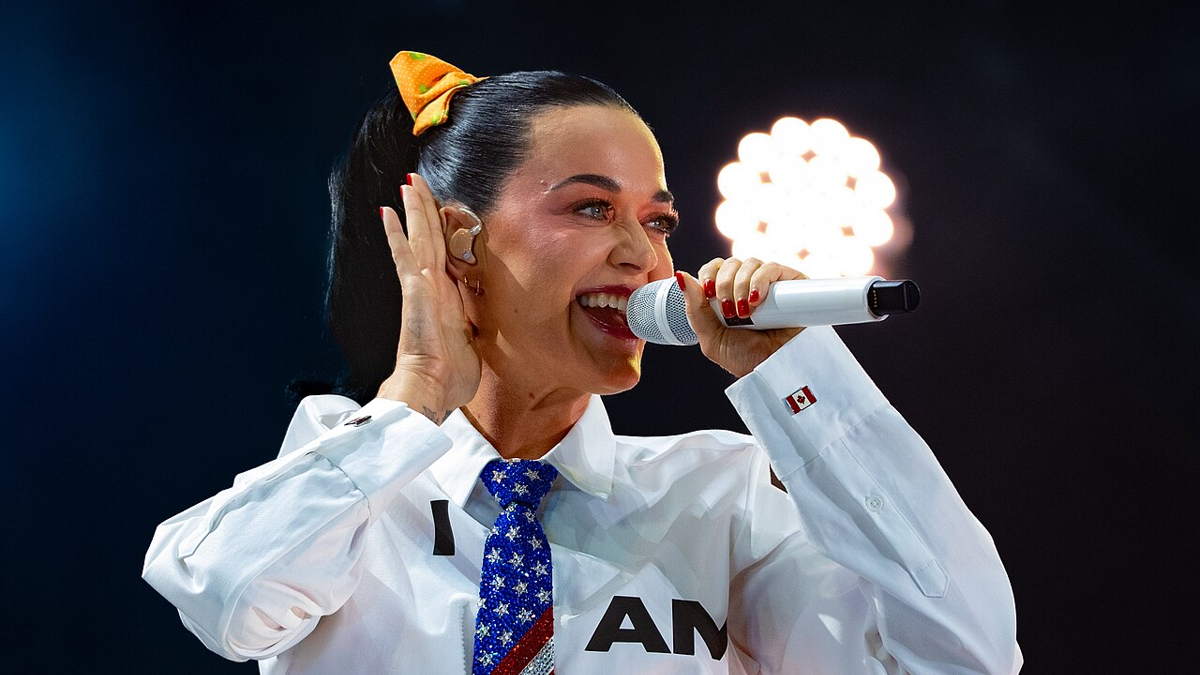
Photo Credit: Katy Perry by Camila Alves / CC by 4.0
A copyright case involving Dr. Luke enters settlement proceedings, but a third party has filed an intervention request, alleging an authorship stake.
This week, in the ever-shifting world of copyright infringement lawsuits, two parties on opposing sides of a copyright infringement lawsuit involving a South Dakota broadcaster and numerous songs, including those attributed to producer Dr. Luke, filed a notice of settlement stating that they had resolved the matter and expected to finalize the agreement within 30 days. But a third party asserts authorship and ownership interest in one of the allegedly infringed-upon tracks and has filed an intervention request. Now, it’s unclear in which direction things may turn.
The case, filed in the U.S. District Court for the District of South Dakota, concerns alleged unauthorized public performances of multiple copyrighted compositions, including “Hot N Cold” by Katy Perry. The ownership issues involve Lukasz Gottwald, better known as producer Dr. Luke—whose business relationships with prominent artists like Kesha have received substantial media coverage and public scrutiny.
On the defendants’ side is South Dakota’s Haugo Broadcasting, which is notably one of the four radio groups operating 15 stations that ASCAP sued back in June over allegedly broadcasting its members’ music without a proper license. This case is similar.
On October 6, both sides of the dispute filed a Notice of Settlement and Joint Motion to Stay Discovery and Further Proceedings, stating that they had reached a settlement in principle that resolved all claims and expect to finalize the agreement within 30 days. The parties asked the court to suspend further proceedings while they hashed out the details privately. The court granted that stay through November 6.
But a third party, songwriter Jonna Johnson, alleges that Dr. Luke actually stole “Hot N Cold” and other songs from Katy Perry’s One of the Boys from her and seeks to intervene in the case based on her asserted authorship and ownership interest in the song and related chain-of-title issues.
“My intervention materials include a declaration stating that, in early 2008, I had a handwritten songwriting notebook containing my compositions; that the notebook later went missing without my permission; that I had not authorized (Dr. Luke) or anyone else to remove, retain, reproduce, submit, publish, register, license, or claim ownership of its contents; and that I never signed any agreement transferring those rights,” Johnson told Digital Music News.
“The original parties are attempting to resolve the infringement litigation while my separately asserted interest in one of the compositions remains before the court through my intervention request.”
Johnson stresses that she is not suggesting that the settlement itself establishes wrongdoing, invalid ownership, or infringement by any particular publisher. Instead, she posits the question: What happens when a copyright enforcement action approaches settlement while a third party has already asserted an authorship or ownership interest in one of the works being enforced?
Indeed, the matter raises broader questions in the industry surrounding chain-of-title, publisher ownership, authorship disputes, and the treatment of competing ownership claims during copyright enforcement litigation.