


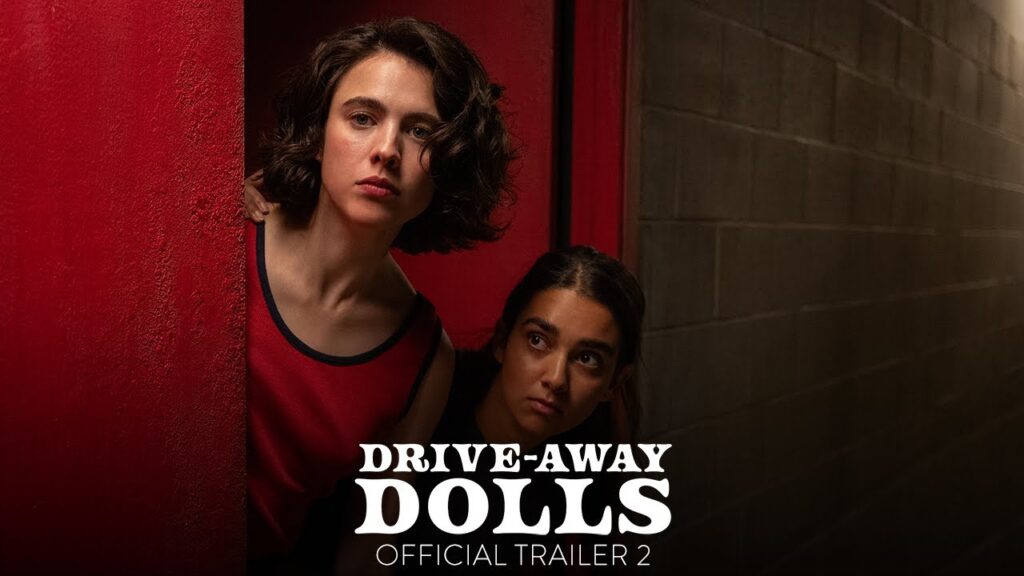
A chaotic queer road-trip comedy about freedom, desire, and absurd criminal misadventure
Sometimes escaping heartbreak leads directly into complete madness.
Drive-Away Dolls follows Jamie and Marian, two emotionally opposite friends who impulsively embark on a road trip to Tallahassee after heartbreak and personal frustration, only to accidentally become entangled with inept criminals chasing mysterious cargo. Ethan Coen and Tricia Cooke blend queer comedy, road-trip chaos, crime farce, sexual absurdity, and B-movie energy into a deliberately messy and playful cinematic experience. The film explores sexual freedom, friendship, emotional escapism, identity, impulsiveness, queer intimacy, and absurd criminality through stylized humor and intentionally exaggerated chaos. Its retro exploitation aesthetic and irreverent tone create a fast-moving but divisive comedic atmosphere throughout. Ultimately, the movie becomes both a queer crime comedy and a reflection on how emotional restlessness and reckless freedom can transform ordinary escape into surreal chaos and accidental liberation.
➡️ Implication: Queer road-trip comedies continue evolving through stylized absurdism and irreverent genre experimentation.
Why It Is Trending: Queer representation, Coen-brand curiosity, and chaotic comedy energy
Audiences increasingly engage with queer-led genre comedies that embrace absurdity and sexual irreverence unapologetically.
The film gained major attention as Ethan Coen’s first solo fiction feature without his brother Joel, alongside its openly queer road-trip premise and retro exploitation style. Viewers strongly connected with the movie’s unapologetically chaotic tone and sexually uninhibited humor. The project’s queer representation and B-movie aesthetic also strengthened online conversation and curiosity considerably. Audiences especially discussed the film’s balance between camp absurdity, crime-comedy structure, and queer buddy-road-trip storytelling.
➡️ Implication: Queer genre comedies increasingly attract attention through stylized irreverence and cult-style humor.
Elements Driving the Trend: Queer road-trip chaos, retro exploitation style, and crime farce
The film builds momentum through unpredictable comedy and intentionally exaggerated criminal absurdity.
Jamie and Marian’s contrasting personalities create comedic tension beneath the increasingly chaotic road-trip structure. Themes of sexual liberation and emotional impulsiveness strengthen the movie’s rebellious energy considerably. The film’s neon visuals, retro transitions, and intentionally campy tone amplify its cult-style identity throughout. Its refusal to take itself seriously creates both comedic freedom and tonal instability simultaneously. Together, these elements create a deliberately messy but energetic queer-comedy experience.
➡️ Implication: Camp-driven queer crime comedies increasingly define modern cult-comedy experimentation.
Virality of Movie (Social Media Coverage): Divisive reactions fueled by queer humor and chaotic tone
The film generated strong online discussion because of its openly queer comedy style and intentionally absurd execution.
Audiences frequently debated whether the movie successfully balanced Coen-style crime humor with queer road-trip comedy and camp absurdism. Social-media reactions strongly focused on the chemistry between Jamie and Marian, the outrageous sexual humor, and the intentionally chaotic storytelling structure. Some viewers praised the film’s irreverence and playful energy, while others criticized its fragmented plotting and inconsistent tone. This polarized response significantly strengthened the movie’s cult-style online visibility.
➡️ Implication: Experimental queer comedies increasingly generate engagement through divisive tonal experimentation and camp absurdity.
Critics Reception: Mixed but appreciative responses toward irreverent queer genre experimentation
Critical responses praised the film’s playful energy, queer representation, and stylized absurdism while criticizing its narrative inconsistency.
Reviewers highlighted Margaret Qualley for delivering chaotic comedic charisma and impulsive energy as Jamie. Geraldine Viswanathan also received praise for grounding the film emotionally through Marian’s awkward restraint and gradual emotional release. Critics frequently commended the movie’s camp style, retro visual experimentation, and unapologetic queer identity. However, many reviewers criticized the screenplay for tonal imbalance and underdeveloped plotting. The film’s intentionally messy structure became both its defining strength and primary criticism.
➡️ Implication: Queer genre comedies increasingly succeed through stylistic boldness and divisive experimentation.
Awards and Recognitions: Cult-style recognition driven by queer representation and visual identity
Drive-Away Dolls earned recognition primarily through queer representation, visual style, and cult-comedy identity rather than major prestige awards success. The film received a nomination for Outstanding Film – Wide Theatrical Release at the GLAAD Media Awards and a Queerty nomination for Comedy Movie at The Queerties. Ari Wegner earned a Golden Camera 300 nomination at the International Cinematographers’ Film Festival Manaki Brothers, while the movie won Best Comedy Poster at the Golden Trailer Awards. Geraldine Viswanathan also received a Girls on Film Award nomination for Best Female Orgasm on Screen.
➡️ Implication: Queer cult-comedies increasingly gain visibility through representation, visual style, and niche cultural recognition.
Director and Cast: A chaotic ensemble shaped by camp absurdity, queer energy, and crime-comedy irreverence
Directed by Ethan Coen with major creative collaboration from Tricia Cooke, the film prioritizes stylized absurdism, sexual irreverence, and chaotic comedic momentum over narrative precision.
Margaret Qualley delivers an uninhibited and wildly energetic performance as Jamie, balancing reckless charisma, emotional impulsiveness, and sexually liberated chaos throughout the road-trip disaster. Geraldine Viswanathan grounds the film emotionally as Marian through awkward restraint, dry humor, and gradual emotional release that contrasts Jamie’s overwhelming energy effectively. Beanie Feldstein strengthens the movie’s comedic instability through Sukie’s emotionally messy relationship dynamic and lingering romantic tension. Supporting performances from Pedro Pascal, Colman Domingo, Bill Camp, and Matt Damon reinforce the movie’s exaggerated crime-farce atmosphere and intentionally ridiculous tonal swings. Coen directs the ensemble through retro visual experimentation, abrupt tonal shifts, campy transitions, and chaotic pacing, allowing absurdity and queer irreverence to overpower traditional narrative realism deliberately.
➡️ Implication: Contemporary queer crime comedies increasingly rely on ensemble-driven chaos, camp stylization, and genre irreverence.
Conclusion: A messy queer road-trip comedy about freedom, desire, and accidental criminal chaos
Drive-Away Dolls transforms a simple road trip into a chaotic collision of sexual freedom, emotional escapism, absurd criminality, and campy genre experimentation. Its retro exploitation style and intentionally exaggerated tone create a divisive but highly energetic viewing experience. Ethan Coen and Tricia Cooke approach queer comedy through irreverence, B-movie absurdity, and stylistic chaos rather than polished mainstream structure. Margaret Qualley and Geraldine Viswanathan anchor the film through contrasting performances balancing impulsive chaos and awkward emotional sincerity. Its themes of sexual liberation, friendship, identity, escapism, and emotional recklessness remain culturally relevant within contemporary queer genre storytelling and cult-comedy culture. Ultimately, the movie becomes both a queer crime farce and a reflection on how emotional restlessness and reckless freedom can quickly spiral into bizarre and liberating unpredictability.
➡️ Implication: Camp-driven queer road-trip comedies will continue shaping modern cult-style indie comedy cinema.
What Movie Trend Is Followed: Queer camp road-trip comedies blending crime farce, sexual freedom, and retro absurdism
Drive-Away Dolls follows the growing trend of queer-led genre comedies that combine road-trip chaos, criminal absurdity, camp aesthetics, and unapologetically sexual humor into stylized cult-style entertainment experiences.
Rather than presenting queer identity through emotionally restrained prestige drama, the film embraces chaotic freedom, irreverence, vulgarity, and playful genre experimentation. Similar contemporary queer comedies increasingly blend crime stories, exploitation influences, retro aesthetics, and absurdist humor into intentionally messy but culturally expressive narratives. The movie also reflects broader audience interest in queer characters existing inside outrageous genre worlds rather than solely issue-driven storytelling. Its campy visual style and B-movie energy strengthen its cult-comedy identity throughout. This creates a loud, divisive, and intentionally chaotic queer-road-trip experience.
➡️ Implication: Camp-driven queer genre comedies continue reshaping contemporary cult-comedy cinema.
Trend Drivers: Audience fascination with irreverent queer storytelling and genre chaos
Audiences increasingly connect with queer films embracing humor, absurdity, and stylistic freedom unapologetically.
Narratives centered on impulsive queer protagonists and ridiculous criminal situations create stronger unpredictability than polished mainstream comedy structures alone. Viewers strongly engage with stories balancing sexual openness, emotional awkwardness, and camp absurdity simultaneously. The blending of retro exploitation style and modern queer comedy also strengthens online discussion and cult-style appeal considerably. These experimental projects often generate stronger niche fandom and internet conversation through divisive humor and chaotic energy.
➡️ Implication: Queer irreverence increasingly drives modern cult-comedy storytelling trends.
What Is Influencing Trend: Expansion of queer-led genre experimentation
Modern filmmakers increasingly place queer characters inside exaggerated genre-driven worlds rather than exclusively dramatic narratives.
Contemporary queer comedies now focus heavily on absurdity, camp aesthetics, crime farce, and road-trip chaos instead of prestige-oriented emotional realism alone. Films exploring queer friendship and sexual freedom through stylized comedy continue influencing indie and mainstream genre filmmaking strongly. Directors increasingly favor visual experimentation, tonal instability, and self-aware absurdism over conventional comedic structure. This storytelling style aligns closely with modern internet humor and cult-film culture.
➡️ Implication: Genre-driven queer experimentation increasingly defines modern indie-comedy cinema.
Macro Trends Influencing: Rise of camp aesthetics and nostalgic exploitation-inspired filmmaking
Contemporary comedy cinema increasingly embraces retro genre aesthetics and intentionally exaggerated storytelling.
Audiences strongly support films mixing nostalgia, vulgar humor, visual experimentation, and queer identity into playful cinematic experiences. Modern cult-style comedies also increasingly reject polished realism in favor of chaotic entertainment and stylistic excess. These narratives reflect broader cultural interest in camp expression, anti-seriousness, and playful genre remixing. The trend strongly supports retro-inspired queer-comedy storytelling globally.
➡️ Implication: Camp-driven retro experimentation continues expanding within contemporary comedy filmmaking.
Consumer Trends Influencing: Preference for bold, chaotic, and socially expressive comedy
Modern audiences increasingly seek comedy experiences that feel unpredictable, outrageous, and culturally distinctive.
Viewers strongly engage with films exploring queer identity and friendship through absurd humor and genre chaos rather than emotionally restrained storytelling alone. Online film communities also amplify camp-driven projects centered on outrageous comedy and stylized visual identity. Younger audiences especially support projects combining queer representation with unconventional storytelling and anti-mainstream energy. These trends strongly support cult-style queer-comedy filmmaking.
➡️ Implication: Stylized queer absurdism increasingly strengthens cult-comedy audience engagement.
Audience Analysis: Younger audiences drawn to campy queer chaos and irreverent genre comedy
The film mainly appeals to viewers aged 18–45 interested in queer cinema, cult comedies, road-trip farces, stylized crime stories, and retro exploitation-inspired filmmaking.
These audiences value irreverence, visual experimentation, sexual openness, and chaotic humor. Fans of camp-driven indie cinema and absurdist genre comedy will strongly connect with the movie’s unpredictable energy and intentionally messy storytelling. Queer audiences and cult-film communities especially engage with its themes of liberation, impulsiveness, friendship, and rebellious freedom. The film’s unapologetically chaotic tone strengthens its cult appeal and online visibility considerably.
➡️ Implication: Camp-driven queer-comedy experimentation continues attracting younger cult-film audiences.
Conclusion: A comedy trend where queer freedom collides with chaotic genre absurdity
The trend reflected in Drive-Away Dolls shows how contemporary comedy cinema increasingly transforms queer identity, friendship, and sexual freedom into loud, chaotic genre experiences shaped by camp absurdity and crime-farce experimentation. These narratives resonate because they prioritize irreverence, stylistic freedom, and playful unpredictability over polished narrative precision or prestige seriousness. Emotionally impulsive queer protagonists create stronger energy and cult appeal within modern comedy storytelling. The rise of camp-driven queer road-trip comedies also reflects broader audience fascination with nostalgic genre remixing, anti-serious entertainment, and visually expressive absurdism. These projects succeed through chaos, humor, sexual openness, and stylistic experimentation. Ultimately, the trend represents a broader movement toward queer-led cult-comedy storytelling shaped by retro aesthetics and unapologetic irreverence.
➡️ Implication: Camp-driven queer genre comedies will continue shaping the future of cult-style indie comedy cinema.
Final Verdict: A chaotic queer road-trip comedy about freedom, desire, and unapologetic absurdity
Drive-Away Dolls succeeds because it transforms a simple buddy-road-trip setup into a wildly irreverent collision of sexual freedom, camp absurdity, criminal chaos, and queer escapism. Instead of aiming for polished prestige storytelling, the film embraces messy energy, retro exploitation aesthetics, and intentionally exaggerated tonal instability. Ethan Coen and Tricia Cooke create a loud and stylized queer-comedy experience driven by crime-farce momentum, vulgar humor, and cult-film experimentation. The movie’s chaotic pacing and camp visual identity strengthen its unpredictable energy throughout. Its themes of impulsiveness, friendship, sexual liberation, emotional escapism, and reckless freedom create a divisive but highly entertaining viewing experience. Ultimately, the movie becomes both a queer crime comedy and a reflection on how emotional restlessness and rebellious freedom can quickly spiral into surreal and liberating unpredictability.
➡️ Implication: Camp-driven queer comedies continue redefining modern cult-style genre cinema.
Audience Relevance: Appeals to viewers seeking chaotic queer comedy and cult-style entertainment
The film strongly connects with audiences drawn to stylized absurdism and sexually irreverent humor.
Its themes of freedom, impulsiveness, and emotional escape create strong entertainment value beneath the intentionally chaotic storytelling. Viewers interested in queer genre comedies and road-trip farces will connect with the movie’s camp energy and unapologetic absurdity. The retro exploitation style and fast pacing strengthen cult-comedy appeal considerably. This creates strong younger-audience and queer-cinema engagement.
➡️ Implication: Campy queer genre experimentation continues attracting younger cult-film audiences.
What Is the Message of Movie: Freedom becomes chaotic when impulsiveness replaces stability
The film explores how emotional frustration and reckless desire can rapidly transform ordinary escape into complete disorder.
Jamie and Marian’s road trip reflects the emotional need to break free from heartbreak, emotional repression, and routine life. The narrative suggests impulsiveness and emotional spontaneity can feel liberating even when they create escalating chaos and danger. Emotional recklessness increasingly becomes part of the adventure throughout the journey. The movie ultimately portrays freedom as messy, unpredictable, and emotionally liberating rather than controlled or responsible.
➡️ Implication: Contemporary queer comedies increasingly examine liberation through absurdist chaos and emotional spontaneity.
Relevance to Audience: Reflects modern appetite for unapologetically chaotic and expressive storytelling
The film resonates because its irreverence and anti-serious tone feel culturally refreshing for many audiences.
Audiences strongly connect with stories embracing chaos, sexual openness, and playful genre experimentation without emotional restraint. The narrative also reflects broader audience fatigue toward overly polished blockbuster storytelling and prestige seriousness within mainstream cinema. Its camp absurdity deepens cult appeal and online conversation considerably. This relevance strengthens the film’s visibility within queer and internet-driven film culture.
➡️ Implication: Chaotic camp storytelling continues strengthening cult-comedy audience engagement.
Social Relevance: A reflection on queer liberation and anti-serious entertainment culture
The film examines how queer characters increasingly exist inside outrageous genre worlds rather than exclusively dramatic narratives.
Its portrayal of impulsive queer freedom reflects broader conversations surrounding representation, sexual openness, and culturally expressive storytelling within modern cinema. The story also explores how friendship and emotional liberation can emerge through reckless experiences and chaotic adventure. Rather than approaching queer identity through trauma-heavy seriousness, the film embraces humor, absurdity, and unapologetic fun. This gives the movie stronger cult-comedy resonance beneath its intentionally ridiculous narrative structure.
➡️ Implication: Queer genre storytelling increasingly evolves through camp absurdity and stylistic irreverence.
Performance: Chaotic ensemble performances fuel the film’s camp energy
The performances reinforce the movie’s absurdist tone and unpredictable comedic rhythm.
Margaret Qualley delivers explosive comedic energy balancing recklessness, charisma, and emotional impulsiveness as Jamie. Geraldine Viswanathan grounds the film through Marian’s awkward restraint and understated emotional sincerity. Beanie Feldstein strengthens the emotional and comedic instability surrounding Jamie’s chaotic romantic life. Supporting performances from Pedro Pascal, Colman Domingo, Bill Camp, and Matt Damon further amplify the film’s exaggerated crime-farce atmosphere and camp absurdity.
➡️ Implication: Ensemble-driven chaos increasingly defines contemporary queer cult-comedy filmmaking.
Legacy: Part of the rise of queer cult-comedy experimentation
The film aligns with the growing expansion of queer-led absurdist genre comedies within modern indie and cult cinema.
Its focus on camp aesthetics, road-trip chaos, sexual openness, and retro exploitation influences reflects contemporary audience demand for expressive and anti-serious queer storytelling. The project also strengthens the continued evolution of Coen-inspired crime farce into more openly queer and stylistically chaotic territory. Over time, the movie may gain stronger cult recognition within queer-comedy and retro genre-experimentation spaces because of its unapologetic weirdness and divisive tone.
➡️ Implication: Camp-driven queer genre comedies continue shaping modern cult-film culture.
Success: Defined by cult energy, queer irreverence, and stylistic experimentation
The film’s success comes primarily through visual identity, irreverent humor, and cult-style unpredictability.
Audience engagement is driven by the movie’s chaotic comedy, queer representation, retro visual experimentation, outrageous humor, and stylized absurdism rather than narrative precision alone. Queer audiences and cult-film communities strongly responded to the film’s unapologetically expressive tone and camp identity. The movie succeeds through weirdness, freedom, and genre experimentation. Its online divisiveness further strengthened visibility and conversation considerably.
➡️ Implication: Cult-style queer comedies increasingly thrive through stylistic boldness and chaotic originality.
Insights: The film transforms a queer road trip into a chaotic exploration of freedom, impulsiveness, and camp absurdity.Industry Insight: Contemporary queer genre cinema increasingly prioritizes stylistic experimentation, irreverent humor, and cult-comedy energy.Audience Insight: Younger audiences strongly connect with expressive queer storytelling that embraces chaos, absurdity, and anti-serious entertainment.Social Insight: The story reflects growing cultural demand for queer characters existing inside playful and outrageous genre worlds rather than exclusively prestige-drama narratives.Cultural Insight: Camp-driven queer road-trip comedies continue evolving through retro aesthetics, sexual openness, and stylized genre experimentation.
Conclusion: A messy and energetic queer comedy about freedom, desire, and reckless chaos
Drive-Away Dolls works because it approaches queer storytelling through camp absurdity, sexual irreverence, and chaotic genre experimentation rather than polished prestige realism. Its retro road-trip energy and intentionally unstable tone create a divisive but highly expressive viewing experience. Ethan Coen and Tricia Cooke explore friendship, desire, and emotional liberation through outrageous crime-farce chaos and B-movie aesthetics. Margaret Qualley and Geraldine Viswanathan anchor the movie through contrasting performances balancing reckless energy and awkward emotional sincerity. Its themes of impulsiveness, sexual freedom, emotional escape, and rebellious identity remain culturally relevant within modern queer and cult-comedy storytelling. Ultimately, the movie becomes both a queer crime farce and a reflection on how emotional restlessness and reckless freedom can unexpectedly turn chaos into liberation and self-discovery.
➡️ Implication: Camp-driven queer genre comedies will continue shaping the future of cult-style indie comedy cinema.
Summary of the Movie: A chaotic queer road-trip comedy about freedom, absurdity, and emotional escape
• Movie themes: Sexual freedom, impulsiveness, friendship, emotional escapism, queer identity, reckless adventure, criminal absurdity, and camp chaos — the film explores how emotional restlessness can quickly spiral into bizarre liberation and unpredictable self-discovery. ➡️ Implication: Camp-driven queer comedies continue evolving through stylized absurdism and cult-style genre experimentation.
• Movie director: Ethan Coen and Tricia Cooke deliver a retro-inspired queer crime comedy blending exploitation aesthetics, road-trip chaos, and irreverent camp humor. ➡️ Implication: Contemporary queer cinema increasingly prioritizes stylistic experimentation and anti-serious genre storytelling.
• Top casting: Margaret Qualley leads alongside Geraldine Viswanathan, Beanie Feldstein, Pedro Pascal, Colman Domingo, Bill Camp, and Matt Damon. ➡️ Implication: Ensemble-driven camp performances increasingly define modern queer cult-comedy filmmaking.
• Awards and recognition: The film received nominations at the GLAAD Media Awards for Outstanding Film – Wide Theatrical Release and at The Queerties for Comedy Movie. Ari Wegner earned a Golden Camera 300 nomination at the International Cinematographers’ Film Festival Manaki Brothers, while the movie won Best Comedy Poster at the Golden Trailer Awards. Geraldine Viswanathan also received a Girls on Film Award nomination. ➡️ Implication: Queer cult-comedies increasingly gain visibility through representation, visual identity, and niche cultural recognition.
• Why to watch movie: A strong choice for viewers interested in queer road-trip chaos, camp absurdism, crime farce, retro exploitation aesthetics, and irreverent cult-style comedy. ➡️ Implication: Stylized queer-comedy experimentation continues attracting younger cult-film audiences.
• Key success factors: Camp visuals, chaotic pacing, queer representation, crime-comedy absurdity, retro genre homage, ensemble chemistry, and unapologetically irreverent humor. ➡️ Implication: Cult-style originality increasingly strengthens modern indie-comedy engagement.
• Where to watch: Released theatrically on February 23, 2024, through Focus Features and available digitally on Prime Video. ➡️ Implication: Streaming platforms continue expanding the visibility of queer cult-comedy cinema.
Conclusion: A loud queer crime comedy about freedom, desire, and campy criminal chaos
Drive-Away Dolls transforms a simple road trip into a chaotic collision of sexual liberation, absurd criminality, camp aesthetics, and emotional impulsiveness. Its retro exploitation energy and intentionally messy storytelling create a divisive but highly expressive viewing experience. Ethan Coen and Tricia Cooke approach queer comedy through irreverence, visual experimentation, and anti-serious genre chaos rather than polished prestige storytelling. Margaret Qualley and Geraldine Viswanathan anchor the film through contrasting performances balancing reckless freedom and awkward emotional sincerity. Its themes of impulsiveness, friendship, sexual openness, and emotional escape remain culturally relevant within contemporary queer and cult-comedy storytelling spaces. Ultimately, the movie becomes both a queer road-trip farce and a reflection on how reckless emotional freedom can unexpectedly turn chaos into liberation, identity, and bizarre self-discovery. ➡️ Implication: Camp-driven queer genre comedies will continue shaping the future of cult-style indie comedy cinema.