


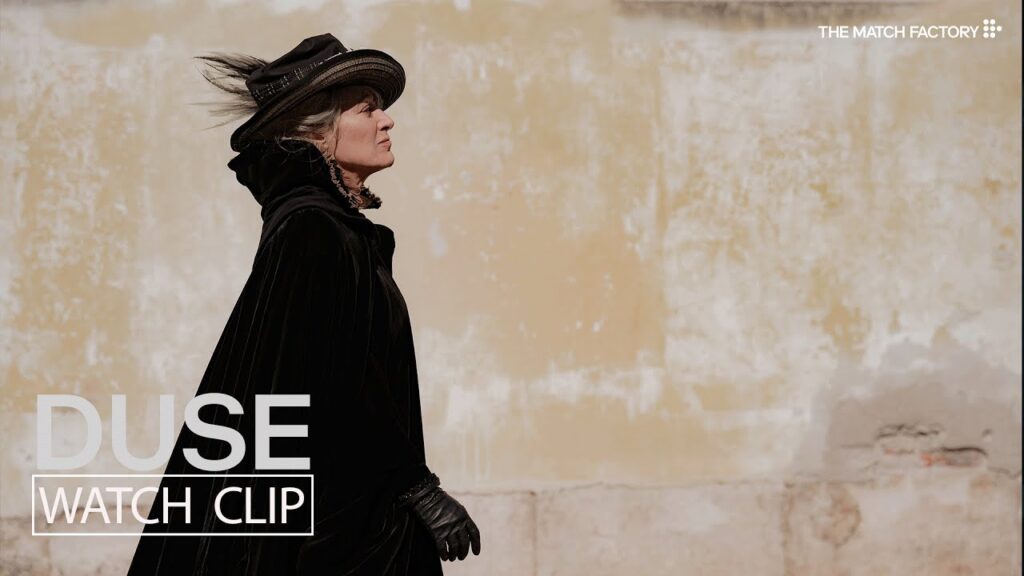
A poetic and introspective portrait of artistic obsession where performance becomes identity and sacrifice becomes legacy
An artist returns, consumed by her own myth
After retiring from a legendary stage career, Eleonora Duse feels an overwhelming pull back toward the theater despite declining health and shifting political realities. What begins as a personal return to performance evolves into a profound confrontation between art, identity, and mortality, set against the backdrop of post–World War I Italy and the rise of fascism.
The film unfolds as a lyrical meditation rather than a conventional biography, immersing the audience in the emotional and psychological state of an artist who exists almost entirely through her craft. Through fragmented storytelling, poetic imagery, and historical echoes, the narrative explores the cost of devotion to art—how it reshapes relationships, isolates the individual, and ultimately becomes inseparable from one’s existence. As Duse navigates personal conflict, political change, and the fading of her physical strength, the film transforms into a haunting reflection on legacy, sacrifice, and the eternal tension between life and performance.
Why It Is Trending: The resurgence of poetic biographical cinema that prioritizes emotional truth over factual storytelling
The film aligns with a growing trend in global cinema where biographical narratives move away from traditional chronological storytelling toward more impressionistic and emotionally driven interpretations. Its release comes at a time when audiences are increasingly receptive to artistic experimentation and non-linear narratives. The cultural relevance is amplified by its exploration of art, identity, and political transformation during a historically significant period. Festival circuits and European cinema continue to champion such auteur-driven projects, strengthening its visibility. Its appeal lies in its ability to merge historical context with deeply personal storytelling, attracting audiences seeking intellectual and artistic depth.
Elements Driving the Trend: Poetic storytelling elevated through performance and visual immersion
The film’s core appeal lies in its transformation of biography into cinematic poetry, focusing on emotional resonance rather than factual recounting. The narrative hook centers on a legendary actress returning to the stage, creating immediate thematic tension around legacy and mortality. Valeria Bruni Tedeschi’s performance anchors the film, delivering intensity and vulnerability that drive engagement. The visual style—rich, textured, and symbolic—enhances immersion and reinforces the film’s artistic tone. Its deliberate pacing allows the audience to experience the character’s internal world, making the storytelling deeply reflective and immersive.
Virality of Movie (Social Media Coverage): Art-house discourse and performance-driven appreciation
The film gains traction primarily within cinephile communities and festival audiences who engage with its artistic style and thematic depth.
Discussions focus on its poetic narrative approach and the intensity of the lead performance
Critics Reception: Divisive yet artistically respected auteur-driven cinema
Critics acknowledge the film’s ambition and artistic vision, often praising its poetic approach.
Publications highlight its strong central performance while noting its abstract storytelling style
Awards and Recognitions: Strong festival presence and critical recognition
The film has received 4 wins and 13 nominations (IMDb), including Venice Film Festival — Pasinetti Award (Best Actress) for Valeria Bruni Tedeschi.
Additional recognition includes Tokyo and European festival nominations, positioning it as a significant art-house contender
Director and Cast: A visionary approach anchored by a commanding central performance
Pietro Marcello directs with a poetic and impressionistic style, blending historical context with emotional introspection. His intent is to portray Eleonora Duse not as a historical figure but as a living embodiment of artistic obsession. Valeria Bruni Tedeschi delivers a transformative performance, capturing the fragility and intensity of a woman defined by her art. Supporting performances, including Fausto Russo Alesi and Noémie Merlant, contribute to the layered emotional landscape. The acting style is theatrical yet intimate, reflecting the blurred line between stage and reality.
Conclusion: A meditative cinematic experience that redefines biography through emotion and artistic vision
The film’s narrative strength lies in its ability to transform biography into a poetic exploration of identity. Its emotional positioning is deeply introspective, focusing on sacrifice and artistic devotion. Culturally, it reflects a growing appreciation for auteur-driven storytelling that challenges conventional structures. From an industry perspective, it reinforces the importance of artistic experimentation within global cinema.
What Movie Trend Is Followed: Poetic biographical cinema where emotional truth outweighs factual chronology
Duse follows the evolving trend of poetic biographical storytelling, where the focus shifts from documenting events to interpreting emotional and psychological realities. These films move beyond linear narratives to explore identity, legacy, and internal conflict through impressionistic techniques. The storytelling is less about what happened and more about how it felt, making it deeply immersive yet intellectually demanding. This trend resonates because it allows audiences to experience historical figures as emotional beings rather than distant icons.
Trend Drivers: The rise of auteur-led storytelling prioritizing artistic interpretation over traditional structure
The trend is driven by filmmakers seeking greater creative freedom in how real-life stories are told. Audiences, particularly in global and festival circuits, are increasingly open to non-linear and abstract narratives that challenge conventional storytelling. The demand for authenticity has expanded beyond factual accuracy to include emotional and psychological truth. Additionally, streaming platforms and international film festivals have created space for niche, auteur-driven films to reach wider audiences. This shift allows filmmakers to experiment with form while maintaining thematic depth.
What Is Influencing Trend: Cultural desire for deeper, more introspective storytelling
Modern viewers are increasingly drawn to stories that explore identity and purpose on a deeper level.
There is a generational shift toward valuing emotional authenticity over narrative clarity
Art and cinema are being used as tools for reflection rather than just entertainment
Macro Trends Influencing: Global expansion of art-house cinema and cross-cultural narratives
The film reflects a broader movement toward internationally co-produced, festival-driven cinema.
Cultural storytelling is evolving to include diverse perspectives and experimental forms
Lifestyle changes favor slower, more contemplative viewing experiences among niche audiences
Consumer Trends Influencing: Audience preference for meaningful, reflective content
Viewers increasingly seek films that offer emotional and intellectual engagement rather than passive consumption.
There is growing interest in character-driven narratives that explore complex inner worlds
Engagement often extends beyond viewing into discussion, interpretation, and analysis
Audience Analysis: Niche, culturally engaged viewers drawn to art-house and historical introspection
The primary audience falls within the age group of 30–65, consisting of culturally aware, educated viewers who engage with international cinema and film festivals. Their lifestyle often includes interest in literature, theater, and visual arts, shaping their appreciation for layered storytelling. Behaviorally, they prefer slow, reflective narratives that allow space for interpretation. Viewing habits include attending festivals, streaming international films, and following auteur filmmakers. Their preferences lean toward artistic experimentation, strong performances, and historically rooted yet emotionally driven narratives.
Conclusion: A sustainable niche trend driven by artistic depth and cultural relevance
This trend works because it offers a deeper emotional connection to historical figures and narratives. It is scalable within niche markets, particularly through festivals and streaming platforms. Its sustainability lies in its ability to evolve through different cultural perspectives and storytelling styles. The industry continues to support this approach as audiences seek more meaningful and reflective cinematic experiences.
Final Verdict: A haunting artistic meditation where performance, identity, and sacrifice blur into one singular existence
Duse positions itself as a deeply introspective and artistically ambitious film that prioritizes emotional resonance over narrative clarity. It reflects an industry space where cinema is not just storytelling but an interpretive art form that explores identity, legacy, and devotion. Culturally, the film reexamines the archetype of the artist as both creator and sacrifice, emphasizing the cost of total commitment to one’s craft. Its identity relevance lies in its portrayal of a woman defined not by her life circumstances but by her relentless need to perform and exist through art. In the long term, it reinforces the role of auteur cinema in preserving complex, non-commercial storytelling traditions.
Audience Relevance: Emotional connection through artistic introspection and identity exploration
The film resonates with audiences who engage with cinema as a form of emotional and philosophical reflection.
It appeals strongly to viewers interested in theater, art history, and character-driven narratives rooted in internal conflict
What Is the Message of Movie: Art demands everything, even when it leaves nothing behind
The narrative suggests that true artistic devotion requires complete surrender of self, relationships, and stability.
It explores how identity can become inseparable from one’s craft, blurring the line between life and performance
Relevance to Audience: Why it resonates in a time of identity and purpose exploration
The film connects with modern audiences navigating questions of purpose, passion, and personal sacrifice.
Its themes align with broader cultural conversations about fulfillment, legacy, and the cost of ambition
Social Relevance: A reflection on the intersection of art, politics, and personal freedom
The story unfolds against a backdrop of political change, highlighting how external forces shape personal and artistic expression.
It examines how individuals navigate societal expectations while maintaining their identity and voice
Performance: Critically recognized with strong festival presence
IMDb rating stands at approximately 6.0, reflecting mixed but thoughtful audience reception.
Box office performance is modest (~$1.25M worldwide), consistent with its art-house positioning
Legacy: A lasting contribution to poetic and auteur-driven biographical cinema
The film contributes to the evolution of biography as an interpretive and emotional experience rather than factual recounting.
Its legacy will be tied to its artistic ambition and its portrayal of the artist as both myth and human
Success: Defined by artistic recognition and performance excellence
With 4 wins and 13 nominations, including Venice Film Festival — Pasinetti Award (Best Actress), the film achieves strong critical validation.
Its success lies in its cultural and artistic impact rather than mainstream commercial reach
Insights: A film that transforms biography into a meditation on art and existenceIndustry Insight: The film reinforces the value of auteur-driven cinema in a commercially dominated landscape. It highlights the continued importance of festival circuits in supporting artistic experimentation. It also demonstrates how performance-led storytelling can define a film’s impact.Audience Insight: Viewers seeking deeper emotional and intellectual engagement are drawn to such narratives. They value interpretation and layered storytelling over linear clarity. This film fulfills those expectations through its poetic approach.Social Insight: The narrative reflects broader societal questions about purpose, identity, and sacrifice. It emphasizes the tension between personal desire and external expectations. This creates a strong emotional connection with audiences.Cultural Insight: The film contributes to preserving artistic storytelling traditions within cinema. It positions art as both a form of expression and existential necessity. This strengthens its cultural significance.
Conclusion: A poetic cinematic experience that redefines legacy through emotion and artistic devotion
The film’s long-term relevance lies in its exploration of art as identity and sacrifice. It impacts cinema by challenging traditional biographical storytelling formats. From a market perspective, it thrives within niche, festival-driven distribution models. For the industry, it signals the continued importance of artistic risk-taking and deeply personal storytelling.
Summary of the Movie: A poetic journey into the soul of an artist where legacy, sacrifice, and identity intertwine through performance
• Movie themes: Artistic obsession, identity, sacrifice — the film explores how devotion to art can define, consume, and ultimately isolate an individual
• Movie director: Pietro Marcello brings a lyrical, impressionistic style that blends history with emotional introspection, focusing on the inner life of the character rather than chronological events
• Top casting: Valeria Bruni Tedeschi delivers a powerful, immersive performance as Eleonora Duse, supported by Fausto Russo Alesi and Noémie Merlant, who add emotional and narrative depth
• Awards and recognition: 4 wins & 13 nominations (IMDb), including Venice Film Festival — Pasinetti Award (Best Actress) and multiple David di Donatello nominations including Best Actress and Best Screenplay
• Why to watch movie: A visually rich and emotionally layered exploration of artistic identity, ideal for audiences who appreciate reflective and poetic cinema
• Key Success Factors: Strong central performance, auteur direction, and festival recognition elevate its artistic impact
• Where to watch: Released September 18, 2025 (Italy); available through festival circuits, limited theatrical release, and expected streaming distribution
Conclusion: A deeply introspective film that transforms a life story into a meditation on art and existence
Duse is defined by its ability to transcend traditional biography and become a poetic exploration of identity and devotion. The emotional takeaway lies in its portrayal of the cost of living entirely for one’s craft. As a viewing experience, it is immersive, contemplative, and visually expressive. Its lasting impression comes from its emotional intensity and artistic ambition. Ultimately, it stands as a significant contribution to modern art-house cinema, leaving audiences reflecting on the meaning of legacy and sacrifice.