
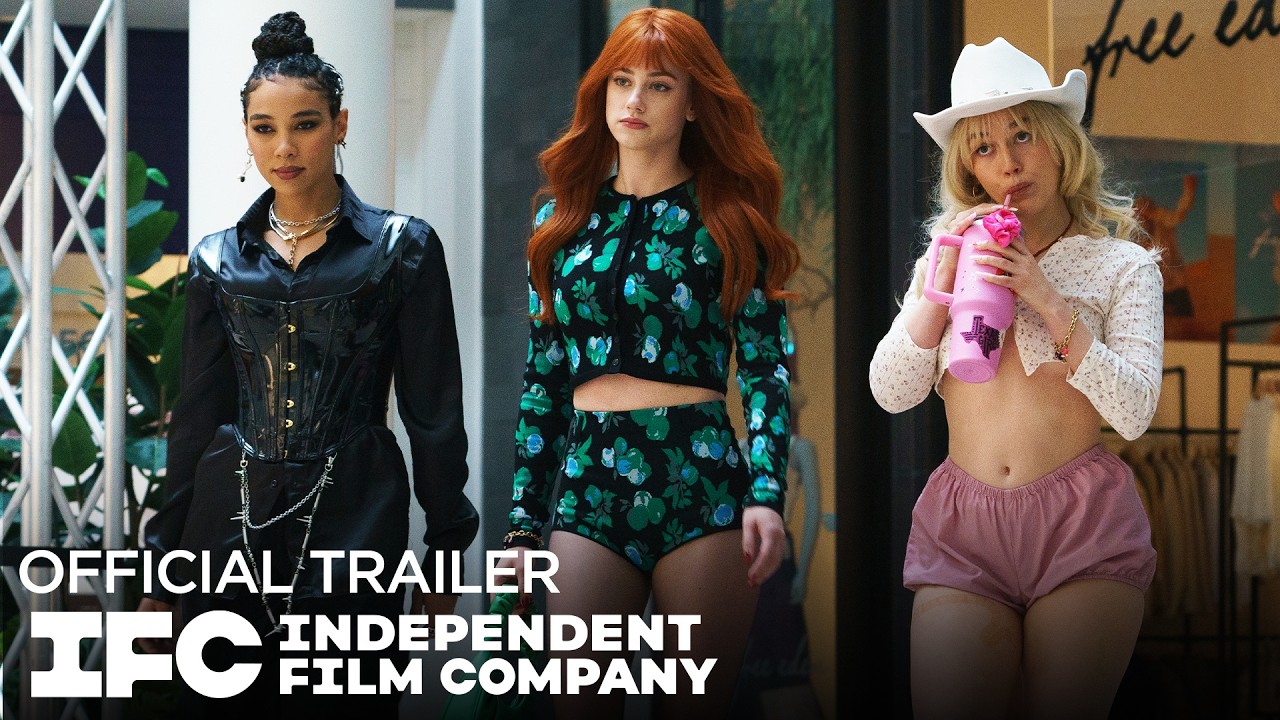
Mall witches, toxic sisterhood, and the darkest girlboss satire of the year
Apple, Cherry, and Fig run the most stylish store at the Dallas mall — and an after-hours witch coven in its basement. When new hire Pumpkin joins their circle, she begins to suspect the sisterhood is less divine feminine and more deeply dangerous. The harder she looks, the bloodier it gets.
Why It Is Trending: The Female Ensemble Horror Comedy the Internet Has Been Waiting to Fight About
Variety called it a kicky and stylized shopping-mall comedy of fashion, slang, and feminist wrath — if you see one spicy depraved satirical thriller this year that’s a cross between Mean Girls and The Craft and something far darker, make it Forbidden Fruits. Its world premiere at SXSW 2026 generated immediate split reactions — half the room calling it a future sleepover classic, the other half calling it unfocused — which is the exact cultural temperature a cult film requires. Produced with Diablo Cody attached, distributed through Independent Film Company and Shudder, and adapted from Lily Houghton’s 2019 stage play, it arrives with serious genre credentials. RogerEbert.com praised Reinhart’s career-best work, calling her a figure of commanding but toxic damage — like Parker Posey crossed with Ann-Margret — with the potential to go far.
Elements Driving the Trend: From its very first scene — Apple throwing her scalding latte on a man crudely masturbating to her — it’s clear the director has not only a vision but something righteous and incendiary to say. The production design, costumes, and soundtrack have generated their own dedicated social media following. Letterboxd audiences called it Mean Girls meets The Craft but campier, chicer, and more unhinged — obsessing over the production design, costumes, and the gruesome gore. The Diablo Cody producer credit and Shudder distribution give it exactly the right platform for its target audience.
Virality: SXSW premiere discourse ignited immediately — the cast, the costumes, and Victoria Pedretti’s Cherry became social media talking points within hours. The film’s “sleepover movie” positioning in user reviews drove strong pre-release discovery among its core female audience.
Critics Reception: Deadline called it director Meredith Alloway’s unhinged camp feature debut. InSession Film called it devilish fun with hidden depths. IndieWire described it as a beautiful disaster with just enough glamour and guts. Metascore of 54 reflects a genuinely divided critical reception that maps onto a cultural divide more than a quality one.
Awards and Recognitions: No awards confirmed. World premiere SXSW, March 16, 2026. Theatrical and Shudder release March 27, 2026.
Forbidden Fruits lands at a moment when the female ensemble horror comedy is one of the most culturally charged genre categories — and its decision to direct its darkness inward, at toxic female power structures rather than at men, gives it a social seriousness that its campy surface initially conceals. For the industry, Alloway’s debut confirms that the female-led horror-comedy format can sustain theatrical release and Shudder’s streaming audience simultaneously. The Reinhart and Pedretti performances will be what the film is remembered for.
What Movie Trend Is Followed: The Girlboss Horror Comedy Eats Itself
The female ensemble horror comedy — from Jennifer’s Body to Ready or Not — has consistently used horror mechanics to interrogate female power. Forbidden Fruits updates that tradition by turning its critical gaze on the toxicity within feminist spaces themselves — the performative sisterhood, the controlling queen bee, the way liberation movements can replicate the structures they claim to oppose. This is not an anti-man girl power film — it’s actually a fairly direct look at female interpersonal dynamics and manipulation. A story about girl-on-girl crime, both literally and figuratively. That inward turn is what separates it from its genre predecessors and what divides its audience.
Trend Drivers: Diablo Cody’s DNA in a New Generation of Femme Horror The script leans on slang (gorge, perf, vom) consistent with Diablo Cody’s producer involvement, and the film operates at a more cosmically tragic level if you devote time to it — but works just as well as a sleepover film with gossip and drinks. The Shudder/IFC distribution combination is the ideal platform pairing for a film that is simultaneously arthouse-adjacent and genre-committed. Alloway’s personal investment — she described the screenplay as mirroring her own relationship dynamics — gives the satire an emotional honesty that pure pastiche lacks.
What Is Influencing Trend: The post-#MeToo, post-girlboss cultural moment has created space for films that interrogate feminist performance rather than simply celebrate it. Female ensemble casts are consistently generating the horror genre’s most commercially successful releases. The mall as setting — simultaneously nostalgic and culturally loaded — gives the film a satirical backdrop that resonates across generational audiences.
Macro Trends Influencing: The horror-comedy hybrid is consolidating as 2026’s breakout genre format, with Forbidden Fruits, They Will Kill You, and Ready or Not 2 all releasing within weeks of each other. Female-led, female-authored genre cinema is finding sustained commercial support from streaming platforms actively seeking to diversify their horror catalogues. The “eat the rich/toxic elite” cultural moment has created a receptive audience for films that use luxury spaces as horror settings.
Consumer Trends Influencing: The 18–35 female audience for sapphic-adjacent horror comedy is one of the most engaged and vocal demographics in contemporary genre cinema. The sleepover/girls’ night positioning in early reviews creates a social viewing dynamic that drives group theatrical attendance and repeat streaming. The Reinhart fanbase — built through Riverdale — brings a pre-converted audience ready for her in a fully camp register.
Audience Analysis: Horror-Comedy Fans, Lili Reinhart Devotees, and the Craft Lineage The core audience is 18–35 — female-skewing genre fans who grew up with The Craft, Jennifer’s Body, and Mean Girls, and are ready for a film that remixes all three with 2026 cultural specificity. Letterboxd called it the last addition to the list of seven movies about evil, morally grey, fashionably impeccable women that you have to watch before dating someone. The ensemble of recognisable young actresses — Reinhart, Pedretti, Shipp, Tung, plus Emma Chamberlain and Gabrielle Union — gives the film the kind of cast that drives engagement before a single review drops.
Forbidden Fruits works for its audience because it uses the coven as a mirror for female social dynamics — control, manipulation, performance, and the violence that erupts when those dynamics are disrupted — with enough genre blood and fashion to make the critique feel like a party rather than a lecture.
Final Verdict: Forbidden Fruits Is an Uneven, Genuinely Original, and Deeply Enjoyable Debut That Reinhart and Pedretti Make Essential
Meredith Alloway delivers one of 2026’s most stylistically distinctive debut features — a film dripping with costume design, femme rage, and dark comedy that never fully coheres but never stops being interesting. Its script has loose ends and underdeveloped threads; its satire occasionally outpaces its structure. But the performances are exceptional, the vision is singular, and there is literally never a dull moment in the hands of Alloway and a wildly game, almost all-female cast.
Audience Relevance: For Anyone Who Has Ever Felt Both Liberated and Suffocated by Female Friendship The film’s central tension — the sisterhood that claims to protect while actually controlling — is immediately recognisable to anyone who has navigated female social hierarchies. Apple’s coven is feminist in its rhetoric and tyrannical in its practice.
That contradiction is the film’s sharpest observation, and it lands with more precision than most films in its genre manage.
What Is the Message: Liberation That Replicates Oppression Is Still Oppression Apple is a raging feminist and misandrist infected with the same superiority complex as the mean girls before her — her control issues suffocate those she claims to love. The film argues that feminist rage, when weaponised against other women rather than the systems that created it, becomes its own form of violence.
That argument is made through spectacular camp rather than polemic — which is why it works.
Relevance to Audience: A Horror Film Disguised as a Fashion Show The production design and costumes are character-level investments — every outfit tells you exactly who each Fruit is and what they want from each other. The mall setting is simultaneously ridiculous and perfect as a satirical space for female performance and competition.
For audiences who respond to films as aesthetic experiences before narrative ones, Forbidden Fruits is one of 2026’s most immediately rewarding watches.
Social Relevance: Performative Feminism Gets Its Horror Comedy The film is ostensibly aiming for biting satire in the post-girlboss era — and when it lands, it lands precisely. The witch cult as a metaphor for toxic wellness culture, performative sisterhood, and social control is the freshest genre application of these ideas since Jennifer’s Body.
The social commentary is sharpest in the Reinhart/Pedretti dynamic — the controlling mentor and the follower who absorbs her ideology before turning against it.
Performance: Reinhart Is Career-Best, Pedretti Steals Every Scene Reinhart plays Apple with a diamond-hard smirk and a gleam of perception — like Parker Posey crossed with Ann-Margret. When the script lets her dip into lurking rage, it unlocks new levels of pathos. Pedretti’s Cherry is the film’s comedic and emotional anchor — effervescent, tragic, and responsible for every genuine laugh the film generates.
Alexandra Shipp brings natural charisma to Fig; Lola Tung serves as the audience’s entry point with effective restraint. Emma Chamberlain’s Pickle cameo and Gabrielle Union’s supervisor turn are both exactly as fun as the casting suggests.
Legacy: A Future Cult Classic and a Debut That Announces a Distinctive Voice Forbidden Fruits will find its audience on Shudder and build toward cult status — the kind of film that gets watched at sleepovers, quoted online, and rediscovered for years. The film goes over-the-top into shock and grandiose violence staged with great wit — but what drives it forward is how it tries to pull its characters out from under the influence of self-destructive belief systems.
Alloway’s debut is the beginning of something — a filmmaker with a vision this distinctive will only get better with more resources and a tighter script.
Success: SXSW Premiere, Shudder Release, Instant Cult Positioning Metascore 54. IMDb 6.5 from early viewers. 21 critic reviews with mixed-to-positive consensus. World premiere SXSW March 16, 2026. Theatrical and Shudder release March 27, 2026. No awards confirmed.
The theatrical run is secondary — Forbidden Fruits is a Shudder film at heart, and its long-term audience will be built through the platform over years rather than weeks.
Insights Forbidden Fruits is the most culturally precise horror comedy of 2026 — and Lili Reinhart’s Apple is the performance that will define both their careers. Industry: Shudder’s positioning of female-led, female-authored horror comedy as a theatrical-plus-streaming event is generating the kind of engaged, loyal audience that sustains genre labels — and Forbidden Fruits is a strong proof of concept for that model. Audience: The female ensemble horror comedy audience is the most socially engaged and word-of-mouth-driven demographic in contemporary genre cinema — and Forbidden Fruits gives them exactly the combination of fashion, gore, and feminist complexity they seek. Social: By directing its horror inward — at toxic female power structures rather than external threats — the film makes a more honest and more uncomfortable argument about performative feminism than any straight drama could manage in 2026. Cultural: Forbidden Fruits positions Meredith Alloway as a filmmaker building a distinctive voice in the female-ensemble horror tradition — and Reinhart’s Apple as one of the great toxic screen queens of the decade, in a lineage that runs from Heathers through Mean Girls through Jennifer’s Body.
Forbidden Fruits is not a perfect film — but it is a genuine one, and in a genre flooded with safe iterations, genuine counts for everything.
Summary of Forbidden Fruits: Mall Witches, Toxic Sisterhood, and One Very Bloody Reckoning
-
Movie themes: Performative feminism, toxic female power structures, control disguised as sisterhood, and the violence that erupts when the coven turns on itself. A horror comedy about the ways women oppress each other in the name of liberation.
-
Movie director: Camp debut with a singular vision. Meredith Alloway — co-writing with Lily Houghton from her 2019 stage play — delivers an uneven but genuinely distinctive first feature that uses fashion, witchcraft, and femme rage to stage one of 2026’s sharpest satires of performative culture.
-
Top casting: Reinhart and Pedretti are the film. Lili Reinhart delivers career-best work as Apple — diamond-hard, secretly tragic. Victoria Pedretti’s Cherry is the film’s comedic and emotional heart. Alexandra Shipp, Lola Tung, Emma Chamberlain, and Gabrielle Union complete a cast that is collectively incapable of a dull moment.
-
Awards and recognition: No awards confirmed. World premiere SXSW March 16, 2026. Theatrical and Shudder release March 27, 2026. Metascore 54.
-
Why to watch: The campiest, most stylish, and most genuinely unsettling female ensemble horror comedy of 2026 — a sleepover film with real teeth, anchored by two of the best performances either lead has delivered.
-
Key success factors: Reinhart and Pedretti’s chemistry plus Alloway’s visual confidence plus the Diablo Cody producer DNA plus Shudder’s genre-savvy platform — a combination that positions the film perfectly for its target audience.
-
Where to watch: In theaters and on Shudder now — March 27, 2026 release.






Leave a Reply