


AUT / GER / FRA | 2026 | 1h 54m | Drama, Thriller
When Love Becomes Evidence Against Everything a Family Believed
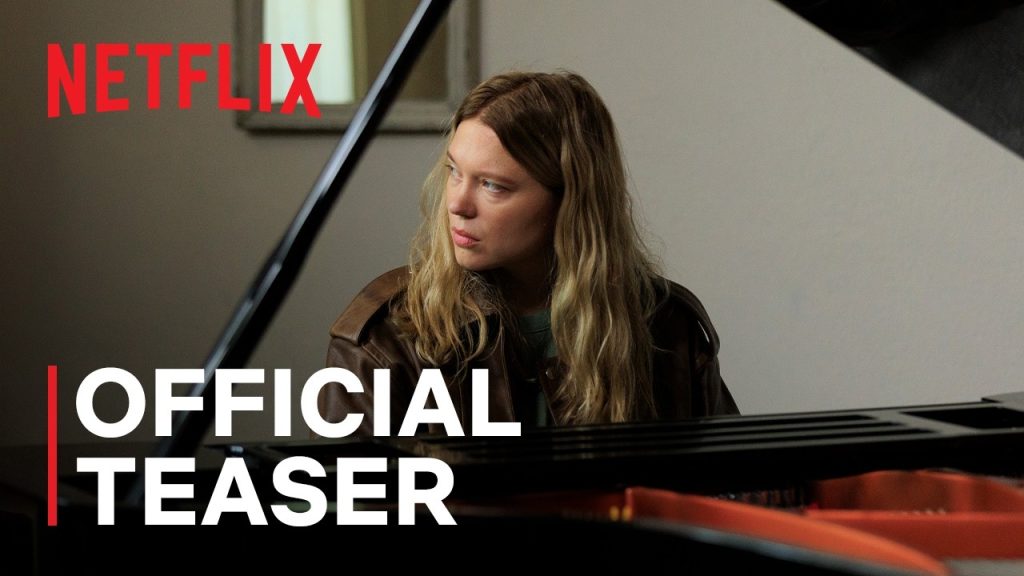
Marie Kreutzer’s Gentle Monster begins with the architecture of an apparently successful life. Lucy Weiss (Léa Seydoux), a renowned concert pianist, moves with her filmmaker husband Philip and their young son from Munich to the countryside, hoping the change will help Philip recover from severe burnout. Then police arrive, seize his computers and force Lucy to confront the possibility that the man she loves has been hiding something horrifying.
Rather than building a conventional investigation around whether Philip is guilty, Kreutzer concentrates on Lucy’s psychological collapse as certainty disappears. Love, memory, motherhood and loyalty all become unreliable once the person at the center of the family can no longer be understood in the same way.
➡️ Movie Insight: Gentle Monster turns the discovery of a terrible secret into a crisis of emotional identity. Lucy is not simply discovering something about Philip; she is being forced to reinterpret years of her own life. The real horror comes from realizing that intimacy may never guarantee knowledge.
Why This Movie Matters Right Now: The Family Secret Drama Is Becoming a Story About Complicity
Gentle Monster arrives at a moment when cinema is increasingly interested in what happens after misconduct, abuse or hidden behavior becomes visible. Kreutzer shifts attention away from the perpetrator and toward the people surrounding him: the partner who believed him, the family that trusted him and the women forced to decide whether love has made them blind. Kreutzer herself has described the film as concerned with the devastation experienced by loved ones rather than with explaining the perpetrator.
That approach expands the familiar family-secret drama. Revelation is no longer merely the narrative twist; it becomes the beginning of a moral investigation into denial, responsibility and the frightening possibility that destructive behavior can exist beside everyday tenderness.
➡️ Why It Matters: Contemporary family dramas are increasingly asking what people owe the truth once loyalty becomes uncomfortable. Gentle Monster pushes that question into particularly disturbing territory. It makes emotional complicity as important as the secret itself.
Should You Watch It?: A Difficult Family Drama Built Around Moral Uncertainty
Gentle Monster is strongest for viewers interested in psychologically demanding European drama rather than conventional crime suspense. The investigation provides the narrative trigger, but Kreutzer is primarily interested in Lucy’s emotional response: disbelief, anger, guilt, uncertainty and the terrifying responsibility of protecting her child while she still cannot completely understand the man she married.
The film has also divided critics over how effectively its multiple strands cohere. Reviews have praised Seydoux’s performance and the seriousness of Kreutzer’s questions while criticizing the parallel narratives and structural complexity as occasionally unfocused.
➡️ Viewing Recommendation: This is best approached as a morally uncomfortable character drama rather than a mystery seeking clean answers. Léa Seydoux provides the emotional center through a performance built around shock, denial and disintegration. Viewers comfortable with ambiguity and difficult subject matter are likely to find the most to engage with.
Why Everyone Is Talking About It: Cannes Turned an Intimate Nightmare Into a Major Festival Conversation
Gentle Monster entered the 2026 Cannes Competition and competed for the Palme d’Or before continuing through major international festivals. Its festival profile also brought nominations for Best International Film at Munich and the Sydney Film Prize.
The combination of Kreutzer, Seydoux, Jella Haase and Catherine Deneuve gave the film considerable auteur and star visibility, while its subject generated sharply divided reactions. Some critics responded strongly to its emotional intensity and Seydoux’s performance; others questioned whether its sprawling structure fully confronts the moral complexity it introduces.
➡️ Viral Potential: Gentle Monster generates conversation because its central dilemma resists an emotionally comfortable answer. The prestige cast and Cannes platform amplify that debate beyond traditional arthouse circles. Its strongest word-of-mouth driver is likely to be the question it leaves behind: how well can anyone truly know the person closest to them?
Why Gentle Monster Stands Out: The Monster Is Already Inside the Family
The film reverses one of the oldest mechanisms in suspense cinema. The danger does not arrive from outside Lucy’s home; it emerges from the possibility that someone already embedded within its most intimate relationships has concealed another identity. Philip’s explanations shift, leaving Lucy caught between the man she remembers and the evidence accumulating around him.
Kreutzer deepens that idea through Elsa, the investigator played by Jella Haase. While professionally confronting Philip’s alleged behavior, Elsa struggles with her own father’s inappropriate conduct toward his caregiver, creating a parallel about how easily people rationalize wrongdoing when confronting someone emotionally close to them.
➡️ Cinema Insight: Gentle Monster transforms domestic familiarity into psychological threat. Its most disturbing proposition is that monstrous behavior does not necessarily look monstrous from inside a relationship. The collapse of trust therefore becomes more frightening than the mechanics of the investigation.
Movie Trend: Family Drama — When a Shocking Truth Makes a Woman Question the Man She Loves
Trend Formula:successful pianist → family leaves the city → apparently secure new life → police investigation → disturbing truth emerges → trusted husband becomes unrecognizable → love collides with evidence → family loyalty fractures → woman questions everything she believed
Family dramas have traditionally used secrets to expose hidden tensions between relatives. Gentle Monster moves the form toward something darker: the revelation forces Lucy to question not only Philip but her own memories, judgments and emotional history. The central conflict becomes whether love can survive knowledge—or whether love itself has prevented knowledge.
The film therefore sits between family drama and psychological thriller without becoming primarily a procedural. Police may uncover the evidence, but Lucy must decide what that evidence means for her marriage, her son and her understanding of herself.
➡️ Movie Trend: The family-secret drama is evolving from revelation toward moral aftermath. The most powerful conflict comes from discovering that emotional intimacy may have helped conceal an uncomfortable reality. Gentle Monster turns that realization into the engine of the entire film.
Viewer Profile: Moral Explorers – Adult Arthouse Viewers Seeking Challenging European Cinema
Gentle Monster is positioned toward adult viewers comfortable with morally complicated European drama, psychologically intense performances and stories that deliberately resist simple resolutions. Its Cannes Competition launch, multinational European production and high-profile cast place it firmly within contemporary prestige arthouse cinema.
The likely core audience follows festival discoveries, auteur filmmakers and performers such as Léa Seydoux and Catherine Deneuve, while a broader secondary audience may arrive through the film’s thriller elements and eventual Netflix availability in markets including the US and UK.
|
European arthouse and prestige-drama viewers |
|
|
Psychological drama and thriller audiences |
|
|
Primarily adult 25–54 audience |
|
|
Broad adult appeal, with particularly strong relevance for female-led drama audiences |
|
|
Middle to upper-middle cultural consumers |
|
|
Film-literate, culturally engaged, festival-aware |
|
|
Arthouse cinema, festivals, curated streaming and prestige international releases |
➡️ Audience Insight: Moral Explorers are attracted to cinema that creates discussion rather than emotional certainty. They value difficult performances, ethical ambiguity and filmmakers willing to enter uncomfortable territory. Gentle Monster offers exactly that combination while retaining enough thriller tension to extend beyond the core arthouse audience.
What This Movie Means for the Industry: Difficult Subjects Are Moving Through Character Rather Than Sensation
Gentle Monster illustrates an important direction for prestige drama: difficult social subjects can be approached through their emotional consequences rather than through explicit reconstruction of the crime itself. Kreutzer keeps the focus primarily on Lucy and the people forced to process Philip’s alleged behavior, allowing the collateral damage to become the narrative center.
Its multinational production model is equally significant. Film AG Produktions, Komplizen Film and Kazak Productions anchor an Austrian-German-French collaboration, with MK2 handling international sales—a familiar model for ambitious European auteur cinema seeking festival visibility and international distribution.
➡️ Industry Insight: Prestige cinema is increasingly finding dramatic power in the people surrounding a scandal rather than the scandal itself. That shift creates space for female perspectives on complicity, denial and emotional fallout. International co-production and global streaming can then carry these culturally specific stories to much broader audiences.
Creative Analysis: Turning Domestic Security Into Psychological Uncertainty
Kreutzer constructs Gentle Monster around emotional destabilization rather than conventional suspense mechanics. The film repeatedly asks Lucy—and by extension the audience—to reconsider earlier assumptions as new information changes the meaning of apparently ordinary behavior.
Its parallel structure broadens that investigation beyond one marriage, although it is also the creative decision that has produced some of the film’s most divided critical responses. The result is deliberately uncomfortable cinema where ambiguity is both the method and the subject.
Storytelling: The Truth Rewrites Everything That Came Before
The narrative uses revelation retrospectively. Moments initially understood as ordinary family behavior become more troubling once Lucy begins questioning Philip, allowing new information to alter the meaning of what has already been seen.
Direction: Marie Kreutzer Keeps the Camera With the Emotional Aftershock
Kreutzer largely avoids turning Philip into the film’s psychological center. Instead, she stays with Lucy’s attempt to understand what has happened and Elsa’s contradictory relationship with misconduct in her own family, making female responses to male behavior the structural focus.
Performances: Léa Seydoux Makes Disbelief the Film’s Emotional Language
Seydoux has received particularly strong notices for communicating Lucy’s movement between defense, fear, fury and emotional collapse. Jella Haase provides a more contained counterpoint as Elsa, while Laurence Rupp’s Philip remains disturbing precisely because his explanations continue to shift.
Visual Style: Controlled Spaces Become Emotionally Unsafe
Cinematographer Judith Kaufmann gives the film a controlled visual language that critics have described as austere and precise, frequently emphasizing the emotional isolation of characters within domestic interiors. Production design is by Myrna Wolff, reinforcing the importance of physical domestic space to Kreutzer’s drama.
Themes: Love, Trust, Denial and the Responsibility to Believe
The film’s central themes converge around an uncomfortable question: what happens when believing someone loved begins to conflict with protecting someone vulnerable? Lucy’s marriage makes that question intimate, while Elsa’s parallel story expands it toward the broader mechanisms through which misconduct can be minimized or rationalized.
What Makes It Different: The Revelation Is the Beginning, Not the Ending
A conventional thriller might make discovering Philip’s secret the climax. Gentle Monster uses it as the starting point for a much more difficult question—how a person rebuilds moral certainty after realizing that years of emotional certainty may have been misplaced.
➡️ Creative Insight: Kreutzer uses the structure of a thriller but keeps returning to the emotional territory of family drama. Seydoux turns uncertainty itself into the film’s central performance. The result is less interested in solving a mystery than in showing what happens when trust becomes impossible.
If You Liked Gentle Monster (2026): Relationships That Cannot Survive What the Truth Reveals
These recent films approach similar territory from different directions: intimate relationships destabilized by revelations, psychological crises that transform domestic life, and families forced to confront realities they would rather avoid.
The Drama (2026) by Kristoffer Borgli: A Secret Turns Romantic Certainty Into Moral Judgment
Zendaya and Robert Pattinson play an engaged couple whose apparently secure relationship begins collapsing when a revelation shortly before their wedding changes how one partner sees the other. Like Gentle Monster, the film asks whether loving someone requires accepting a past that fundamentally alters the present.
➡️ Why It Connects: Both films begin with relationships that appear emotionally secure. A revelation then forces one partner to reconsider who the other person really is. The suspense comes from watching intimacy become interrogation.
Die My Love (2025) by Lynne Ramsay: Domestic Isolation Turns Love Into Psychological Crisis
Lynne Ramsay’s drama follows Grace as motherhood, isolation and psychological deterioration destabilize her relationship and sense of identity. The circumstances are very different from Gentle Monster, but both films transform a seemingly restorative move away from the city into an increasingly threatening domestic environment.
➡️ Why It Connects: Both films place women inside domestic environments that gradually stop feeling safe. Psychological instability changes how love, motherhood and partnership are understood. Each uses an intense central female performance to turn private crisis into unsettling cinema.
The Seed of the Sacred Fig (2024) by Mohammad Rasoulof: Public Power Turns a Family Against Itself
Mohammad Rasoulof turns political repression into domestic paranoia as an investigating judge’s new position and growing distrust destabilize his relationship with his wife and daughters. Like Gentle Monster, the family home becomes the place where larger questions about authority, loyalty and moral responsibility become intensely personal.
➡️ Why It Connects: Both films use the family as a laboratory for much larger moral conflicts. Trust collapses as hidden behavior and competing responsibilities become impossible to ignore. Domestic intimacy gradually becomes a source of fear rather than protection.
➡️ If You Liked Insight: These films belong to a contemporary wave of dramas in which relationships collapse because knowledge changes faster than love can adapt. Their characters discover that intimacy cannot protect them from uncomfortable truths. The resulting cinema turns private relationships into arenas of moral judgment.
Final Verdict: A Family Drama Where Love Becomes the Hardest Evidence to Ignore
Gentle Monster works most powerfully when it remains close to Lucy and the impossible emotional contradiction at the center of her marriage. Kreutzer understands that discovering something terrible about another person can also destroy confidence in one’s own judgment, and Seydoux gives that process a painfully unstable emotional reality.
The film’s parallel structures and thematic ambitions have divided critics, but that unevenness does not erase the force of its central question. Gentle Monster is deliberately more interested in moral discomfort than narrative reassurance, leaving the audience with the frightening possibility that familiarity and knowledge are not the same thing.
➡️ Final Verdict: Gentle Monster is an emotionally demanding family drama strengthened by Léa Seydoux’s controlled but devastating performance. Its difficult subject and refusal of easy certainty make it more provocative than comfortable. The film is strongest when it asks how love survives after trust has already disappeared.
Quick Facts: A Family Secret Turns Intimacy Into Moral Uncertainty
|
Léa Seydoux, Jella Haase, Laurence Rupp |
|
|
Catherine Deneuve, Sylvester Groth, Katharina Lorenz |
|
|
Film AG Produktions, Komplizen Film, Kazak Productions |
|
|
Alexander Glehr, Johanna Scherz |
|
|
Cannes Competition; Munich; Sydney; Toronto Special Presentations |
|
|
Palme d’Or nominee; ARRI/OSRAM Best International Film nominee; Sydney Film Prize nominee |
|
|
Family Drama — When a Shocking Truth Makes a Woman Question the Man She Loves |
|
|
Lucy must reconcile her love for Philip with growing fear about what he may have done |
|
|
The discovery of the secret begins the drama rather than resolving it |
|
|
Trust, denial, complicity, motherhood, responsibility, deception |
|
|
Léa Seydoux, moral ambiguity and an unsettling reinterpretation of the family-secret drama |
The principal technical credits are confirmed by the Cannes listing, including Kaufmann on cinematography, Wolff on production design, Camille on music and Kofler on editing. The film’s Cannes, Munich and Sydney nominations are also documented in the supplied awards material.
Final Insights: Family Drama Is Moving Beyond Secrets Toward the Consequences of Knowing
Gentle Monster reflects a broader shift in contemporary family drama. Secrets remain important, but increasingly the revelation itself is not enough: filmmakers are interested in what knowledge does to relationships afterward, particularly when affection, dependency and shared history make the morally obvious response emotionally difficult.
That direction pushes family drama closer to psychological thriller without requiring conventional suspense mechanics. The home, marriage and family memory become sources of uncertainty, while characters must decide whether loyalty represents love or denial. Gentle Monster takes that movement to an extreme by asking whether discovering the truth about another person can permanently destroy confidence in one’s own ability to recognize the truth.
➡️ Final Insight: The next evolution of the family-secret drama is not about uncovering what someone has hidden. It is about living with the knowledge once the person who was loved can no longer be seen in the same way. Gentle Monster turns that emotional rupture into its most disturbing form of suspense.