


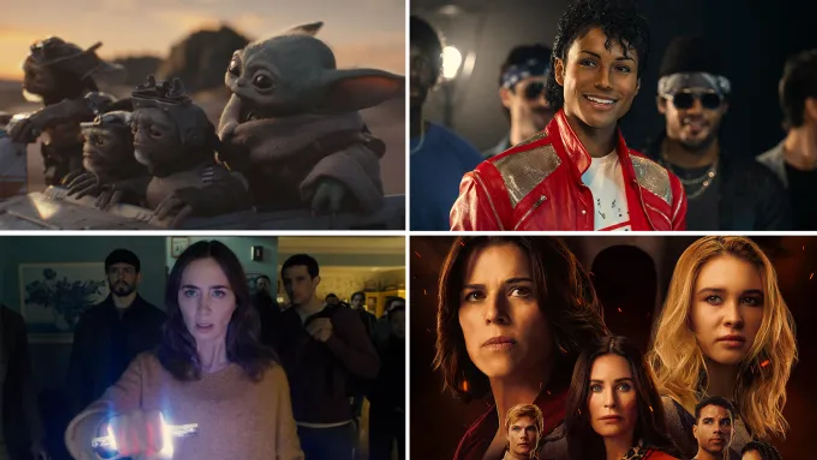
Why the Trend Is Emerging: When Movie Marketing Turns Into a Live Stadium Flex
The Super Bowl has evolved into Hollywood’s flashiest battlefield — a place where studios drop trailers like surprise singles and fight for cultural dominance in front of 128 million viewers. What used to be a fun marketing stunt is now a high‑stakes ritual: if your movie doesn’t show up during the Big Game, fans assume it’s not a contender. The old “let the trailer go viral online” logic is collapsing, replaced by a new era where hype must be staged, not hoped for.
-
Eventized Trailers: Movie studios now treat Super Bowl spots as cultural events that signal scale, confidence and blockbuster intent.
-
Attention Inflation: The cost of attention has exploded, making the Super Bowl one of the last guaranteed mass‑audience moments left in pop culture.
-
Hype Compression: With theatrical unpredictability and streaming fatigue, studios need unified hype spikes — and nothing delivers like the Big Game.
-
Pressure Marketing: Box office stakes force studios to buy cultural certainty through spectacle rather than slow‑burn campaigns.
-
Death of Organic Virality: The old “drop it online and pray” model is gone; eventized marketing is the new engine of cultural heat.
-
Audience Expectation Shift: Fans now expect blockbuster‑level reveals, not quiet drops, turning the Super Bowl into Hollywood’s unofficial summer‑movie kickoff.
Insights: Trailer Fever as Cultural Currency
A trend powered by the idea that hype isn’t earned — it’s staged.
Industry Insight: Eventized marketing is replacing slow rollouts as studios chase cultural moments that guarantee mass awareness in a single hit, turning the Super Bowl into a launchpad rather than a luxury. Consumer Insight: Fans treat Super Bowl trailers like surprise album drops — communal, high‑energy, instantly dissected across social feeds, transforming a 30‑second clip into a shared cultural ritual. Brand Insight: Studios that show up during the Big Game signal confidence, scale and cultural ambition, elevating their film’s perceived importance before it even opens.
The Super Bowl has become Hollywood’s new opening weekend — a place where cultural heat is manufactured in real time. Studios that show up win the narrative before their movie even hits theaters. Audiences reward films that feel like events, not content drops. The Big Game is no longer an ad buy — it’s a cultural coronation. And brands that understand this shift can turn 30 seconds into months of momentum.
Detailed findings: the big game becomes Hollywood’s biggest trailer drop zone
The Super Bowl has quietly transformed into the movie industry’s loudest cultural megaphone — a place where studios test cultural heat, flex franchise dominance and turn 30‑second clips into nationwide talking points. What looks like “just ads” is actually a high‑stakes arms race: who can hijack the national conversation before the movie even opens? The Big Game has become the unofficial kickoff to blockbuster season, and every studio knows it.
-
Market reality: Studios are clustering their biggest IP reveals around the Super Bowl because it guarantees instant national visibility and resets the cultural conversation.
-
Cultural weight: The Big Game is one of the last communal viewing rituals left, making it the perfect stage for films that want to feel like events.
-
Behavioral proof: Fans now expect surprise drops, early looks and franchise teases — and they immediately dissect them across TikTok, X and Reddit.
-
Strategic shift: The Super Bowl is no longer a marketing add‑on; it’s the centerpiece of hype architecture for tentpole films.
-
Key finding: The studios that dominate the Super Bowl tend to dominate the cultural narrative for weeks afterward.
Signals: the big game as Hollywood’s new hype engine
A cultural shift revealed through the way studios and fans behave around the broadcast.
-
Market / media signal — the IP stampede: Multiple studios are fighting for Super Bowl slots, turning the broadcast into a parade of franchise flexes.
-
Behavioral signal — trailer rituals: Fans treat Super Bowl trailers like live pop‑culture drops, reacting in real time and creating instant virality.
-
Cultural signal — eventization fever: The Super Bowl has become a cultural stage where movies prove they matter before they even open.
-
Systemic signal — marketing compression: Studios are collapsing months of hype into one explosive moment to cut through noise.
-
Marketing signal — prestige placement: A Super Bowl spot now signals that a film is a top‑tier priority, not just another release.
-
Main finding: The Super Bowl is no longer an ad buy — it’s a cultural certification stamp for films that want to dominate the year.
Insights: the big game as Hollywood’s cultural launchpad
A trend revealing how studios manufacture cultural inevitability.
Industry Insight: the super bowl has become a strategic pressure valve where studios compress awareness, cultural heat and franchise positioning into one high‑impact moment. Consumer Insight: audiences treat super bowl trailers as communal pop‑culture rituals, using them to gauge which movies “matter” in the year ahead. Brand Insight: films that appear during the big game gain an aura of scale and importance, shaping audience expectations long before release.
The Super Bowl has become the movie industry’s most powerful hype accelerator. Studios that dominate the broadcast dominate the cultural narrative. Fans reward films that show up with confidence and spectacle. The Big Game now functions as Hollywood’s cultural sorting hat — deciding which films feel essential. And the studios that understand this shift win the year before it even starts.
Description of consumers: the fans who treat Super Bowl trailers like cultural events
Super Bowl trailer watchers aren’t passive viewers — they’re hyper‑online, hype‑sensitive cultural participants who treat the Big Game like a live fandom festival. These are the people who pause, rewind, screen‑record, meme, dissect and circulate every frame within minutes. They don’t just watch trailers; they activate them. Their behavior turns a 30‑second spot into a cultural weather report for what movies will dominate the year.
-
Consumer identity: A hyper‑connected, pop‑culture‑literate crowd that treats movie marketing as entertainment in its own right.
-
Demographic profile: Primarily 18–44, mixed‑gender, digitally native, mid‑income to upper‑middle income, with strong fandom overlap.
-
Life stage: Young professionals, students, early‑career creatives and culture‑obsessed millennials who build identity through media consumption.
-
Shopping profile: Heavy entertainment spenders — subscriptions, merch, collectibles, opening‑weekend tickets, premium formats.
-
Lifestyle profile: Always‑on, socially expressive, trend‑tracking, and deeply invested in cultural participation.
-
Media habits: TikTok for reactions, X for discourse, Reddit for breakdowns, YouTube for frame‑by‑frame analysis.
-
Impact of trend: The Super Bowl becomes their annual “fandom census,” shaping which movies they’ll champion, meme, or ignore.
Insights: the rise of the trailer‑native consumer
A consumer who treats marketing as content and content as identity.
Industry Insight: studios now rely on trailer‑native consumers to ignite early cultural heat, using their reactions as real‑time feedback loops. Consumer Insight: fans see trailer drops as communal rituals that let them signal taste, allegiance and cultural literacy. Brand Insight: movies that energize this group gain instant momentum, because their enthusiasm multiplies across platforms.
These consumers don’t wait for release weekends — they decide what matters months earlier. Their reactions shape the cultural hierarchy of films long before opening day. Studios that understand their rhythms can engineer hype with precision. And the movies that win this group’s attention often win the year. They’re not just viewers — they’re the cultural engine behind every blockbuster moment.
What is consumer motivation: why fans treat Super Bowl trailers like cultural rituals
Super Bowl trailer watchers aren’t just reacting to marketing — they’re fulfilling emotional, social and cultural needs. The Big Game gives them a rare moment of collective anticipation, a place where fandom becomes visible and validated. These consumers use trailers to signal identity, claim cultural territory and participate in a national moment that feels bigger than themselves. Their motivation isn’t passive entertainment; it’s active belonging.
-
Emotional motivation: Trailers deliver a hit of anticipation, novelty and adrenaline — a micro‑dose of cinematic excitement.
-
Social motivation: Reacting in real time lets fans participate in a shared cultural ritual, proving they’re “in the moment.”
-
Identity motivation: Choosing which trailers to hype becomes a way to signal taste, allegiance and cultural fluency.
-
Status motivation: Being early to react, analyze or meme gives fans social capital within their communities.
-
Cultural motivation: The Super Bowl is one of the last mass‑audience rituals, and fans use trailers to anchor themselves inside it.
-
Behavioral motivation: The act of watching, rewinding, posting and dissecting becomes a form of cultural authorship.
Insights: the emotional logic behind trailer‑driven fandom
A deeper look at why this behavior feels meaningful, not superficial.
Industry Insight: studios rely on emotionally motivated fans to amplify trailers instantly, turning hype into measurable cultural heat. Consumer Insight: fans use trailer reactions to express identity, belonging and cultural literacy in real time. Brand Insight: movies that tap into these emotional drivers gain momentum that paid media alone can’t replicate.
Fans aren’t just watching trailers — they’re using them to participate in culture. Their reactions shape which films feel essential long before release. Studios that understand these motivations can engineer hype with precision. The emotional stakes are higher than they look; this is identity work disguised as entertainment. And the movies that resonate here become the cultural winners of the year.
Trends 2026: engineered moments now define cultural power
A new cultural landscape is emerging where audiences no longer wait for meaning — they seek it in orchestrated, high‑impact moments. Brands, platforms and creators are shifting from passive communication to active cultural staging. Consumers gravitate toward experiences that feel both communal and personally expressive. 2026 becomes the year where cultural participation is designed, not discovered.
Core influencing macro trends: the forces that make engineered culture inevitable
-
Economic trends — The Attention Premium: As attention becomes more expensive, brands invest in fewer but louder cultural moments that guarantee impact.
-
Cultural trends — Eventization Everywhere: Culture shifts toward shared rituals, making audiences expect spectacle even from everyday categories.
-
Psychological force — Identity Signaling: Consumers use participation in cultural moments to express belonging, taste and social fluency.
-
Technological force — Algorithmic Amplification: Platforms reward spikes, not slow burns, pushing brands toward engineered virality.
-
Global trends — Synchronised Culture: Global audiences now react in real time, creating unified cultural flashpoints across markets.
-
Local / media trends — Live‑First Media: Local media ecosystems prioritize real‑time engagement, making live cultural moments more valuable than static content.
Main trend: culture shifts from watching to participating
-
Trend definition: Participation Culture — consumers expect to co‑create, react and shape cultural moments rather than observe them.
-
Core elements: Collective Rituals — shared, time‑bound events that create instant cultural belonging.
-
Primary industries impacted: Entertainment, retail, sports, gaming — sectors where real‑time engagement drives value.
-
Strategic implications: Design for Spikes — brands must architect moments that trigger immediate cultural heat.
-
Future projections: Programmable Culture — cultural moments will be increasingly scheduled, engineered and optimized.
-
Social Trends implications: The Belonging Economy — consumers reward brands that create spaces for identity expression.
Related Consumer Trends: audiences now behave like cultural accelerators
-
Hype‑Driven Behavior: Consumers gravitate toward moments that feel urgent and communal.
-
Fandom as Identity: Fans use cultural participation to signal who they are.
-
Real‑Time Validation: Social proof is measured in instant reactions, not long‑term loyalty.
-
Collective Escapism: Shared moments offer emotional relief in an overstimulated world.
-
Micro‑Community Power: Niche groups amplify cultural moments faster than mass audiences.
Related Industry Trends: sectors reorganize around cultural flashpoints
-
Event‑Led Marketing: Industries shift budgets toward high‑impact cultural activations.
-
Compressed Launch Cycles: Brands collapse long campaigns into short, explosive moments.
-
Platform‑Native Storytelling: Content is built for real‑time reaction, not passive viewing.
-
Cultural Forecasting: Companies invest in predicting when and how cultural moments will peak.
-
Experience‑First Retail: Stores and platforms become stages for cultural participation.
Related Marketing Trends: strategy now revolves around engineered heat
-
Moment Engineering: Brands design cultural flashpoints to trigger mass engagement.
-
Reaction‑Optimized Creative: Campaigns built to be remixed, memed and dissected.
-
Live‑Drop Strategy: Releases timed to coincide with cultural rituals or major events.
-
Community‑Powered Amplification: Fans become the primary distribution engine.
Related Media Trends: formats evolve to reward cultural acceleration
-
Live‑Stream Dominance: Real‑time formats outperform static content.
-
Algorithmic Heat Mapping: Media prioritizes content that spikes quickly.
-
Cultural Countdown Programming: Media builds anticipation windows around major moments.
-
Fragmented Rituals: Micro‑events emerge across platforms, each with its own audience logic.
Summary of trends: culture becomes a scheduled experience
The shift from accidental virality to intentional cultural design. Culture no longer “just happens” — it is architected, staged and optimized. Brands now compete to create the moments that define the year. Audiences reward the experiences that feel communal, not incidental. And the companies that master this shift gain cultural power that compounds over time.
Trend Synthesis Table: how engineered moments reshape cultural power
|
Culture shifts from passive watching to active, real‑time involvement |
Brands must design collective moments that audiences can join and amplify |
||
|
Fans treat cultural moments as identity‑building rituals |
Engagement becomes a form of self‑expression and social belonging |
||
|
Brands architect high‑impact cultural spikes instead of slow campaigns |
Success depends on timing, spectacle and real‑time amplification |
||
|
Industries reorganize around cultural flashpoints rather than linear calendars |
Budgets shift toward fewer, louder, culturally synchronized activations |
||
|
People seek shared emotional experiences that validate identity |
Insights: engineered moments reshape who holds cultural influence
A single insight: culture is no longer discovered — it’s constructed.
Industry Insight: brands that design high‑impact cultural moments outperform those relying on slow, traditional awareness models, because spikes now drive disproportionate cultural and commercial value. Consumer Insight: audiences gravitate toward orchestrated moments because they offer instant belonging, emotional clarity and a sense of participating in something larger than themselves. Brand Insight: companies that master moment engineering gain cultural authority, shaping not just what people watch but how they gather, react and express identity.
Culture in 2026 rewards brands that create moments, not messages. Consumers respond to experiences that feel communal, not passive. Industries that embrace real‑time participation gain cultural momentum faster. And the businesses that thrive will be those that treat culture as something they build — not something they chase.
Areas of innovation: cultural advantage belongs to brands that design the moment
The shift toward engineered cultural moments has redefined where innovation lives. Brands no longer compete on product features alone — they compete on their ability to shape participation, emotion and collective experience. The next cultural leaders will be those who build systems that let audiences join, influence and amplify the moment. Innovation now emerges where culture moves fastest, not where categories traditionally innovate.
Live‑Pulse Design: real‑time experience design that lets audiences participate as culture unfolds
-
Live interaction layers: Tools that let fans react, remix or influence content in real time.
-
Adaptive storytelling: Narratives that shift based on audience behavior or cultural context.
-
Event‑native creative: Formats designed specifically for live cultural flashpoints.
-
Instant feedback loops: Systems that translate audience reactions into immediate creative or strategic adjustments.
Community Engines: ecosystems that turn micro‑communities into cultural accelerators
-
Fandom infrastructure: Platforms that give niche groups tools to organize, create and amplify.
-
Co‑creation models: Structured ways for fans to shape product drops, storylines or brand moments.
-
Identity‑based segmentation: Designing experiences around cultural identities rather than demographics.
-
Community‑first distribution: Letting communities, not brands, drive the spread of cultural moments.
Heat Architecture: platforms that help brands design, time and optimize cultural spikes
-
Predictive cultural analytics: Tools that forecast when audiences are most receptive to specific moments.
-
Heat‑mapping dashboards: Systems that track cultural momentum in real time.
-
Drop orchestration engines: Software that coordinates timing, creative and amplification across channels.
-
Cultural simulation models: Testing how a moment might perform before it launches.
Immersive Rituals: formats that make cultural participation feel embodied, emotional and communal
-
Mixed‑reality rituals: Live events enhanced with AR layers that deepen emotional impact.
-
Spatial storytelling: Experiences that unfold across physical and digital environments simultaneously.
-
Synchronized viewing moments: Tools that let global audiences experience content together.
-
Sensory‑driven creative: Formats that use sound, motion or haptics to heighten emotional resonance.
Emotion‑Aware Systems: technology that reads, responds to and amplifies audience emotional states
-
Sentiment‑adaptive creative: Content that shifts tone or pacing based on real‑time emotional signals.
-
Emotional heat scoring: Ranking cultural moments by emotional intensity, not just reach.
-
Mood‑based personalization: Tailoring experiences to the emotional context of the moment.
-
Empathy‑driven design: Building products and narratives that reflect lived emotional realities.
Culture‑Driven Commerce: turning cultural participation into new forms of economic value
-
Event‑linked product drops: Commerce tied directly to cultural flashpoints.
-
Participation‑based rewards: Incentives for fans who engage, react or co‑create.
-
Cultural subscription models: Access to exclusive moments, communities or experiences.
-
Dynamic pricing ecosystems: Pricing that shifts based on cultural momentum.
Insights: innovation now follows the gravitational pull of cultural heat
A single insight: the most valuable innovations are the ones that help audiences shape, amplify or emotionally deepen the cultural moment.
Industry Insight: brands that innovate around cultural spikes outperform those focused on static product improvements, because cultural heat now determines disproportionate commercial and competitive outcomes. Consumer Insight: audiences gravitate toward innovations that make participation easier, more expressive and more emotionally resonant, turning cultural involvement into a form of identity work. Brand Insight: companies that build tools, platforms or experiences enabling cultural participation become cultural infrastructure — not just cultural players — gaining long‑term authority and relevance.
Innovation now lives where culture moves fastest. The brands that win will design for participation, not passive consumption. They will build systems that let audiences shape the moment, not simply watch it. And they will treat culture as a space to innovate — not just a space to advertise.
Final Insight: cultural power now belongs to those who design the moment
Culture is shifting from something audiences encounter to something they actively join. The brands that thrive will be those that understand how participation, emotion and timing now shape meaning. Engineered moments have become the new cultural infrastructure — the places where identity, belonging and attention converge. What endures is not the message, but the moment that lets people feel part of something larger.
What endures: the foundations that remain as culture accelerates
-
Participation as value: Audiences continue to reward brands that let them shape or influence the moment.
-
Emotion as currency: Cultural power flows to experiences that deliver emotional clarity and shared intensity.
-
Communities as accelerators: Micro‑communities remain the engines that amplify cultural moments at scale.
-
Timing as strategy: The brands that master when to show up outperform those focused only on what to say.
-
Rituals as relevance: Cultural rituals — big or small — remain the most durable way to anchor meaning.
Consequences: the ripple effects shaping culture, industry and behavior
-
Trend consequences — The rise of engineered culture: Brands must design moments, not messages, to stay culturally relevant.
-
Cultural consequences — Participation becomes identity: People use shared moments to express who they are and where they belong.
-
Industry consequences — Event‑led ecosystems dominate: Sectors reorganize around cultural flashpoints rather than linear calendars.
-
Consumer consequences — Belonging becomes the motivator: Audiences gravitate toward experiences that offer communal emotional payoff.
Insights: the brands that build the moment will own the meaning
A single insight: cultural authority now comes from creating the moments people gather around.
Industry Insight: Moment‑Led Advantage — companies that design high‑impact cultural spikes outperform traditional marketers because cultural heat now drives disproportionate commercial outcomes. Consumer Insight: Belonging Drivers — audiences gravitate toward orchestrated moments that offer emotional clarity, identity expression and shared participation. Brand Insight: Cultural Infrastructure — brands that build platforms, rituals or systems enabling participation become the places where culture happens, not just the voices within it.
Culture now rewards brands that create experiences, not campaigns. Participation becomes the new measure of relevance and emotional impact. Industries that embrace real‑time cultural design gain momentum faster than those relying on static storytelling. And the businesses that thrive will be those that treat culture as something they architect — not something they chase.

