


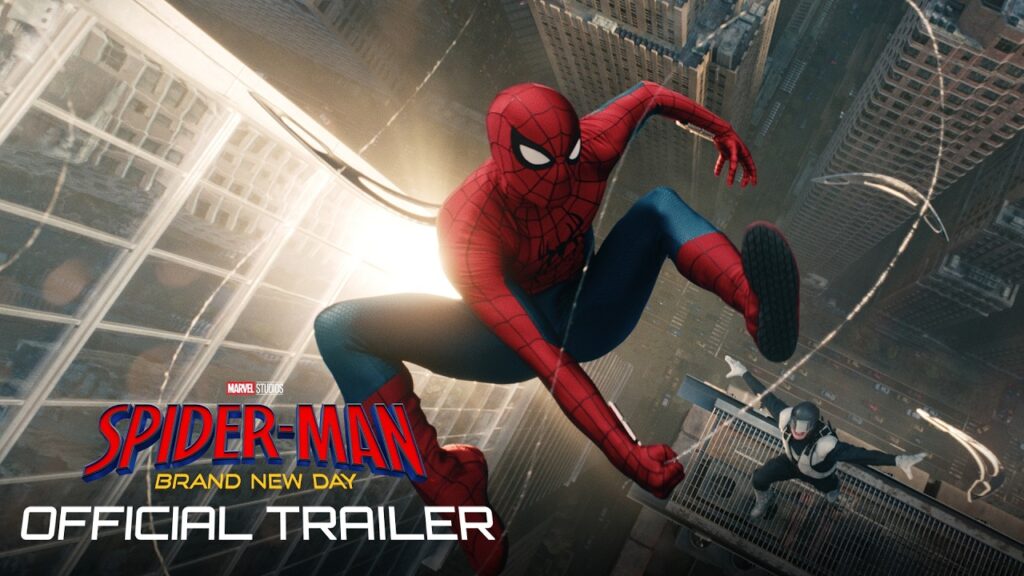
Why it is Trending: when fandom becomes the world’s biggest marketing engine
The Era of Algorithmic Fandom In a culture where attention is fragmented and entertainment is endless, only emotionally loaded franchises can unite global audiences in a single moment. Spider‑Man: Brand New Day didn’t just drop a trailer — it triggered a worldwide digital event powered by nostalgia, character loyalty, and the thrill of collective anticipation. Fans crave connection, continuity, and emotional payoff, and Spider‑Man delivers all three at scale.
• The trailer hit 718.6M views in 24 hours — the most watched trailer in history.
• It beat Deadpool & Wolverine’s record in just eight hours.
• It surpassed GTA VI’s 475M 24‑hour record — the biggest video launch ever.
• Spider‑Man has a multi‑generation fanbase with emotional investment.
• The storyline promises a darker, adult Peter Parker — a major cultural hook.
Virality section: The trailer spread because fans posted reaction videos, breakdowns, Easter‑egg hunts, and emotional edits within minutes. TikTok amplified the hype through algorithmic loops. Nostalgia clips from No Way Home resurfaced, fueling momentum. The “most watched ever” headline became its own viral engine.
Where it is seen: Film, gaming, streaming, fandom culture, merchandise, creator economy, social media ecosystems.
This trend rises because fandom is now the most powerful cultural force online. It matters culturally because it shows how shared emotional universes drive global participation. It matters for the market because hype cycles now outperform paid marketing. The best strategy is to build worlds, not campaigns.
Description of the Consumers: the hyper‑connected superfans
A new generation of fandom‑driven consumers is powering this shift — people who treat trailers like cultural events, who participate in hype as a social ritual, and who see franchises as emotional anchors.
• The Lore‑Obsessed Analyst — A fan who dissects every frame; often Gen Z or millennial; they crave depth; they’re driven by mastery; they prefer long‑form breakdowns; they decide based on narrative clues.
• The Nostalgia Loyalist — Someone emotionally tied to earlier Spider‑Man eras; spans ages 20–45; they seek continuity; they’re driven by memory; they prefer familiar characters; they decide based on emotional payoff.
• The Reaction‑Economy Creator — A content creator who thrives on hype; often Gen Z; they move fast; they’re driven by virality; they prefer high‑emotion moments; they decide based on shareability.
• The Multiverse Maximalist — A fan who loves crossovers; typically younger; they crave expansion; they’re driven by surprise; they prefer interconnected worlds; they decide based on scale.
• The Casual Excitement Seeker — Someone who joins hype waves socially; all ages; they want to feel included; they’re driven by FOMO; they prefer big cultural moments; they decide based on buzz.
• The Character‑Driven Emotionalist — A fan who follows actors as much as stories; often female‑leaning; they crave emotional arcs; they’re driven by attachment; they prefer character‑centric marketing; they decide based on cast chemistry.
• The Cross‑Category Consumer — Someone who engages through games, merch, and social media; all ages; they want immersion; they’re driven by world‑building; they prefer multi‑platform experiences; they decide based on universe depth.
These consumers matter because they turn trailers into global events and transform franchises into cultural ecosystems.
Main Audience Motivation: the need for collective emotional excitement
At the core of this trend is a desire for shared anticipation — a moment where millions feel the same thrill at the same time. Fans want emotional continuity, cultural belonging, and the dopamine hit of a massive reveal.
• They want to feel part of something bigger.
• They want emotional payoff from long‑term storylines.
• They feel tension between everyday monotony and the thrill of fandom.
• They respond by participating in hype rituals online.
• They signal identity through the franchises they support.
This motivation reflects a structural shift toward fandom as a primary form of emotional connection.
Trends 2026: the rise of fandom‑driven cultural megamoments
This moment reveals a broader shift where entertainment is no longer consumed — it is collectively experienced, dissected, and emotionally lived.
• What is influencing: Multiverse storytelling deepens emotional investment; TikTok accelerates hype; nostalgia cycles intensify.
• Macro trends influencing: Creator economy growth; cross‑platform storytelling; globalized fandom communities.
• Novelty/innovation: Trailer‑as‑event culture, real‑time reaction ecosystems.
• Category differentiation: Franchises outperform standalone films by cultural default.
• Implementation + brand strategy: Build hype loops, not campaigns.
Below is the strategic breakdown of the HYPE SHOCK trend.
|
Spider‑Man’s trailer becomes the most watched in history. |
Trailer drops become global cultural events. |
|
|
Strategy to Benefit From Trend |
Treat reveals as shared emotional moments. |
Drives massive organic reach. |
|
Reaction culture dominates TikTok and YouTube. |
Fans amplify marketing for free. |
|
|
Franchises outperform all other content types. |
Studios invest in universe‑building. |
|
|
Fans crave collective excitement and emotional continuity. |
Hype becomes the new currency. |
|
|
Expands emotional investment. |
||
|
Nostalgia‑driven fandom. |
Revives legacy characters and arcs. |
|
|
Creator‑led amplification. |
Influencers become hype accelerators. |
This trend matters because it shows that fandom now drives the entertainment economy. The industry can respond by designing emotional, participatory hype cycles that feel communal and cinematic.
Final Insights: fandom is now the world’s most powerful cultural engine
The HYPE SHOCK moment shows how a single trailer can unite global audiences, break records across industries, and redefine what cultural participation looks like.
This shift represents a structural transformation where fandom replaces traditional marketing, emotional continuity replaces advertising, and hype becomes a shared cultural ritual.
Insights: a hype‑engineered moment that explains the trailer’s global explosion
Industry Insight: The trailer became a global phenomenon because it delivers the perfect modern hype formula — nostalgia, emotional stakes, legacy characters, and multiverse‑scale storytelling engineered to activate every layer of the fandom. Consumer Insight: Fans are deeply attached to Spider‑Man’s emotional arc, and the trailer taps directly into that attachment by showing an isolated, adult Peter Parker facing existential pressure, giving audiences the emotional depth they crave. Social Insight: The trailer was built for reaction culture — every frame contains reveals, shocks, and Easter eggs designed to explode on TikTok and YouTube, turning the drop into a shared global moment within minutes. Cultural/Brand Insight: Spider‑Man’s cross‑generation cultural power makes any new chapter feel like a reunion event, and the trailer activates nostalgia from multiple eras simultaneously.
This shift will define future entertainment by rewarding brands that build worlds, nurture fandoms, and create moments worth gathering around.
Innovation Areas: designing the next era of fandom‑powered entertainment
• Trailer Event Drops — Timed global reveals with interactive fan participation.
• Creator‑First Hype Loops — Early access for reaction creators to spark virality.
• Emotional Continuity Storylines — Character arcs designed for long‑term fan attachment.
• Universe‑Wide Easter Egg Networks — Multi‑platform clues that reward deep engagement.
• Fandom Ritual Kits — Digital and physical tools for watch parties, breakdowns and community moments.
This trend opens a new frontier where entertainment becomes a shared emotional experience — and the industry can respond by building worlds that fans can live inside, not just watch.
IMPACT SURGE: when a single moment triggers global participation and cultural acceleration
A world trained by algorithms to react instantly now turns peak‑attention moments into economic, cultural and behavioral shockwaves across industries.
The Trend: peak‑attention moments become cultural detonators
• What began with entertainment trailers — like Spider‑Man’s record‑breaking 718M views — is now happening across fashion drops, product launches, sports reveals, tech announcements and political moments.
• A single “impact moment” can now shift markets, sell out products, move culture and dominate global conversation within hours.
• Consumers treat these moments as shared rituals — events to participate in, react to, and amplify.
This trend is about how attention, emotion and community converge to create instant cultural explosions.
How It Appeared: algorithmic virality met fandom‑style behavior everywhere
• TikTok and YouTube normalized reaction culture, making every drop a participatory event.
• Fandom logic spread into fashion, gaming, tech and even food — people want to feel part of something.
• Brands learned to engineer “hype loops” with teasers, leaks, countdowns and surprise reveals.
The moment emerged because consumers were already primed to respond emotionally and instantly to anything that feels big.
Why It Is Trending: people crave collective excitement and cultural belonging
• In a fragmented world, shared hype moments create unity and emotional connection.
• Consumers want to feel “in the moment” with millions of others.
• The dopamine of anticipation and reveal is now a cultural currency.
The trend grows because collective excitement feels rare, energizing and socially meaningful.
What Is the Motivation: the desire to participate in something bigger
• People want to feel plugged into culture, not watching from the sidelines.
• They want emotional payoff, surprise, and the thrill of being “there when it happened.”
• They want identity‑affirming moments that signal taste, belonging and cultural fluency.
This motivation is about emotional participation, not passive consumption.
Industries Impacted: the surge spreads everywhere
• Fashion: limited drops, surprise collaborations, viral runway moments.
• Tech: keynote reveals, product leaks, AI announcements.
• Sports: transfer news, athlete reveals, record‑breaking plays.
• Retail: flash sales, capsule launches, creator‑led product drops.
• Gaming: trailer events, character reveals, expansion announcements.
• Food & Beverage: viral menu items, limited‑edition flavors, creator collabs.
• Automotive: EV reveals, concept car drops, design teasers.
Any industry that can create anticipation can trigger an Impact Surge.
How to Benefit From the Trend: design moments, not messages
• Build hype loops with teasers, countdowns and layered reveals.
• Create emotionally charged moments that reward participation.
• Use creators and communities to amplify the drop instantly.
Brands win when they engineer cultural moments, not campaigns.
What Strategy Should Be: turn launches into shared cultural events
• Treat every reveal as a global stage moment.
• Design content for reaction culture — shock, surprise, emotional beats.
• Build multi‑platform ecosystems that let fans decode, share and celebrate.
The strategy is to create moments people want to react to.
Who Are the Consumers Targeted by the Trend: the hype‑driven cultural participants
• The Reaction Creator — thrives on instant commentary.
• The Nostalgia Loyalist — responds to emotional continuity.
• The Drop Hunter — obsessed with limited releases.
• The Community Fan — wants to feel part of a shared moment.
• The Cultural Decoder — loves Easter eggs, clues and hidden meaning.
• The FOMO‑Driven Explorer — joins because everyone else is talking about it.
These consumers want emotional energy, cultural belonging and the thrill of participation.
Link to Main Trend: the cultural expansion of HYPE SHOCK
• IMPACT SURGE is the cross‑industry evolution of HYPE SHOCK — the same mechanics applied to every category.
• Both trends show how emotional continuity, anticipation and virality drive modern behavior. • Both rely on reaction culture and algorithmic amplification.
• Both prove that moments — not messages — now shape culture.