


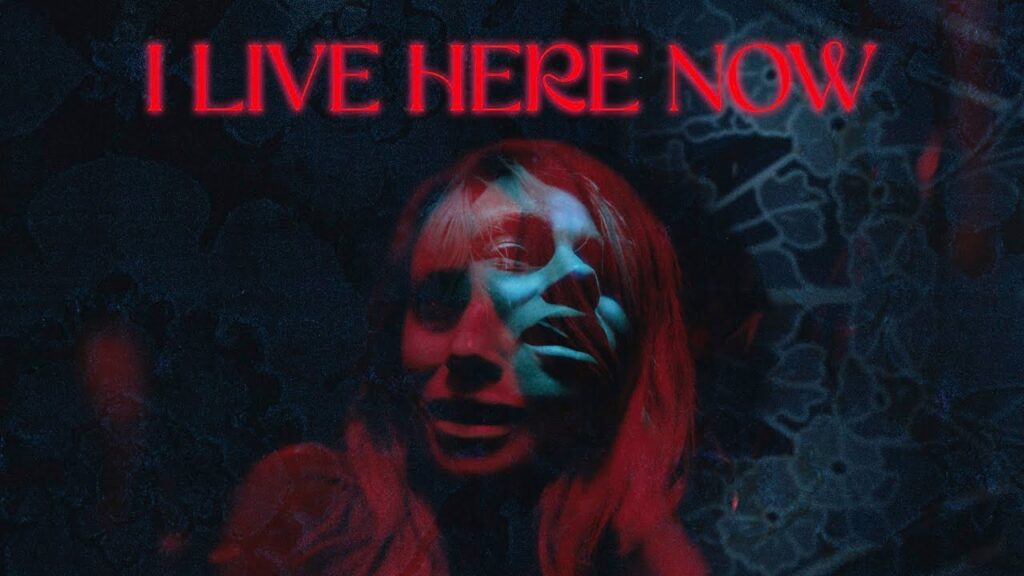
The Lynch-Argento Psychological Horror Debut From Al Pacino’s Daughter — Shot on 35mm and 16mm, Featuring Lucy Fry at Her Most Viscerally Committed
Rose is an aspiring actress on the verge of a major career breakthrough. When she discovers she is pregnant, her boyfriend Travis defers to his controlling mother Martha — who attempts to remove Rose’s agency over the decision entirely. Rose escapes, checking into The Crown Inn, a remote, surrealist hotel whose staff seem to know more than they should, and whose fellow guests feel like projections of Rose’s own fractured interior. Reality dissolves across five colour-coded chapters. The hotel’s corridors, its smoking rooms, its labyrinthine geometry all become the architecture of a psyche confronting buried childhood trauma. Written and directed by Julie Pacino in her feature debut — developed from a prior photographic project, shot on 35mm and 16mm by cinematographer Zoë White. Score by Pam Autuori (TOMI) and Jackson Greenberg. Produced by Pacino, Kyle Kaminsky, and Lara Clear. Distributed by Utopia. World premiere Fantasia International Film Festival July 24, 2025. US theatrical and digital April 21, 2026.
Why It Is Trending: A Lynch-Meets-Argento Feature Debut That Screened at Fantasia, Locarno, Edinburgh, and Deauville — With a Visual Register Critics Cannot Stop Describing
The film’s festival circuit — Fantasia World Premiere (Compétition Cheval Noir), Locarno Out of Competition, Edinburgh International Film Festival (UK premiere), Deauville (Grand Special Prize nominee) — positions it within the international arthouse horror circuit before its US theatrical release. The referential density of the critical consensus — Lynch, Argento, Cronenberg, Badalamenti, The Love Witch, Barton Fink, Shirley Jackson, Alice in Wonderland, Twin Peaks — is itself the most commercially precise description of both the film’s visual ambition and its target audience. Nightmare on Film Street called it “a vibrant painting I wanted to stare at all evening.” Next Best Picture called it “a cinematic exorcism.” The saturated pink-dominated colour palette designed by Hannah Rawson and Lucie Brooks Butler is cited by every review as the film’s most immediately distinctive formal element.
Elements Driving the Trend: The 35mm-16mm Visual Register, Fry’s Physical Commitment, and the Crown Inn as Psychic Architecture
-
The dual-format 35mm and 16mm cinematography — each format carrying its own temporal and psychological register — gives the film its most formally distinctive visual texture and the grain that the dreamlike atmosphere requires.
-
Zoë White’s colour work — saturated pinks, frigid blues, violent reds — is cited across every positive review as operating not decoratively but diagnostically: colour as psychological state rather than production design choice.
-
The Crown Inn as psychic architecture — each guest a projection of Rose’s interior life, each corridor a wound not yet named — gives the hotel premise its most formally specific argument: the labyrinth is not a location but a self.
-
Fry’s physical performance — fragility, rage, confusion, and strength delivered with what Next Best Picture called “gut-punch intensity” — is the film’s most reliable critical consensus element across positive and divided reviews.
Virality: The Pacino Name and the Fantasia-to-Arthouse Discovery Circuit
-
Julie Pacino’s lineage gives the film an immediate discovery mechanism beyond genre horror circuits — the name generates coverage in mainstream entertainment press that a micro-budget genre debut would not otherwise access.
-
The Fantasia Compétition Cheval Noir placement, followed by Locarno and Edinburgh, positions the film within the arthouse horror festival circuit that generates the most sustained critical community engagement.
Critics Reception: Divided Along Expectations — Visual Ambition Unanimously Praised, Narrative Coherence the Consistent Reservation
-
Next Best Picture — cinematic exorcism; soaked in emotional gasoline; Fry gut-punch performance; must-watch nightmarish journey through the female psyche; Julie Pacino’s voice arrives bold and unafraid; can feel unfocused at times.
-
Film Focus Online — hauntingly beautiful debut; confident visual flair; Fry her most emotionally charged performance to date; belongs on must-watch list alongside Mulholland Drive, Black Swan, Safe.
-
Moviejawn — exciting calling card; confident visual flair; unflinching trauma-informed screenplay; literary references elevate it above other psychological films about actors with identity issues; beautiful, sometimes disgusting, always unpredictable.
-
Nightmare on Film Street — undeniable visual feast; vibrant painting; story spins its wheels but striking debut; perfect for fans of The Love Witch, Barton Fink, Shirley Jackson novels.
-
Eye for Film — vaulting ambition that frequently falls short of its goals; as a first feature has enough moments to commend but not enough to recommend; short of that from a place of ambition.
-
IMDb 5.5 from 128 viewers. 24 critic reviews. Rotten Tomatoes: critics praise confident visual flair; note overflowing basket of ideas.
Awards and Recognitions: 1 Win and 1 Nomination — Dark Hedges Best Feature, Deauville Grand Special Prize Nominee
-
The Dark Hedges Film Festival 2025: Best Feature — Julie Pacino (win).
-
Deauville Film Festival 2025: Grand Special Prize — nominee.
-
Fantasia 2025 Compétition Cheval Noir. Locarno 78 Out of Competition. Edinburgh IFF. US theatrical and digital April 21, 2026. Utopia distribution.
Director and Cast: Al Pacino’s Daughter Making a Debut That Is Entirely Her Own — Built on Photographic Roots, Surrealist Ambition, and a Lead Performance of Complete Physical Commitment
-
Julie Pacino — feature debut, developed from a prior photographic project, with short film experience in similar surrealist-feminist territory — brings a fully formed visual language and a trauma-informed screenplay that every review acknowledged as a genuine directorial voice regardless of their position on the film’s narrative coherence.
-
Lucy Fry (Rose) — the film’s unanimous performance consensus — carries five colour-coded chapters of psychological dissolution with the layered fragility and physical intensity that every review cited as the film’s most reliable foundation.
-
Madeline Brewer (Lillian) — The Handmaid’s Tale — delivers what multiple reviews described as a hypnotic, quietly menacing supporting presence that amplifies the film’s off-kilter energy and nearly steals scenes from the lead.
-
Sheryl Lee (Martha) — Twin Peaks — brings the powerful matriarchal energy the controlling mother figure requires, with a recurrent red dress that Eye for Film noted is “as obvious as blue velvet.”
-
Matt Rife (Travis) — comedian in a dramatically specific role — provides both the comedy and the specific breed of cheerful, consequence-free male entitlement the film’s argument about bodily autonomy requires.
-
Zoë White (cinematographer) — whose saturated, psychologically diagnostic colour work is the film’s most discussed technical contribution alongside the dual-format shooting approach.
Conclusion: A Formally Ambitious Arthouse Horror Debut That Earned Its Festival Circuit Through Visual Conviction and Fry’s Performance — With a Directorial Voice That Is Fully Formed Even Where the Narrative Is Not
The Deauville nomination and the Dark Hedges Best Feature win confirm that the festival community recognised the formal ambition. The Fantasia-Locarno-Edinburgh circuit gives the film the widest possible arthouse horror institutional validation. Pacino’s debut is a calling card of genuine authority — the next feature will determine whether the visual language finds a screenplay that fully matches its ambition.
What Movie Trend Is Followed: The Surrealist Feminist Horror Debut Deploys the Hotel as Psychic Architecture — Joining the Most Formally Ambitious Strand of Contemporary American Genre Cinema
I Live Here Now belongs to the surrealist feminist horror tradition — The Love Witch, Titane’s body horror register, Black Swan’s industry-pressure nightmare — in which the protagonist’s interior life is externalised through a formally adventurous visual language that prioritises psychological truth over narrative legibility. Pacino’s specific formal contribution is the Lewis Carroll structure: the rabbit hole as the abortion clinic’s hotel recommendation, the Crown Inn as Wonderland, the guests as playing cards or chess pieces, the pill that distorts reality as the narrative engine that sends the film into its most formally distinctive register. The trauma-informed screenplay and the body horror elements give the surrealism its most specific content: this is not random dreamlike imagery but the precise visual language of a psyche that has been trained to internalise violence.
Trend Drivers: The Five-Chapter Colour-Coded Structure, the Body Horror as Psychic Autobiography, and the Hotel Labyrinth as Self-Portrait
-
The five-chapter structure — each colour-coded, each shifting the film’s formal register — gives the surrealist narrative a discipline that pure dream-logic films lack, and mirrors the specific therapeutic structure of trauma processing.
-
The body horror elements — self-inflicted burns, Lillian swallowing glass, the physical violence of the nightmare sequences — are cited by trauma-informed reviewers as the most formally accurate available visual representation of how unprocessed childhood trauma manifests in the adult body.
-
The Crown Inn’s architecture — labyrinthine, entirely female staff, time-distorting, without reliable external reference — gives the hotel premise its most formally specific psychic argument: the building is the mind, the guests are the wounds.
-
The Lewis Carroll reference — pill that distorts reality, labyrinthine hotel, anthropomorphic guests, the queen motif — gives the surrealism a literary architecture that the Moviejawn review identified as one of the film’s most formally specific and most underappreciated formal choices.
What Is Influencing Trend: Utopia Distribution’s Arthouse Horror Pipeline and the Fantasia Debut Discovery Circuit
-
Utopia Distribution — whose catalogue includes We’re All Going to the World’s Fair (Jane Schoenbrun, 2021) — positions I Live Here Now within the most formally adventurous strand of contemporary American arthouse horror, giving it an institutional context that prepares audiences for radical formal choices.
-
Fantasia’s Compétition Cheval Noir is the most prestigious available international festival section for feminist and surrealist horror — its placement there confirms the film’s genre community institutional standing.
-
The dual-format 35mm/16mm shooting approach gives the film a tactile, analogue visual register that the arthouse horror community responds to as a formal commitment signal — the same community that built the cult around The Love Witch and We’re All Going to the World’s Fair.
Macro Trends Influencing: Bodily Autonomy Cinema and the Feminist Horror Wave
-
The bodily autonomy theme — Rose’s pregnancy, the controlling mother’s attempted removal of her agency, the Crown Inn as a space where she reclaims it — gives the film a political urgency that the post-2022 American cultural climate makes impossible to separate from the personal horror narrative.
-
The feminist surrealist horror wave — Anna Biller, Jane Schoenbrun, Josephine Decker, Karyn Kusama’s adjacent register — has established a critical and audience infrastructure for formally adventurous films about female interiority that the mainstream horror industry cannot produce.
-
The trauma-informed screenplay as a genre approach — the film’s most formally specific contribution — gives it a therapeutic and psychological credibility that conventional horror premises lack.
Consumer Trends Influencing: The Arthouse Horror Streaming Community and Fantasia’s Cult Discovery Network
-
Utopia’s distribution infrastructure gives the film the streaming and digital availability that the arthouse horror audience uses as its primary discovery mechanism — the same audience that found We’re All Going to the World’s Fair through platform access rather than theatrical marketing.
-
Fantasia’s cult discovery network — one of genre cinema’s most active and most advocacy-driven communities — generates word of mouth that sustains films across the months between festival premiere and theatrical release.
-
The Lynch-Argento comparison is the film’s most efficient discovery shorthand — a cross-demographic reference that activates both the arthouse auteur audience and the genre horror community simultaneously.
Audience Analysis: Arthouse Horror Audiences, Feminist Surrealist Cinema Followers, and the Fantasia Cult Community
The core audience is 22–45 — arthouse horror viewers who follow Utopia’s catalogue and Fantasia’s competition section, feminist surrealist cinema followers who responded to The Love Witch and We’re All Going to the World’s Fair, and the Lynch-Argento community that the critical referencing activates. The “will you like it?” Letterboxd quiz — suggesting the film is for viewers who spent the 2010s on Tumblr reblogging Twin Peaks GIFs and Petra Collins photoshoots — is the most precise available audience self-description, and one that positions the film within a specific and active discovery community.
Conclusion: A Surrealist Feminist Horror Debut That Found Its Exact Festival Audience — and a Director Whose Visual Language Is Fully Formed Before Her Narrative Architecture Is
I Live Here Now earns its festival circuit placement through the visual conviction and the Fry performance that make the film’s most challenging sequences unavoidable. Pacino’s debut positions her within the most formally ambitious strand of contemporary American feminist horror — and confirms that the next screenplay, built to match the visual language already in place, will be worth watching closely.
Final Verdict: A Visually Ferocious Feminist Surrealist Horror Debut — With Fry’s Physical Commitment and Zoë White’s Colour Architecture as Its Two Most Formally Irreplaceable Elements
Pacino delivers a debut of genuine formal conviction — the dual-format cinematography, the five-chapter colour-coded structure, the Lewis Carroll architecture, and the trauma-informed body horror register are all fully formed aspects of a specific directorial voice. The narrative coherence is the film’s most consistently contested element, and the critical division accurately reflects the gap between the film’s formal ambition and the screenplay’s capacity to carry it. Fry and White are inarguable regardless of critical position.
Audience Relevance: For Arthouse Horror Audiences Who Respond to Visual Ambition and Psychological Truth Over Narrative Resolution
Works best for viewers who approach surrealist horror on its own terms — the Mulholland Drive audience, the Black Swan audience, the arthouse feminist horror community that values dreamlike formal logic over conventional narrative mechanics. The bodily autonomy theme gives the film a contemporary political resonance that extends the psychological horror into social argument.
What Is the Message of Movie: The Body Keeps the Score — and the Crown Inn Is Where Rose Finally Stops Running From What Hers Has Been Keeping
The film’s most precise thematic statement — the body as the archive of trauma, the hotel as the space where that archive is finally opened and examined — is the specific argument that trauma-informed horror is uniquely equipped to make. Rose’s journey is not a recovery narrative but a confrontation narrative: she doesn’t heal so much as face.
Relevance to Audience: A Film That Gives Bodily Autonomy Its Most Formally Specific and Most Viscerally Honest Cinematic Treatment in the Post-2022 American Horror Landscape
The bodily autonomy theme — Rose’s pregnancy, the controlling mother’s removal of her agency, the Crown Inn as the space where she reclaims both her body and her history — is one of contemporary American horror’s most politically specific and most personally resonant subjects. Pacino’s treatment is horror rather than advocacy, which gives it a formal reach that issue-driven drama cannot achieve.
Social Relevance: The Female Psyche as Horror Architecture — and the Body as the Archive That Cannot Be Erased
The film’s social argument — that the violence done to women’s bodies is written into those bodies permanently, that the surrealist hotel is the most accurate available architectural representation of what unprocessed trauma looks like from the inside — is the feminist horror wave’s most specific and most formally honest contribution to contemporary American cinema.
Performance: Fry Anchors Every Formal Experiment — Brewer Nearly Steals the Film
Fry’s Rose — fragility, rage, confusion, and finally strength, delivered with physical and emotional intensity across five colour-coded chapters — is the film’s foundation without which the surrealist formal experiments would have nothing to hold them. Brewer’s Lillian — hypnotic, quietly menacing, the film’s most unsettling secondary presence — delivers the performance that every review noted was pushing to take the film over entirely.
Legacy: A Debut That Announced a Directorial Voice of Complete Formal Specificity — and That Lucy Fry Can Carry a Film’s Most Demanding Psychological Architecture Alone
I Live Here Now will be remembered as the film that introduced Julie Pacino as a filmmaker with a fully formed visual language and a trauma-informed formal perspective that contemporary American arthouse horror was specifically waiting for. Fry’s performance will be remembered as the career-best work that the film required — and delivered.
Success: 1 Win and 1 Nomination — Dark Hedges Best Feature — Deauville Grand Special Prize Nominee
-
Dark Hedges Film Festival 2025 Best Feature — win. Deauville 2025 Grand Special Prize — nominee.
-
Fantasia 2025 Compétition Cheval Noir. Locarno 78 Out of Competition. Edinburgh IFF UK Premiere.
-
US theatrical and digital April 21, 2026. Utopia distribution. IMDb 5.5 from 128 viewers. 24 critic reviews.
The festival circuit confirmed the formal ambition. Fry and White confirmed the execution. The critical division confirmed that the film is genuinely asking something of its audience rather than providing easy answers.
I Live Here Now proves that the most formally honest films about trauma are the ones where the hotel is not a setting but a self — and that Julie Pacino arrived with a fully formed visual language on her very first feature.
Insights: A surrealist feminist horror debut of genuine formal conviction — the dual-format cinematography, the five-chapter colour-coded structure, and the Lewis Carroll architectural logic give the film a visual register that is fully formed on its first appearance, while Fry’s physical commitment and Brewer’s hypnotic supporting presence give the formal ambition its most reliable human foundation. Industry Insight: Utopia’s distribution positioning — which placed We’re All Going to the World’s Fair as the anchor of its arthouse horror catalogue — gives I Live Here Now the most formally appropriate and most audience-specific institutional context available for a formally adventurous feminist surrealist debut; the Fantasia-Locarno-Edinburgh-Deauville circuit confirms the international festival community’s recognition of that formal ambition before the domestic theatrical release. Audience Insight: The Lynch-Argento critical comparison is the film’s most commercially efficient discovery shorthand — simultaneously activating the arthouse auteur audience and the genre horror community — while the Letterboxd audience quiz’s self-identification as “people who reblogged Twin Peaks GIFs and Petra Collins photoshoots in the 2010s” is the most precise available description of the community for whom the film’s aesthetic is not challenging but immediately recognisable. Social Insight: A film that uses surrealist hotel architecture as the visual language of unprocessed childhood trauma — where the body horror sequences are the most formally accurate available representation of what it costs a person to carry violence that was never acknowledged — is making the feminist horror wave’s most specific and most politically precise contribution to contemporary American cinema in the post-2022 bodily autonomy landscape. Cultural Insight: I Live Here Now positions Julie Pacino as a filmmaker whose visual language is fully formed before her narrative architecture has caught up to it — the rarest and most promising available debut condition — and confirms that the second feature, with a screenplay equal to the visual intelligence already demonstrated, will be one of American arthouse horror’s most anticipated productions.
Conclusion: A Formally Ferocious Feminist Surrealist Debut That Confirms Pacino’s Visual Authority and Fry’s Capacity to Carry the Heaviest Available Psychological Architecture
The five-chapter colour architecture is fully realised. The dual-format tactility is fully intentional. Fry is fully committed. The narrative coherence is the next film’s opportunity. I Live Here Now earns its place in the Utopia arthouse horror catalogue as a debut of genuine formal specificity — and confirms that its director’s next film will be worth the arthouse horror community’s most attentive watching.
Summary: One Hotel, Five Chapters, One Woman’s Buried History, and the Architecture of a Psyche Finally Willing to Look
-
Movie themes: Bodily autonomy and its violent removal, the body as the archive of unprocessed childhood trauma, the hotel as the external architecture of the interior self, the surrealist recovery of agency through confrontation rather than escape, and the specific formal argument that dreamlike horror is the most honest available visual language for what trauma actually looks like from the inside.
-
Movie director: Julie Pacino — feature debut, developed from a photographic project, short film experience in similar feminist surrealist territory — arrives with a fully formed visual language: dual-format 35mm/16mm, five-chapter colour architecture, Lewis Carroll structural logic, and a trauma-informed screenplay that every review acknowledged as a genuine directorial voice.
-
Top casting: Fry’s Rose is the film’s complete foundation — five chapters of physical and psychological dissolution delivered with gut-punch intensity and the full layered complexity that the surrealist formal experiments require to remain anchored in human experience. Brewer’s Lillian is the film’s most hypnotic secondary presence. Lee’s matriarchal Martha and Rife’s consequence-free Travis give the first act its most precisely observed social argument.
-
Awards and recognition: Dark Hedges Film Festival 2025 Best Feature (win). Deauville 2025 Grand Special Prize nominee. Fantasia 2025 Compétition Cheval Noir. Locarno 78 Out of Competition. Edinburgh IFF UK Premiere. US theatrical and digital April 21, 2026. Utopia distribution.
-
Why to watch: The surrealist feminist horror debut that positions the hotel as the architecture of a psyche — shot on 35mm and 16mm, colour-coded across five chapters, anchored by Fry’s most physically committed performance, and formally indebted to Lynch, Argento, and Lewis Carroll simultaneously in ways that feel completely personal rather than referential.
-
Key success factors: Zoë White’s saturated colour cinematography plus the dual-format tactile visual register plus Fry’s career-defining physical performance plus Brewer’s hypnotic supporting presence plus Utopia’s arthouse horror distribution infrastructure plus the Fantasia cult discovery network plus the Lewis Carroll-Lynch-Argento referential density that activates multiple critical and audience communities simultaneously.
-
Where to watch: US theatrical and digital from April 21, 2026. Available to rent on Fandango at Home. Check JustWatch for full platform availability.
Conclusion: A Debut That Arrived With Its Visual Language Fully Formed — and With a Lead Performance That Confirms Lucy Fry as One of American Arthouse Horror’s Most Committed and Most Capable Screen Presences
The Crown Inn is built from Rose’s wounds. Zoë White filmed them in saturated colour. Fry carried them across five chapters. Pacino built the architecture from scratch on her first feature. The next film is where the narrative catches the visual. That is the one to watch.