


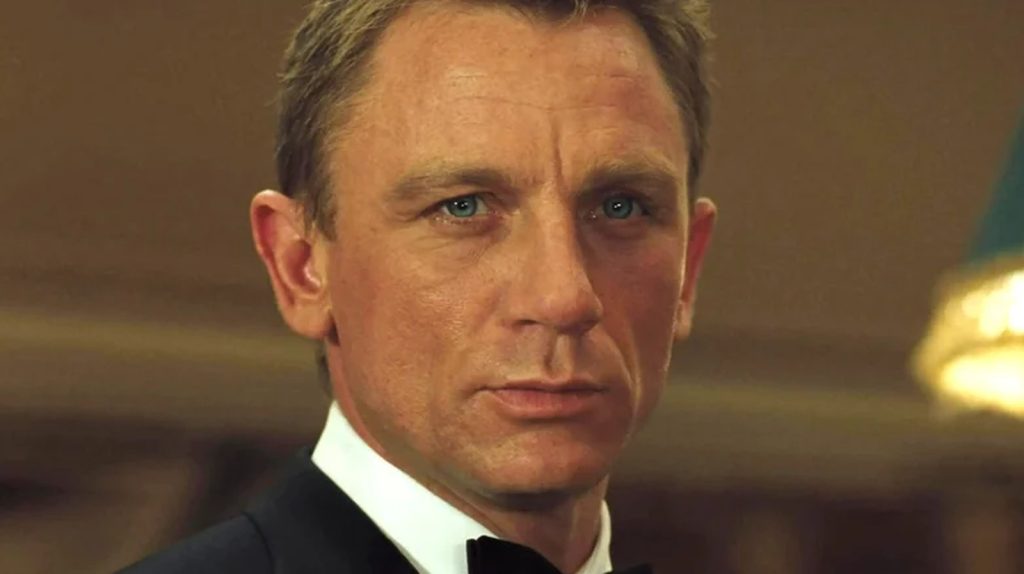

We are officially in a new era for 007, with Robert Pattinson recently being announced as the new James Bond, in the wake of Amazon buying the rights to the 64 year-old movie franchise. Before we see what director Denis Villeneuve is cooking, and whether he allows Pattinson to be a little weirdo, this is the time to look back at the franchise so far — what worked and what didn’t, and the legacy previous Bond actors have left behind.
As a confession, I have never experienced the James Bond franchise. My only familiarity with it is the N64 game “GoldenEye 007,” which I played religiously with friends growing up. I have never watched a single one of these movies before, though I very much enjoy a good spy thriller like the “Mission: Impossible” movies, or the “Fast & Furious” movies when they forget about the drag racing.
So when the editors at /Film asked if I wanted to binge Daniel Craig’s James Bond movies and write my honest thoughts about them, I figured I might as well clear a cinematic blindspot on my list. After over 20 movies in the franchise, what did the Craig movies do to keep the Bond franchise fresh, while also competing in the era of mega-budget globe-trotting spy thrillers and action adventure films?
Well, in short, these movies rule. Big shocker, eh? Well, I actually was skeptical at first. My only perception of Bond as a franchise was that of a suave English womanizer who occasionally dealt with ridiculously cartoonish villains in over-the-top sci-fi plots (not that dissimilar to “Fast & Furious,” actually). What I discovered was that, sure, but also a lot more.
The prestige TV of spy thrillers
I must confess that I was skeptical of the Daniel Craig Bond movies at first. Though fun and thrilling, the gadgets of this modern James Bond didn’t feel particularly unique, and though cool, his mono-lettered allies like M and Q weren’t as purely entertaining to watch as, say, Benji and Luther from “Mission: Impossible,” or Roman and Tej from “Fast & Furious.” But what does make these movies stand out is their look. In many ways, 007 movies are the prestige TV of spy thrillers. If “Bourne” made them gritty and realistic, and “Mission: Impossible” turned them into sheer spectacle, Bond gave them back a shine and an esteem that other movies don’t have. Tapping legends such as Roger Deakins and Hoyte van Hoytema as cinematographers, these movies simply look gorgeous. They are grand and full of spectacle, but without the shine and artifice of a 21st century action-adventure. It’s a look that matches the prestige and expense of, well, Bond’s car and watch, for instance.
The movies also all have rather unique and different approaches to the spy thriller. Though the Bond formula is rather well established, each movies still manages to feel like a completely unique aspect of Bond’s career. That the climax of “Casino Royale” is not some big shoot-out but a simple high-stakes poker game is a testament to the versatility of the franchise. Indeed, though these movies feel big in their scale and thrilling in their stakes, they also feel rather intimate in the way they end up focusing on Bond’s efforts to thwart his villain’s plots.
The complete story of a complete character
Then there is James Bond himself, the undisputed star and focus of these movies, and a completely unique element in the genre at large. No matter how many franchises try to replicate the success of 007, of the archetypical gentleman spy, none can quite nail what makes him work.
Even before “No Time to Die” does what no other Bond movie has done before and delivered a definitive (and quite finite) ending to the main character, Daniel Craig’s tenure had already done something unique and special within the spy thriller genre. These movies are the prestige TV of spy thrillers in aesthetics, but also by being serialized. The Craig films tell one complete story of a singular man, following Bond from a rookie 00 agent to a grizzled veteran who is too old for this s**t. It allows the franchise to make Bond more than an archetype, but a full character with an arc, with flaws, with a temper, and with a history. To watch these movies is to fully get Bond (at least this specific version of him): the story of a man that grieves from one movie to the other, and whose years in the service take a toll.
A big reason why this works is Daniel Craig himself, who infuses his portrayal not only with a sense of humor, but with an inner darkness that challenges the idea of Bond as the suave womanizing spy with little to no flaws. Instead, this Bond is a monster, an angry killing machine that hides behind that suave persona, his anger increasing with every loss. The movies, then, become a fascinating arc of him learning to be more human again. By the end, I had become a proper Bond fan.