
The Italian woman who came out first — and paid with everything
Mariasilvia Spolato is a mathematics professor, an activist, and the co-founder of Italy’s first gay liberation movement. On International Women’s Day 1972, she publicly declares her homosexuality — the first woman in Italy to do so. She loses her university position, her family’s support, and eventually her home. She lives homeless for forty years, never abandoning her passion for mathematics, until her death. Geraldine Ottier’s debut gives her the cinematic reckoning she was denied in life.
Why It Is Trending: A Forgotten Italian Pioneer Gets Her Film — Released on International Women’s Day
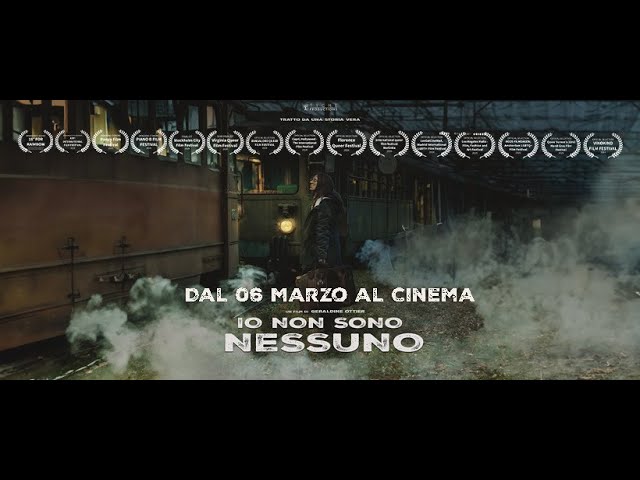
Produced with the support of the Ministero della Cultura and distributed by Green Film, Io Non Sono Nessuno opened in Italian cinemas on March 6, 2025 — two days before International Women’s Day — in an act of distributorial symbolism as pointed as the subject itself. Director Geraldine Ottier — who also wrote, edited, and dedicated the film to her wife — describes making the film as “an immense honour.” The Florence Queer Festival premiere generated standing ovation response described by Ottier herself: “long and warm applause.” The film has since travelled an extensive international queer film festival circuit, winning awards in Brazil and Italy and screening across India, Finland, Spain, and beyond. The Italian box office gross of €23,400 reflects limited screens, not the film’s cultural reach.
Elements Driving the Trend: Mariasilvia Spolato is not a well-known name internationally — and her near-total erasure from Italian cultural memory is itself part of what the film documents. She co-founded Fuori! — Italy’s first homosexual liberation magazine and movement — and was subsequently declared “unworthy of teaching,” fired from her university position, rejected by her family, and spent four decades homeless in Rome, still doing mathematics. The film’s title — “I Am Nobody” — is drawn from Spolato’s own description of her experience of social erasure. Ottier’s decision to open on March 8 and to structure the film around the Women’s Day 1972 declaration gives the story a formal and political precision that pure biographical drama often lacks.
Virality: The LGBTQ+ film festival circuit — Florence, LesGaiCineMad, Bangalore, Vinokino, For Rainbow — carried the film internationally before its Italian release, building international community awareness of Spolato’s story among LGBTQ+ audiences who had no prior access to her history. The Italian theatrical opening generated cultural press coverage around both the film’s subject and its International Women’s Day positioning.
Critics Reception: Il Davinotti praised the dry, never melodramatic style well-suited to the cast’s effective performances, with Erica Zambelli particularly noted. Taxidrivers acknowledged the value of restoring Spolato’s story to public memory while noting the film’s modest indie production level. MYmovies confirmed it as a clear and painful portrait of Spolato’s courage. IMDb 7.9 from 62 early viewers — a score that reflects genuine emotional engagement from the queer festival audience that found it first.
Awards and Recognitions: 1 win and 2 nominations total. Best Sound — For Rainbow Film Festival, Fortaleza, Brazil. Best Soundtrack — Asti International Film Festival, Italy. Official selections: Bangalore Queer Film Festival (India), Vinokino Film Festival (Finland), LesGaiCineMad Madrid LGBTI+ Film Festival (Spain), Florence Queer Festival (Italy). Italian theatrical release March 6, 2025.
Io Non Sono Nessuno arrives as Italian LGBTQ+ rights remain a live political battleground — and the story of a woman whose 1972 courage cost her everything arrives with a contemporary urgency that historical distance does not diminish.
What Movie Trend Is Followed: The Recovered LGBTQ+ Pioneer Biopic Restores What History Erased
Io Non Sono Nessuno belongs to a growing international tradition of films that restore erased or forgotten LGBTQ+ pioneers to cultural memory — films built on the conviction that the people who paid the highest prices for the rights subsequent generations inherited deserve to be named and known. Spolato’s specific combination of intellectual achievement, activist courage, institutional punishment, and four decades of homelessness makes her story one of the most extreme examples of what Italian society was willing to do to a woman who refused to be silent. Ottier’s approach — dry, restrained, never melodramatic — trusts the historical facts to carry the film’s emotional weight without sentimentalising them.
Trend Drivers: A Director Who Made This Film Because No One Else Had Ottier is the creator of Italy’s first lesbian web series (LSB The Series) and has spent her career building LGBTQ+ Italian media infrastructure through independent production. The decision to dedicate the film to her wife gives it a personal register that reinforces rather than sentimentalises the subject’s meaning. The train motif — used throughout the film as a metaphor for life’s passages and temporal transitions — is the film’s most formally specific poetic choice. Erica Zambelli’s performance gives Spolato a restrained dignity that the more exaggerated supporting portrayals of her persecutors throw into effective relief.
The film’s release timing — March 6-8, 2025, tied to International Women’s Day — is not incidental marketing but a formal argument about who Spolato was and what her declaration meant.
What Is Influencing Trend: Italy’s LGBTQ+ independent cinema has been producing important and internationally circulated work for over a decade — and the queer film festival circuit provides the distribution infrastructure that mainstream Italian theatrical cannot offer for this subject matter. The Ministry of Culture’s funding participation signals institutional recognition of LGBTQ+ history as a legitimate subject for Italian cultural investment. The recovered pioneer biopic format — from Milk to Portrait of a Lady on Fire — has proven one of LGBTQ+ cinema’s most commercially reliable and culturally essential categories.
The specific convergence of feminist and LGBTQ+ rights in Spolato’s story — she came out at a women’s liberation rally — gives the film a dual political resonance that neither strand alone would generate.
Macro Trends Influencing: Italy’s ongoing political contestation over LGBTQ+ rights — including debates over same-sex partnership recognition and LGBTQ+ education — gives a film about 1972 persecution a 2025 political urgency. The international LGBTQ+ film festival circuit has become one of the most effective distribution systems for films that national theatrical markets cannot sustain commercially. The homeless LGBTQ+ elder — a figure whose existence is systematically erased from both LGBTQ+ and mainstream cultural representation — is one of the most politically charged subjects in contemporary queer cinema.
Films that restore erased queer history to visibility are doing work that journalism, academia, and mainstream cinema consistently fail to do — and their cultural value compounds over time.
Consumer Trends Influencing: The LGBTQ+ film festival audience is among cinema’s most loyal and internationally distributed communities, and the word-of-mouth from Florence Queer Festival through Brazil, India, Finland, and Spain confirms the film’s genuine international reach. The Italian diaspora and Italy-interested LGBTQ+ audiences globally give the film a reach that its theatrical performance in Italy alone does not capture. The March 8 release date generates cultural press coverage and social media discovery among feminist and LGBTQ+ audiences simultaneously.
The combination of a genuinely unknown subject and a genuinely extraordinary life is the most reliable discovery mechanism in biographical queer cinema.
Audience Analysis: Italian LGBTQ+ Audiences, International Queer Cinema Communities, and Anyone Who Cares About Erased History The core audience is 25–60 — Italian and diaspora LGBTQ+ audiences who will find Spolato’s story both personally and politically resonant, international queer cinema festival communities that have already engaged with the film, and the broader audience of viewers who respond to biographical cinema of genuine historical urgency. The film’s IMDb 7.9 from early viewers reflects the passion of a community that found something it needed. The Vinokino and LesGaiCineMad selections confirm the film’s cross-cultural reach among specifically lesbian-identified audiences. Anyone who has encountered the idea of a woman who came out in 1972, lost everything, and lived homeless for forty years will want to see this film.
Final Verdict: Io Non Sono Nessuno Is a Modest, Honest, and Genuinely Important Italian Debut — a Film That Gives Mariasilvia Spolato the Cinematic Reckoning She Was Denied in Life
Geraldine Ottier delivers a debut of genuine moral purpose — a film made because the person it documents has been erased, and because that erasure is itself the story. The production values are modest, the style is deliberately restrained, and Erica Zambelli’s dignified central performance does the heavy lifting that the modest budget cannot. This is not an aesthetically ambitious film. It is a historically necessary one. Those two things are not contradictions — and the distinction matters for understanding what the film achieves.
Audience Relevance: For Anyone Who Has Needed to See Their History Acknowledged on Screen Spolato’s story is unknown in Italy and almost entirely unknown internationally. The film’s first function is documentary: to make her existence, her courage, and the specific cruelty of what was done to her a matter of public record in cinematic form. For Italian LGBTQ+ audiences — and for LGBTQ+ audiences internationally — that function carries a weight that formal elegance alone cannot provide. The standing ovation at Florence Queer Festival was not for the filmmaking alone; it was for the act of remembering.
What Is the Message: The Price of Being First Is Paid in Full — and the People Who Paid It Deserve to Be Named Spolato was fired, rejected by her family, and spent forty years homeless not despite being brilliant, brave, and right — but because she was. The film’s title — “I Am Nobody” — is the erasure her society imposed and the title Ottier reclaims on her behalf. That reclamation is the film’s entire purpose, and it is enough.
Relevance to Audience: A Story That Is Not Over The film’s Italian release in 2025 — fifty-three years after Spolato’s declaration — arrives when the rights she sacrificed everything for remain contested in Italy. The historical distance provides no comfort. Spolato’s story is not past; it is precedent. The film’s contemporaneity is not manufactured but structural: this is what Italian society was willing to do to a woman who told the truth, and the political forces that made that possible have not disappeared.
Social Relevance: Italy’s First Out Lesbian, Still Unknown to Most Italians Mariasilvia Spolato co-founded Fuori! — Italy’s first gay liberation magazine — and was one of the most consequential LGBTQ+ activists in Italian history. She is virtually unknown to the general Italian public. The film’s existence is an argument that this is not acceptable. The Ministry of Culture’s funding participation is an institutional acknowledgement that Italian cultural memory has a debt to Spolato that the culture has not paid. Ottier’s film begins the payment.
Performance: Zambelli Carries the Film with Quiet Dignity Erica Zambelli’s Spolato is the film’s greatest technical achievement — a restrained, never melodramatic performance that communicates the character’s intellectual strength, emotional resilience, and eventual devastation without exaggeration. Il Davinotti noted the dry style as precisely suited to the cast’s effective work. Martina Carletti’s Valeria provides the film’s most nuanced supporting relationship — more complex precisely because her character’s choices are less clearly drawn than the film’s institutional villains.
Legacy: A Film That Does Its Most Important Work Simply by Existing Io Non Sono Nessuno will be remembered as the film that introduced Mariasilvia Spolato to the international cultural record — and as the debut that confirms Geraldine Ottier as one of Italian LGBTQ+ independent cinema’s most purposeful voices. Its festival circuit will sustain it for years. Its streaming availability will extend it indefinitely. The audience that needs this film will find it.
Success: Best Sound Brazil, Best Soundtrack Italy, International Queer Festival Circuit 1 win and 2 nominations total. Best Sound — For Rainbow Film Festival, Fortaleza, Brazil. Best Soundtrack — Asti International Film Festival, Italy. Official selections: Florence Queer Festival, Bangalore Queer Film Festival, Vinokino Finland, LesGaiCineMad Madrid. Italian theatrical release March 6, 2025. Italian box office €23,400 — festival and streaming audience considerably larger.
The film’s cultural work is measured in discovery rather than box office — and the discovery is happening at exactly the pace and in exactly the communities where it matters most.
Io Non Sono Nessuno gives Mariasilvia Spolato the name she was told she didn’t have — and in doing so, makes her impossible to forget.
Industry Insights: Ottier’s debut demonstrates that Italian LGBTQ+ independent cinema can build genuine international festival reach — from Brazil to India to Finland — on Ministry of Culture funding and the authority of a genuinely extraordinary historical subject. The March 8 theatrical release date is the film’s most significant production decision, positioning it as a cultural event rather than a niche release. Audience Insights: The global LGBTQ+ film festival audience found this film before the Italian theatrical audience did — and their response, documented across five international festivals, confirms that Spolato’s story generates the emotional and political engagement that queer cinema communities specifically seek and sustain. Social Insights: A film about Italy’s first out lesbian, released in 2025 when Italian LGBTQ+ rights remain politically contested, is not historical drama — it is contemporary argument. The fifty-three years between Spolato’s declaration and this film’s release is itself a social fact that the film’s existence quietly documents. Cultural Insights: Io Non Sono Nessuno positions itself in the tradition of recovered LGBTQ+ biographical cinema — from Milk to Portrait of a Lady on Fire — that understands its primary function as historical testimony rather than aesthetic achievement. The distinction does not diminish the film; it explains why it matters.
Io Non Sono Nessuno is the film Mariasilvia Spolato deserved fifty years ago — and the fact that it exists now, however modestly, is itself a form of justice that forty years of homelessness could not cancel.
Summary: One Coming Out, One System’s Response, and Forty Years of Consequences
-
Movie themes: LGBTQ+ pioneer erasure, institutional punishment of homosexuality, the cost of courage in a hostile society, feminist and queer activism in 1970s Italy, and the specific violence of a life reduced to nobody by a country that should have honoured it.
-
Movie director: Geraldine Ottier — creator of Italy’s first lesbian web series — makes her debut feature with the precision of a filmmaker who knew exactly what needed to be made. Writes, directs, and edits. Dedicates the film to her wife.
-
Top casting: Erica Zambelli gives Spolato her cinematic dignity — restrained, never melodramatic, carrying the full weight of the character’s intelligence and devastation simultaneously. Martina Carletti’s Valeria is the film’s most nuanced relationship.
-
Awards and recognition: Best Sound — For Rainbow Film Festival, Fortaleza, Brazil. Best Soundtrack — Asti International Film Festival, Italy. Florence Queer Festival, Bangalore Queer Film Festival, Vinokino Finland, LesGaiCineMad Madrid official selections. Italian theatrical release March 6, 2025.
-
Why to watch: The only film that gives Italy’s first out lesbian her cinematic reckoning — a modest, honest, and historically essential debut that restores Mariasilvia Spolato from forty years of erasure to the cultural record where she always belonged.
-
Key success factors: Spolato’s extraordinary and genuinely unknown story plus Ottier’s moral conviction plus the Ministry of Culture funding plus the International Women’s Day theatrical positioning plus the global queer festival circuit — a combination that gives a low-budget debut the cultural significance that money cannot manufacture.
-
Where to watch: Italian theatrical release March 6, 2025 via Green Film. International LGBTQ+ film festival circuit continuing.






Leave a Reply